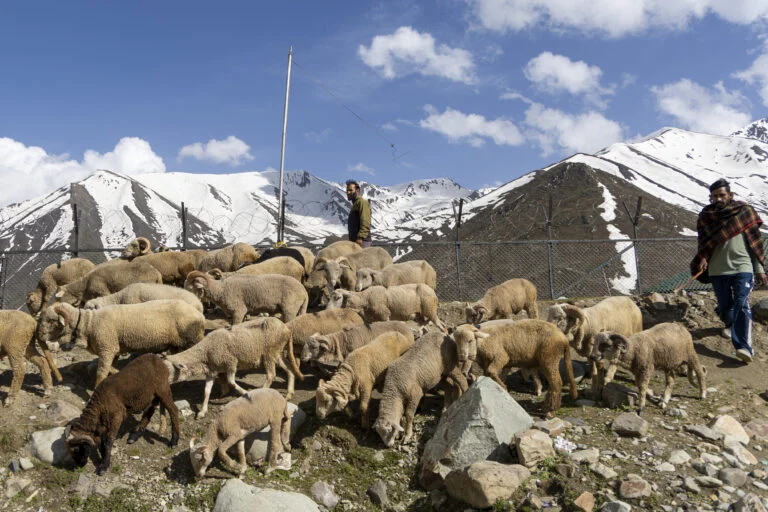
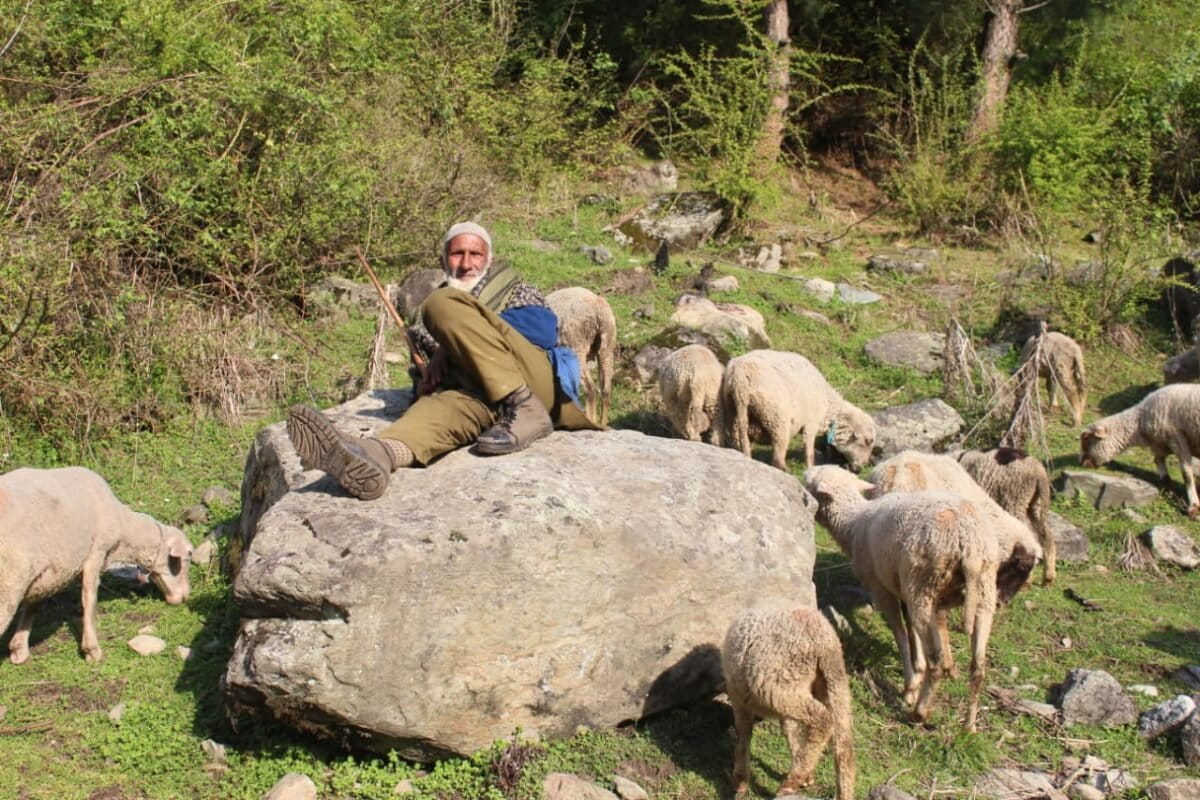
Srinagar, Jammu and Kashmir – For centuries, the high-altitude passes of the Pir Panjal range have echoed with the rhythmic whistling of shepherds and the bleating of thousands of sheep and goats. This seasonal movement, known as transhumance, is more than a journey; it is a sophisticated ecological dance performed by the Gujjar and Bakarwal tribes of Jammu and Kashmir. However, as the climate crisis accelerates, this ancient rhythm is fracturing, leaving one of South Asia’s largest nomadic populations stranded between a vanishing past and an unpredictable future.
Main Facts: A Livelihood Under Siege
The Gujjar and Bakarwal communities represent a vital socio-economic pillar of Jammu and Kashmir. Numbering over 1.5 million in total, approximately 612,000 individuals—comprising some 30,000 families—undertake an annual migration from the plains of Jammu to the highland pastures, or Dhoks, of the Kashmir Valley and the Chenab region.
This migration is not a choice but a survival strategy. As temperatures soar in the southern districts of Rajouri, Poonch, and Jammu during the spring, the grass withers, forcing the tribes to seek the lush, alpine grasslands of the north. Conversely, as winter approaches, the heavy snows of the Kashmir Himalayas push them back toward the lower altitudes.
Today, this survival strategy is being undermined by "weather whiplash." In May 2024, a month traditionally associated with the final ascent into the highlands, a freak snowfall at Peer Ki Gali—a high point on the Mughal Road connecting Shopian with Rajouri—brought the migration to a grinding halt. Hundreds of families were left stranded on the roadside without shelter, their livestock shivering in sub-zero temperatures they were never supposed to encounter so late in the season.

The crisis is multifaceted:
- Economic Devastation: The nomadic economy is built entirely on livestock. Unseasonal cold and the resulting lack of fodder lead to high mortality rates among lambs and calves.
- Knowledge Erosion: Traditional ecological knowledge (TEK), passed down through generations to predict weather and pasture cycles, is becoming obsolete in the face of unprecedented climatic shifts.
- Forced Adaptation: Nomads are being pushed into "reverse migration"—abandoning their journey halfway—or "ghost pasturing," where they occupy unfamiliar and often dangerous territories.
Chronology: The Disruption of the Seasonal Calendar
The traditional migration calendar was once a masterpiece of precision.
The Spring Ascent (March–May)
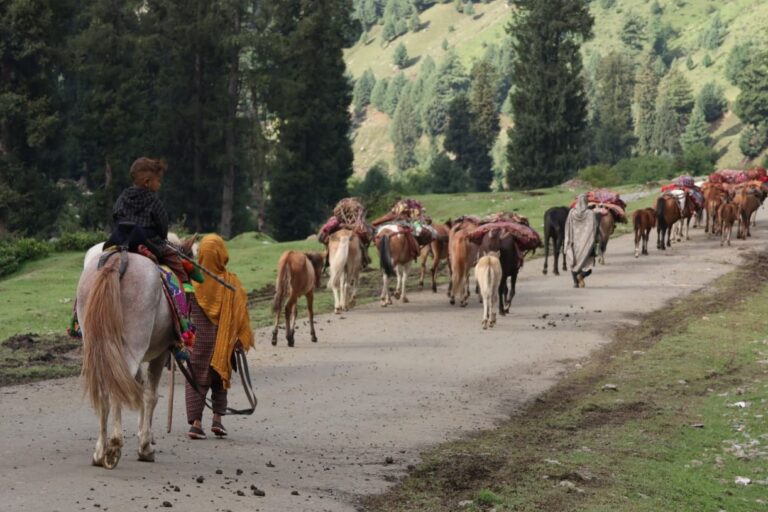
Traditionally, the migration begins in late March. The tribes move slowly, timing their arrival at various altitudes to coincide with the melting of the snow and the first sprout of nutritious grasses. By May, most families expect to be settled in their high-altitude Dhoks.
However, the timeline is shifting. Rising temperatures in the Jammu plains are now forcing an earlier start. "When communities are forced to migrate earlier in the spring, they often arrive at summer pastures where the snow has not yet melted," explains a recent study on community perceptions of climate change. This creates a "hunger gap" where animals, already weakened by the month-long trek, find no fodder, leading to mass starvation and death.
The Summer Stasis (June–August)
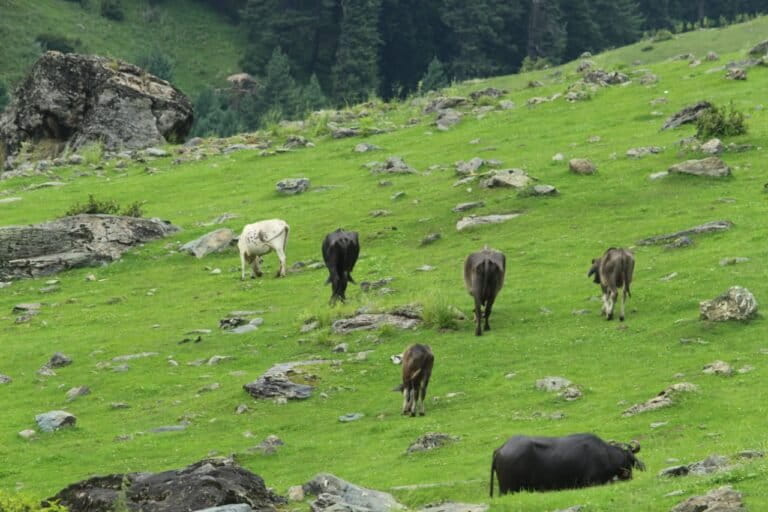
This period was once a time of relative stability and productivity. However, drying water sources at lower-than-usual altitudes and the invasion of non-native plant species are reducing the quality of the alpine grasslands.
The Autumn Descent (September–October)
The return journey is now increasingly plagued by sudden, intense storms. The "timing itself is being disrupted," says Javaid Rahi, a tribal researcher with three decades of experience. The predictability that allowed these tribes to navigate the treacherous Pir Panjal range has vanished.
Supporting Data: The Science of a Warming Himalaya
The struggles of the Gujjars and Bakarwals are backed by alarming meteorological data. The Himalayan region is warming at a rate 50% faster than the global average. This "Himalayan amplification" has led to a complete destabilization of precipitation patterns.
Precipitation Deficits
According to Faizan Arif, an independent weather forecaster, Jammu and Kashmir has recorded seven consecutive deficient winters since the 2019–2020 season. The 2025–2026 winter season saw a staggering 65% deficit in precipitation. Even more striking was February 2026, which recorded a 90% deficit.
The "Snow Drought" and Flash Events
The problem is not just a lack of snow, but the timing of it. The region is experiencing what experts call "snow droughts" during the peak winter months (December and January), followed by "sudden and poorly timed spells" in late spring (April and May).
Irfan Rashid, an associate professor at the University of Kashmir, notes that these shifts are reshaping pasture phenology—the timing of plant life cycles. When snow melts too early or too late, the nutritional value of the grass peaks at the wrong time, or the grass fails to grow at all, leaving the livestock vulnerable.
Mortality and Economic Loss
For a family like Zareena’s, a Gujjar pastoralist from Rajouri, the data is measured in lives lost. During the recent unseasonal May snow, she lost three goats. "Our entire livelihood depends on these animals," she says. "Losing even a few goats means losing months of income and food." Reports from mountain passes like Chattergalla and Sarthal indicate that hundreds of young sheep and horses are dying annually due to these sudden thermal shocks.
Official Responses and Researcher Insights: A System in Transition
The plight of the nomads has caught the attention of anthropologists and tribal advocates, but institutional support remains lagging.
The Concept of "Ghost Pasturing"
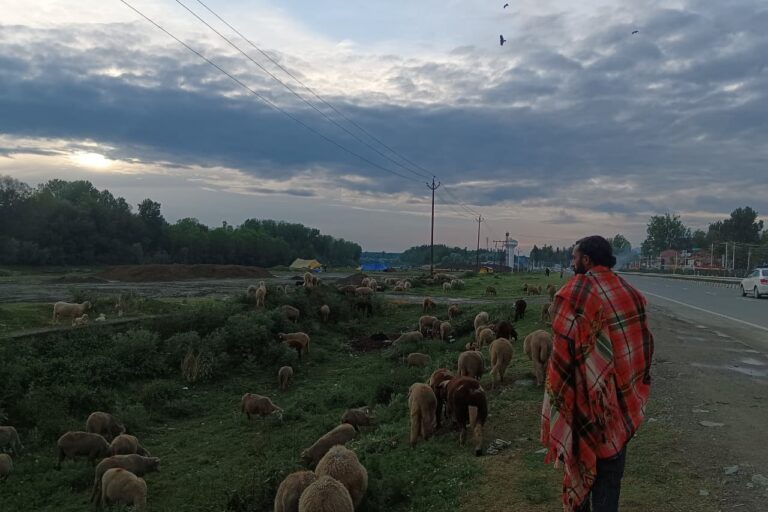
Shahid Sulaiman, founder of the Himalayan Pastoral Trust (HPT), has identified a phenomenon he calls "ghost pasturing." Because ancestral grazing lands are becoming ecologically unstable or blocked by unseasonal snow, herders are forced into unfamiliar territories. This often leads to "forced adaptation," where they must graze their herds on private agricultural land, leading to increased social tensions and conflict with settled farming communities.
The Information Gap
While weather forecasting technology has improved, the dissemination of this information to the people who need it most is failing. Javaid Rahi points out that mobile connectivity is virtually non-existent in the high-altitude Dhoks. "Even if forecasting improves, timely communication of weather alerts will remain difficult unless satellite-based systems or dedicated alert mechanisms are extended to these remote areas," Rahi says.
Lack of Safety Nets
Anthropologist Irfan Ali Banka, an ICSSR fellow, emphasizes that the forced change in routes—moving from mountain paths to main roads like the Srinagar-Jammu National Highway—exposes livestock to road accidents, exhaustion, and unfamiliar diseases. Despite these risks, there is a glaring absence of:
- Livestock insurance tailored for migratory herders.
- Emergency shelters along the National Highway and Mughal Road.
- Climate-linked migration assistance.
Implications: The End of an Era?
The disruption of Gujjar-Bakarwal transhumance carries profound implications for the ecology and culture of Jammu and Kashmir.
Ecological Consequences
Pastoralism is often viewed as an environmental burden, but in the Himalayas, it is a vital ecological service. The grazing of livestock helps manage grassland biodiversity and prevents the overgrowth of invasive species. As herders abandon traditional routes or reduce their flock sizes, the delicate balance of the alpine meadows is at risk.
Socio-Cultural Erosion
The "reverse migration" mentioned by researchers is a harbinger of a larger trend: sedentarization. Young Gujjars and Bakarwals, seeing the existential threat posed by climate change and the lack of government support, are increasingly looking to abandon the nomadic lifestyle for low-paying manual labor in cities.
"The journey itself has become increasingly uncertain," laments Talib Hussain, a nomad traveling toward Shopian. "This livestock does not sustain us properly anymore. We have no farming land or any other source of income."
The Call for Policy Reform
The transition currently underway is a "forced adaptation." Without a concerted effort to integrate nomadic communities into climate action plans, one of the world’s last great migratory cultures may vanish.

Experts suggest that the government must move beyond symbolic gestures and provide:
- Communication Infrastructure: Solar-powered weather alert stations in high pastures.
- Veterinary Corridors: Mobile veterinary units that move with the tribes during the peak migration months.
- Legal Protections: Strengthening grazing rights and providing insurance for livestock lost to climate-induced disasters.
As the snows of May melt into the history books, the Gujjars and Bakarwals continue their trek, but the ground beneath their feet is no longer certain. The "rhythm of the mountains" has changed, and for those whose lives depend on it, the silence left behind is deafening.