

HOUSTON, TX — For over six decades, NASA’s Lyndon B. Johnson Space Center (JSC) has served as the nerve center for human space exploration. From the Apollo moon landings to the continuous habitation of the International Space Station (ISS), the Houston-based facility has been synonymous with government-led orbital operations. However, as the ISS approaches its twilight years, a profound transformation is underway within the walls of JSC.
NASA is currently orchestrating a historic shift, transitioning from its role as the primary owner and operator of space stations to becoming one of many customers in a burgeoning commercial marketplace. This evolution, necessitated by the scheduled retirement of the ISS around 2030, is redefining the mission of Johnson Space Center, turning it into a collaborative hub where federal expertise meets private-sector innovation.
Main Facts: The Transition to Commercial LEO Destinations (CLD)
The core of NASA’s future strategy in Low-Earth Orbit (LEO) lies in the Commercial LEO Destinations (CLD) program. Rather than building a government-funded successor to the ISS, NASA is incentivizing the private sector to develop, launch, and operate the next generation of orbital laboratories.
The Key Players and Contracts
In 2021, NASA jumpstarted this transition by awarding initial contracts totaling approximately $415 million to three industry teams:
- Blue Origin: Developing "Orbital Reef," a "mixed-use business park" in space, in partnership with Sierra Space.
- Nanoracks (Voyager Space): Working on "Starlab," a continuously crewed, free-flying space station. Northrop Grumman, originally an independent developer, has since pivoted to join the Starlab effort.
- Axiom Space: While funded under a separate contract, Axiom is currently building commercial modules that will initially attach to the ISS before detaching to form an independent station.
The Role of Johnson Space Center
As these private entities prepare their hardware, JSC is adapting its world-class infrastructure—specifically Mission Control, the Space Vehicle Mockup Facility (Building 9), and the Neutral Buoyancy Laboratory (NBL)—to support a hybrid ecosystem. The goal is to ensure that when the ISS is eventually deorbited, there is no "gap" in American presence in LEO, allowing for the continued research of microgravity and the testing of technologies destined for Mars and the Moon.
Chronology: From Government Monopoly to Commercial Collaboration
The path toward privatization has been decades in the making, born from the realization that LEO should eventually become a domain for commerce, allowing NASA to focus its limited budget on "deep space" exploration.
- 1998: The first module of the ISS, Zarya, is launched, marking the beginning of the most complex international engineering project in history.
- 2010-2012: NASA initiates the Commercial Orbital Transportation Services (COTS) program, leading to the first private cargo deliveries to the ISS by SpaceX and Northrop Grumman.
- 2020: The Commercial Crew Program sees SpaceX successfully launch astronauts from American soil, proving that private companies can safely handle human spaceflight.
- December 2021: NASA officially announces the CLD awards, signaling the beginning of the end for the ISS as the sole destination in LEO.
- 2024–2026 (Ongoing): NASA engineers at JSC begin integrating commercial hardware mockups into training facilities.
- 2030 (Projected): The ISS reaches its planned end-of-life. NASA and its international partners prepare for a controlled deorbit into the Pacific Ocean, while commercial stations are expected to be fully operational.
Supporting Data: Infrastructure and Investment
The transition is supported by massive investments and a physical reconfiguration of NASA’s most iconic assets.
Mission Control Center (MCC) Evolution
The Christopher C. Kraft Jr. Mission Control Center is no longer a monolithic entity dedicated solely to government craft. It is now a multi-room complex supporting diverse mission profiles:
- FCR-1 (Flight Control Room 1): Historically used for Apollo and Shuttle, now often utilized for Artemis and commercial partner integration.
- The ISS Control Room: Continues 24/7 operations, monitoring the $150 billion station, its international crew, and visiting vehicles like Boeing’s Starliner and SpaceX’s Dragon.
Building 9: The Space Vehicle Mockup Facility
Building 9 serves as the primary classroom for astronauts. Recent data shows a significant uptick in private-sector occupancy:
- Hardware Integration: The facility now houses mockups from SpaceX, Blue Origin, and the Starlab consortium.
- Training Complexity: Astronauts are currently training for "high-stress" medical emergencies in microgravity, such as performing CPR. In a weightless environment, the lack of leverage requires specialized techniques—using the ceiling or walls to push back against the patient—that are now being standardized for both NASA and private crews.
The Neutral Buoyancy Laboratory (NBL)
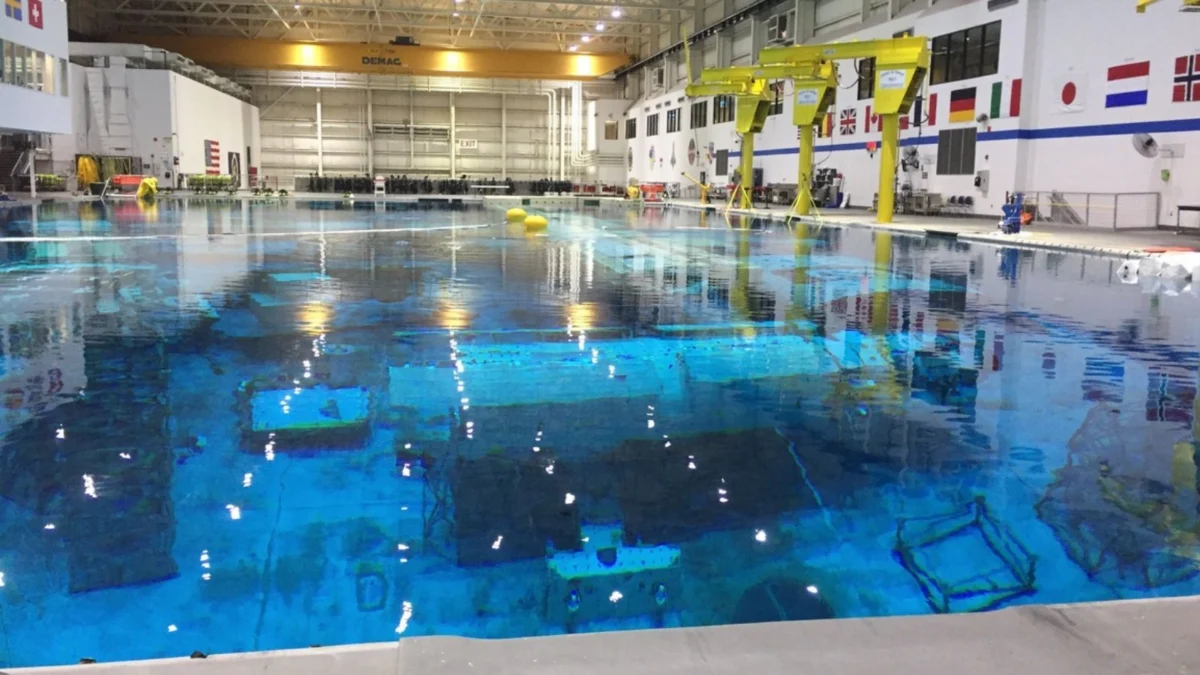
The NBL remains one of the largest indoor bodies of water in the world, holding 6.2 million gallons. While its primary use remains ISS spacewalk (EVA) training, its "customer" profile is shifting:
- Commercial Testing: Private companies are increasingly renting "tank time" to test their own proprietary spacesuits and hatch designs.
- Navy Involvement: Currently, a portion of the NBL’s spare capacity is utilized by the US Navy for specialized underwater recovery training, though NASA anticipates this space will eventually be reclaimed by commercial spaceflight operators as station construction ramps up.
Official Responses: Insights from the Flight Deck
NASA leadership emphasizes that this transition is not a withdrawal from space, but a maturation of the agency’s role.
Diane Dailey, NASA Flight Director, notes that the future of mission control will look different but remain rooted in NASA’s foundational expertise. "Future mission control centers will require specialists responsible for areas such as propulsion, communications, and computers," Dailey stated. She emphasized that NASA’s role will shift toward providing a "consultative and oversight" framework, sharing decades of "lessons learned" in orbital mechanics and life support with private operators.
Officials at Johnson Space Center have also addressed the "ISS Gap" concern. NASA’s official stance is that the agency will only retire the ISS when a viable commercial alternative is ready. "We want to be one of many customers in a robust LEO economy," a NASA spokesperson recently noted. "By moving to commercial providers, we can save over $1 billion annually—funds that will be directly redirected toward the Artemis missions to return humans to the lunar surface."
Implications: A New Era for Houston and the Global Space Industry
The evolution of JSC carries significant weight for the economy, international diplomacy, and the future of science.
1. Economic Transformation of "Space City"
Houston’s economy has long been tied to federal budget cycles. By transforming JSC into a commercial hub, the city is insulating itself from political shifts. The presence of companies like Axiom Space (headquartered in Houston) and the frequent visits from Blue Origin and Voyager Space personnel are turning the region into a "Silicon Valley of Space," attracting venture capital and high-tech manufacturing.
2. The Democratization of Research
On the ISS, research time is a precious commodity, strictly rationed among international partners. Commercial stations will offer "pay-to-play" access, potentially opening the door for pharmaceutical companies, materials scientists, and smaller nations to conduct microgravity research that was previously cost-prohibitive.
3. Safety and Standardized Training
As NASA moves to a customer role, the agency faces the challenge of maintaining safety standards without stifling innovation. The training conducted at Building 9 and the NBL will likely become the "gold standard" for the industry. Private astronauts will likely be required to pass NASA-vetted emergency protocols, ensuring that even on a private station, the "culture of safety" established after the Challenger and Columbia accidents remains intact.
4. Geopolitical Shifts
The ISS has been a rare beacon of cooperation between the U.S. and Russia. As the station nears retirement, the geopolitical landscape of space is changing. While NASA moves toward a commercial model, China is operating its own Tiangong station, and Russia has signaled intentions to build its own facility. The success of NASA’s commercial transition is therefore a matter of strategic importance, ensuring that the U.S. and its allies maintain a continuous, leading presence in LEO.
5. Focus on the Deep Space Frontier
Ultimately, the most significant implication for NASA is the "unburdening" of LEO operations. By delegating the management of Earth-orbiting stations to the private sector, JSC can return to its roots as a center for pioneering exploration. The expertise housed in Houston will be increasingly focused on the Lunar Gateway, the Artemis basecamp, and eventually, the first human footprints on Mars.
Conclusion
The transformation of the Johnson Space Center is more than a change in floor plans or contract structures; it is a fundamental shift in the human relationship with space. As the ISS era draws to a close, JSC is evolving from a government outpost into a bustling metropolitan port for the 21st century. While the "Golden Age" of the ISS will be remembered for its international unity, the coming "Commercial Age" promises a level of activity and accessibility that was once the stuff of science fiction. Through this shared future, NASA is ensuring that while it reaches for the stars, the path to orbit remains open for all.
