

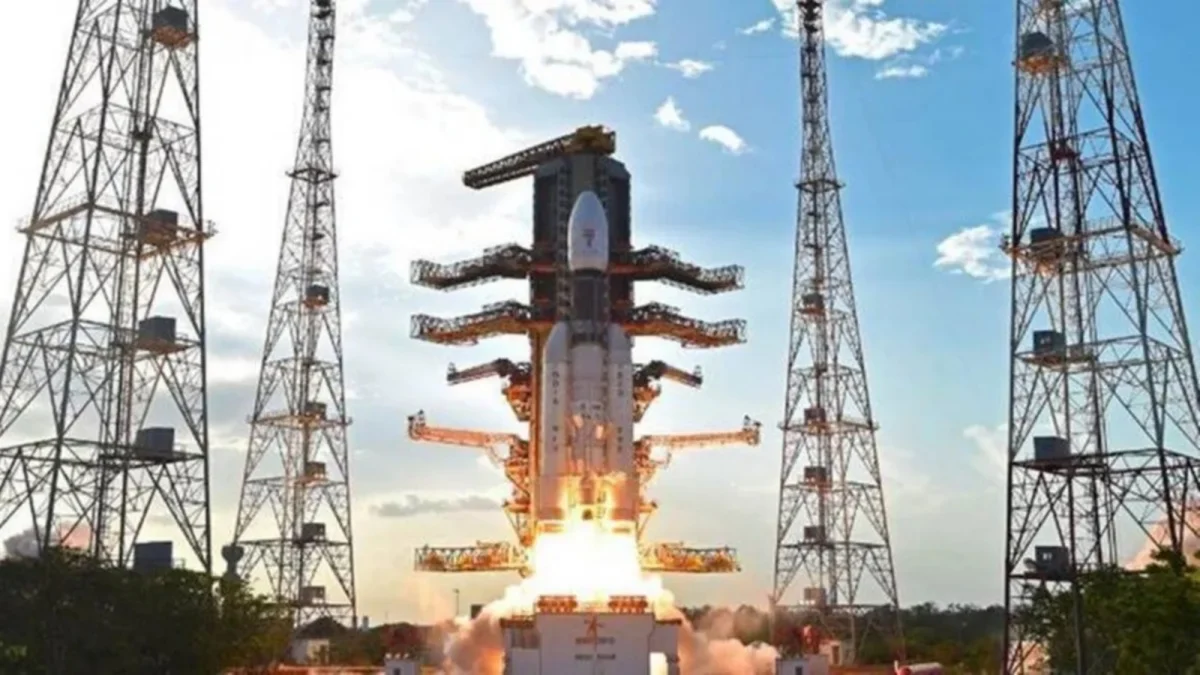
SRIHARIKOTA – In the quiet, pre-dawn hours of September 4, 2026, the silence over the Satish Dhawan Space Centre (SDSC-SHAR) is set to be shattered by the thunderous roar of the GSLV-F17. The Indian Space Research Organisation (ISRO) has officially announced that at 02:55 AM IST, it will attempt to launch the EOS-05 earth observation satellite, marking a pivotal moment for a space agency seeking to reclaim its momentum after a challenging period of technical setbacks and operational silence.
The mission, more than just a routine satellite deployment, represents the end of a seven-month "operational hiatus" that followed the failure of the PSLV-C62 mission in January earlier this year. As the GSLV (Geosynchronous Satellite Launch Vehicle) stands on the Second Launch Pad, the eyes of the global space community are fixed on India’s "workhorse" and its "naughty boy" rockets, as the agency attempts to stabilize its launch record.
Main Facts: The EOS-05 Mission at a Glance
The EOS-05, formerly known under the older nomenclature as GISAT-1A (Geo Imaging Satellite-1A), is a sophisticated state-of-the-art agile earth observation satellite. Unlike the majority of India’s remote sensing fleet, which operates in Low Earth Orbit (LEO), the EOS-05 is designed to be placed in a Geosynchronous Transfer Orbit (GTO) before eventually reaching its final Geostationary Orbit (GEO) roughly 36,000 kilometers above the equator.
Key Mission Parameters:
- Launch Vehicle: GSLV-F17 (featuring the indigenous Cryogenic Upper Stage).
- Satellite Weight: Approximately 2,268 kg.
- Mission Life: 10 years.
- Primary Objective: Near real-time monitoring of the Indian subcontinent at frequent intervals.
- Launch Timing: September 4, 2026, at 02:55 AM IST.
The mission’s primary payload is designed to provide high-temporal resolution imaging. This means that unlike LEO satellites that pass over a specific spot on Earth only once every few days, EOS-05 will remain "fixed" over India, allowing for constant surveillance. This capability is critical for monitoring fast-moving natural disasters, agricultural health, and forest cover changes.
Chronology: A Path Riddled with Turbulence
To understand the weight of the September 4 launch, one must look back at the sequence of events that led to this seven-month pause. The journey of the GISAT series has been one of the most scrutinized chapters in ISRO’s recent history.
The 2021 Setback (EOS-03)
The predecessor to this mission, GISAT-1 (EOS-03), was launched in August 2021. The mission ended in heartbreak when the cryogenic upper stage of the GSLV-F10 rocket failed to ignite. A subsequent Failure Analysis Committee (FAC) identified a technical glitch in a pressure-regulating valve that led to a lack of pressure in the liquid hydrogen tank. The loss was a significant blow, as it deprived India of a much-needed "eye in the sky" for real-time disaster management.
The Volatile 2025-2026 Cycle
The years 2025 and 2026 were intended to be a period of high-frequency launches for ISRO, yet they proved to be statistically difficult. Out of six missions attempted in this window, three encountered significant anomalies.
- January 12, 2026: The year began with the PSLV-C62/EOS-N1 mission. Intended to be a routine delivery, the mission failed to inject the satellite into the correct orbit due to an unspecified "anomaly" in the rocket’s third stage.
- The Hiatus: Following the January failure, ISRO entered a period of internal review. For seven months, the launch pads at Sriharikota remained silent as engineers worked to rectify systemic issues in both the PSLV and GSLV platforms.
The September Resumption
The announcement of the September 4 launch date follows months of speculation. Sources indicate that the NVS-03 (Navigation Satellite) was also considered for an earlier slot but has now been pushed to November to prioritize the deployment of the EOS-05.
Supporting Data: The Technical Evolution of GSLV-F17
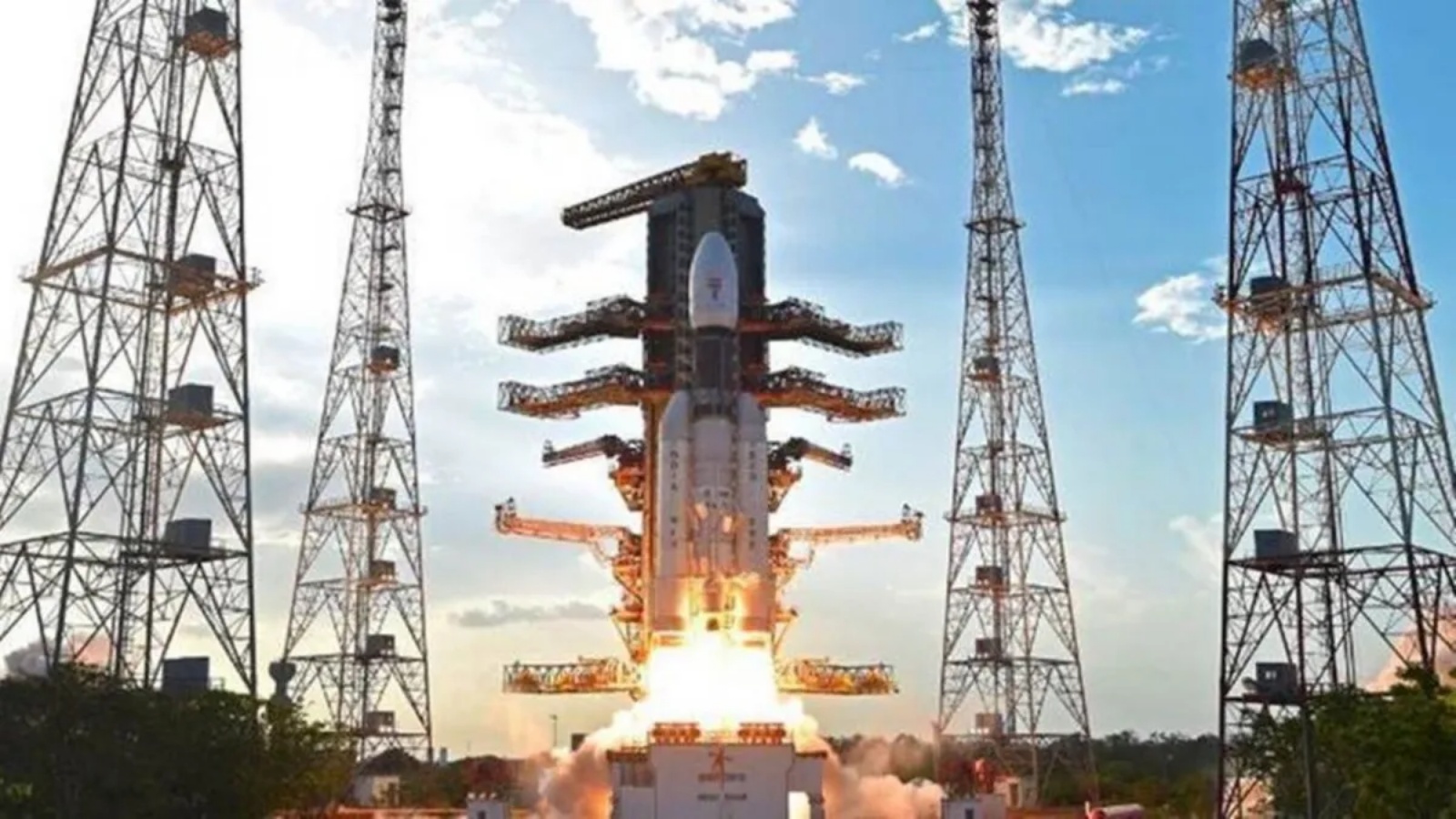
The GSLV-F17 is a three-stage launch vehicle. The first stage uses solid fuel, the second stage uses liquid fuel (the Vikas engine), and the crucial third stage is the indigenous Cryogenic Upper Stage (CUS).
The Cryogenic Challenge
The CUS uses liquid hydrogen as fuel and liquid oxygen as an oxidizer. Maintaining these at extremely low temperatures while ensuring valve integrity under high-pressure flight conditions is one of the most complex tasks in aerospace engineering. Following the 2021 failure, ISRO engineers have reportedly redesigned the valve systems and implemented more rigorous "hot-fire" testing protocols for the CUS to ensure that the GSLV-F17 does not suffer the same fate as its predecessor.
Orbit and Imaging Capabilities
| Feature | Specification |
|---|---|
| Orbit Type | Geostationary (GEO) |
| Altitude | 35,786 km |
| Spectral Bands | Multi-spectral & Hyperspectral |
| Spatial Resolution | 50m to 1.5km (depending on band) |
| Temporal Resolution | Every 30 minutes for the full Indian landmass |
By operating from a geostationary height, EOS-05 can image the entire country in "near real-time." In contrast, the RISAT or Cartosat series (in LEO) can provide much higher resolution (sub-meter) but cannot provide the constant, 24/7 "video-like" monitoring that EOS-05 promises.
Official Responses and Institutional Transparency
Publicly, ISRO has maintained a stance of cautious optimism. However, the agency has faced criticism from the scientific community regarding transparency. The full report of the Failure Analysis Committee regarding the January 12 PSLV-C62 debacle has yet to be released to the public.
In a brief statement accompanying the launch announcement, an ISRO spokesperson noted: "The GSLV-F17 mission is the culmination of rigorous testing and validation phases. We have addressed the concerns raised by previous missions and are confident in the robustness of the EOS-05 spacecraft and its launch vehicle."
Internal sources suggest that the "anomaly" in the January PSLV launch was related to a manufacturing defect in a component provided by a private vendor—a growing concern as ISRO moves toward more outsourced production. This has led to a tightening of Quality Assurance (QA) protocols across the organization, contributing to the length of the seven-month hiatus.
Strategic Implications: Why This Mission Matters
The successful deployment of EOS-05 carries heavy implications for India’s national security, economic planning, and its standing in the global space race.
1. Disaster Management and Climate Resilience
India is highly vulnerable to cyclones, floods, and forest fires. Currently, the India Meteorological Department (IMD) relies on INSAT satellites for weather data, but EOS-05 will provide much more detailed imaging of land use and environmental changes. During the monsoon season, the ability to track cloud movements and river levels every 30 minutes could save thousands of lives through better early warning systems.
2. The Commercial and Global Perception
In an era where SpaceX is launching rockets weekly, a seven-month hiatus for a national space agency is a significant period of inactivity. To remain a competitive player in the multi-billion-dollar commercial launch market, ISRO must prove that its GSLV—often nicknamed the "naughty boy" due to its historically lower success rate compared to the PSLV—is now a reliable heavy-lifter.
3. National Security and Borders
While EOS-05 is officially designated for civilian use (agriculture, forestry, and disaster management), a geostationary satellite with imaging capabilities provides a strategic advantage. The ability to monitor large-scale movements across the subcontinent without the "gaps" inherent in LEO satellite passes is an invaluable asset for situational awareness.
4. Clearing the Logjam
The success of F17 is a prerequisite for the busy schedule ahead. With the NVS-03 navigation satellite slated for November and the ambitious Gaganyaan (manned mission) tests looming in 2027, ISRO cannot afford another failure. A success on September 4 will restore morale within the ranks of the 17,000+ employees of the space agency and signal to the government that the recent string of anomalies has been successfully corrected.
Conclusion: The Dawn of a New Operational Phase
As the countdown for September 4 begins, the stakes could not be higher. For ISRO, the EOS-05 mission is more than just a satellite launch; it is a test of institutional resilience. After seven months of introspection, the agency is ready to prove that it has mastered the complexities of cryogenic technology and geostationary imaging.
If the GSLV-F17 successfully places EOS-05 into its intended orbit, it will mark the beginning of a new era of "constant vigil" for India, providing the nation with a permanent eye in the sky that never blinks. For a country increasingly defined by its technological aspirations, the roar of the GSLV in the early hours of September 4 will be the sound of a space giant waking up from its slumber.
