

The history of a nation is often written in ink, but it is remembered through its images. In the case of India, the visual narrative of its birth and subsequent evolution was largely shaped by the lens of Homai Vyarawalla, the country’s first female photojournalist. Her work did more than just document events; it captured the soul of a fledgling republic. However, as India marks its latest Independence Day, a look back at her legacy—and the literary reflections of the current moment—reveals a profound shift in how the nation’s story is told.
From the intimate, unscripted moments of the Nehruvian era to the high-stakes, hyper-curated imagery of the 21st century, the evolution of political photography mirrors the transformation of the Indian state itself. This report examines the shift from the "candid lens" to the "guarded frame," the role of literature in preserving the nuances of history, and the implications of a media landscape now dominated by social media and restricted access.
Main Facts: The Iconic Legacy of Homai Vyarawalla
Homai Vyarawalla’s photographs serve as the primary visual archive of India’s transition from a British colony to a sovereign democratic republic. Her lens immortalized the towering figures of the Independence movement, most notably Jawaharlal Nehru, whom she regarded as her greatest muse.
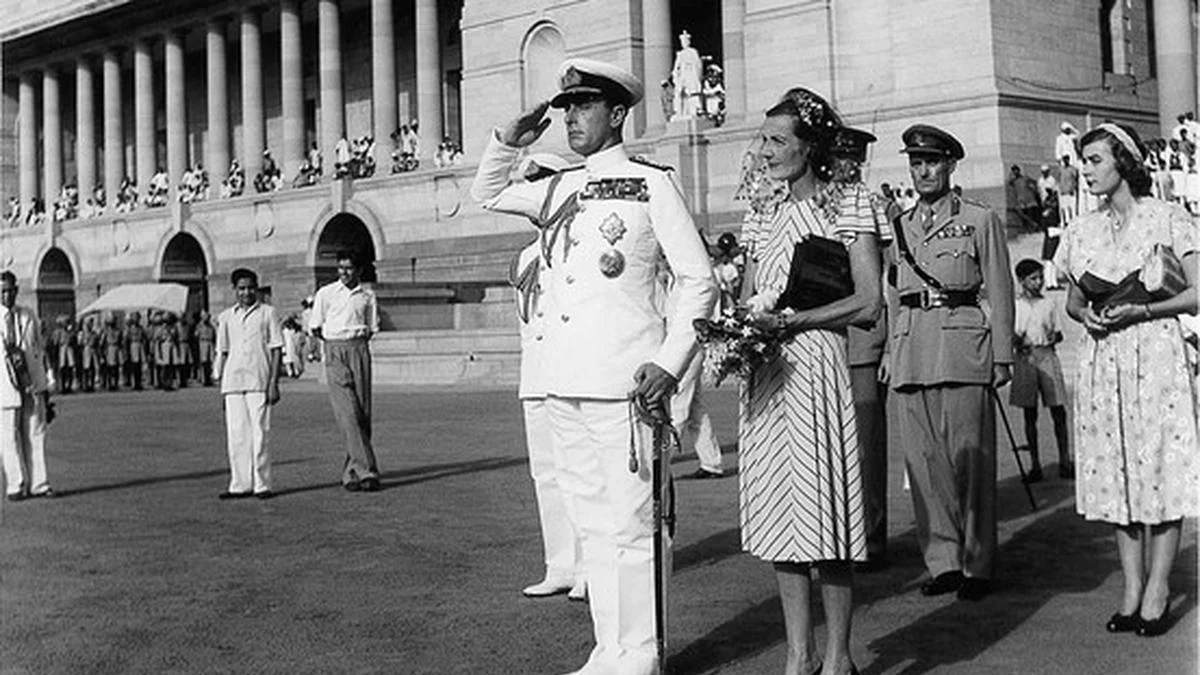
One of her most poignant images captures the end of an era: Lord Mountbatten, the last Viceroy of India, standing in a final salute. Dressed in pristine white, he embodies a sense of ritualistic solemnity. Beside him stands an Englishwoman with flowers, a hat, and heels, while in the background, a group of Indians in bell-bottoms look on with a mix of curiosity and bemusement. This single frame encapsulates the awkward, hopeful, and complex friction of 1947.
Vyarawalla’s portfolio includes several iconic moments that have since become part of the national consciousness:
- The Nehru-Pandit Embrace: A joyful, unguarded moment between Jawaharlal Nehru and his sister, Vijaya Lakshmi Pandit.
- The Peace Pigeon: Nehru with an outstretched arm, releasing a bird into the sky, symbolizing the hope of a new nation.
- The Cigarette: A rare, informal shot of Nehru lighting a cigarette for the wife of the British High Commissioner, a testament to the ease and accessibility of leaders at the time.
- The Martyr’s End: The body of Mahatma Gandhi wrapped in the tricolour at Birla House, surrounded by a sea of mourners.
These images were defined by their exuberance and an unprecedented level of access. Photographers in the mid-20th century were not merely observers; they were often within arm’s reach of the architects of modern India, capturing them in moments of vulnerability, humor, and profound reflection.
Chronology: The Evolution of the Political Image
The trajectory of political photography in India can be divided into three distinct phases, each defined by the level of access granted to the press and the technological tools available.

1. The Era of Optimism (1940s – 1960s)
During the early decades of the Republic, the relationship between the leader and the lens was one of mutual trust. Vyarawalla and her contemporaries operated in an environment where security was minimal and the "performance" of leadership was secondary to the "presence" of the leader. This period produced images that felt human and relatable, fostering a sense of shared destiny between the government and the governed.
2. The Turning Point: Security and Shadows (1980s – 1990s)
As noted by Binoo John in his book All in a Flash, the landscape of political photography changed irrevocably following the assassinations of Prime Ministers Indira Gandhi (1984) and Rajiv Gandhi (1991). The subsequent formation of the Special Protection Group (SPG) created a physical and psychological barrier between leaders and the public.
Access for independent photojournalists was drastically curtailed. The "candid" shot became a casualty of security protocols. Photography moved from the intimate to the ceremonial, with leaders often seen from a distance, surrounded by a phalanx of security personnel. This era marked the beginning of "guarded" political subjects.
3. The Digital and Curated Age (2000s – Present)
Today, the rise of digital technology and social media has democratized the act of photography while simultaneously professionalizing the "curation" of the image. While anyone with a smartphone can capture a moment, the images of top-tier leaders are increasingly managed by internal PR teams.
Modern political photography is characterized by:
- Hyper-Curation: Photos are released by official handles, designed to convey specific messages or "memes."
- The Loss of the Candid: Relaxed, unscripted moments are rare. Most images are taken during highly choreographed election campaigns or official functions.
- The Rise of Dissent Imagery: In contrast to the curated images of power, independent photojournalists now focus heavily on protests and the struggles of the common citizen, highlighting a visual divide between the state and the street.
Supporting Data: Literary Reflections on the Indian Identity
The evolution of India is not only captured in photographs but also in its literature. Current literary trends, particularly during "Women in Translation" month, highlight how contemporary writers and historians are filling the gaps left by the visual record.
The Power of Sisterhood and Translation
The literary world is currently celebrating the jugalbandi (duet) between International Booker Prize-winning author Geetanjali Shree and translator Daisy Rockwell. Their latest collaboration, Once Elephants Lived Here, explores themes where meaning "floats" rather than being stated, mirroring the elusive nature of memory. Similarly, Mieko Kawakami’s Sisters in Yellow examines the brutality of life and the resilience of youth, providing a stark contrast to the often sanitized versions of "the national struggle."

Filling the Historical Gaps
While Vyarawalla photographed the "stalwarts," modern non-fiction is turning its gaze toward the shadows. Josy Joseph’s Birth of a Nation: Twenty-One Days That Made India focuses on the unsung bureaucrats and advisors who worked behind the scenes to prevent the balkanization of India by convincing princely states to join the Union. This "history from the wings" complements the "photography from the front lines," offering a more holistic view of the nation’s formation.
Furthermore, the English translation of Qurratulain Hyder’s memoir, A Tilt in Time: Partition & Pakistan, provides a poignant look at the "internal shattering" experienced by the generation of the 1940s. Hyder’s work suggests that while the photographs of the era showed exuberance, the internal reality for many was one of deep tragedy and loss.
Official Responses and Expert Perspectives
The shift in how we view our leaders has drawn commentary from various cultural critics and authors.
Binoo John (All in a Flash): John argues that the assassination of the Gandhis was the death knell for candid political photography. He suggests that the "flash" of the camera has been replaced by the "flash" of social media, where immediacy is valued over depth.
Jerry Pinto (Tribute to Nisha Da Cunha): In his tribute to the late professor and writer Nisha Da Cunha, Pinto highlights the importance of the "unfulfilled woman" in Indian literature. His analysis suggests that while political photography often focuses on the "triumph" of the state, literature like Da Cunha’s focuses on those "out of step with their time and place"—the individuals who don’t make it into the iconic tricolour-wrapped frames.
Aditya Vikram Shrivastava (Critic): Reviewing Geetanjali Shree, Shrivastava points out that the rhythm of storytelling in translation allows for a "sleight of hand" that keeps the mystery of the original language alive. This suggests that some truths about the Indian experience can only be captured through the nuance of language, which can transcend the limitations of a fixed photographic frame.
Implications: The Future of the National Record
The transition from the era of Homai Vyarawalla to the age of Instagram carries significant implications for democratic transparency and historical memory.

1. The Erosion of Authenticity
When political imagery is exclusively curated by the subjects themselves, the public loses a vital tool for holding power to account. The "human" element of leadership—the mistakes, the fatigue, the genuine laughter—is scrubbed away in favor of a polished, infallible persona. This creates a disconnect between the leader and the reality of the people they serve.
2. The Fragmentation of Narrative
In the 1940s, a Vyarawalla photograph was a shared national experience. Today, the digital evolution has led to a fragmentation of the visual narrative. Different segments of society consume different images, often filtered through ideological lenses. This makes it increasingly difficult to have a unified visual history of the present moment.
3. The Role of the Archive
As we move further away from the dawn of the Republic, the archives of Vyarawalla become even more precious. They remind us that there was once a time when the "nation waiting in the wings" and its leaders shared a frame without the intervention of high-security cordons or digital filters.
4. A Shift to the "Ordinary"
Perhaps the most significant implication is the shift in the focus of independent photojournalism. With leaders becoming less accessible, the lens has turned toward the "ordinary" citizen. The iconic images of the future may not be of Prime Ministers releasing pigeons, but of the "enduring struggles" and "protests" that define the modern democratic experience.
In conclusion, while the tools of the trade have evolved from the heavy Leica cameras of Vyarawalla’s day to the high-speed digital sensors of today, the fundamental purpose of the lens remains the same: to witness. Whether through the candid optimism of the past or the guarded curation of the present, the photographs of India continue to tell the story of a nation in constant, often turbulent, motion. As the literary reviews of the week suggest, it is in the combination of the visual and the written—the photo and the prose—that the true, complex heart of India is finally found.
