

The history of Indian cinema is often told through the lens of its "superstars"—the larger-than-life figures who commanded fanatical followings and defined eras with their signature styles. However, nestled within the golden age of Bollywood was an actor who defied the conventional tropes of stardom. Sanjeev Kumar, born Harihar Jethalal Jariwala, was not just a star; he was a craftsman whose versatility became the gold standard for generations to come.
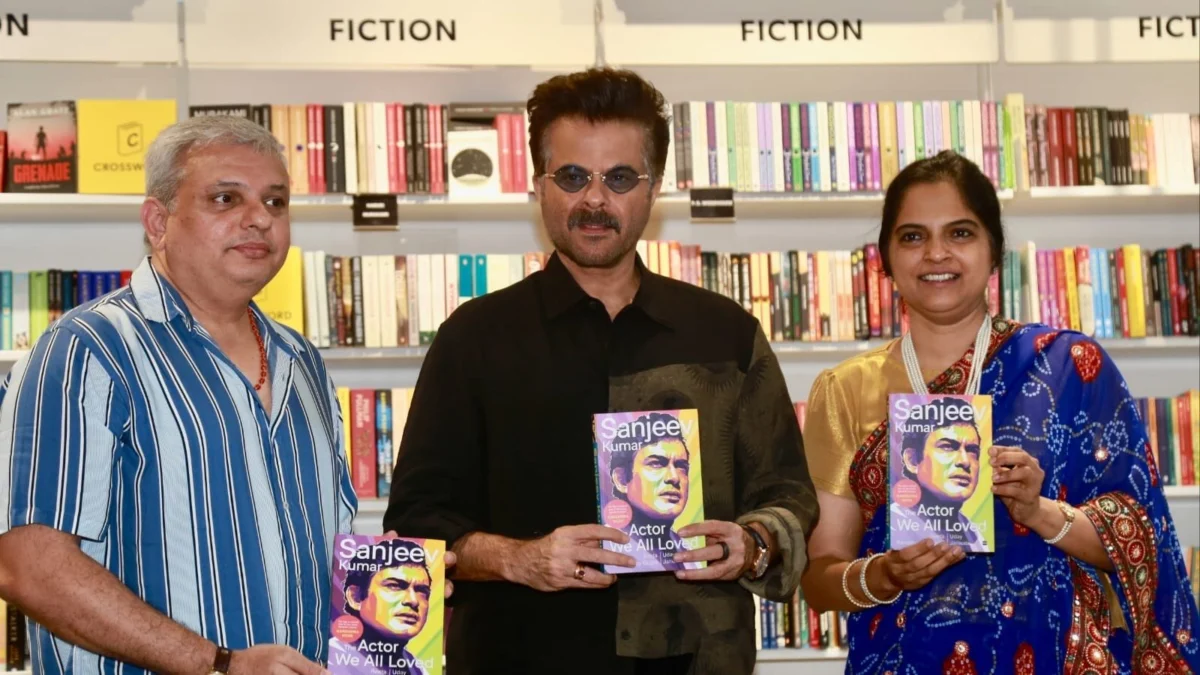
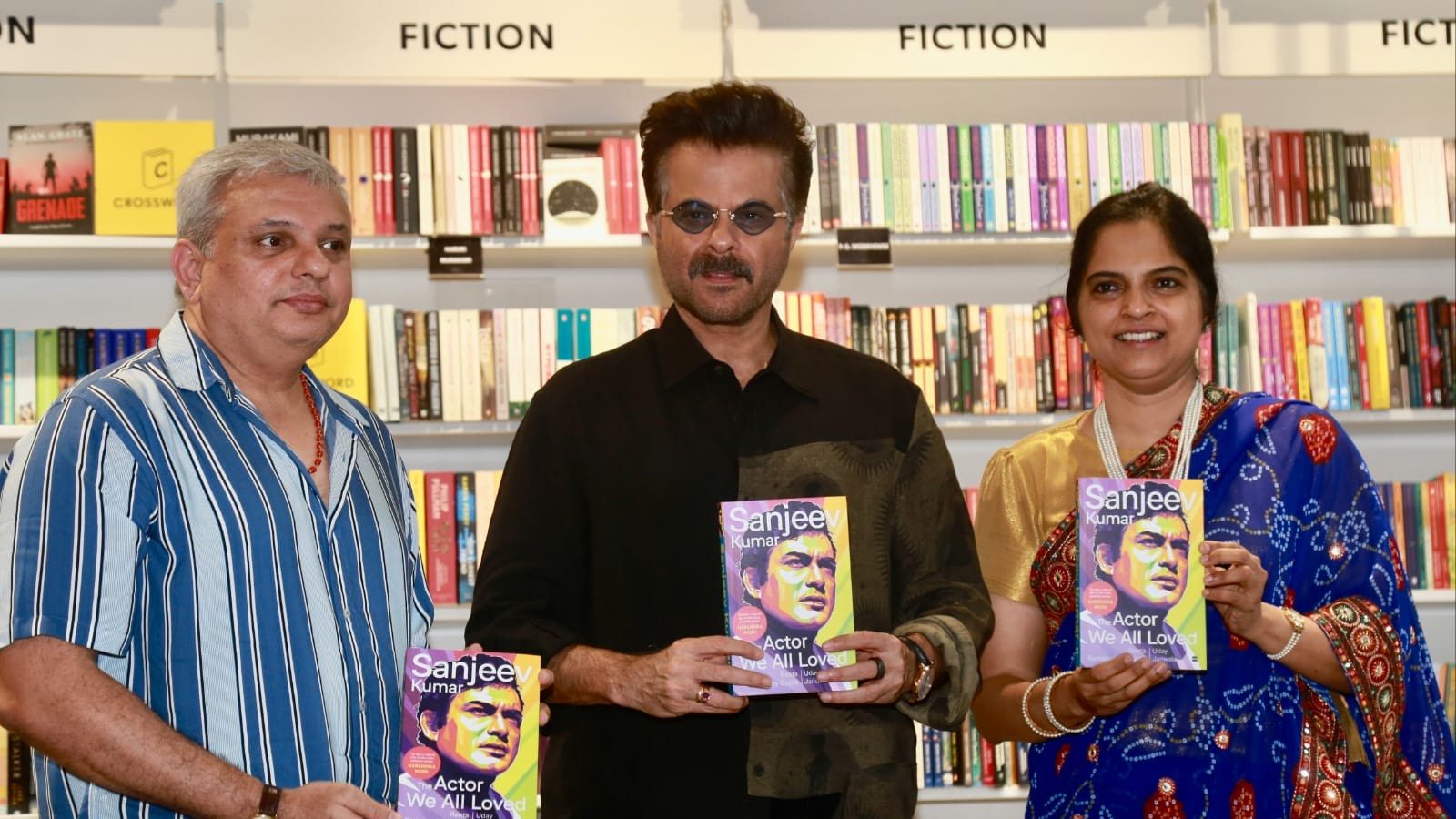
Decades after his untimely passing, the enigma of the man remains as potent as ever. To bridge the gap between the myth and the man, his nephew Uday Jariwala and noted biographer Reeta Ramamurthy Gupta have released a comprehensive biography titled Sanjeev Kumar: The Actor We All Loved. Launched in Mumbai amidst a gathering of industry stalwarts, the book seeks to peel back the layers of a performer who was equally at home playing a vengeful disabled man, a romantic lead, or a bumbling comedian.
Main Facts: A Literary Tribute to ‘Haribhai’
The biography, which was conceptualized in 2018, serves as the first authoritative account of Sanjeev Kumar’s life. For years, the actor’s story was scattered across film magazines, hearsay, and the collective memory of his peers. The new book aims to centralize these narratives while adding never-before-seen personal insights from his family archives.
The launch event was headlined by veteran actor Anil Kapoor, a self-proclaimed devotee of Kumar’s craft. Kapoor’s presence underscored the respect Sanjeev Kumar continues to command among his successors. The book explores Kumar’s journey from his humble beginnings in Surat to his rise in the Gujarati theatre circuit, and eventually, his ascent to the pinnacle of Indian cinema.
Beyond his professional accolades, the biography delves into the "human side" of the actor—his simplicity, his struggles with loneliness, and his profound connection to his family. It addresses the vacuum in film literature regarding his life, providing a nuanced look at a man who played characters twice his age while he was still in his youth, only to leave the world at the tragically young age of 47.
Chronology: From Theatre Boards to Cinematic Immortality
To understand the weight of this biography, one must look at the timeline of a career that spanned barely two decades but left an indelible mark on the medium.
The Formative Years (1938–1960)
Born in 1938 in Surat, Harihar Jariwala moved to Mumbai (then Bombay) with his family. His tryst with the arts began not on the silver screen, but on the stage. He joined the Indian People’s Theatre Association (IPTA) and later the Indian National Theatre. It was here that he honed the "realistic" acting style that would later distinguish him from the melodramatic norms of 1960s Bollywood.
The Rise of Sanjeev Kumar (1960–1970)
He made his film debut with a small role in Hum Hindustani (1960), but it was the 1968 film Sunghursh that acted as his true arrival. Sharing the screen with the legendary Dilip Kumar, the young Sanjeev Kumar refused to be overshadowed. By the end of the decade, films like Khilona (1970) established him as a leading man capable of intense emotional depth.
The Golden Era and Gulzar (1971–1980)
The 1970s marked the peak of his creative powers. This era was defined by his collaboration with filmmaker Gulzar. Together, they produced masterpieces such as Parichay, Koshish (where he played a deaf and mute character), Aandhi, and Mausam. Simultaneously, he became a household name with mainstream hits like Seeta Aur Geeta and the quintessential Sholay (1975), where his portrayal of Thakur Baldev Singh became a cultural landmark.
The Final Act (1981–1985)
Even as his health began to fail due to a congenital heart condition, Kumar continued to deliver stellar performances in films like Angoor (a masterclass in comedy) and Satyajit Ray’s Shatranj Ke Khiladi. He passed away on November 6, 1985, leaving behind several incomplete projects and a void that the industry has struggled to fill.
Supporting Data: The Craft and the Global Recognition
The biography highlights why Sanjeev Kumar was "a cut above the rest." Unlike his contemporaries who often played versions of themselves, Kumar was a chameleon.
A significant data point mentioned by co-author Reeta Ramamurthy Gupta is the inclusion of Shatranj Ke Khiladi (The Chess Players) in Martin Scorsese’s list of "40 films you must watch before you die." In this film, Kumar played Mirza Sajjad Ali, a nobleman obsessed with chess while his world crumbles around him. The nuance he brought to the role—balancing satire with tragedy—is cited as a primary reason for the book’s inception.
Furthermore, Kumar’s versatility is backed by his decorated career. He was a two-time winner of the National Film Award for Best Actor (Koshish and Anubhav) and received several Filmfare Awards. His ability to transition from the slapstick humor of Pati Patni Aur Woh to the gravitas of Vidhaata is analyzed in the book as a rare technical proficiency that few actors possessed.
Official Responses: Insights from the Authors and Peers
During the launch, the contributors shared poignant reflections on the actor’s life, offering a glimpse into the motivations behind the biography.
Reeta Ramamurthy Gupta explained the intellectual spark that led to the project:
"I was shocked to know that no one had written a book about him before. When I saw Shatranj Ke Khiladi, my mind was made up. He was an actor of international caliber. I grew up with his songs, like ‘Thande Thande Pani Se,’ but it was only later that I realized the depth of the man behind those fun numbers."
Uday Jariwala, the actor’s nephew, emphasized the need to clear the air regarding his uncle’s personal life:
"I wanted people to know the real Sanjeev Kumar, away from the gossip and the rumour mills. He was a superstar, yes, but he was incredibly down-to-earth. He had no hangups. Whether he was at home or on an outdoor shoot, he remained a simple man who cherished his family."
Jariwala also shared personal anecdotes that paint a picture of a devoted family man:
"I remember him every day. He used to take time out from his hectic shooting schedules to take us to see Charlie Chaplin movies or other children’s films. He would drive us himself, without any drivers or staff, just to spend those quiet moments with us."
Anil Kapoor, who officially unveiled the book, recounted the moment he became a lifelong fan:
"I went to see Sunghursh to watch Dilip Kumar Sahab. But when I left the theatre, I kept asking, ‘Who was that other actor?’ It was Sanjeev Kumar. To hold your own against Dilip Kumar in your early years is no small feat. I have watched every single one of his films since then."
Implications: Why Sanjeev Kumar Matters Today
The release of this biography carries significant implications for the study of Indian cinema and the preservation of its history.
1. Debunking the "Bachelor" Myth
For years, Sanjeev Kumar’s personal life was shrouded in rumors regarding his bachelorhood and supposed heartbreak. The book aims to provide a more dignified and factual account of his personal choices, framing his life not as a tragedy of loneliness, but as a life lived with intentionality and dedication to his craft.
2. A Lesson for Modern Actors
In an era where "branding" often takes precedence over "acting," the biography serves as a manifesto for the craft. It details Kumar’s willingness to look "un-heroic"—putting on weight for roles, playing elderly characters in his 30s, and taking on non-glamorous parts. This "character-actor" approach within a "leading-man" career is a blueprint for contemporary actors seeking longevity over fleeting fame.
3. Preservation of Cinematic Heritage
By documenting the making of films like Aandhi and Sholay from Kumar’s perspective, the book contributes to the historical record of Indian cinema’s "Golden Age." It ensures that the technical and emotional contributions of Sanjeev Kumar are not lost to time, providing future film students with a roadmap of how he decoded his characters.
4. Re-engaging the Youth
While millennials and Gen Z may recognize him as the "Thakur" from memes or television reruns, the biography invites a younger audience to explore his more experimental work. By highlighting the Scorsese connection and his work with Satyajit Ray, the authors position Sanjeev Kumar as a global icon of acting, relevant far beyond the borders of Bollywood.
In conclusion, Sanjeev Kumar: The Actor We All Loved is more than just a trip down memory lane. It is a necessary intervention in the narrative of Indian cinema—a reminder that while stars may fade, the work of a true artist remains eternal. Through the words of Uday Jariwala and Reeta Ramamurthy Gupta, "Haribhai" finally receives the literary monument his monumental talent deserved.
