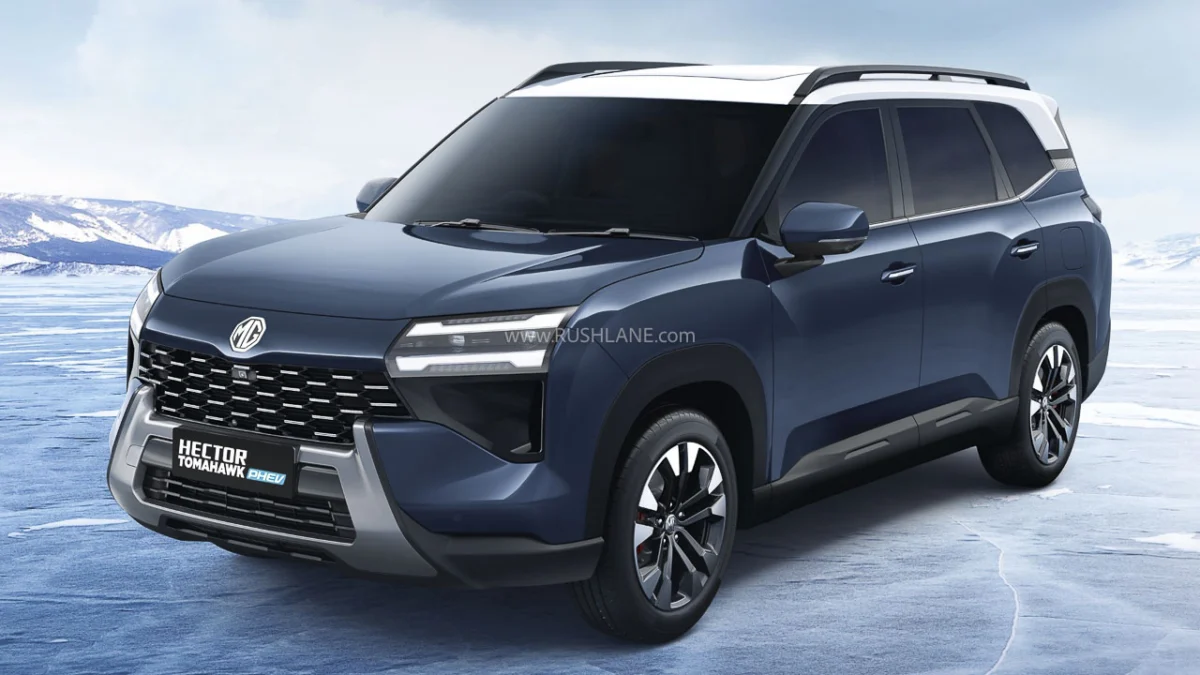
The Indian automotive landscape is witnessing a paradigm shift as the transition from internal combustion engines (ICE) to sustainable mobility accelerates. While Battery Electric Vehicles (BEVs) continue to gain traction, the "bridge technologies"—Strong Hybrids and Plug-in Hybrid Electric Vehicles (PHEVs)—have emerged as the preferred choice for long-distance commuters. The recent launch of the MG Hector Tomahawk PHEV has sent shockwaves through the premium three-row segment, directly challenging the undisputed leader of the category: the Toyota Innova Hycross Hybrid.
This comparison delves into the nuances of these two electrified giants, examining whether MG’s tech-heavy, value-oriented PHEV approach can unseat Toyota’s reputation for reliability and chauffeur-driven comfort.
1. Main Facts: A Tale of Two Technologies
At the heart of this rivalry lies a fundamental difference in engineering philosophy. The MG Hector Tomahawk utilizes a Plug-in Hybrid Electric Vehicle (PHEV) architecture, whereas the Toyota Innova Hycross employs a Self-Charging Strong Hybrid system.
Pricing and Value Proposition
The financial delta between these two models is significant. The MG Hector Tomahawk PHEV, in its top-tier ‘Essence’ trim, is priced at an aggressive Rs 27.79 lakh (ex-showroom). In contrast, the Toyota Innova Hycross Hybrid ZX (O) commands a premium price of approximately Rs 31.84 lakh.
This price gap of Rs 4.05 lakh is a strategic move by MG Motor India. By undercutting the Hycross, MG is positioning the Tomahawk not just as a greener alternative, but as a more technologically advanced vehicle that costs substantially less upfront.

The Powertrain Contrast
- MG Hector Tomahawk PHEV: Features a 1.5-litre naturally aspirated petrol engine paired with a high-torque electric motor and a substantial 20.5 kWh battery pack. This setup produces a combined output of 198 hp. The "Plug-in" nature allows owners to charge the vehicle via a wall socket or DC fast charger, enabling significant pure-electric driving range.
- Toyota Innova Hycross Hybrid: Utilizes a 2.0-litre four-cylinder Atkinson cycle petrol engine mated to an electric motor, producing a combined 184 hp. Unlike the MG, the Toyota cannot be plugged in. It relies on regenerative braking and engine power to charge a much smaller Ni-MH battery, prioritizing seamless transitions between petrol and electric modes without user intervention.
2. Chronology: The Road to the Tomahawk
The journey to this head-to-head battle has been years in the making.
- Late 2022: Toyota launches the Innova Hycross in India, marking the first time the legendary "Innova" nameplate moved away from a ladder-frame diesel chassis to a monocoque hybrid petrol setup. It quickly became the gold standard for fuel-efficient executive transport.
- 2024-2025: MG Motor India identifies a gap in the market. While the ZS EV catered to the full-electric crowd, the standard Hector faced stiff competition from diesel SUVs. The decision was made to introduce the "Tomahawk" series—a high-performance PHEV line.
- August 2026: MG officially unveils the Hector Tomahawk PHEV, showcasing industry-leading efficiency figures and a revamped tech suite.
- November 2026: Deliveries for the MG Hector Tomahawk PHEV are scheduled to commence, marking the first time a mainstream SUV in this price bracket offers DC fast-charging PHEV capabilities in India.
3. Supporting Data: Dimensions, Efficiency, and Features
To understand which vehicle suits a buyer’s lifestyle, one must look at the empirical data.
Dimensional Analysis
While both vehicles are marketed as three-row family haulers, the Toyota Innova Hycross holds a slight edge in physical footprint:
- Length: Hycross (4,755 mm) vs. Tomahawk (4,745 mm).
- Height: Hycross (1,790 mm) vs. Tomahawk (1,770 mm).
- Wheelbase: The Hycross offers a 2,850 mm wheelbase, which is 40 mm longer than the Tomahawk. This translates directly into superior legroom for the third row.
- Boot Space: With all seats up, the Hycross provides 239 litres, whereas the Tomahawk offers a more modest 192 litres, likely due to the packaging of the larger 20.5 kWh battery.
Efficiency: The PHEV "Asterisk"
MG claims a staggering 50 km/l for the Tomahawk, with a combined range of over 1,100 km. Toyota claims 22.16 km/l for the Hycross with a range of approximately 800 km.
However, journalists and engineers note that these figures require context. The Tomahawk’s 50 km/l is achieved by utilizing its 20.5 kWh battery to cover the first 70–90 km on pure electricity. Once the battery is depleted, the vehicle operates as a heavy petrol SUV, where efficiency will likely drop to 12–15 km/l in city traffic. The Toyota, conversely, maintains its 20+ km/l average consistently because it does not rely on external charging.

Interior Technology and Comfort
The Hector Tomahawk is a "gadget on wheels." It features:
- 15.6-inch Portrait Infotainment Screen: The largest in its class.
- 8.8-inch Digital Cluster: Providing high-resolution telemetry.
- Audio: A 10-speaker Infinity system.
- Ambient Lighting: 256-colour customizable palette.
The Innova Hycross takes a more "Lounge" oriented approach:
- Powered Ottoman Seats: The second-row captain chairs feature electric recliners and leg rests, a feature missing in the Hector.
- 8-way Powered Driver Seat: Focused on ergonomic long-distance cruising.
- 10.1-inch Screen: Smaller and more functional than MG’s unit.
4. Safety and Reliability: The Trust Factor
In the premium segment, safety is a non-negotiable metric.
Bharat NCAP Ratings
The Toyota Innova Hycross arrives with a proven pedigree, having secured a 5-star Bharat NCAP rating for both adult and child occupant protection. This certification provides a significant psychological advantage for Toyota, especially among family-oriented buyers.
The MG Hector Tomahawk PHEV, being a newer entrant, is yet to undergo official Bharat NCAP testing. While it is equipped with a comprehensive safety suite—including six airbags, 360-degree cameras, and Level 2 ADAS (Advanced Driver Assistance Systems)—it lacks the validated crash-test "star" badge that Toyota currently flaunts.

Standard Safety Features
Both vehicles are remarkably well-equipped, offering:
- Electronic Stability Control (ESC)
- Hill-Hold Assist
- Tyre Pressure Monitoring Systems (TPMS)
- All-wheel disc brakes
- Electronic Parking Brake with Auto Hold
MG adds traction control and rain-sensing wipers to the mix, while Toyota focuses on the structural integrity of its TNGA-C platform.
5. Official Responses and Market Context
While official statements from both manufacturers emphasize their commitment to "Carbon Neutrality," their strategies differ based on infrastructure readiness.
MG Motor India Perspective:
Industry insiders suggest MG’s pivot to PHEV is a calculated move to address "range anxiety." By providing a vehicle that can run as a pure EV for daily city commutes (30–50 km) but utilize a petrol engine for highway runs, MG is targeting the urban elite who have charging access at home but still fear the limitations of a pure EV on long trips.
Toyota Kirloskar Motor Perspective:
Toyota remains the loudest proponent of Strong Hybrids. Their "Self-Charging" narrative is designed for the Indian mass market, where public charging infrastructure remains inconsistent. Toyota’s official stance has often highlighted that Strong Hybrids are more "accessible" because they require zero change in driver behavior—no plugging in, no waiting at charging stations.

6. Implications: Who Wins the Green War?
The arrival of the MG Hector Tomahawk PHEV signifies a maturing Indian auto market. No longer is "Hybrid" a monolithic term. Consumers now have to choose between two distinct lifestyles.
The Case for the MG Hector Tomahawk
The Tomahawk is the clear winner for the Tech-Enthusiast and the Urban Commuter. If your daily drive is under 60 km and you can charge your car at night, you could theoretically drive the Tomahawk for months without ever visiting a petrol pump. The Rs 4 lakh savings and the superior infotainment system make it a compelling "Value-Luxury" proposition. Furthermore, features like V2L (Vehicle-to-Load) and V2V (Vehicle-to-Vehicle) charging allow the Tomahawk to act as a mobile power bank, adding a layer of utility Toyota cannot match.
The Case for the Toyota Innova Hycross
The Hycross remains the king of the Chauffeur-Driven and the High-Mileage Traveller. For those who spend their time in the rear seat, the Ottoman chairs and the extra wheelbase are worth the premium. Toyota’s legendary resale value and the consistency of its hybrid system make it the "safer" financial bet for those who plan to keep their vehicle for a decade or more.
Conclusion
The MG Hector Tomahawk PHEV doesn’t just compete with the Innova Hycross; it offers a different vision of the future. While the Hycross is the perfection of the present, the Tomahawk is a bold leap toward an electrified tomorrow. With deliveries starting in late 2026, the real test will be how MG’s sophisticated electronics hold up against the rugged, "fill-it-and-forget-it" reliability that has made Toyota a household name in India. One thing is certain: the consumer is the ultimate winner in this high-stakes battle of the hybrids.