

By Motorscribes in association with The Hindu
The Indian automotive landscape is currently traversing a period of profound metamorphosis. For decades, the industry was defined by the steady evolution of the internal combustion engine (ICE) powered by fossil fuels. However, today, the sector finds itself at a crossroads, compelled by the dual imperatives of mitigating environmental degradation and insulating the national economy from the volatility of global crude oil prices. While the narrative of the past five years has been dominated by the rapid ascent of Battery Electric Vehicles (BEVs), a new protagonist is emerging from the wings: Flex-Fuel technology.
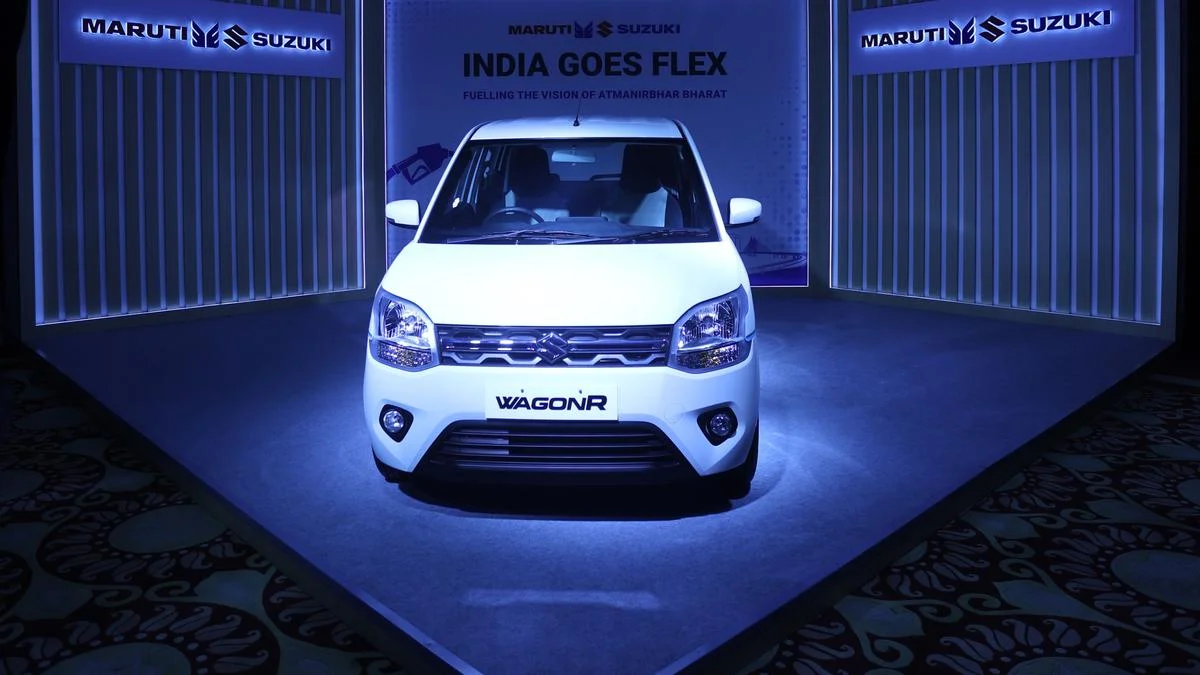
The recent showcase of the Maruti Suzuki Wagon R Flex Fuel represents more than just a technical exercise by India’s largest carmaker. It serves as a definitive signal that the path to decarbonization in India will not be a singular highway, but rather a multi-lane expressway involving diverse technologies. By integrating flex-fuel capabilities into one of the country’s most iconic and high-volume nameplates, Maruti Suzuki is challenging the notion that green mobility is reserved for the premium segment or restricted to electric powertrains.
Main Facts: Engineering a Mass-Market Revolution
At first glance, the Maruti Suzuki Wagon R Flex Fuel appears indistinguishable from the millions of "Tall Boy" hatchbacks that have dominated Indian roads for over two decades. However, the true innovation lies beneath its familiar sheet metal. This is not a mere E20-compliant vehicle (designed for 20% ethanol blending), which is already becoming the industry standard. Instead, this prototype is engineered to operate on any ethanol-petrol blend ranging from E20 all the way to E100.
Technical Sophistication
To achieve E100 compatibility, Maruti Suzuki engineers had to fundamentally redesign several critical components. Ethanol, while cleaner-burning, possesses different chemical properties than petrol; it is more corrosive and has a lower energy density. To counter this, the Wagon R Flex Fuel features:
- Upgraded Fuel Systems: The fuel pump, injectors, and fuel lines have been reinforced with ethanol-resistant materials to prevent degradation and "swelling" of rubber and plastic components.
- Engine Hardening: Valve seats and piston rings have been modified to withstand the different combustion characteristics of high-ethanol blends.
- Advanced Engine Control Unit (ECU): Perhaps the most critical component is the smart ECU. It utilizes specialized sensors to detect the exact ratio of ethanol in the fuel tank in real-time. It then automatically adjusts ignition timing and fuel injection parameters to ensure optimal performance and fuel efficiency, regardless of whether the car is running on 20% or 100% ethanol.
Market Positioning
Maruti’s choice of the Wagon R is a calculated strategic move. By avoiding niche luxury segments and focusing on a mass-market hatchback, the company is signaling that flex-fuel technology is a "people’s solution." With an expected price point in the range of INR 7.50 – 8.00 lakh, it remains accessible to the middle-class demographic, which forms the backbone of Indian automotive consumption.

Chronology: India’s Journey Toward Ethanol Autonomy
The journey toward the Wagon R Flex Fuel did not happen in a vacuum. It is the culmination of nearly two decades of evolving government policy and industrial recalibration.
- 2003: The Genesis: The Government of India launched the Ethanol Blended Petrol (EBP) Programme in 2003, initially targeting a modest 5% blending in 9 states and 4 union territories.
- 2014-2018: Policy Acceleration: The program gained significant momentum after 2014. The National Policy on Biofuels in 2018 set an ambitious target of 20% ethanol blending (E20) by 2030.
- 2021: Fast-Tracking the Future: In a move that caught the industry by surprise, the Union Government advanced the E20 deadline from 2030 to 2025-26. This created an urgent need for manufacturers to modernize their engine lineups.
- 2022-2023: The Prototype Era: Following the government’s push, several manufacturers began showcasing "Flex-Fuel Strong Hybrid" and pure Flex-Fuel prototypes. Maruti Suzuki’s showcase of the Wagon R prototype at various industry forums marked the transition from theoretical engineering to a production-ready vision.
- 2024 and Beyond: The focus has now shifted from whether the technology works to how the ecosystem—distribution, pricing, and consumer trust—will be built.
Supporting Data: The Economic and Environmental Imperative
The push for flex-fuel technology is underpinned by staggering economic data. India is currently the world’s third-largest consumer of crude oil, importing approximately 85% of its total requirement. This dependency creates a massive drain on foreign exchange reserves and leaves the domestic economy at the mercy of geopolitical tensions.
The Import Bill
According to data from the Ministry of Commerce and Industry, India’s oil import bill surged to over $150 billion in recent fiscal years. By shifting toward ethanol—a fuel that can be produced domestically from agricultural waste—the government aims to save billions in foreign exchange. It is estimated that reaching E20 blending alone could save the country upwards of INR 30,000 crore annually.
Agricultural Impact
Unlike petroleum, which is an extractive resource, ethanol is regenerative. India is the world’s second-largest producer of sugar. The surplus production of sugarcane often leads to a glut in the market, depressing prices for farmers. Flex-fuel technology creates a direct "farm-to-fuel" pipeline. By diverting excess sugarcane, broken rice, and other food grains toward ethanol production, the government provides a price floor for farmers, effectively turning the agricultural sector into an energy provider.
Emission Reductions
From an environmental standpoint, ethanol offers a significant reduction in tailpipe emissions. Higher ethanol blends lead to lower emissions of Carbon Monoxide (CO), Hydrocarbons (HC), and Nitrogen Oxides (NOx). Furthermore, because ethanol is plant-based, the carbon dioxide absorbed by the crops during growth partially offsets the CO2 emitted during combustion, resulting in a lower "well-to-wheel" carbon footprint compared to pure fossil fuels.
Official Responses: The Government and Industry Stance
The development of the Wagon R Flex Fuel has been met with vocal support from high-ranking government officials. Union Minister for Road Transport and Highways, Nitin Gadkari, has been a tireless advocate for flex-fuel vehicles (FFVs). In various industry summits, Gadkari has urged manufacturers to move away from petrol-only engines, stating that "the future of India lies in biofuels which are cost-effective, pollution-free, and indigenous."

Maruti Suzuki, for its part, has aligned its corporate strategy with this national vision. Hisashi Takeuchi, Managing Director & CEO of Maruti Suzuki India, has frequently emphasized that while the company is investing heavily in EVs (with its first electric SUV expected in 2025), it believes in a "composite solution." The company argues that in a country as vast and diverse as India, a single technology cannot address every use case. Flex-fuels, alongside CNG, Hybrids, and Biogas, form the pillars of their "Carbon Neutral" journey.
However, industry experts also sound a note of caution. Society of Indian Automobile Manufacturers (SIAM) representatives have noted that while the hardware is ready, the success of these vehicles depends entirely on the "Oil Marketing Companies" (OMCs). Without a dedicated pump at every station dispensing E85 or E100, a flex-fuel car remains a petrol car with expensive, unused sensors.
Implications: Challenges and the Path Ahead
While the Maruti Suzuki Wagon R Flex Fuel is a technological triumph, its path to mainstream adoption is fraught with hurdles that go beyond the factory floor.
The Infrastructure Gap
The most glaring challenge is the availability of fuel. Currently, India is still in the process of rolling out E20 petrol nationwide. Moving to E85 or E100 requires a massive overhaul of the storage and dispensing infrastructure at petrol pumps. Ethanol is hygroscopic (it absorbs water), meaning storage tanks must be specialized to prevent fuel contamination.
The Consumer Value Proposition
For the end consumer, the biggest question is: "What is in it for me?" Ethanol has roughly 33% less energy content than petrol. This means a car running on E100 will deliver lower fuel efficiency (mileage) than one running on petrol. For flex-fuel vehicles to be viable, the price of ethanol at the pump must be significantly lower than petrol to compensate for the drop in mileage. Without a clear pricing policy from the government that ensures ethanol is 30-40% cheaper than petrol, consumers may be hesitant to make the switch.
Public Awareness and Maintenance
There remains a significant "education gap." Many car owners worry that ethanol will damage their engines or lead to higher maintenance costs over time. While modern engineering (as seen in the Wagon R) addresses these concerns, the "ghosts" of older, non-compliant vehicles suffering from fuel-line corrosion haunt the public imagination. A massive communication campaign will be required to build trust in the durability of flex-fuel systems.

Conclusion: A Parallel Future
The Maruti Suzuki Wagon R Flex Fuel is far more than a variant of a popular car; it is a proof of concept for a sovereign energy future. It demonstrates that the internal combustion engine—often written off in the wake of the "EV revolution"—still has a vital role to play if it can be adapted to burn renewable, domestic fuels.
As India moves toward its goal of becoming "Atmanirbhar" (self-reliant) in energy, the success of the Wagon R Flex Fuel will depend on a synchronized effort between the automotive industry, the agricultural sector, and government policymakers. If the ecosystem can match the pace of the engineering, the familiar hum of a Wagon R on Indian roads might soon be powered not by imported oil, but by the very fields that feed the nation.
Maruti Suzuki Wagon R Flex Fuel expected price: (INR 7.50 – 8.00 lakh)
Motorscribes, in association with The Hindu, brings you the latest in cars and bikes. Follow them on Instagram @motorscribes
