

In the contemporary landscape of interior design, lighting has transitioned from a basic functional necessity to a pivotal element of architectural expression. No longer confined to the simple task of illuminating a dark room, modern lighting systems are engineered to influence psychological well-being, accentuate architectural nuances, and provide the flexibility required by ever-changing living spaces.
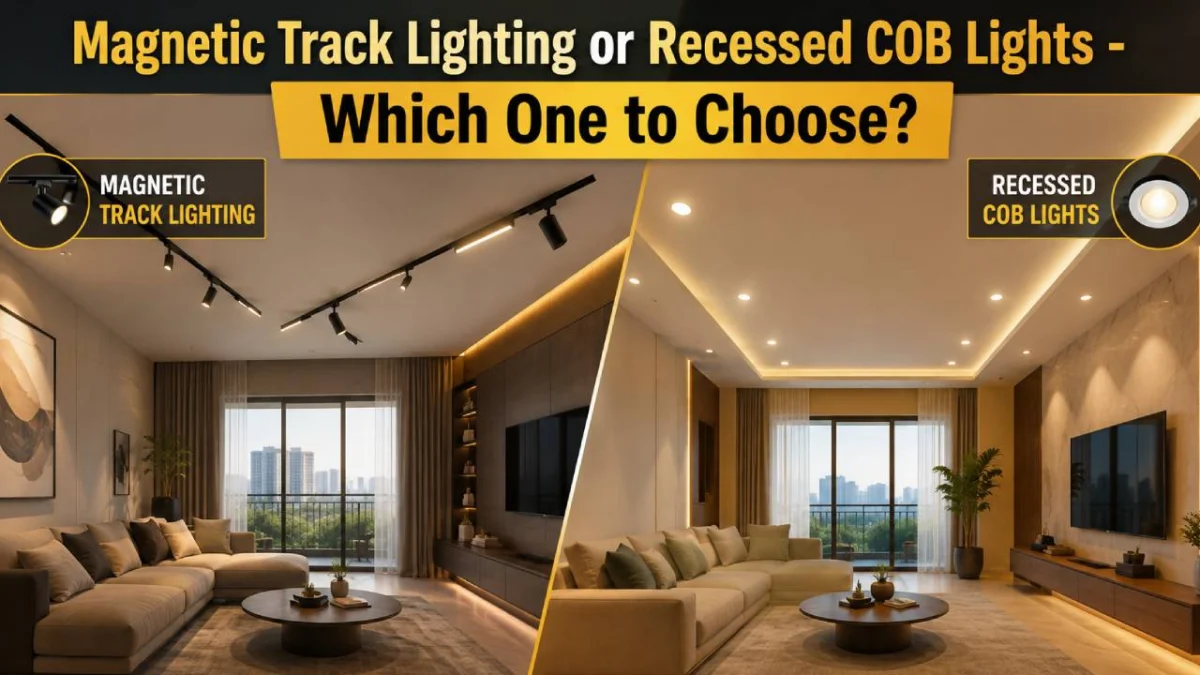
As homeowners and developers increasingly adopt sophisticated false ceiling designs, two technologies have emerged as the primary contenders for the "gold standard" of residential illumination: Magnetic Track Lighting and Recessed COB (Chip on Board) Lights. This report provides an in-depth analysis of these systems, evaluating their technical specifications, aesthetic impacts, and long-term implications for modern property development.
1. Main Facts: Defining the Modern Lighting Standard
To understand the current shift in the market, one must first distinguish between the two dominant technologies currently integrated into high-end residential and commercial projects.
Magnetic Track Lighting: The Modular Revolution
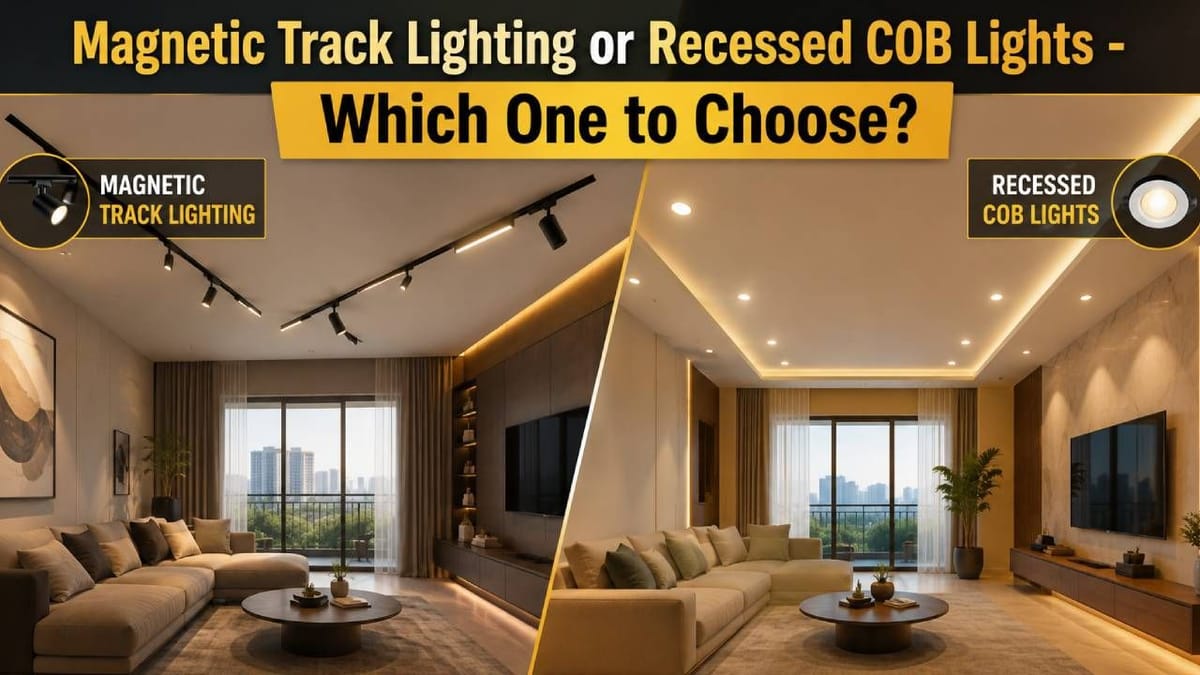
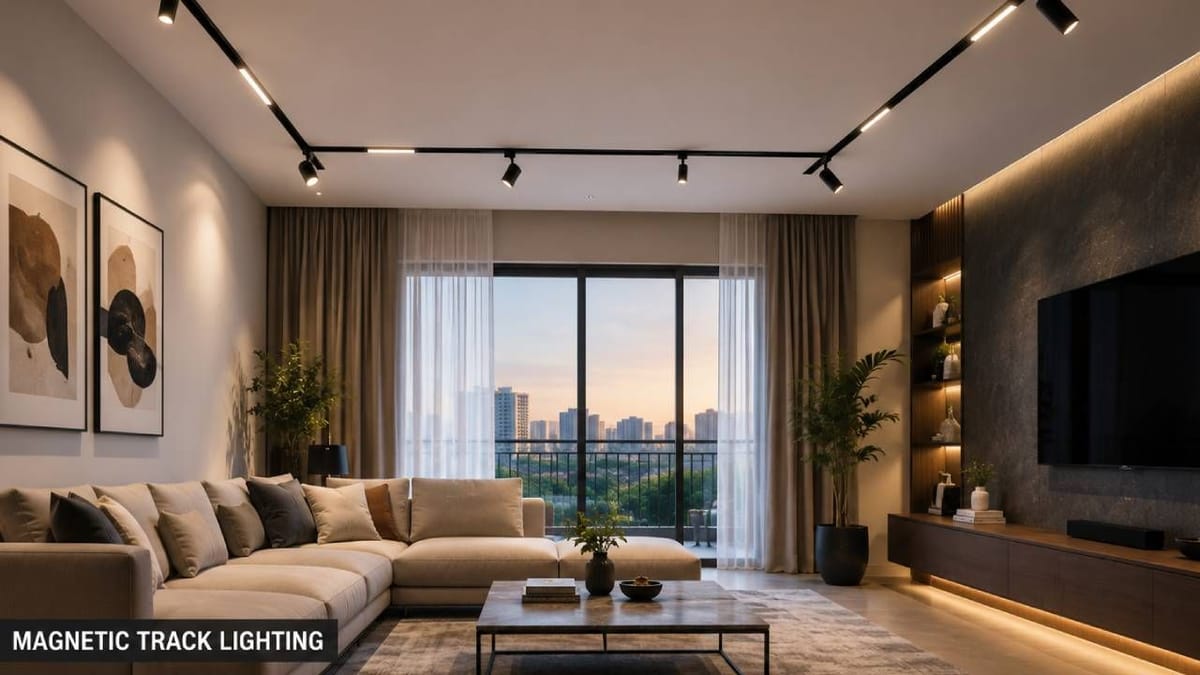
Magnetic track lighting represents a departure from traditional fixed wiring. It consists of an aluminum track—often recessed into a false ceiling—that houses a low-voltage (typically 24V or 48V) copper conductor. The defining feature is its magnetic mounting system, which allows various light modules (spots, floodlights, pendants, or linear diffusers) to be snapped into the track without the need for tools or manual wiring.
Recessed COB Lights: The Precision Powerhouse
COB, or "Chip on Board," refers to the mounting of multiple LED chips directly onto a substrate to form a single module. Unlike traditional Surface Mounted Diode (SMD) LEDs, which can appear as multiple points of light, COB technology creates a dense, high-intensity, and uniform beam. These fixtures are recessed into the ceiling, offering a flush, minimalist finish that prioritizes the light effect over the fixture itself.
2. Chronology: From Utility to Architectural Integration
The journey to today’s lighting standards has been marked by significant technological leaps over the last two decades.
- The Early 2000s: The Rise of the LED: The lighting industry began a massive shift from incandescent and halogen bulbs to Light Emitting Diodes (LEDs). Initial LEDs suffered from poor color rendering and "multi-shadow" effects.
- 2010–2015: The COB Breakthrough: As thermal management improved, COB technology became commercially viable. It allowed for smaller fixtures with higher lumen output, leading to the decline of bulky "pot lights" in favor of sleek, recessed architectural spots.
- 2018–Present: The Magnetic Modular Shift: Borrowing from commercial gallery and retail designs, magnetic track systems were miniaturized for residential use. This era marked a shift toward "Human-Centric Lighting," where the ability to move and adjust lights according to the time of day or room usage became a priority.
Today, the integration of these two systems often defines the "luxury" status of a real estate project, moving away from centralized chandeliers toward layered, peripheral, and task-oriented illumination.
3. Supporting Data: Technical and Performance Comparison
When choosing between these systems, architects and homeowners must weigh several technical factors. The following data highlights the performance gap between the two.
Technical Specification Table
| Feature | Magnetic Track Lighting | Recessed COB Lights |
|---|---|---|
| Operating Voltage | Low Voltage (24V/48V DC) | Standard (110V/220V AC) |
| Installation Type | Surface, Recessed, or Suspended | Strictly Recessed (Flush) |
| Flexibility | Dynamic (Move/Add/Remove modules) | Static (Fixed position) |
| Beam Quality | Versatile (Interchangeable heads) | High-intensity, focused beam |
| Safety | High (Touch-safe tracks) | Standard (Requires insulated wiring) |
| Typical CRI | 90+ (High Color Accuracy) | 80 – 95+ (Application dependent) |
| Initial Cost | Premium (High track/driver cost) | Economical (Per-point pricing) |
| Maintenance | Tool-free module replacement | Requires access to ceiling void |
Energy Efficiency and Heat Management
Both systems utilize LED technology, offering up to 80% more efficiency than traditional lighting. However, COB lights are particularly noted for their heat sinks. Because the chips are concentrated in a small area, high-quality COB fixtures require robust aluminum housings to dissipate heat, ensuring a lifespan often exceeding 50,000 hours. Magnetic tracks, conversely, distribute the electrical load across a transformer (driver) that is usually hidden in a reachable service hatch, making the system easier to cool and maintain.
4. Official and Expert Responses: The Designer’s Perspective
Leading interior designers and lighting consultants often view these two options not as competitors, but as complementary tools in a "layered lighting" strategy.
The Case for Magnetic Tracks in Multi-Functional Spaces
"The modern home is no longer static," says Elena Rodriguez, a senior architectural lighting consultant. "A living room might be a home office during the day, a gallery for art in the evening, and a cinema at night. Magnetic track systems allow the inhabitant to slide a spotlight to highlight a desk, then move it to accent a painting later. It is the only system that truly future-proofs a ceiling."
The Case for COB in Minimalist Design
Conversely, proponents of "Quiet Luxury" in architecture favor the recessed COB. "There is a psychological comfort in seeing the light but not the source," explains Mark Chen, an interior architect. "Recessed COBs with deep anti-glare baffles provide a ‘dark light’ effect where the ceiling remains clean and unobtrusive. For high-end residential projects where minimalism is the goal, the visual ‘noise’ of a track might be undesirable."
Safety and Regulation
Electrical engineers point out that the 48V DC nature of magnetic tracks is a significant safety upgrade. Unlike standard 220V AC recessed lights, the tracks are safe to touch even when powered, reducing risks during adjustments—a crucial factor for DIY-friendly home maintenance.
5. Implications: Property Value and Future Trends
The choice of lighting system carries long-term implications for property valuation and the evolution of "Smart Home" ecosystems.
Impact on Real Estate Value
Properties equipped with integrated magnetic track systems are increasingly marketed as "designer-ready." Because these systems allow new owners to customize the lighting without structural renovations, they add a tangible "flexibility premium" to the property. Recessed COB lights, while standard, are viewed as a reliable, high-quality baseline for any modern build.
The Integration of Smart Technology
Both systems are now converging with IoT (Internet of Things) technology.
- Magnetic Tracks: New "Smart Tracks" allow each module to be controlled individually via Zigbee or DALI protocols. This means a single track can have one light dimmed to 10% while the one next to it is at 100%.
- COB Evolution: The next generation of COB lights features "Tunable White" technology, allowing the color temperature to shift from a warm 2700K (sunset) to a crisp 6000K (daylight) to support the occupants’ circadian rhythms.
Structural Requirements
A critical implication for homeowners is the "false ceiling" requirement. Magnetic tracks require a specific depth (often 40mm to 75mm) and structural support to hold the weight of the aluminum channels. Recessed COBs require "plenum space" for heat dissipation. Failing to account for these during the blueprint phase can lead to costly retrofitting or reduced ceiling heights.
6. Conclusion: The Final Verdict
The debate between Magnetic Track Lighting and Recessed COB Lights ultimately settles on the balance between versatility and minimalism.
- Choose Magnetic Track Lighting if: You value adaptability, enjoy changing your interior layout, or want a bold, modern aesthetic that serves as a design statement in itself. It is the superior choice for galleries, home offices, and open-plan living areas.
- Choose Recessed COB Lights if: You prefer a timeless, "invisible" lighting scheme that focuses on highlighting specific architectural features or artwork with precision. It is the ideal choice for hallways, bedrooms, and spaces with lower ceilings where visual clutter must be minimized.
As we move toward 2025, the industry trend suggests a hybrid approach: using recessed COB lights for foundational "ambient" lighting and magnetic tracks for "task" and "accent" layers. By understanding the technical strengths and design implications of each, homeowners can transform their living spaces into sophisticated environments that are both functional and visually stunning.
Disclaimer: This report is based on current industry standards and technological availability. Lighting requirements can vary significantly based on local electrical codes and structural constraints. It is recommended to consult with a certified lighting designer or electrical engineer before finalizing installation plans.
