

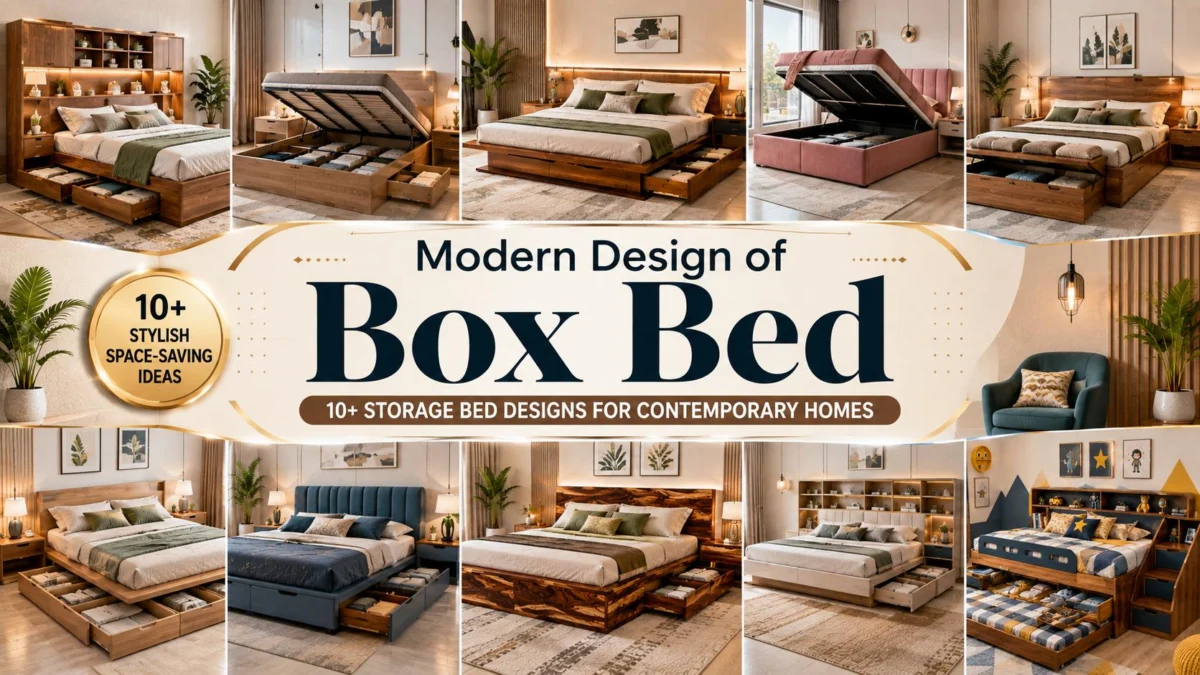
In the contemporary architectural landscape, where urban living spaces are progressively shrinking, the bedroom has transitioned from a mere sleeping quarter into a multifunctional sanctuary. At the heart of this transformation is the "Box Bed"—a furniture innovation that marries structural integrity with high-capacity storage. No longer just a heavy wooden frame, the modern box bed has evolved into a sophisticated piece of engineering designed to eliminate clutter while enhancing the aesthetic value of the home.
Main Facts: The Rise of Multi-Functional Furniture
The primary driver behind the popularity of box bed furniture is the critical need for floor space optimization. Real estate trends in major metropolitan hubs show a consistent decrease in average apartment sizes, forcing homeowners to seek "hidden" storage solutions. The box bed addresses this by utilizing the often-wasted footprint directly beneath the mattress.
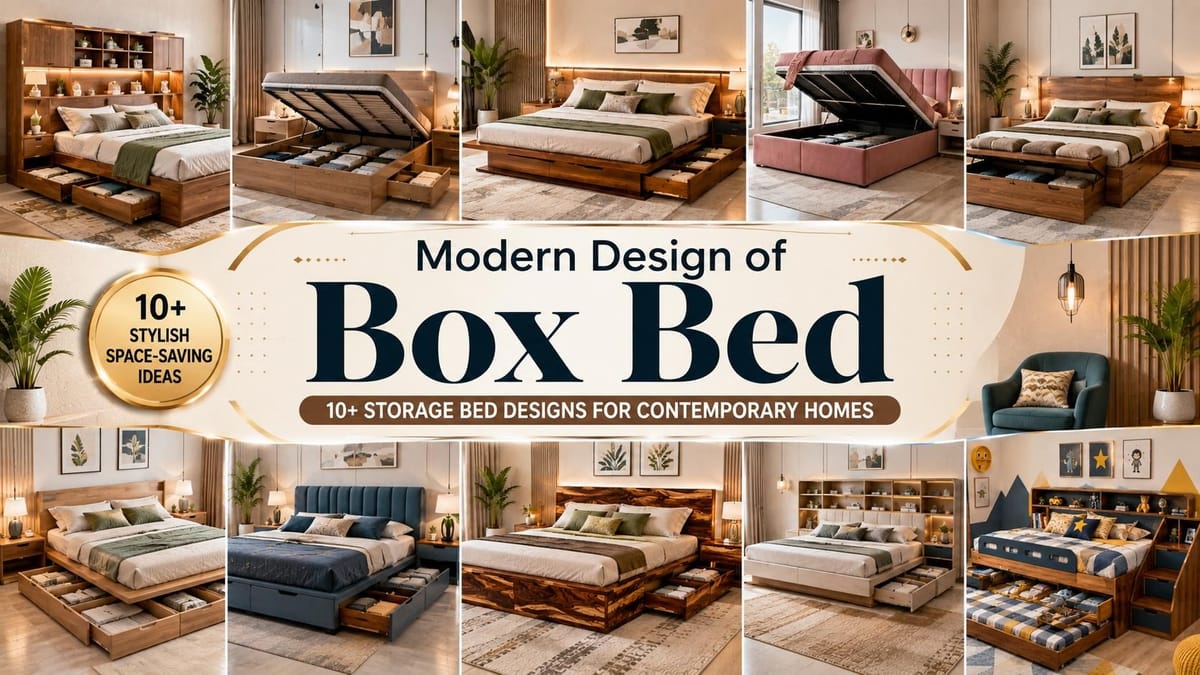
A standard box bed design typically stands between 12 to 18 inches off the floor. This elevation is not arbitrary; it is calculated to provide maximum internal volume—often ranging from 20 to 40 cubic feet of storage—without making the bed appear disproportionately high. These units are designed to house heavy quilts, seasonal wardrobes, and household items that would otherwise require bulky external wardrobes.
Beyond storage, the box bed serves as a critical structural component for sleep health. By providing a solid, continuous platform for the mattress, it prevents sagging and extends the lifespan of high-quality orthopedic mattresses.
Chronology: From Traditional Trunks to Hydraulic Systems
The history of the box bed is a journey from rudimentary utility to high-tech convenience.
- The Traditional Era: In many cultures, particularly in South Asia, the precursor to the box bed was the "Peti" or heavy wooden trunk. These were standalone units placed near the bed. Eventually, craftsmen integrated these trunks into the bed frame itself, creating the first iterations of the solid wood box bed.
- The Industrial Shift: With the advent of mass manufacturing in the late 20th century, the use of engineered woods like MDF (Medium-Density Fibreboard) and plywood allowed for lighter, more affordable box beds. This era introduced the "sliding drawer" mechanism, moving away from the need to lift the entire mattress.
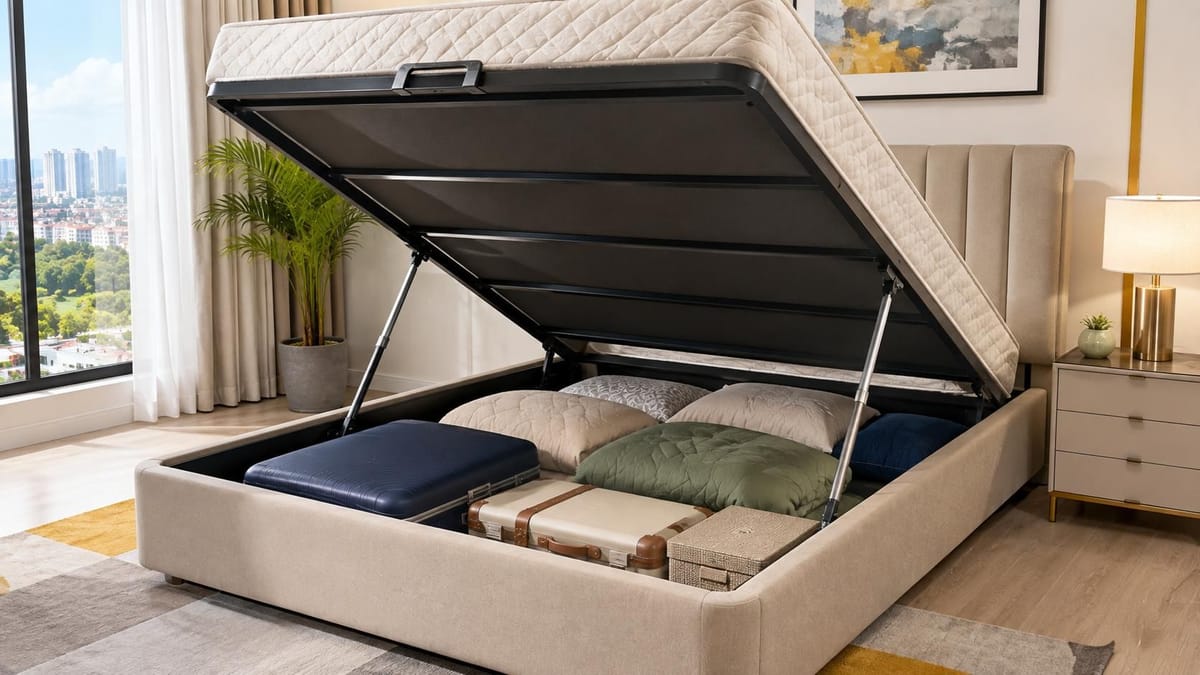
- The Modern Hydraulic Revolution: The most significant technological leap occurred with the integration of pneumatic gas-lift pistons. This allowed users to lift a heavy king-size mattress with minimal physical effort, granting access to the entire under-bed area as a single, uninterrupted storage bay.
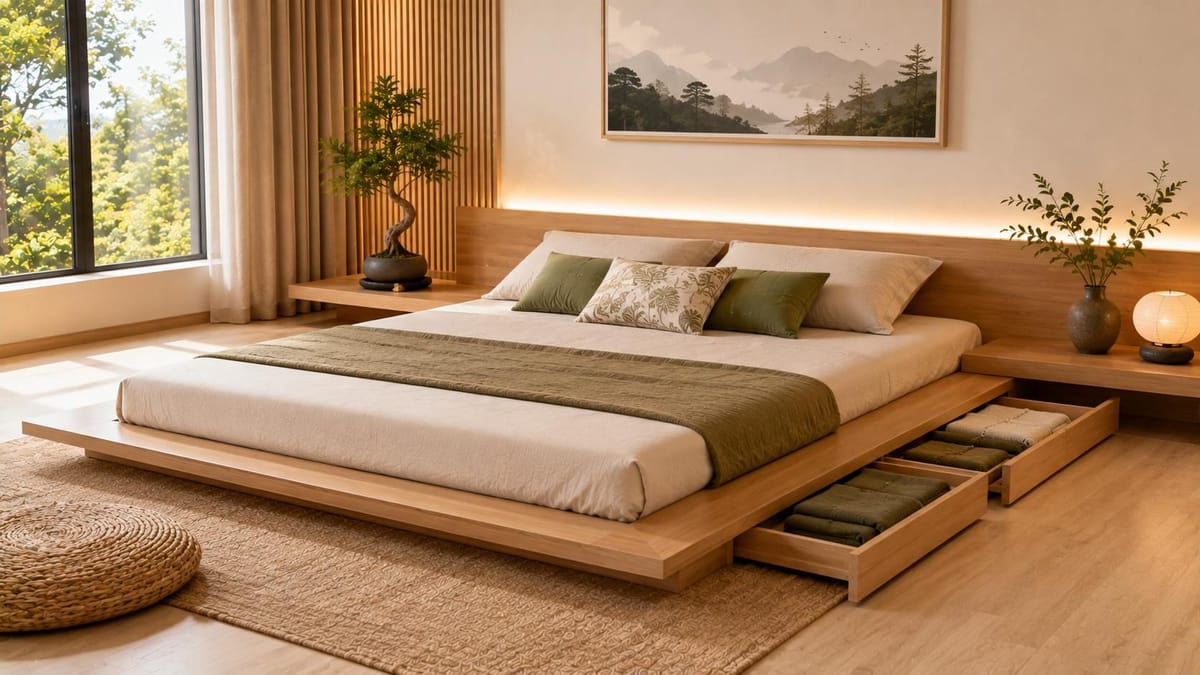
- The Aesthetic Integration: Today, we see the "Japandi" (Japanese-Scandinavian) influence, where box beds are low-slung, minimalist, and often upholstered in premium fabrics, hiding their utilitarian nature behind a façade of luxury.
12 Definitive Modern Box Bed Designs
To understand the current market, one must analyze the twelve distinct design archetypes that dominate interior decor today:
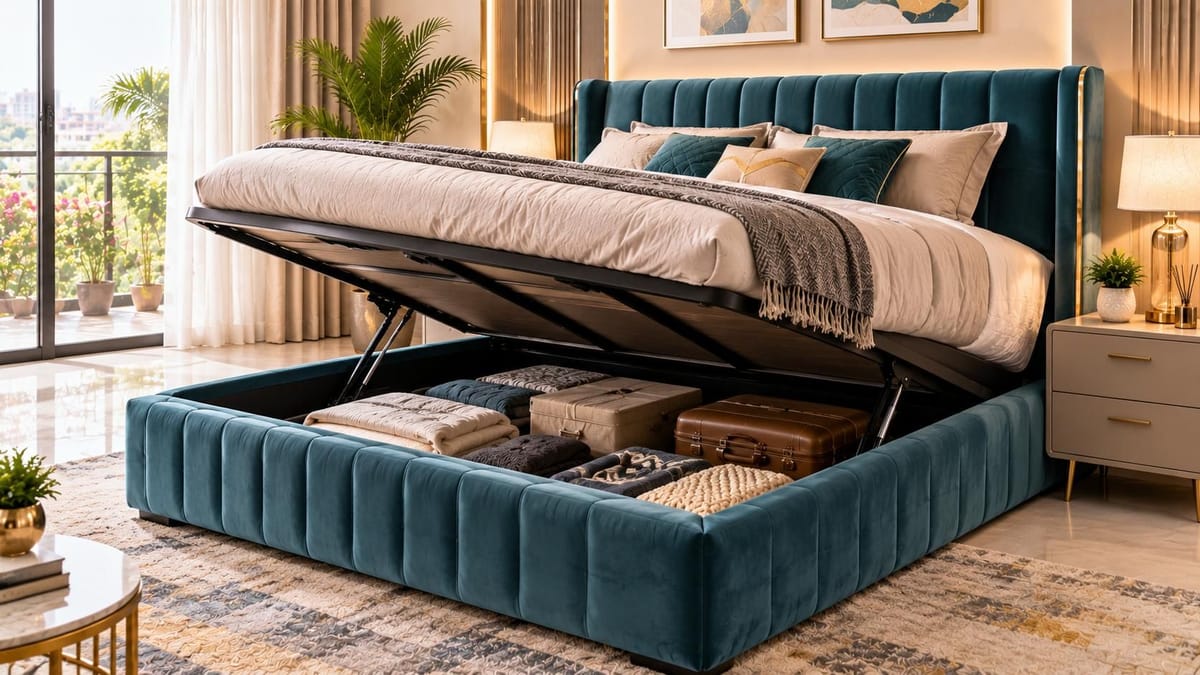
1. Gas-Lift Hydraulic Top Box Bed
The pinnacle of modern convenience, this design uses pneumatic struts to lift the mattress platform. It is favored for storing large, infrequently used items like suitcases or winter bedding. The seamless lift ensures that the internal compartment remains dust-free.
2. Four-Quadrant Side Drawer Box Bed
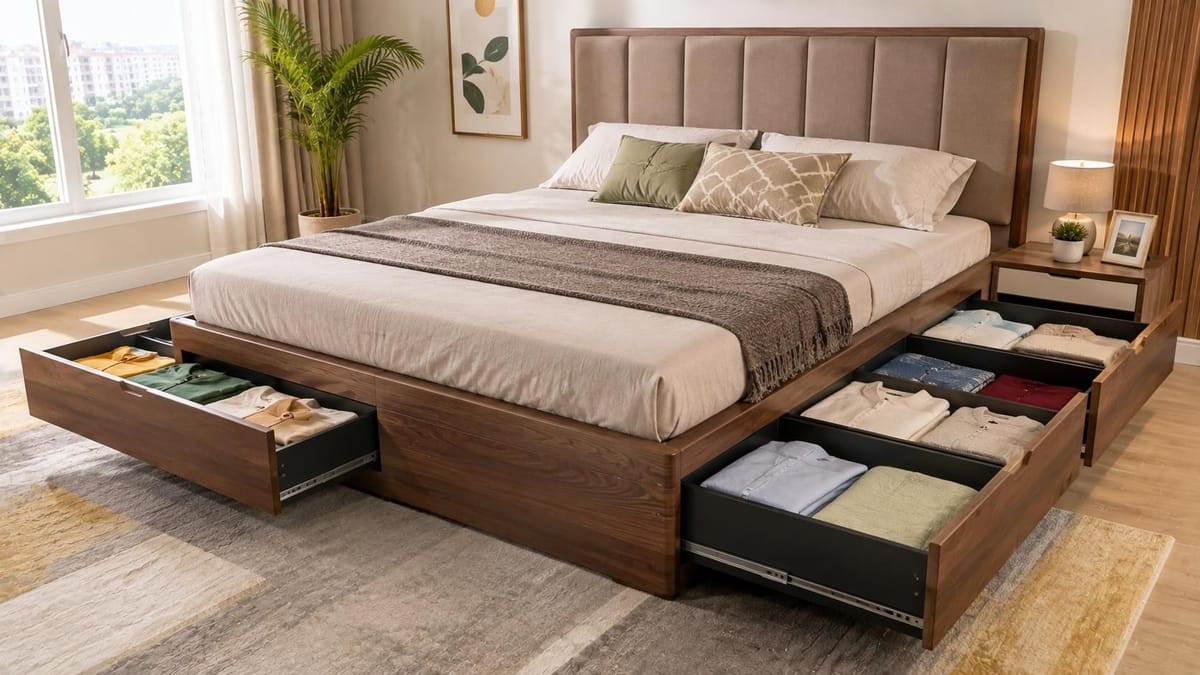
Ideal for rooms with ample side clearance, this design features four deep drawers (two on each side). It is the preferred choice for daily-access items like socks, gym wear, or bed linens, as it does not require "making the bed" before accessing the storage.
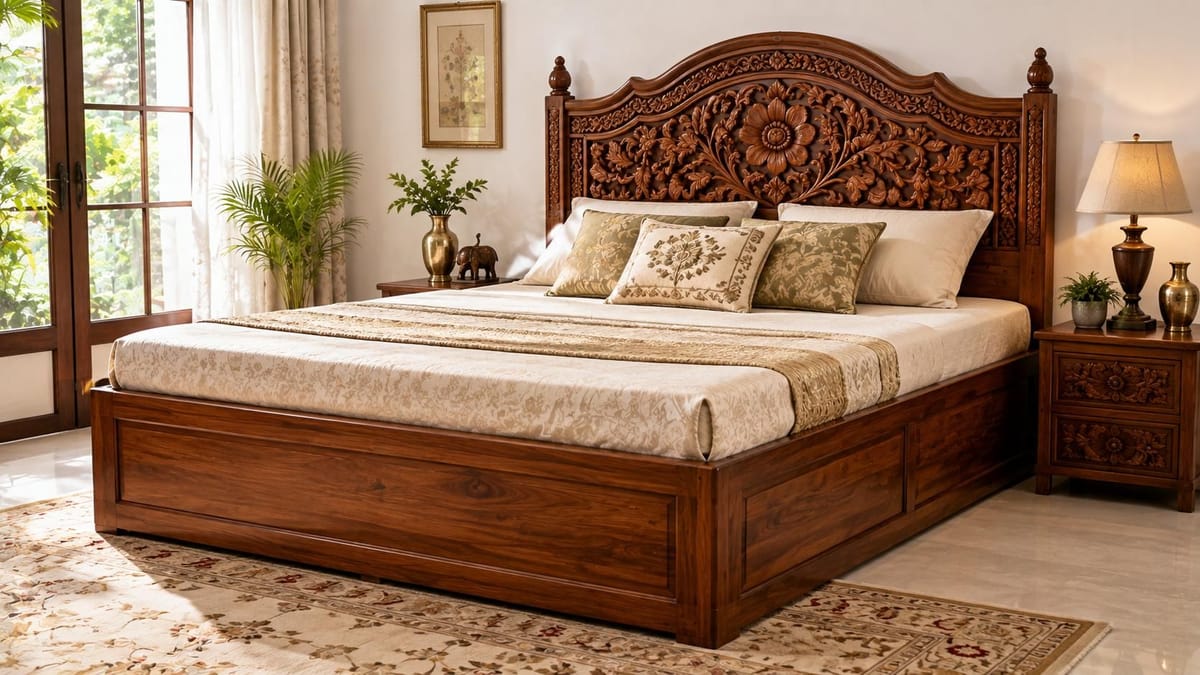
3. Classic Solid Segun (Teak) Wood Carved Box Bed
Representing the heritage segment, these beds are crafted from dense Teak. They often feature intricate hand-carvings on the headboard. Their primary value lies in their longevity; Teak is naturally resistant to termites and warping, making it a multi-generational investment.
4. Headboard Storage Box Bed
This design maximizes verticality. The headboard is engineered as a shallow cabinet with sliding doors or open niches. It replaces the need for bedside tables, providing a home for books, chargers, and nighttime essentials.
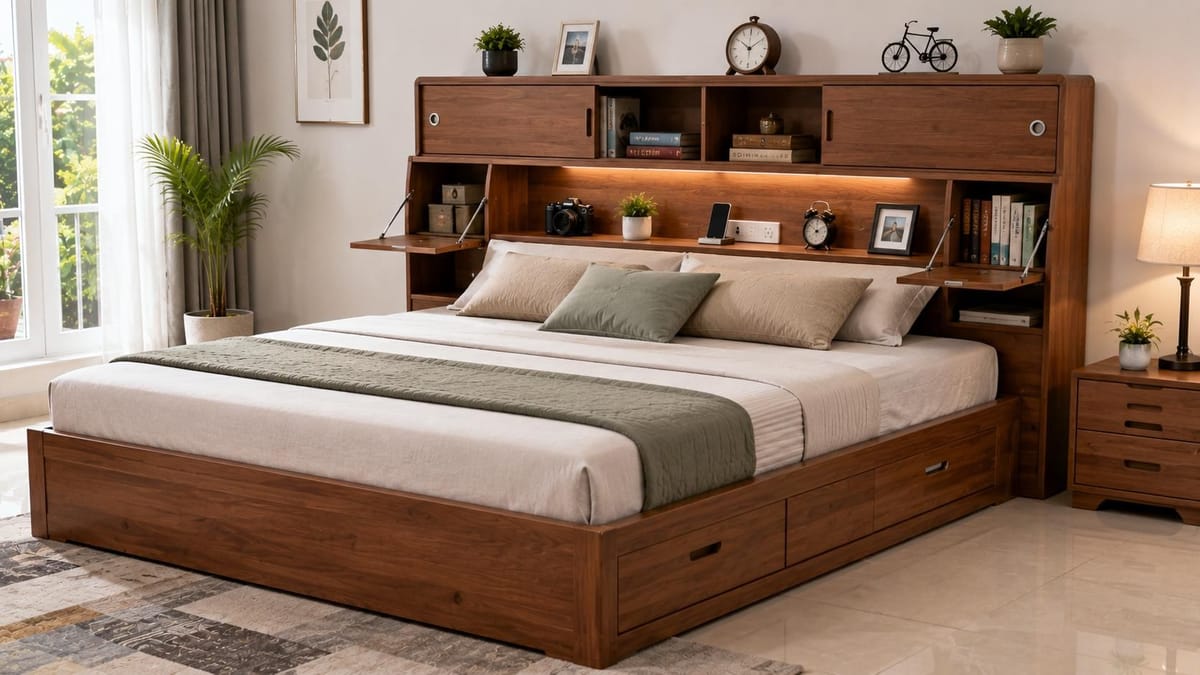
5. Hybrid Hydraulic-and-Drawer Combination Bed
Engineered for the "super-user," this hybrid model features a hydraulic lift at the head of the bed for seasonal storage and pull-out drawers at the footboard for daily use. It offers the most versatile storage distribution on the market.
6. Minimalist Platform Box Bed
Focusing on the "less is more" philosophy, these beds feature handle-less, push-to-open mechanisms. They often appear as a solid block of wood or metal, creating a clean, architectural line in the bedroom.
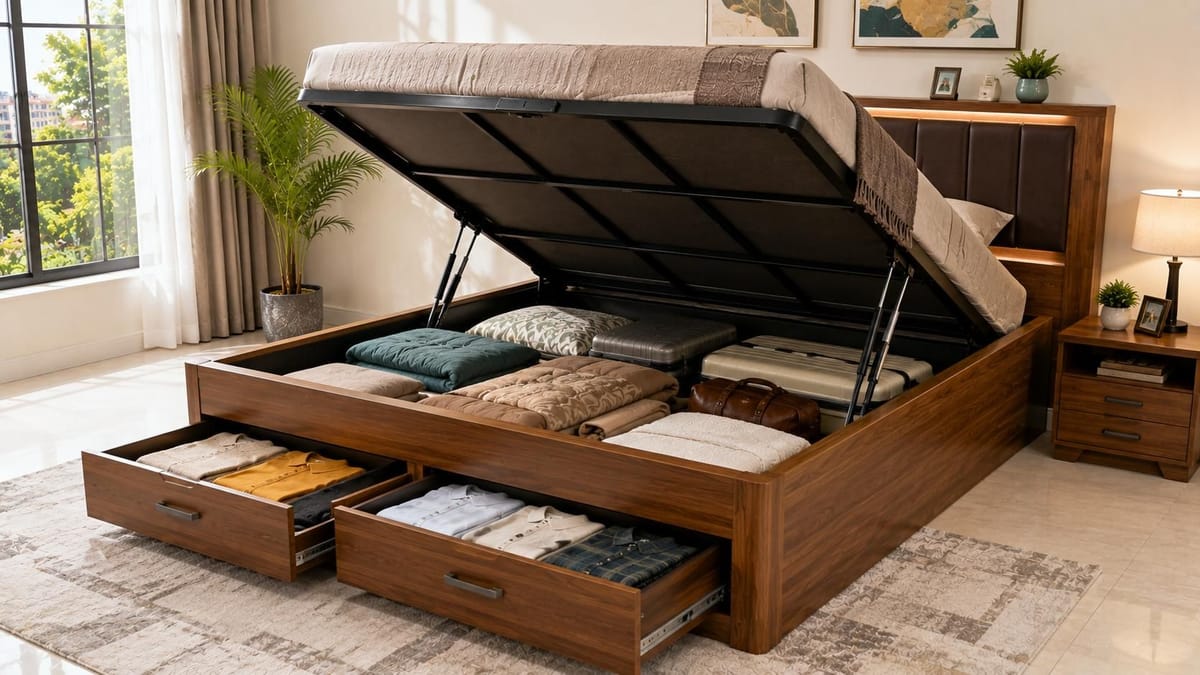
7. Upholstered Velvet/Fabric Box Bed
This design targets the luxury boutique aesthetic. The entire frame is padded and wrapped in velvet, linen, or faux leather. Beneath the soft exterior lies a rigid metal hydraulic frame, proving that high-end style need not sacrifice utility.
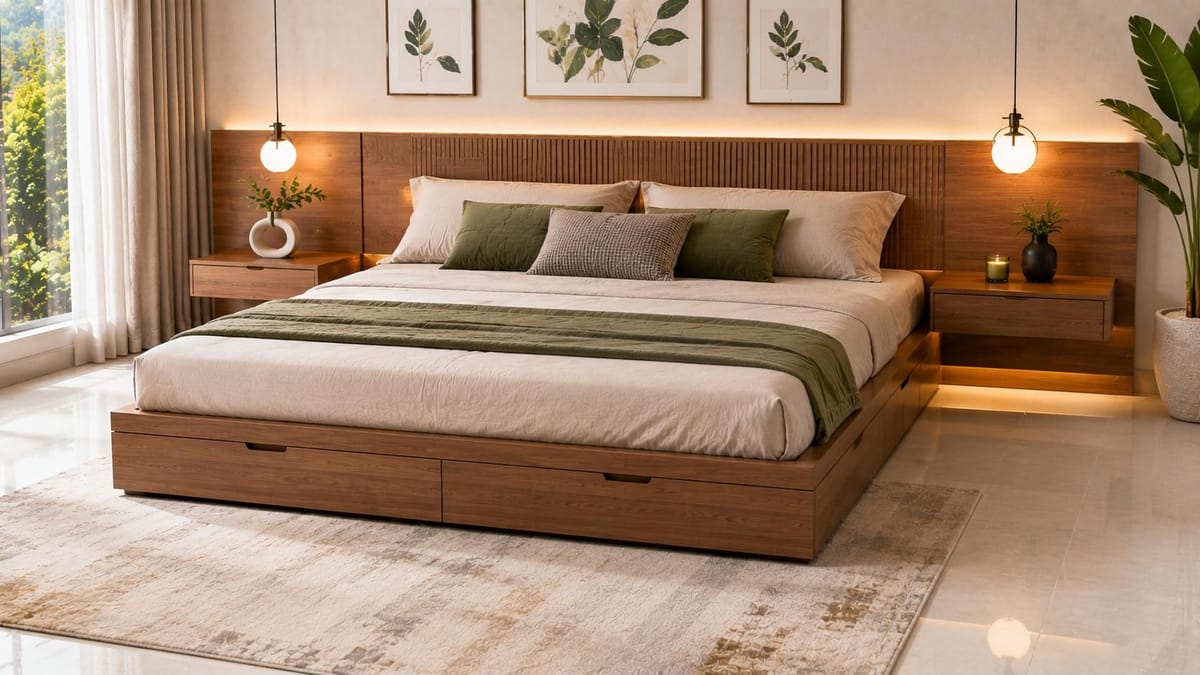
8. Box Bed with Integrated Floating Nightstands
By extending the headboard paneling horizontally, designers have created a "floating" effect for bedside tables. This clears the floor space beneath the tables, making the room feel larger and easier to clean.
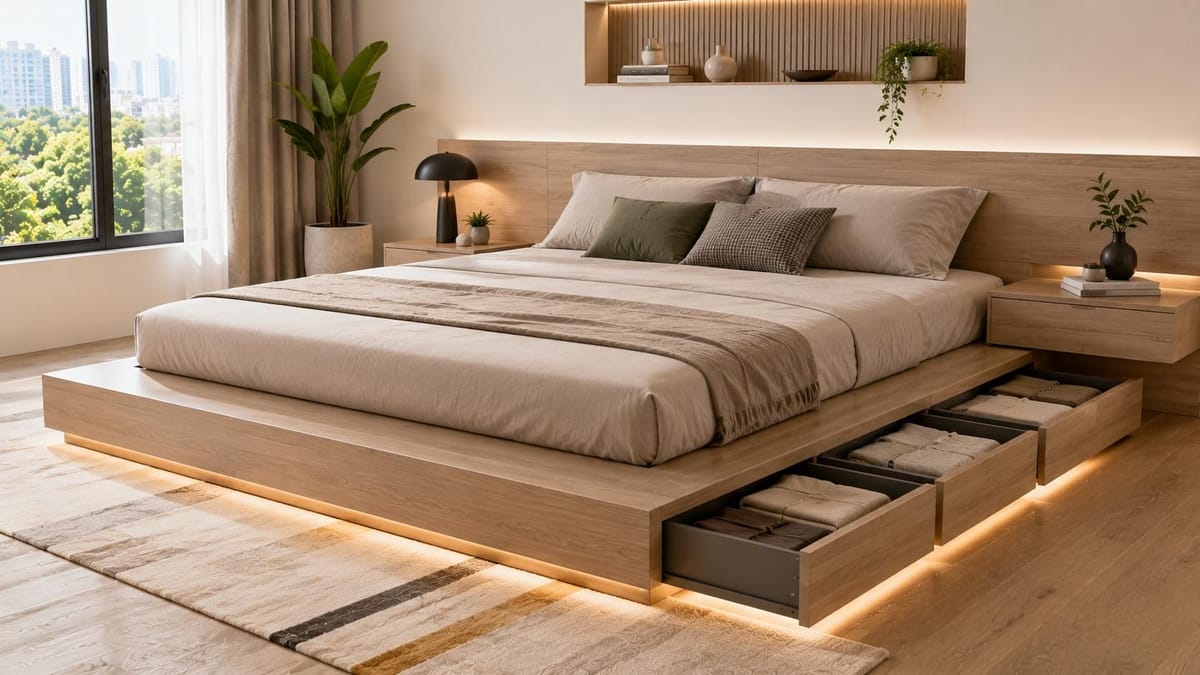
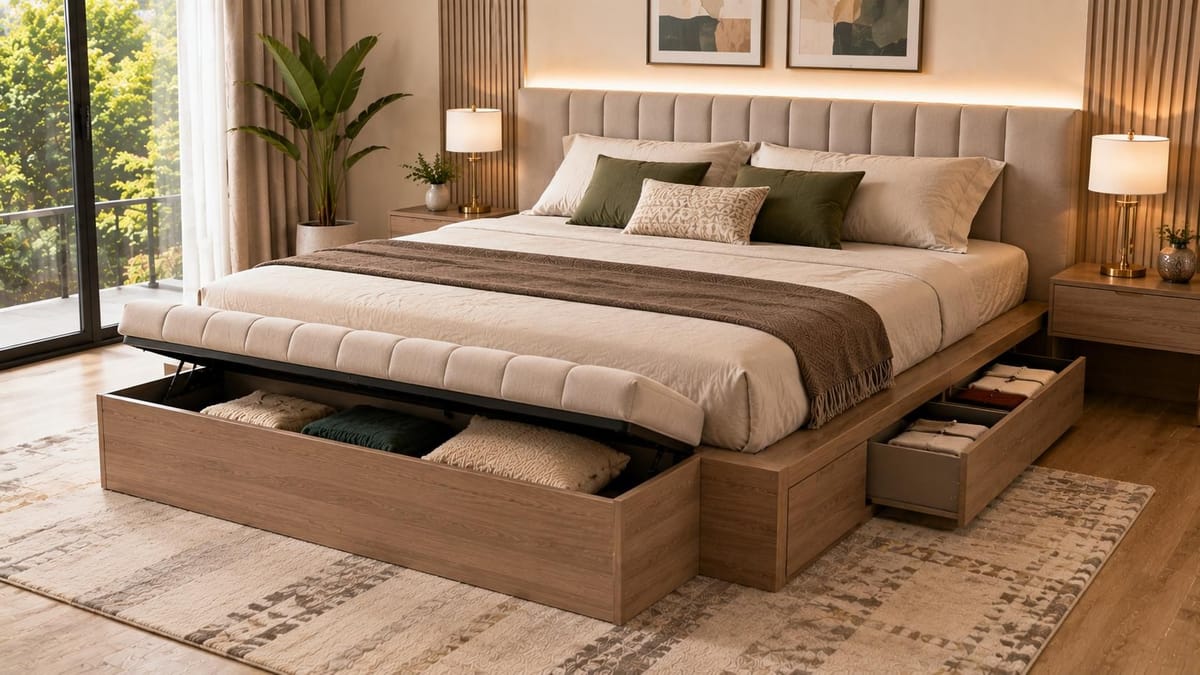
9. Footboard Bench Storage Box Bed
This design incorporates a cushioned bench at the foot of the bed. The bench lid opens to reveal a separate compartment, perfect for throw pillows or accent blankets, while providing a functional seating area.
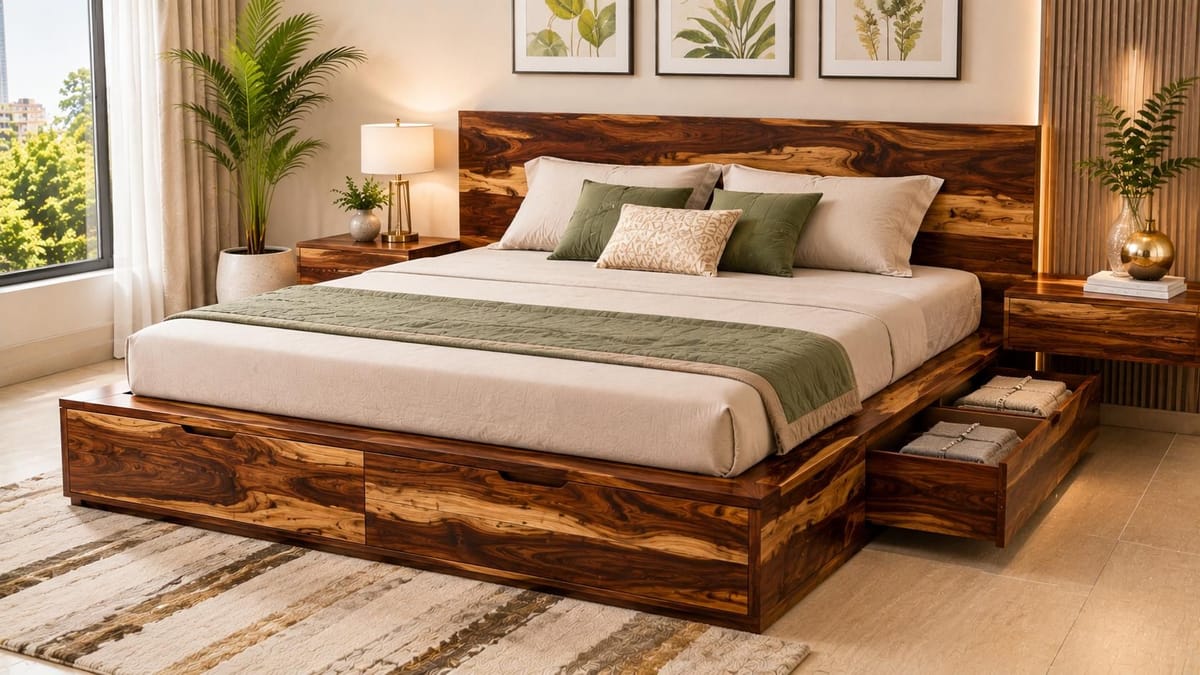
10. Sheesham Wood Grain Contrast Box Bed
Sheesham (Indian Rosewood) is prized for its dramatic, two-tone grain. These beds are usually constructed with a cross-grid internal support system, allowing them to bear significantly higher weight loads than engineered wood alternatives.
11. Low-Height Japanese Style Box Bed
Reflecting the "Japandi" trend, these beds sit very close to the floor. They use low-clearance sliding panels rather than deep drawers, making them ideal for attic bedrooms or spaces with low ceilings.
12. Kids’ Captain Box Bed with Trundle & Drawers
The most complex of the designs, the Captain’s bed is a three-in-one solution. It features storage drawers at the base, a pull-out trundle bed for guests in the middle, and the primary sleeping platform on top.
Supporting Data: Material Science and Durability
The longevity of a box bed is dictated by its material composition. Industry data suggests a clear hierarchy in performance:
- Solid Woods (Teak/Sheesham): These materials have a lifespan of 30-50 years. Teak’s natural oils act as a deterrent to household pests, which are often attracted to the dark, undisturbed areas inside storage beds.
- Engineered Wood (HDF/BWP Plywood): High-Density Fiberboard and Boiling Water Presto Plywood are the standards for modern, affordable furniture. While they offer a lifespan of 10-15 years, they allow for much more precise machining of hydraulic and drawer tracks.
- Reinforced Internal Dividers: Quality box beds are no longer "hollow." They feature a "grid" or "T-structure" inside the box. This prevents the frame from bowing under the weight of a heavy memory foam or latex mattress.
Industry Insights: Expert Responses to Common Concerns
Interior designers and furniture engineers emphasize three critical factors when selecting a box bed:
1. Ergonomics and Access:
"The most common mistake homeowners make is choosing a drawer-based box bed for a narrow room," says Ananya Sharma, a senior interior consultant. "If you cannot fully extend the drawer, the storage becomes a dead zone. In tight quarters, a hydraulic lift is the only logical choice."
2. Pest Management:
Because box beds create an enclosed environment, they can occasionally attract pests if not properly maintained. Experts recommend choosing designs with a "sealed base" to prevent dust mites and spiders from entering the storage chamber from the floor level.
3. Weight Capacity:
Official specifications for high-end box beds now include "Lift Capacity" for hydraulic models. A standard king-size hydraulic system is usually rated for 60kg to 90kg of mattress weight. Exceeding this can lead to piston failure, a common point of mechanical fatigue.
Implications: The Future of the "Smart" Bed
The implications of box bed design extend into the future of "Smart Homes." We are already seeing the integration of:
- IoT Lighting: Motion-sensor LED strips installed in the storage compartments that illuminate automatically when the bed is lifted.
- Climate-Controlled Storage: High-end models featuring small ventilation fans or dehumidifier strips within the box to protect expensive fabrics from mold in humid climates.
- Sustainable Sourcing: A shift toward FSC-certified (Forest Stewardship Council) woods as consumers become more eco-conscious.
Summing Up
The modern box bed is a testament to the ingenuity of functional design. By transforming the footprint of a bed into a high-capacity storage vault, it addresses the most pressing challenge of urban living: the scarcity of space. Whether through the timeless elegance of hand-carved Teak or the mechanical precision of a hydraulic lift, the box bed has secured its place as the essential centerpiece of the contemporary bedroom. As living spaces continue to evolve, these multipurpose units will likely become even more integrated, blending furniture, technology, and architecture into a single, seamless solution for the home.
