

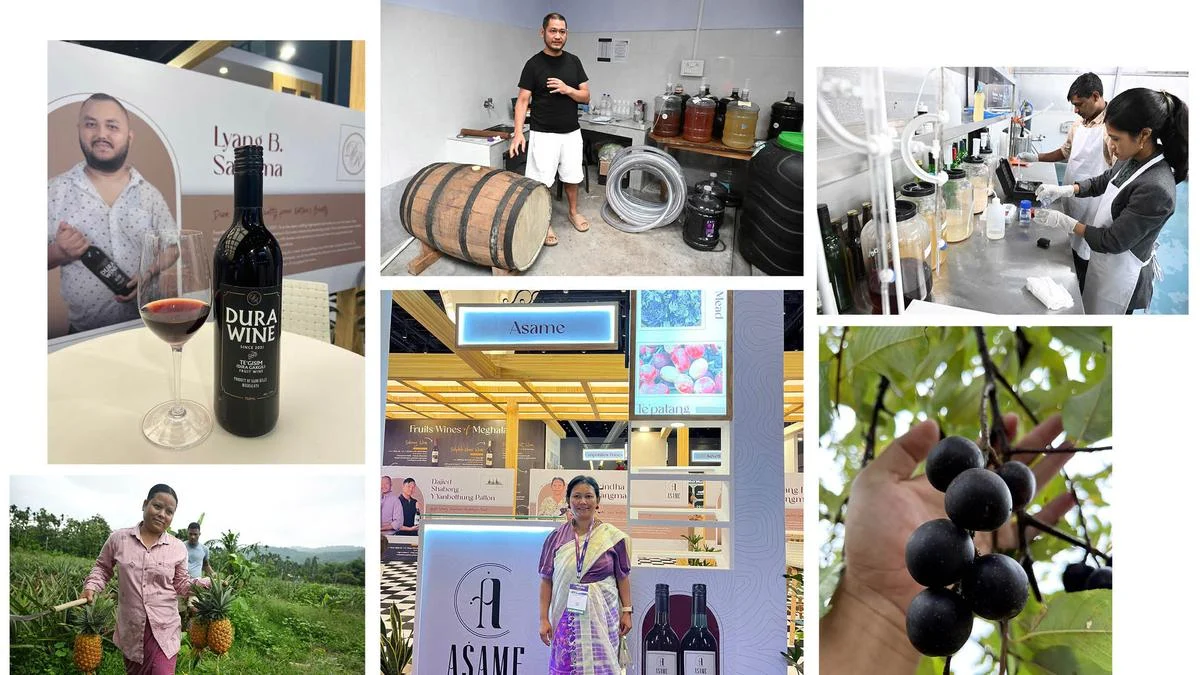
In the misty, verdant folds of the Garo Hills in Meghalaya, a botanical secret once whispered only by the wind and local foragers is now making waves in the high-stakes world of international viticulture. The fruit is te.gism—colloquially known as the “fruit with a dot in its name.” To botanists, it is Prunus jenkinsii, the Himalayan cherry. Until less than a decade ago, it was a wild curiosity; today, it is the crown jewel of Meghalaya’s burgeoning fruit wine industry, a sector that is rapidly redefining the state’s agrarian economy and its cultural identity.
The transition from jungle floor to premium bottle is not merely a story of entrepreneurship; it is a meticulously choreographed effort involving government policy, historical legacy, and a radical shift in how the Northeast views its natural bounty.
I. Main Facts: The Emergence of a New Viticultural Frontier
The Meghalaya fruit wine movement reached a symbolic crescendo in September 2024 at Vinexpo India in Mumbai. Among the myriad of traditional grape-based wines, six exotic labels from Meghalaya—ranging from wild fruit ferments to honey-based meads—were showcased by the Meghalaya Farmers Empowerment Commission (MFEC).
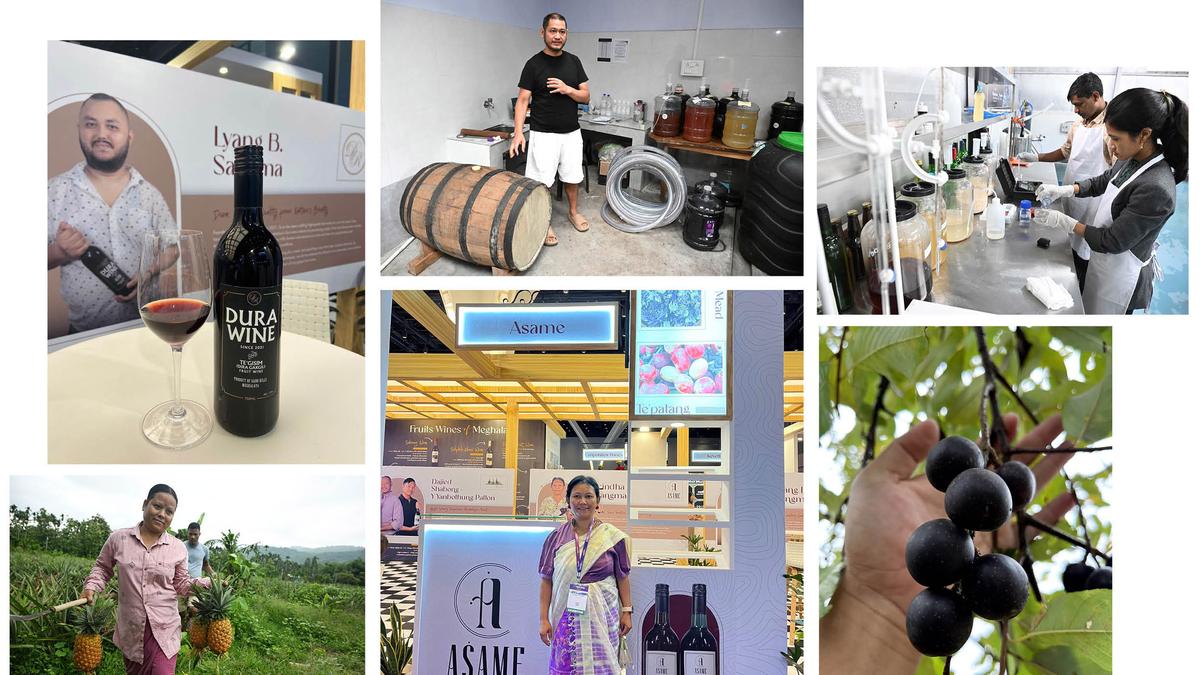
The standout was undoubtedly the te.gism wine. Produced by entrepreneurs like Lyang B. Sangma of Dura Wines, the dark, ruby-red elixir challenged the palates of seasoned connoisseurs. "I had my heart in my mouth whenever an expert or connoisseur sipped the te.gism wine," Sangma recalls. The feedback was unanimous: the product possessed a sophistication and "possibility" that extended far beyond the local markets of Tura and Shillong.
The Botanical Palette
Unlike the traditional wine world, which relies on specific wine-grade grape varieties, Meghalaya’s industry is built on indigenous biodiversity. The primary fruits driving this "renaissance" include:
- Te.gism (Himalayan Cherry): Known for its deep color and balanced acidity.
- Te.patang (Blood Fruit): Scientifically Haematocarpus validus, this sweet-and-sour fruit produces a vibrant red wine.
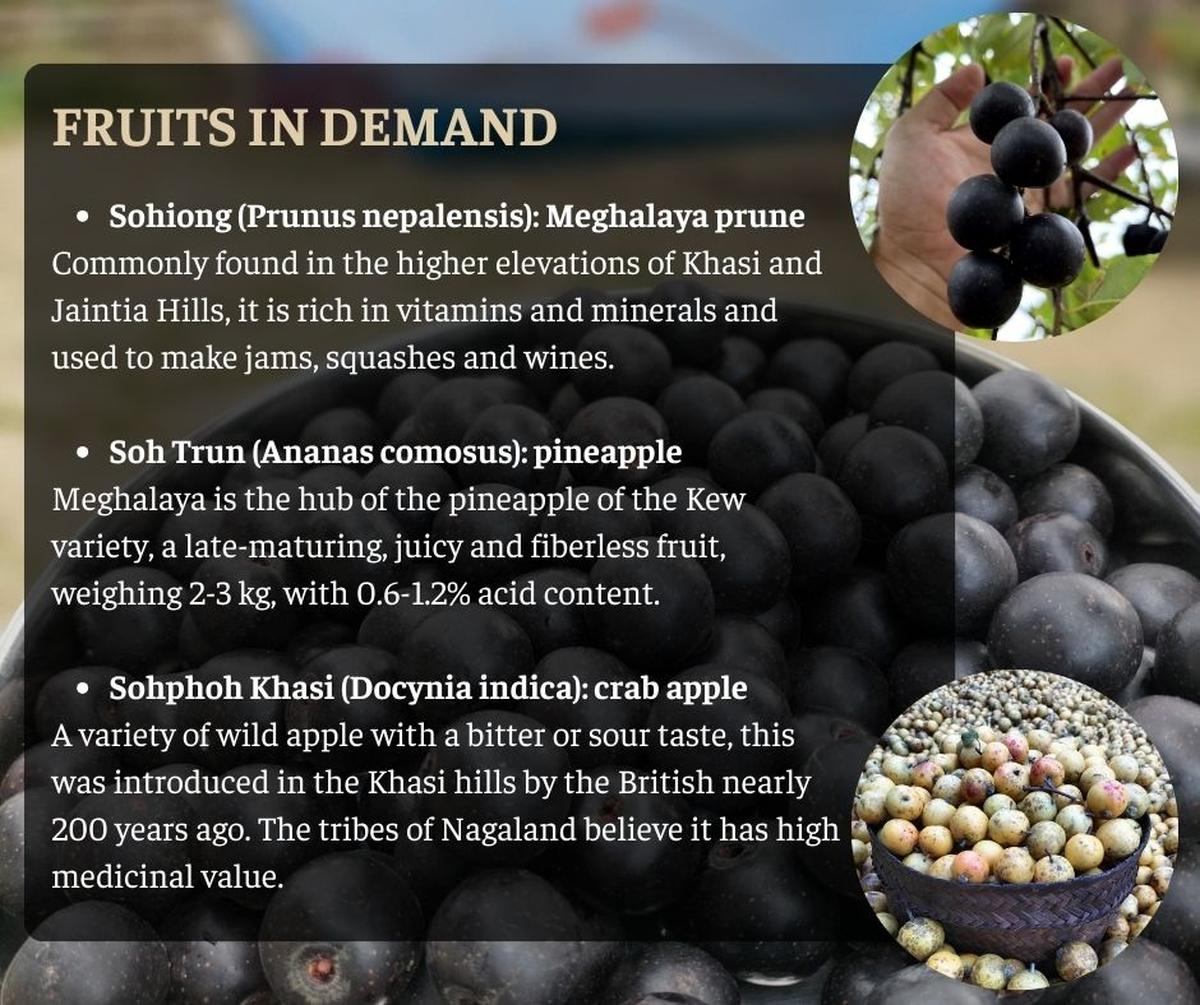
- Sohiong (Meghalaya Prune): A staple of the Khasi Hills, offering a rich, dark profile.
- Sohphie (Bayberry): Known for its sweet notes and aromatic qualities.
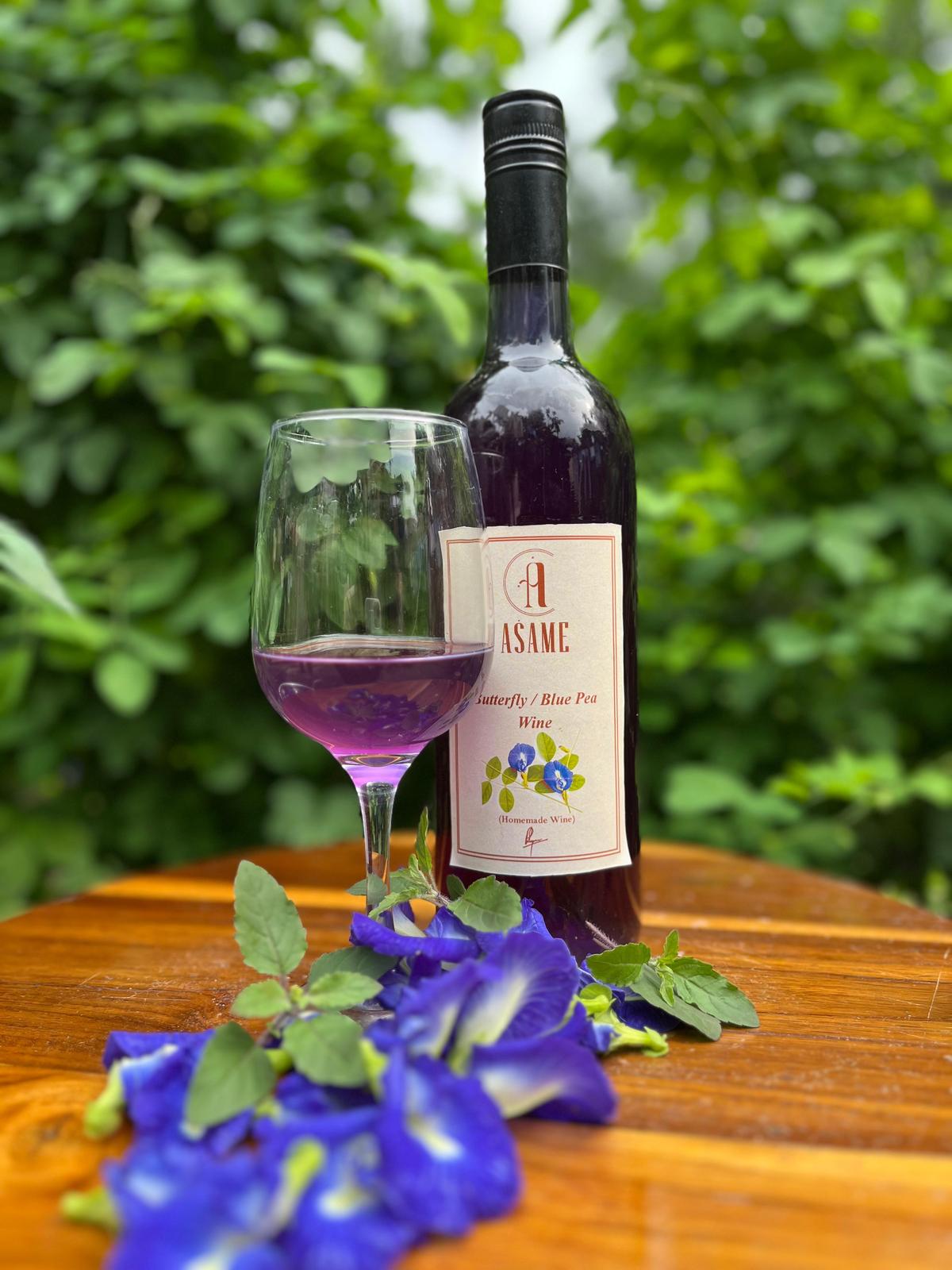
- Exotics: Innovations include blue wine made from the butterfly pea flower and pungent, acquired-taste ferments from jackfruit.
Currently, Meghalaya boasts approximately 30 fruit winemakers, with 17 having successfully transitioned to full-scale commercial production. This shift is supported by modern, scientific equipment and a rigorous certification process, positioning the state as the second-largest fruit wine producer in India, trailing only Himachal Pradesh.

II. Chronology: From Sacred Groves to Commercial Wineries
The history of winemaking in Meghalaya is a tapestry of colonial influence, indigenous tradition, and modern legislative reform.
1947: The Hunt Legacy
The roots of the industry can be traced back to Capt. Harold Douglas Hunt, an English army officer who settled in the village of Mawphlang. Hunt established India’s first fruit winery, utilizing the sohiong and other wild fruits found near the famous Mawphlang sacred groves. His "Mawphlang Cherry Wine" became a household name until the winery ceased operations in the 1980s following his death.
2004: The Spark of Revival
For decades, winemaking remained a domestic craft, primarily for festive gifting. In 2004, Michael Syiem of the Forever Young Club organized Shillong’s first wine festival. This annual event was pivotal; it normalized the idea of fruit wine as a sophisticated beverage and began attracting a millennial audience that viewed exotic local ferments as "cooler" and more relevant than expensive imported grape wines.

2019–2020: The Legislative Pivot
The most significant turning point occurred in late 2019 with the establishment of the Meghalaya Farmers Empowerment Commission (MFEC). Under the leadership of Chairman B.K. Sohliya and the vision of Chief Minister Conrad K. Sangma, the state recognized that the informal wine sector was an untapped economic goldmine.
In September 2020, the Meghalaya Excise Rules were amended. This landmark decision legalized home-made wines and provided a clear, accessible licensing framework for local winemakers to go commercial. It effectively moved the industry from the "shadows" of home kitchens into the sunlight of regulated commerce.
2021–Present: Scaling Up
Since 2021, the industry has seen a surge in commercial launches. Lyang B. Sangma launched Dura Wines in 2021, followed by Keenan Marak’s "7 United"—a canned, carbonated version of bitchi (traditional smoky rice beer). In 2023, the North East Fruit Wine Incubation Centre was established, providing a scientific backbone to the "art" of fermentation.

III. Supporting Data: The Economics of Fermentation
The growth of the Meghalaya fruit wine sector is backed by significant capital investment and impressive socio-economic metrics.
Investment and Infrastructure
Setting up a modern winery is a capital-intensive venture. A standard facility with a 5,000-litre capacity costs approximately ₹50 lakh, excluding land and buildings. To bridge this gap, the government has facilitated machinery grants. For instance, Lyang B. Sangma’s winery received a ₹25 lakh grant from the North East Centre for Technology Application and Reach (NECTAR).
Tax Incentives
To ensure the local industry can compete with national brands, the Meghalaya government has implemented a highly favorable tax regime:
- VAT: 0% (compared to 4%–53% in other Indian states).
- Levies: A nominal ad valorem of ₹100 per case (12 bottles).
- Lifting Fee: Only ₹10 per case for retailers.
Employment and Income
The industry currently supports about 400 families directly or indirectly. However, the most profound impact is seen at the farm level.
- Waste Reduction: India averages a 40% wastage rate for fruits and vegetables. In Meghalaya’s difficult terrain, this was historically higher. Winemaking has significantly reduced this by creating a reliable market for surplus harvests.
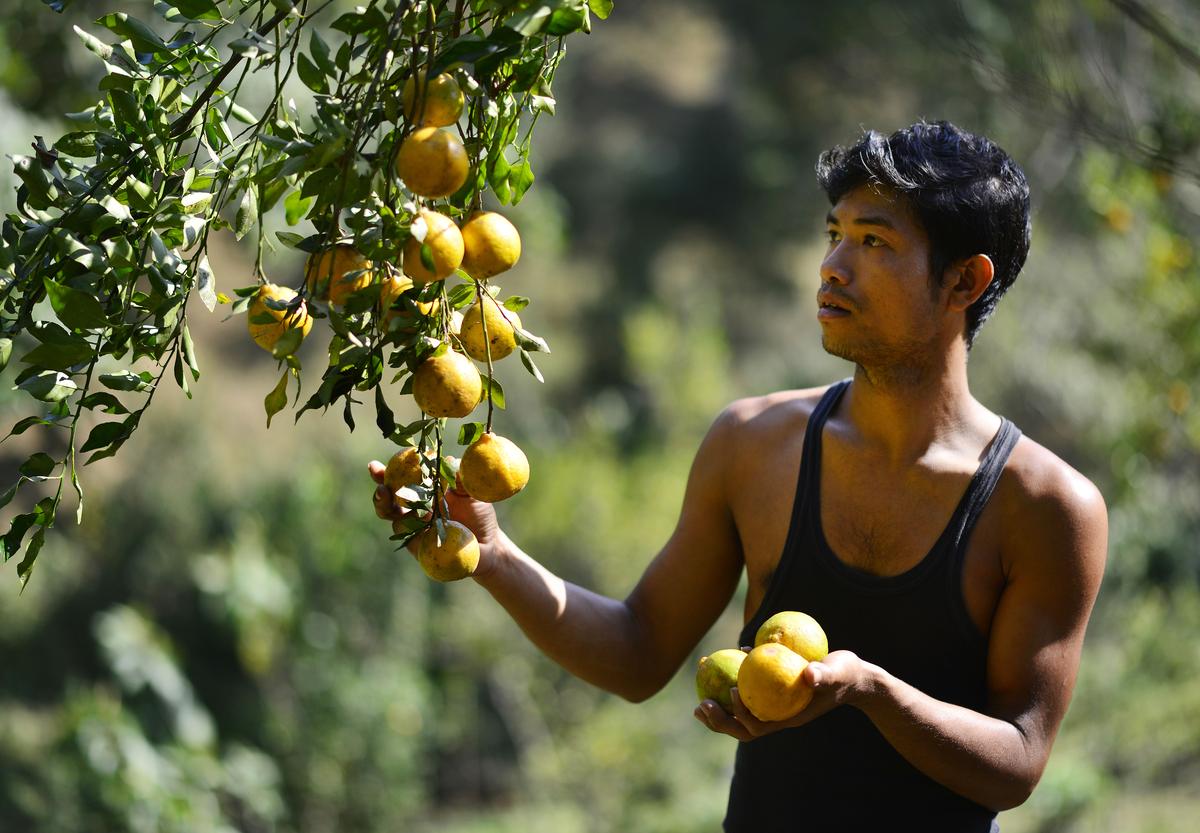
- Farmer Revenue: A farmer who previously earned ₹3,000 per sohiong tree per season can now earn up to ₹15,000. For high-value crops like kiwi, plum, and orange, seasonal incomes for some farmers have skyrocketed from ₹30,000 to over ₹3 lakh.
IV. Official Responses: A Strategy of "Science over Luck"
The government’s role has evolved from being a mere regulator to a proactive facilitator. B.K. Sohliya, Chairman of the MFEC, emphasizes that the goal is to transform winemaking from a traditional craft into a precise science.
"The art of winemaking is mostly science," Sohliya notes. To this end, the MFEC roped in Priyanka Save of Himachal Nectars as an official training partner. The North East Fruit Wine Incubation Centre at the Institute of Hotel Management (IHM) Shillong has already trained 137 people. The curriculum covers the entire value chain—from fruit selection to a bottled beverage in 90 days—ensuring that the final product meets international standards of 10% Alcohol by Volume (ABV) with balanced residual sugar.
Professional spirit tasters, such as Rajesh Swarnakar, have noted a marked improvement in the texture and taste of Meghalaya’s wines. While he acknowledges that the state is still "catching up" to the established apple-wine industry of Himachal Pradesh, he points out that the sheer variety of indigenous fruits gives Meghalaya a unique competitive edge in the global "exotic wine" niche.
V. Implications: Cultural Preservation and Global Branding
The rise of fruit winemaking in Meghalaya carries implications that extend far beyond the balance sheets of startups.
1. Environmental and Cultural Conservation
The demand for wild fruits like sohiong and te.gism has incentivized the protection of Meghalaya’s forests. Indigenous communities now view their "sacred groves" and wild jungles not just as spiritual sites, but as sustainable economic assets. There is a noticeable shift from simple foraging to organized "forest farming," ensuring these species are preserved for future generations.
2. The "Made in Meghalaya" Global Brand
By showcasing these wines at international forums like Vinexpo, Meghalaya is positioning itself as a destination for "Experiential Tourism." Much like the wine trails of Napa Valley or Bordeaux, the state has the potential to develop a "Fruit Wine Circuit," drawing tourists to see the process from the jungle harvest to the cellar.
3. Economic Resilience
The industry offers a blueprint for other North Eastern states. It demonstrates how traditional knowledge—such as the Garo community’s expertise in brewing bitchi—can be modernized and commercialized to create high-value exports. For entrepreneurs like Dajied Shabong of Kynjai Wine, the journey is "rewarding for the soul." It represents a new era where the "fruits of labor" no longer rot on the forest floor but are celebrated in glasses across the country.
4. Generational Continuity
Perhaps the most poignant implication is the revival of the Hunt legacy. Andrew Nongdhar, grandson of Capt. Hunt, is currently overhauling his grandfather’s old cottage and winery in Mawphlang. "Failing to capitalize on this trend would have been an injustice to the man who started it all," he says. His efforts symbolize the closing of a circle—where a colonial-era experiment has finally blossomed into a state-wide movement of self-reliance and pride.
As the "fruit with a dot in its name" continues to intrigue wine lovers, Meghalaya stands at the threshold of a new economic chapter. It is a chapter written in the deep reds of the te.patang and the vibrant blues of the butterfly pea, proving that in the heart of the Northeast, the most exotic flavors are often those that have been waiting in the woods all along.
