

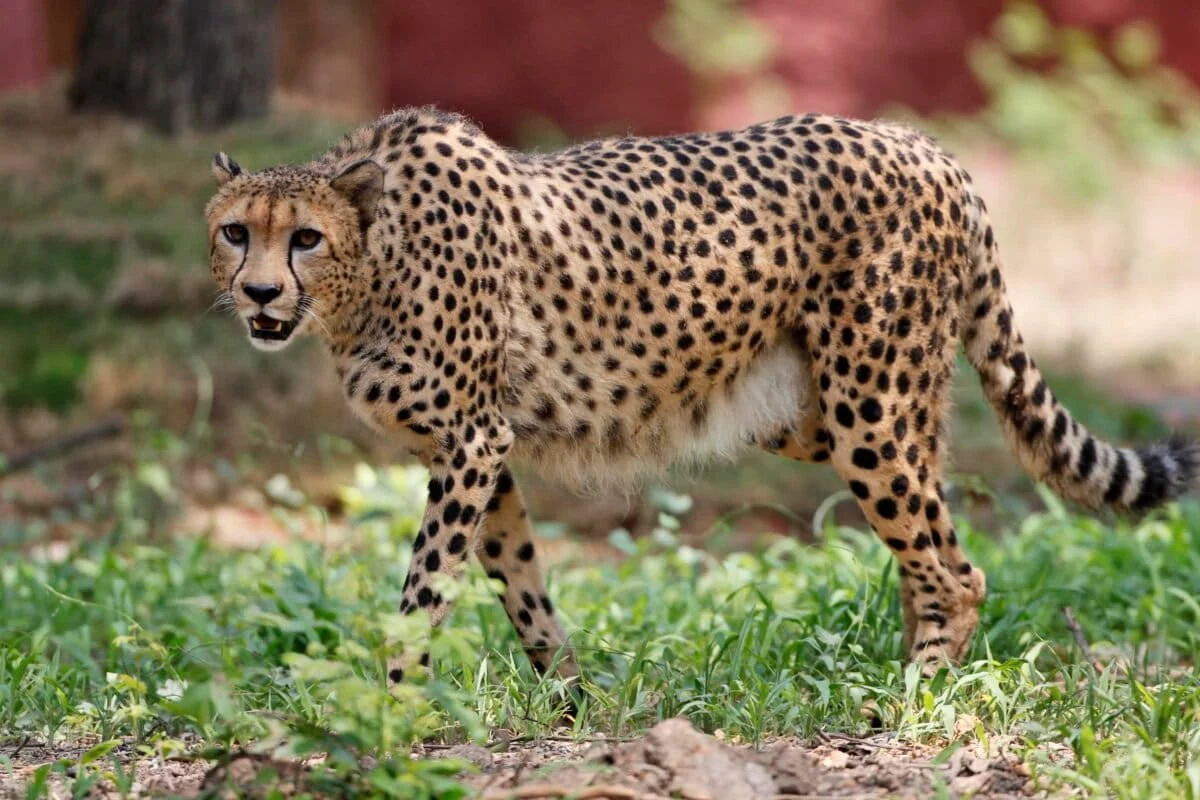
Main Facts: A 150-Kilometer Journey into Danger
In the early days of April 2024, a young male cheetah named KP-2 etched a new, albeit controversial, chapter in the history of Indian wildlife conservation. Leaving the protected confines of Kuno National Park in Madhya Pradesh, the sub-adult feline embarked on a perilous 150-kilometer trek that culminated in the tourist-heavy zones of the Ranthambore Tiger Reserve in Rajasthan. This was not merely a stroll across state lines; it was a literal and figurative crossing into uncharted territory for India’s ambitious Project Cheetah.
The presence of KP-2 in Ranthambore created a sensation among wildlife enthusiasts and tourists, leading to a "triple sighting"—a rare and statistically improbable event where a tiger, a leopard, and a cheetah were all spotted within the same general landscape. While the sighting was a boon for tourism, it underscored a harrowing reality for conservationists: KP-2 had wandered into one of the most dangerous environments for a cheetah in the world. Ranthambore is home to nearly 70 Bengal tigers, apex predators known for their territorial aggression and propensity to kill smaller competitors.
KP-2’s odyssey lasted over a month as the cheetah attempted to establish a territory in a landscape characterized by hilly, undulating terrain and sparse vegetation—a far cry from the flatter savannas of its African ancestors. Ultimately, the Madhya Pradesh Forest Department, in coordination with Rajasthan authorities, tranquilized the animal and "rescued" it, returning it to Kuno just days before a high-profile visit by Madhya Pradesh Chief Minister Mohan Yadav.
This event is not an isolated incident. It serves as a stark reminder of the biological impulses of the cheetah—a wide-ranging species—and the logistical nightmares facing a project that seeks to manage free-ranging animals within the confines of fragmented habitats.

Chronology: From Namibia to the Ranthambore Border
The journey of KP-2 is part of a larger timeline that began with the official launch of Project Cheetah in September 2022. The project was designed to reintroduce the species to India decades after the Asiatic cheetah was declared extinct in the country in 1952.
- September 2022: The first batch of eight cheetahs arrives from Namibia, released into Kuno National Park by Prime Minister Narendra Modi.
- February 2023: A second batch of 12 cheetahs is brought from South Africa.
- March 2023 – August 2023: The project faces its first major crisis as several adult cheetahs die due to various causes, including infection, organ failure, and injuries sustained during mating.
- Early 2024: KP-2 and its siblings (KP-1, KP-3, and KP-4), all sub-adult males born in India or brought as youngsters, reach an "exploratory stage."
- April 2024: KP-2 leaves Kuno, traveling northwest toward Rajasthan. Concurrently, its sibling KP-3 is reported to have moved toward the Dholpur area of Rajasthan, allegedly preying on local cattle.
- May 2024: After a month of monitoring, KP-2 is captured in the Ranthambore landscape and transported back to a fenced enclosure in Kuno.
- June 2024: Reports emerge of the death of four one-month-old cubs born to the female KGP-12, highlighting the high mortality rate of the species in the wild due to predation and environmental stress.
Supporting Data: The Biological Mismatch of Space and Species
The primary friction point in Project Cheetah lies in the mathematical reality of cheetah biology versus the physical reality of Indian geography. Cheetahs are the fastest land animals, but they are also among the most wide-ranging. Unlike tigers, which can thrive in relatively dense populations if prey is abundant, cheetahs require vast, contiguous landscapes to avoid conflict with other predators.
The Home Range Problem
According to wildlife biologist and conservation scientist Ravi Chellam, the home range requirements for cheetahs are immense.
- Male Cheetahs: Typically require 13 to 26 square kilometers, but in exploratory phases or low-prey environments, this can expand to 130 square kilometers.
- Female Cheetahs: Being solitary, females require significantly more space, ranging from 833 to 958 square kilometers.
Kuno National Park, the primary site for the reintroduction, spans approximately 748 square kilometers. The broader Kuno Wildlife Division covers 1,235 square kilometers. Biologically, this means Kuno is only large enough to support a handful of male cheetahs or perhaps a single female. When these animals are translocated, they often exhibit "homing" behavior or exploratory dispersal, sometimes covering 1,000 square kilometers in a single month to find suitable territory.

Predator Density and Competition
The movement of KP-2 into Ranthambore highlights a lethal threat: inter-species competition.
- Ranthambore Tiger Reserve: Contains ~70 tigers. The density of apex predators is high, leaving little room for a cheetah, which sits lower on the carnivore hierarchy.
- Prey Base: African cheetahs prefer prey weighing 20-30 kg (such as Thompson’s gazelle). In India, while chital (spotted deer) are available, the density and quality of prey in the scrublands surrounding Kuno are often insufficient to keep the cats within park boundaries.
Mortality and Population Status
As of mid-2024, there are approximately 53 cheetahs in India (including adults and cubs). however, the majority—39 individuals—remain in specialized enclosures rather than being truly "free-ranging." The project has seen a high turnover; while new cubs are born, predation (likely by leopards or hyenas) remains a significant threat, as evidenced by the recent loss of KGP-12’s entire litter.
Official Responses: The "Rescue" Paradox
The official narrative provided by the Forest Department and the Ministry of Environment, Forest and Climate Change (MoEFCC) has often been one of cautious optimism, though critics argue it borders on obfuscation.
The Definition of "Wild"
When KP-2 was caught and returned to Kuno, official press notes described the animal as being "rescued." This terminology has sparked a debate among conservationists. If the goal of Project Cheetah is to establish a "free-ranging" population, critics ask: what are they being rescued from?

The act of repeatedly tranquilizing and returning animals that exhibit natural dispersal behavior suggests that the project is currently a "managed semi-wild" experiment rather than a true reintroduction. Forest officials argue that these interventions are necessary to prevent human-animal conflict and to protect the expensive, high-profile felines from being killed by tigers in Ranthambore or by angry villagers whose livestock may be targeted.
Administrative and Jurisdictional Hurdles
Management becomes exponentially more complex when a cheetah crosses state lines. KP-2’s journey from Madhya Pradesh to Rajasthan involved two different state forest departments with different protocols and priorities. While Madhya Pradesh is the "host" of the project, Rajasthan bears the "risk" when the animals wander into its territory.
Union Minister Bhupender Yadav has maintained that the project is on track, noting that breeding in wild conditions (such as the litter from KGP-12) is a sign of success. However, the third annual progress report for the project, which was expected to be public by late 2023 or early 2024, has yet to be released, leading to calls for greater transparency regarding the project’s long-term viability.
Implications: The Future of India’s Open Ecosystems
The odyssey of KP-2 is a harbinger of the systemic challenges that lie ahead. The project was never just about the cheetah; it was marketed as a "flagship" project to conserve India’s Open Natural Ecosystems (ONEs)—grasslands, scrublands, and savannas.

Challenging the "Wasteland" Narrative
For decades, India has categorized its grasslands and scrublands as "wastelands" in official land-use records. This has led to these vital ecosystems being diverted for industrial use, solar farms, or "afforestation" projects that plant trees where they don’t belong. Ravi Chellam and other experts argue that if Project Cheetah is to succeed, the government must officially recognize ONEs as ecologically significant habitats. Without a massive, multi-state corridor of protected grasslands, the cheetahs will continue to wander into "sink" habitats like Ranthambore where their survival is unlikely.
The Conflict with Pastoralists
As cheetahs like KP-3 move into areas like Dholpur and prey on cattle, the project faces a social risk. India’s grasslands are not empty; they are the lifelines for millions of pastoralists and their livestock. If the government does not establish a robust, fast-acting compensation scheme for livestock loss, the initial public support for the "return of the cheetah" could quickly sour into hostility, leading to retaliatory poisonings—a common fate for leopards and tigers in India.
Conclusion: A Project at a Crossroads
With more cheetahs expected to arrive from Africa in the coming years, the case of KP-2 forces a difficult question: Is India trying to fit a wide-ranging, savanna-dwelling species into a series of disconnected "island" parks?
The current strategy of "surveil, tranquilize, and return" is a short-term fix for a long-term biological reality. For Project Cheetah to move beyond a high-stakes experiment, it must secure vast, contiguous landscapes that transcend state borders and move away from the "fortress conservation" model. Until then, the daring walks of animals like KP-2 will remain a source of both wonder and deep-seated concern for the future of Indian conservation.
