

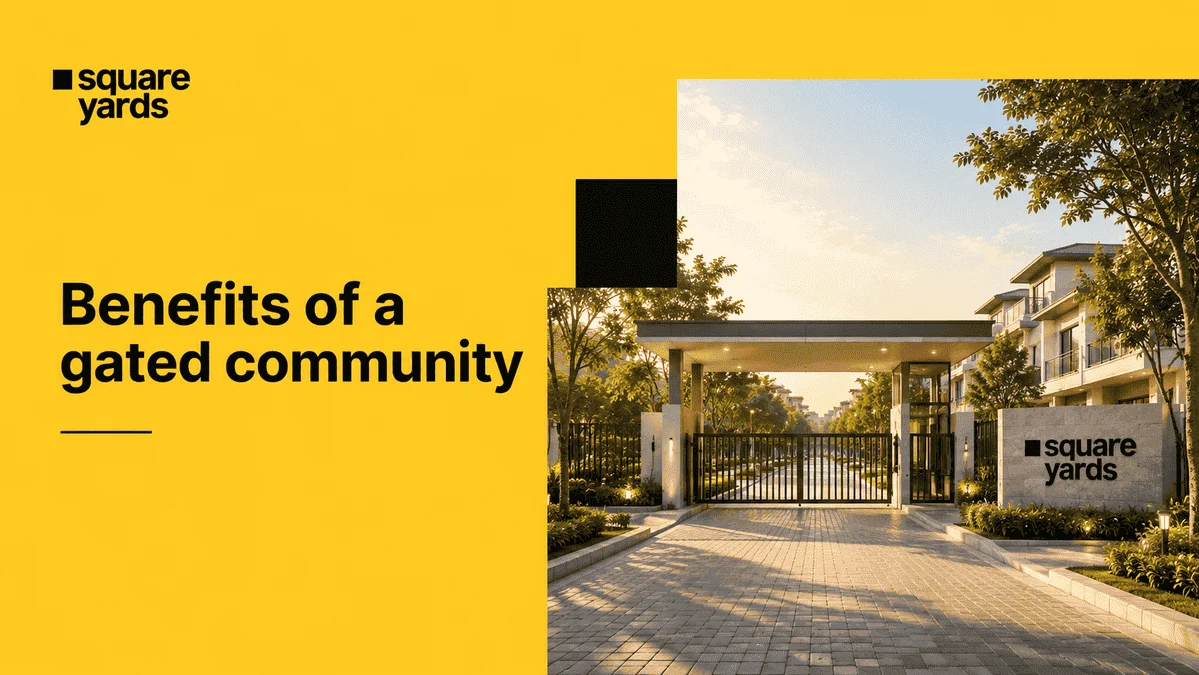
The transition from traditional independent housing to structured, integrated living environments represents one of the most significant sociological and economic shifts in urban India over the last decade. For many, like Manish Gupta, a 46-year-old import-export business owner from Delhi, this shift is not merely a matter of architectural preference but a fundamental reassessment of lifestyle management and asset protection.
This comprehensive report examines the changing landscape of Indian residential real estate, evaluating the critical differences between standalone homes and gated communities, the financial implications of these choices, and the data-driven frameworks necessary for modern homebuyers to make informed decisions.
Main Facts: The Dichotomy of Modern Living
The core of the debate between gated communities and standalone homes lies in the "management of life." For decades, the independent bungalow was the ultimate symbol of success in Indian society. However, as urban centers become more congested and the complexity of municipal services increases, the "autonomy" of a standalone home is often replaced by the "burden" of self-management.
Manish Gupta’s experience serves as a cautionary tale for the modern investor. When he purchased his first independent home in a bustling Delhi neighborhood, he sought freedom. Instead, he found himself acting as a de facto estate manager. "I was spending my weekends coordinating with private security guards, negotiating with independent water tankers during shortages, and arguing with neighbors over the maintenance of the shared alleyway," Gupta recalls. "The straight answers I needed regarding alternative housing models—specifically gated communities—were never provided until I was already bogged down by the inefficiencies of standalone living."
The fundamental difference today is the shift from reactive living (fixing problems as they arise in an independent setup) to proactive living (paying for a managed ecosystem where problems are mitigated by design).
The Core Value Propositions
- Infrastructure Integration: Gated communities offer centralized utilities, including 24/7 power backup, integrated water treatment plants (STP), and professional waste management. Standalone homes are reliant on the inconsistent quality of municipal grids.
- Security Protocols: While a standalone home requires the owner to hire and monitor private guards, a gated community utilizes a multi-tier security system involving perimeter fencing, CCTV surveillance, digital visitor management (e.g., MyGate or NoBrokerHood), and 24/7 patrolling.
- Social Infrastructure: Gated townships provide "plug-and-play" access to gyms, swimming pools, clubhouses, and parks—amenities that would be prohibitively expensive or physically impossible to maintain for a single standalone homeowner.
Chronology: The Evolution of the Indian Residential Market
To understand the current dominance of gated communities, one must look at the timeline of urban development in India’s Tier-1 and Tier-2 cities.
- Pre-1990s: The Era of the Plot. Residential growth was characterized by government-allotted plots and ancestral bungalows. Ownership was defined by land, and community was organic rather than structured.
- 1990s – Early 2000s: The Rise of Standalone Apartments. Following economic liberalization, developers began converting large plots into "builder floors" or small standalone apartment blocks. This increased density but did not address infrastructure or security.
- 2010 – 2020: The Gated Revolution. Rapid urbanization and the rise of the IT/ITES sector created a new middle class with higher disposable income but less time. Developers like DLF, Lodha, and Prestige began launching "Integrated Townships"—cities within cities.
- 2020 – Present: The Post-Pandemic Pivot. The COVID-19 pandemic acted as a catalyst. Homebuyers realized that during lockdowns, those in gated communities had access to internal grocery stores, walking tracks, and managed sanitation, while those in standalone homes were isolated and vulnerable.
By 2025, the preference for gated communities has become the "new baseline" for urban residential investment, with over 70% of new launches in major metros like Bengaluru, Mumbai, and Hyderabad falling into the category of structured communities.
Supporting Data: The Economics of the Decision
The financial gap between these two models is often misunderstood. While the sticker price of a gated community home may be higher per square foot, the long-term compounding effects tell a different story.
Appreciation and Market Value
Data from residential development formats across Indian markets for the 2025-26 period indicates that micro-markets featuring integrated gated communities are repricing faster than standalone plots. In cities with active infrastructure investment, gated communities have shown a capital appreciation rate of 12-15% annually, compared to 7-9% for standalone properties in similar vicinities.
Rental Yields and Occupancy
Rental yield data shows a significant divergence. While the "headline yield" (annual rent divided by property value) might seem comparable, the occupancy stability is far higher in gated communities.
- Mid-segment gated properties: Maintain an average occupancy rate of 95%.
- Standalone apartments/homes: Often face longer "void periods" between tenants, averaging 85% occupancy.
Families, particularly those with children or elderly members, consistently prioritize secure, amenity-rich environments, making these properties easier to lease and more resistant to market downturns.
The Maintenance Math
A common pitfall is underestimating the "hidden" costs of standalone living.
- Standalone Cost: Private security (₹15,000/mo), Private water tankers (variable), Generator maintenance (₹2,000/mo), Individual repair services.
- Gated Community Cost: A consolidated Common Area Maintenance (CAM) fee, which typically ranges from ₹3 to ₹7 per square foot. Because these costs are shared across 500+ units, the economy of scale provides superior service at a lower per-capita cost.
Official Responses and Expert Insights
Industry leaders and market analysts suggest that the "Gated Community vs. Standalone" debate is increasingly being settled by the "Quality of Life" index.
Vikram Nair, a 45-year-old portfolio manager from Mumbai, highlights the role of data in this transition. Working with advisors at Square Yards, Nair utilized market analytics to move his portfolio toward structured developments. "The decision wasn’t just emotional; it was backed by verified market data," says Nair. "Having access to structured timelines and transaction support meant I could see the projected growth of a township versus the stagnation of a standalone plot."
Real estate analysts argue that the move toward gated communities is a response to the "trust deficit" in urban infrastructure. "Buyers are essentially ‘privatizing’ their governance," says an industry consultant. "They are paying a premium to ensure that their water flows, their electricity stays on, and their children are safe—services that the municipal framework often struggles to guarantee consistently."
Square Yards’ internal data supports this, showing a 40% increase in inquiries for gated communities over the last 24 months, particularly from NRIs (Non-Resident Indians) who require managed environments for their families back home.
Implications: The Future of Urban Design
The shift toward gated communities has profound implications for the future of Indian cities and the wealth of individual investors.
1. The Democratization of Luxury
Previously, amenities like a private pool or a 24-hour gym were reserved for the ultra-wealthy. Integrated townships democratize these luxuries by spreading the cost across a large resident base, making high-end lifestyles accessible to the mid-market segment.
2. The Rise of "Smart" Micro-Markets
Gated communities are becoming the testing grounds for "Smart City" technologies. From automated waste segregation to solar-powered common grids and EV charging stations, these communities are often a decade ahead of the surrounding municipal infrastructure.
3. Impact on Social Cohesion
While critics argue that gated communities create "islands of exclusion," proponents point to the internal social capital they build. Shared spaces foster a sense of community that has largely vanished from the anonymous streets of standalone urban neighborhoods.
4. Risk Mitigation for Investors
For investors, the primary implication is the reduction of "avoidable error." A standalone property carries the risk of neighboring plot disputes, illegal encroachments, or unfavorable zoning changes. A gated community, managed by a professional Residents’ Welfare Association (RWA) and protected by RERA (Real Estate Regulatory Authority) guidelines, offers a much higher level of legal and operational security.
Conclusion: Making the Decision
As Manish Gupta eventually learned, the difference between a good property decision and a costly one comes down to the quality of information and the foresight to choose a managed ecosystem.
For those navigating this choice, the recommended framework is clear:
- Establish a Baseline: Define your non-negotiables—is it 24/7 security or absolute architectural freedom?
- Validate with Data: Don’t rely on brochures. Use tools like online property valuations to benchmark the price of a gated community against the true market value of local standalone homes.
- Consider the Exit: Always think about the next buyer. In 2030, will a buyer want a standalone house with maintenance headaches, or a modern apartment in a thriving, secure community?
The trend is undeniable: the future of Indian residential real estate is gated, managed, and data-driven. By prioritizing communal infrastructure and professional management today, homeowners like Gupta and Nair are not just buying a roof—they are securing a foundation for long-term peace of mind and financial growth.
