

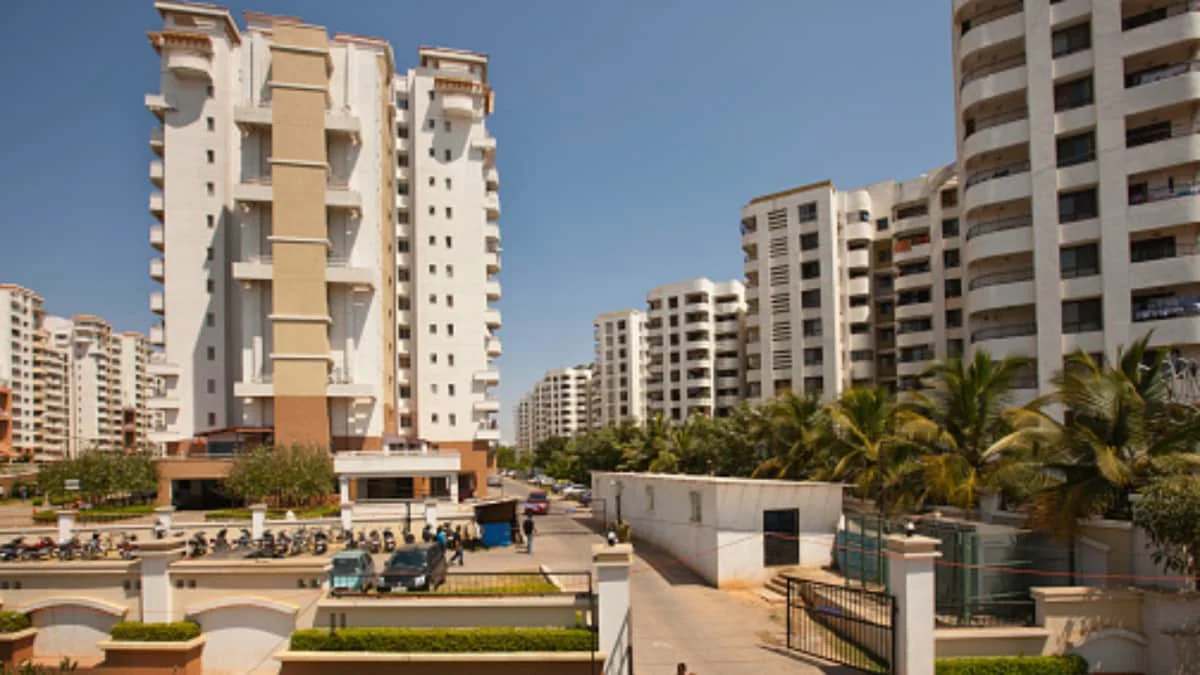
The landscape of Indian real estate is undergoing a seismic shift, one where the traditional dominance of the "Silicon Valley of India" is being challenged by the rapid ascent of the "City of Pearls." According to a comprehensive new report, the ultra-luxury residential market in South India has reached a historic milestone, with Hyderabad emerging as the undisputed leader, significantly outperforming Bengaluru and Chennai in the high-stakes segment of homes priced at ₹10 crore and above.
Main Facts: A Record-Breaking Year for Premium Realty
The fiscal year 2025-26 has proven to be a watershed moment for the southern real estate corridor. A joint study titled ‘Southern India High-End Luxury Housing,’ released by India Sotheby’s International Realty and CRE Matrix, reveals that the three primary southern metros—Hyderabad, Bengaluru, and Chennai—collectively recorded the sale of 811 ultra-luxury homes. These transactions represented a staggering total value of ₹11,246 crore.
While the entire region showed growth, the distribution of these sales was heavily skewed toward Hyderabad. The city accounted for 625 of the 811 units sold, representing nearly 77% of the total volume in the three-city cohort. The financial implications are equally lopsided; Hyderabad’s ultra-luxury sales were valued at ₹8,562 crore, while Bengaluru followed with ₹1,957 crore (128 units) and Chennai trailed with ₹727 crore (58 units).
This data signals a fundamental change in investor sentiment and buyer behavior. The "ultra-luxury" tag, once reserved for the sea-facing apartments of South Mumbai or the sprawling bungalows of Lutyens’ Delhi, has found a robust and expansive new home in the Deccan plateau.
Chronology: The Evolution of the Southern Luxury Market
To understand how Hyderabad surpassed Bengaluru, one must look at the trajectory of the southern property market over the last decade.
The Pre-Pandemic Baseline (2015–2019)
During this period, Bengaluru was the primary driver of high-end real estate in the south. Driven by the wealth generated in the tech and startup ecosystem, the city saw steady demand for "premium" housing. However, "ultra-luxury" (₹10 crore+) remained a niche segment, often confined to a few legacy pockets like Lavelle Road or Sadashivanagar. Hyderabad, meanwhile, was laying the groundwork with massive infrastructure projects, including the Outer Ring Road (ORR) and the development of the IT corridor in Gachibowli and Hitech City.
The Pandemic Catalyst (2020–2022)
The COVID-19 pandemic acted as a global accelerant for luxury housing. High-Net-Worth Individuals (HNWIs) began prioritizing space, privacy, and wellness. The "work from home" culture evolved into "work from a mansion." During these years, Hyderabad began to pull ahead by offering something Bengaluru struggled with: massive land parcels and clear, vertical development policies. While Bengaluru grappled with infrastructure bottlenecks and rising congestion, Hyderabad’s proactive urban planning made it attractive for large-scale luxury gated communities.
The 2025-26 Explosion
The current data represents the culmination of this evolution. The fiscal year 2025-26 saw a convergence of accumulated wealth, a desire for "trophy assets," and the delivery of world-class projects. The report released in May 2026 confirms that the momentum has shifted decisively. Hyderabad is no longer just a "value" alternative to Bengaluru; it has become the primary destination for the ultra-wealthy seeking scale and modern luxury.
Supporting Data: Quantifying the Shift
The Sotheby’s-CRE Matrix report provides granular data that explains why the market is moving in this direction. A key metric is the "Space Value Proposition"—the amount of square footage a buyer receives for a ₹10 crore investment.
1. The Space-to-Price Ratio
The disparity in what ₹10 crore buys across these cities is startling:
- Hyderabad: Buyers can secure approximately 6,210 sq. ft. for ₹10 crore. This allows for expansive 5BHK or 6BHK penthouses or sprawling independent villas within gated communities.
- Chennai: The same amount fetches roughly 4,290 sq. ft., reflecting the premium on coastal land and established neighborhoods.
- Bengaluru: The city offers the least "bang for the buck" in terms of size, with ₹10 crore commanding only 3,930 sq. ft.
This "space advantage" is a primary driver for Hyderabad’s dominance. For the UHNWI (Ultra High Net Worth Individual) buyer, the ability to own a home that is nearly 60% larger in Hyderabad than in Bengaluru for the same price is a compelling argument.
2. Transaction Momentum and Volume
The sheer volume of transactions reinforces the trend. Hyderabad’s 625 units sold indicate a market with high liquidity and high confidence. In contrast, Bengaluru’s 128 units suggest a tighter, more supply-constrained market where the entry price for true luxury has climbed so high that the volume of transactions has naturally thinned.
3. Micro-Market Hotspots
The report identifies specific "power neighborhoods" that are driving these numbers:
- Kokapet (Hyderabad): Often referred to as the "New Manhattan" of Hyderabad, Kokapet has seen unprecedented land auctions and the launch of high-rise luxury projects that offer amenities previously unseen in India.
- Rajanukunte (Bengaluru): As the city center becomes increasingly congested, the northern fringes like Rajanukunte have emerged as a hub for luxury villas and "managed farmlands," attracting those looking to escape the urban chaos.
Official Responses: Insights from Industry Leaders
The report’s findings have drawn significant commentary from real estate veterans who view this not as a temporary fluke, but as a structural realignment.
Ashwin Chadha, CEO of India Sotheby’s International Realty, noted that the southern market is no longer a monolith. "South India’s luxury housing market reflects three distinct identities," Chadha explained. "Hyderabad stands out for its sheer scale and the size of its offerings. Bengaluru is characterized by rapid transaction momentum—homes there sell fast, even if they are smaller. Chennai, meanwhile, remains a market of legacy; it draws strength from its established premium neighborhoods and a more conservative, yet extremely wealthy, buyer base."
Chadha further predicted that while Hyderabad has set the benchmark for volume, Bengaluru is likely to see "accelerated growth in the near term" as new luxury supply hits the market, though it may struggle to match Hyderabad’s space-value proposition.
Abhishek Kiran Gupta, CEO and Co-Founder of CRE Matrix, described the current climate as a "strategic turning point." He emphasized that Hyderabad’s leadership is built on "strong structural fundamentals." According to Gupta, the city’s ability to provide better space value while maintaining consistent demand for large residential units has created a unique "goldilocks zone" for developers and buyers alike.
Gupta also offered advice for the investment community: "For investors, the key lies in tailoring strategies based on individual city dynamics rather than treating the segment as a uniform market. What works in Kokapet will not necessarily work in Rajanukunte."
Implications: What This Means for the Future of Urban India
The shift in luxury housing dominance from Bengaluru to Hyderabad carries several broader implications for the economy, urban planning, and the socio-economic fabric of South India.
1. The "Premiumization" of the Indian Economy
The fact that over ₹11,000 crore was spent on just 811 homes in three cities underscores the "K-shaped" recovery of the Indian economy. While the affordable housing segment has faced headwinds due to interest rate hikes and inflation, the ultra-luxury segment is decoupled from these pressures. This "premiumization" trend suggests that wealth concentration among India’s elite is manifesting in real estate as a preferred asset class.
2. Infrastructure as a Competitive Advantage
Hyderabad’s victory is, in many ways, a victory for urban planning. The city’s investment in the 158-km Outer Ring Road, the expansion of the metro, and the development of "Golden Mile" zones have provided the physical infrastructure necessary to support ultra-luxury living. Bengaluru’s relative slowdown in this segment serves as a cautionary tale of how infrastructure bottlenecks can eventually dampen even the most robust real estate markets.
3. The Rise of the "Vertical Villa"
The data shows a move away from traditional independent bungalows toward "vertical villas"—high-rise apartments that offer the privacy of a house with the security and amenities of a luxury resort. Developers in Hyderabad have mastered this format, offering units with private pools, 12-foot ceilings, and expansive decks.
4. Wealth Migration
The growth in Hyderabad’s luxury sector is not just driven by locals. There is a noticeable migration of capital from other parts of India and the NRI (Non-Resident Indian) community. Investors are increasingly viewing Hyderabad as a more stable and high-growth alternative to the saturated markets of Mumbai or the volatile markets of Delhi-NCR.
Conclusion: A New Hierarchy in High-End Living
The May 2026 report serves as a definitive ranking of South India’s real estate powerhouses. Hyderabad has moved beyond its reputation as a "cost-effective" IT hub to become the luxury capital of the South. With 625 ultra-luxury sales in a single year, it has set a bar that will be difficult for its neighbors to clear in the near future.
While Bengaluru remains the intellectual and technological heart of the region, its real estate market is facing a period of introspection. To compete with Hyderabad’s scale, Bengaluru may need to unlock new micro-markets and address the fundamental "space-value" gap that is currently driving UHNWIs toward the Telangana capital.
As we move further into 2026, the trend is clear: in the world of Indian ultra-luxury real estate, size, scale, and speed are the new currencies of success. For now, Hyderabad is the city that is richest in all three.
