

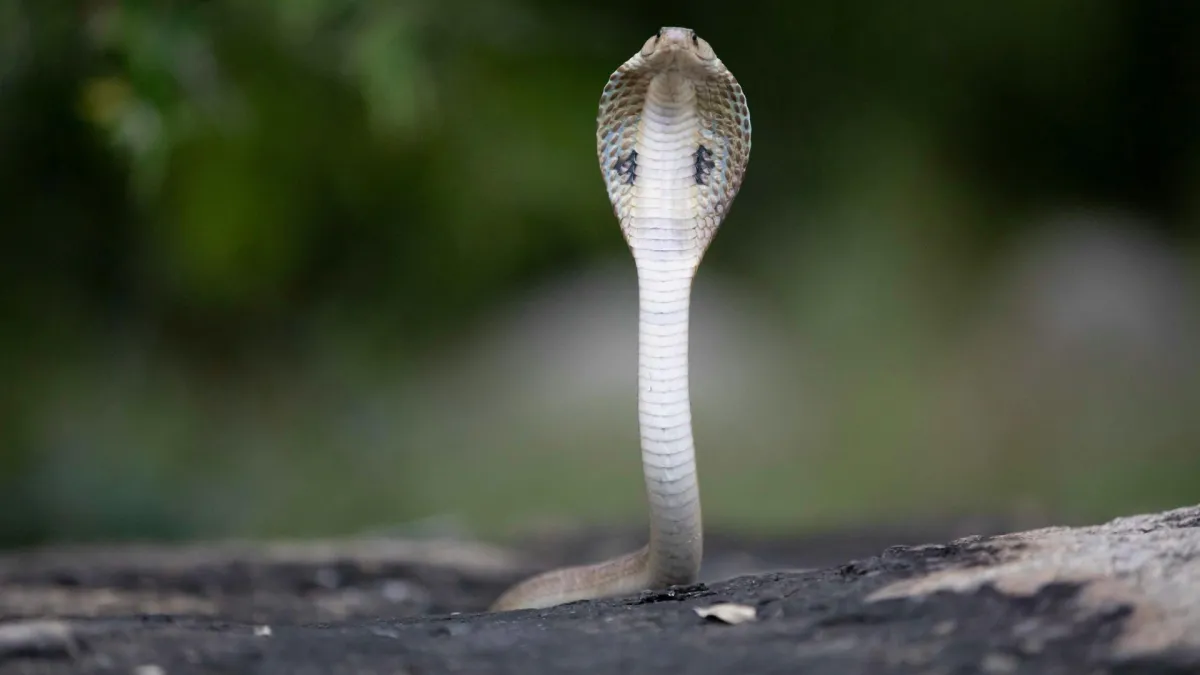
BENGALURU – In the dense jungles of the Western Ghats, the arid stretches of the Thar Desert, and the humid Gangetic plains, the spectacled cobra (Naja naja) reigns as one of the most feared and revered predators. For centuries, its varied appearances—ranging from jet black to pale yellow, with hood markings that shift from a perfect "O" to an intricate "U"—led naturalists to believe that India was home to several distinct subspecies of this iconic serpent.
However, a landmark study led by researchers at the Indian Institute of Science (IISc) has dismantled this long-standing assumption. Utilizing advanced genetic sequencing, the team has revealed that while the spectacled cobras of the Indian mainland appear diverse to the naked eye, they constitute a single, highly connected, and interbreeding population. Conversely, the study identified that the cobras of Sri Lanka have been on a separate evolutionary trajectory for millions of years, marking them as a genetically unique lineage.
This discovery, led by Kartik Sunagar and his team at the Centre for Ecological Sciences (CES), provides the most comprehensive genetic map of the species to date, offering profound implications for evolutionary biology, conservation, and the critical field of antivenom development.
The Main Facts: A Single Mainland Family
The primary revelation of the IISc study is the "panmictic" nature of the Indian cobra across the mainland. In genetics, panmixia refers to a population where all individuals are potential partners, leading to a constant shuffling of the gene pool. Despite the vast geographical barriers of the Indian subcontinent—including mountain ranges and diverse climatic zones—the spectacled cobra has maintained a remarkable level of genetic connectivity.
For decades, the scientific community had proposed the existence of up to five different subspecies of Naja naja based on "morphological" traits—physical characteristics like color, pattern, and the number of scales. The IISc research proves that these physical variations are merely superficial adaptations to local environments rather than signs of deep evolutionary splits.
Key Findings at a Glance:
- Mainland Unity: Cobras from Rajasthan to West Bengal and down to Kanyakumari belong to the same genetic family.
- The Sri Lankan Exception: Cobras on the island of Sri Lanka form a distinct "clade" (a branch of the family tree) that has been isolated for approximately two million years.
- The Big Four Context: The spectacled cobra is a member of India’s "Big Four"—the group of snakes responsible for the majority of the country’s 58,000 annual snakebite deaths.
- Genetic Markers: The study utilized nine specific genetic markers, analyzing both mitochondrial DNA (maternal lineage) and nuclear DNA (biparental lineage).
Chronology: From African Origins to the Indian Subcontinent
To understand the current state of the spectacled cobra, the researchers reconstructed a "time-calibrated" family tree that spans millions of years. This evolutionary timeline provides a fascinating look at how the Naja genus conquered Asia.

10 to 14 Million Years Ago (The Miocene Epoch)
The ancestors of the Indian cobra did not originate in Asia. The IISc study confirms that the Naja genus first emerged in Africa. During the Miocene epoch, a period characterized by significant tectonic shifts and the expansion of grasslands, these ancestral cobras began a massive long-distance dispersal. They likely traveled through a land bridge in the Middle East, moving eastward as the climate and habitat allowed.
2 to 5 Million Years Ago (The Pliocene Epoch)
Once the cobras reached the Indian subcontinent, they found an environment perfectly suited to their predatory style. They flourished across the region, establishing themselves as a dominant venomous species. During this period, the mainland population remained largely connected as the geography of India was relatively stable.
2 Million Years Ago to Present (The Pleistocene Epoch)
The most significant split occurred roughly two million years ago. During the Pleistocene, global sea levels fluctuated wildly due to successive ice ages. When sea levels were low, a land bridge (now submerged as Adam’s Bridge or Rama Setu) connected the southern tip of India to Sri Lanka. When sea levels rose, the island was isolated.
The IISc data shows that it was during one of these periods of isolation that the Sri Lankan cobra population began to diverge. While they are still classified as Naja naja, they have been separated from their mainland cousins long enough to develop a unique genetic signature.
Supporting Data: Sequencing the Predator
The scientific weight of this study lies in its methodology. Prior to this research, the global scientific community had access to only 23 genetic sequences for Naja naja, many of which were collected from neighboring countries like Pakistan and Bangladesh, leaving a massive data gap regarding the Indian population.
The Sample Set
The IISc team collected samples from 67 individual cobras across a wide variety of Indian landscapes:

- The Deccan Peninsula: Known for its rugged terrain and dry forests.
- The Gangetic Plains: Characterized by high humidity and dense human populations.
- The Northwest Semi-Arid Regions: Including the deserts of Rajasthan.
Genetic Analysis
The researchers sequenced nine different genetic markers. This included:
- Mitochondrial DNA: Useful for tracing maternal lineages and deep evolutionary history.
- Nuclear DNA: Useful for understanding contemporary interbreeding and recent population shifts.
By combining these two types of data, the team could see both the "ancient" history of the species and its "modern" social behavior. The results showed that while a cobra in Karnataka might look different from one in Punjab, their nuclear DNA shows constant gene flow across the mainland.
Legal and Logistical Hurdles
One reason this study is so significant is the difficulty of the work itself. In India, the spectacled cobra is protected under the Wildlife Protection Act. Handling, sampling, and transporting venomous reptiles requires a complex web of permits and high-level safety protocols. The IISc team’s ability to gather 67 samples from across the country represents a major logistical feat.
Official Responses: Insights from the Experts
Kartik Sunagar, an Assistant Professor at the Centre for Ecological Sciences and the lead author of the study, emphasized that the findings challenge how we perceive biodiversity.
"We often assume that if two animals look different, they must be different species or subspecies," Sunagar noted in discussions regarding the study. "But our research shows that for the Indian cobra, looks are deceiving. The mainland population is incredibly well-connected."
However, Sunagar and his colleagues also issued a cautionary note regarding the Sri Lankan findings. While the island’s cobras are currently viewed as a distinct population within the species, the genetic gap is wide. Some smaller, previous studies had even suggested they should be classified as a separate species entirely. The IISc team argues that while they aren’t a separate species yet, they are on a distinct evolutionary path that warrants specific conservation and medical attention.

The researchers also pointed out the limitations of the current data. While nine markers provide a clear picture, they do not constitute a "whole-genome" sequence. A full genome map would offer even finer details about how these snakes adapt to specific local environments at a molecular level.
Implications: Medicine, Conservation, and Beyond
The findings of this study extend far beyond the realm of academic biology; they have life-saving implications for the people of South Asia.
The Antivenom Challenge
India is the snakebite capital of the world. The "Big Four" (the Spectacled Cobra, the Common Krait, the Russell’s Viper, and the Saw-scaled Viper) are responsible for the vast majority of fatalities. Currently, antivenom in India is produced using venom collected primarily from a single district in Tamil Nadu.
The IISc study presents a complex challenge for medical professionals. If the snakes are genetically one family, one might assume a single antivenom would work everywhere. However, the researchers warn that venom is not DNA. Even if two snakes are genetically identical, their venom "cocktails" can vary significantly based on their diet, local temperature, and environment. A cobra in the desert might have different toxins than a cobra in a rainforest.
The fact that the mainland population is genetically one group means that these venom differences are likely "plastic" or environmental, rather than hard-coded evolutionary traits. This helps scientists understand how to better calibrate antivenoms to cover these regional variations.
Conservation Strategies
The discovery of the unique Sri Lankan clade means that conservation efforts must be tailored. Protecting the spectacled cobra in India does not necessarily protect the unique genetic heritage of the Sri Lankan population. If the Sri Lankan lineage were to decline, a unique two-million-year-old branch of the cobra family tree would be lost forever.

Future Research Directions
The IISc team has highlighted the need for further sampling in "connectivity zones." Specifically, the southern coast of India and the northern parts of Sri Lanka need to be studied to see if there is any remaining genetic "bridge" where the two groups might still interact during periods of low sea levels (though this is now impossible due to modern geography, historical DNA could tell the story).
Conclusion
The IISc study is a masterclass in the complexity of nature. It reveals a species that is both remarkably unified and fascinatingly diverse. By proving that the spectacled cobra is a single, massive mainland family, researchers have cleared decades of taxonomic confusion, paving the way for more effective medical treatments and a deeper understanding of one of India’s most iconic natural residents. As genomic technology continues to advance, the secrets held within the scales of the cobra are finally being told, one DNA strand at a time.
