

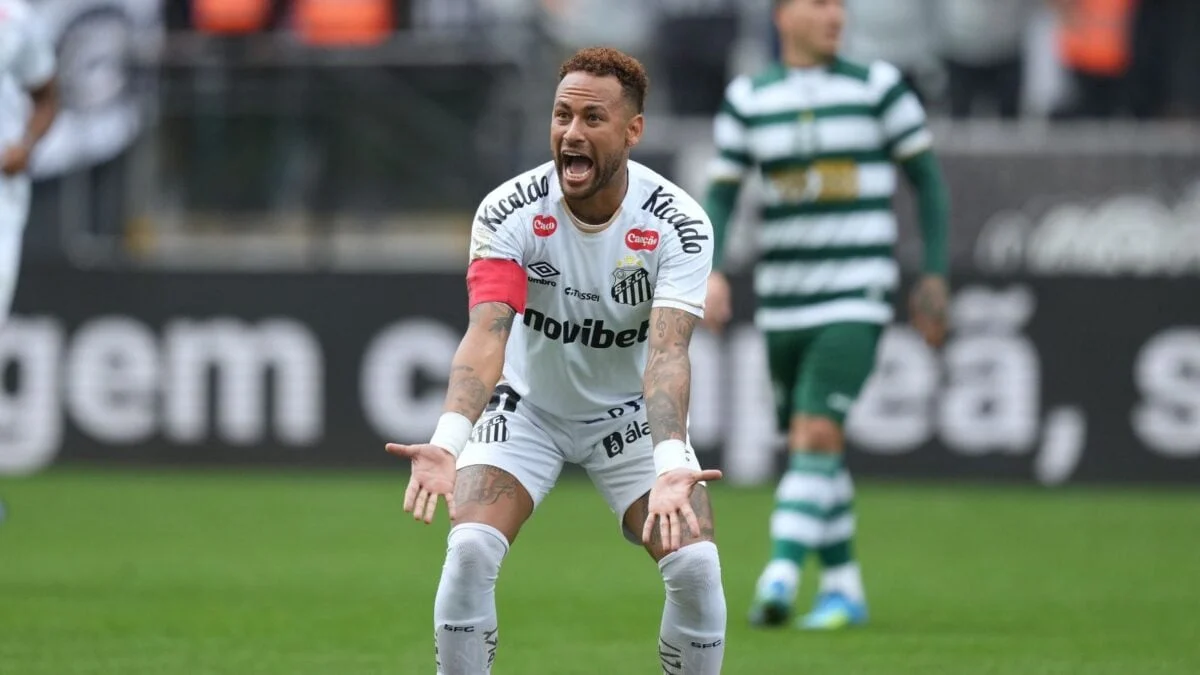
New Delhi, India – May 26, 2026 – As the FIFA World Cup in the United States looms, Brazil’s footballing landscape is abuzz with speculation, not least concerning the iconic No. 10 jersey. In a significant display of respect and team hierarchy, burgeoning superstar Vinicius Junior has unequivocally stated that the legendary shirt, previously worn by Pele, Zico, and Ronaldinho, unequivocally belongs to Neymar, effectively ruling himself out of contention for the number at the upcoming tournament. This declaration comes amidst the highly anticipated, and somewhat controversial, inclusion of Neymar in Carlo Ancelotti’s 26-man squad, despite the talismanic forward’s prolonged absence from the national team due to a debilitating knee injury.
The announcement from Vinicius Jr., a player widely regarded as the heir apparent to Brazil’s attacking throne, underscores the immense reverence still held for Neymar within the Seleção camp, even as the veteran grapples with fitness concerns. While the Real Madrid winger’s statement clarifies the immediate future of the prestigious jersey, it simultaneously casts a spotlight on Ancelotti’s tactical conundrum: how to integrate a returning, potentially peripheral, Neymar into a squad that has evolved in his absence, and whose balance remains a subject of intense debate.
Chronology: Neymar’s Journey Back to the Seleção Spotlight
Neymar’s path to what will be his fourth FIFA World Cup appearance has been fraught with challenges, marked by a severe injury that cast a long shadow over his international career. His inclusion in Ancelotti’s squad, announced in May 2026, represents a testament to his enduring influence and the coach’s belief in his unique, albeit now potentially limited, capabilities.
The Injury Setback: October 2023
The turning point in Neymar’s recent international career occurred on October 17, 2023, during a CONMEBOL World Cup qualifier against Uruguay. In a moment that sent shockwaves through the footballing world, Neymar suffered a devastating anterior cruciate ligament (ACL) and meniscus tear in his left knee. The injury, sustained early in the first half after an innocuous challenge, saw him stretchered off in tears, immediately signaling the severity of the blow. Subsequent medical evaluations confirmed the worst, necessitating complex reconstructive surgery and initiating a lengthy rehabilitation process. This injury not only sidelined him from club duties with Al-Hilal but also effectively removed him from the national team picture for well over two years, leaving a significant void in Brazil’s attacking prowess.
A Period of Absence and Speculation
In the wake of Neymar’s injury, the Seleção entered a period of transition and experimentation. Without their primary creative force and goalscorer, other players were forced to step up and assume greater responsibility. During this time, the iconic No. 10 jersey, traditionally reserved for Brazil’s most gifted playmaker, was passed around. Both Vinicius Junior and Raphinha, two dynamic wingers, notably wore the famous shirt in Neymar’s absence, signaling a potential shift in the team’s creative hub. This period sparked considerable debate among fans and pundits alike regarding who would permanently inherit the mantle, especially with Neymar’s international future appearing increasingly uncertain. The team’s performances were often inconsistent, highlighting how deeply dependent Brazil had become on Neymar’s individual brilliance, and simultaneously underscoring the challenge of building a cohesive unit without him.
The Road to Recovery: A Grueling Rehabilitation
Neymar’s rehabilitation was a grueling and often solitary journey. Following successful surgery, he embarked on an intensive recovery program, meticulously overseen by a team of medical experts and physiotherapists. The process involved months of physical therapy, strength training, and gradual reintroduction to on-field activities. Public appearances were rare, but occasional updates from his club or social media offered glimpses into his dedication. Despite setbacks and the mental toll of such a severe injury, Neymar remained committed to returning to the pitch, fueled by the desire to represent his country once more, particularly on the grandest stage of the World Cup. His determination to overcome this significant physical challenge has been a recurring theme in his career, further solidifying his reputation as a resilient athlete.
Ancelotti’s Bold Decision: May 2026
The climax of this chronological narrative arrived in May 2026, with Carlo Ancelotti’s announcement of Brazil’s 26-man squad for the FIFA World Cup. The inclusion of Neymar, despite not having been capped in nearly three years and with lingering questions about his match fitness, sent ripples across the footballing world. Ancelotti, renowned for his tactical acumen and man-management, faced immediate scrutiny. His decision was interpreted by some as a calculated risk, banking on Neymar’s experience and potential influence, even if only from the bench. Others viewed it as a sentimental choice, potentially disrupting team cohesion and taking a spot from a fully fit, in-form player. Regardless, Ancelotti’s gamble has set the stage for one of the most compelling storylines of the upcoming tournament, with all eyes on how the veteran forward will contribute to the Seleção’s quest for a record-extending sixth World Cup title.
Supporting Data: The Weight of the "Dez" and Neymar’s Enduring Legacy
The No. 10 jersey in Brazilian football is not merely a number; it is a sacred symbol, imbued with a rich history and immense expectation. For Vinicius Jr. to publicly declare it "belongs to Neymar" speaks volumes about the enduring reverence for the veteran and the profound significance of this particular shirt.
The Iconic No. 10 Jersey: A Legacy of Legends
The No. 10 shirt for Brazil is arguably the most iconic jersey in international football. It represents creativity, flair, leadership, and the very essence of "Joga Bonito" – the beautiful game. Its lineage is unparalleled:
- Pele: The undisputed king, who wore it during all three of Brazil’s World Cup triumphs in 1958, 1962, and 1970, defining the role of the attacking midfielder/forward with his unparalleled skill and goalscoring prowess.
- Zico: The elegant playmaker of the 1980s, revered for his sublime free-kicks and vision, even though a World Cup eluded him.
- Rivaldo: A powerful and technically gifted forward who was instrumental in Brazil’s 2002 World Cup victory.
- Ronaldinho: The dazzling magician who captivated audiences with his audacious skills and infectious joy for the game, also part of the 2002 winning squad.
- Kaká: The last Brazilian Ballon d’Or winner, an elegant attacking midfielder who carried the creative burden in the mid-2000s.
These players not only wore the number but embodied its spirit, becoming national heroes and global icons. For any player to don this jersey is to carry the weight of this extraordinary legacy, a burden of expectation that transcends mere performance statistics. Vinicius Jr.’s statement acknowledges this profound heritage, demonstrating a maturity that prioritizes collective respect over individual ambition for a symbolic number.
Neymar’s Unrivaled Scoring Record: Surpassing the King
Beyond the symbolism of the No. 10, Neymar’s contributions to Brazilian football are etched in the record books. With 79 international goals, he stands as Brazil’s all-time leading goalscorer, having surpassed the legendary Pele’s long-standing record of 77 goals (recognized by FIFA). This achievement alone solidifies his place in the pantheon of Brazilian footballing greats. His prolific scoring ability, combined with his exceptional dribbling, passing, and vision, has made him an indispensable figure for the Seleção for over a decade. While his critics often point to his failure to deliver a World Cup trophy, his individual statistics remain undeniable proof of his immense talent and impact. This goalscoring prowess, despite his injury, is undoubtedly a key factor in Ancelotti’s decision to include him, hoping he can still provide a decisive moment if called upon.
Vinicius Jr.’s Rising Stardom: A Future Captain?
Vinicius Junior, at just 25 years old, has rapidly ascended to become one of the most electrifying and impactful players in world football. His blistering pace, mesmerizing dribbling, and increasingly clinical finishing have made him a cornerstone of Real Madrid’s recent successes, including multiple Champions League titles. For Brazil, he has become a vital attacking outlet, capable of changing games with his directness and creativity. His maturity in deferring the No. 10 to Neymar, despite being arguably the team’s most in-form attacking player, highlights a self-awareness and respect that bodes well for his future leadership prospects. It suggests a player focused on winning as a team rather than personal accolades or symbolic gestures, a trait that will undoubtedly endear him to fans and teammates alike. This decision could be seen as a strategic move, showcasing his readiness for greater responsibility without needing the immediate trappings of the "Dez."
The World Cup Stage: Neymar’s Previous Appearances
The upcoming tournament will mark Neymar’s fourth appearance at the FIFA World Cup, a significant milestone. His previous World Cup campaigns have been a mixed bag of brilliant moments, crushing injuries, and ultimately, collective disappointment:
- 2014 (Brazil): His tournament ended prematurely with a fractured vertebra in the quarter-finals, arguably robbing Brazil of their best chance on home soil.
- 2018 (Russia): He was heavily targeted by opposition defenses, and while he showed flashes of brilliance, Brazil exited in the quarter-finals to Belgium.
- 2022 (Qatar): Despite scoring a sensational goal against Croatia in the quarter-finals, Brazil again fell short, losing in a penalty shootout.
Each tournament has added to the narrative of Neymar’s quest for the elusive World Cup trophy, intensifying the pressure on him and now, the intrigue surrounding his fitness and role in this latest attempt. His "peripheral role," as suggested, could be a deliberate strategy to manage expectations and allow him to contribute selectively, leveraging his experience and occasional flashes of genius.
Official Responses: Ancelotti’s Vision and Team Dynamics
The decisions made by Carlo Ancelotti and the public statements from players like Vinicius Jr. offer crucial insights into the current dynamics within the Seleção and the strategic thinking guiding Brazil’s World Cup preparations.
Ancelotti’s Rationale: A Calculated Gamble on Experience
Carlo Ancelotti, a coach renowned for his pragmatic approach and ability to manage star players, faces one of his most significant challenges with Brazil. His rationale for including an injured Neymar, who has not been capped for three years, is multi-faceted:
- Experience and Leadership: Neymar brings an unparalleled wealth of World Cup experience. Even if not fully fit, his presence in the dressing room, his understanding of the big occasion, and his ability to inspire could be invaluable, especially for younger players like Vinicius Jr. and Rodrygo.
- Psychological Boost: The sheer presence of Neymar, even if limited, can be a psychological boost for his teammates and a deterrent for opponents. His aura alone commands respect.
- Impact Player: Ancelotti might envision Neymar as a game-changer off the bench. In tight matches, a fit Neymar, even for 20-30 minutes, could unlock defenses or provide a moment of individual brilliance that no other player can.
- Tactical Flexibility (or Necessity): While the article suggests a "peripheral role," Ancelotti might be hoping that Neymar can recover enough to offer tactical options, perhaps in a deeper playmaking role or as a false nine, depending on match situations.
However, this decision also carries significant risks. It places immense pressure on Ancelotti to justify the selection if Neymar cannot contribute meaningfully, and it raises questions about fairness to other in-form players who might have been overlooked.
Vinicius Jr.’s Statement: A Mark of Respect and Maturity
Vinicius Jr.’s declaration to CazeTV – "I don’t know what number I will wear at the World Cup, but the No. 10 belongs to Neymar; that is obvious" – is more than just a soundbite. It is a profound statement on several levels:
- Respect for Hierarchy: It reinforces the traditional hierarchy within Brazilian football, where legends are revered, and their place is acknowledged by younger generations.
- Team Cohesion: By publicly removing himself from the No. 10 debate, Vinicius avoids potential internal friction or media-driven rivalries, promoting unity within the squad.
- Focus on Performance: It signals that his primary focus is on contributing to the team’s success, regardless of the number on his back. He understands that his value lies in his play, not in a jersey.
- Future Leadership: This act of deference positions Vinicius Jr. as a mature leader-in-waiting, someone who understands the culture and traditions of the Seleção. It showcases his humility and his willingness to put the team first, qualities essential for a future captain.
Squad Balance Concerns: Strengths and Deficiencies
The original article correctly identifies "clear deficiencies" in Ancelotti’s squad despite some undeniable strengths.
- Defensive Base: The core of the defense is indeed formidable. Alisson Becker (Liverpool) remains one of the world’s premier goalkeepers, known for his shot-stopping and distribution. In central defense, Gabriel Magalhaes (Arsenal) and Marquinhos (PSG) form a robust partnership, offering a blend of aerial dominance, passing ability, and leadership. This defensive solidity is a significant asset in tournament football.
- Deficiencies:
- Full-back: This has been a recurring problem for Brazil since the likes of Cafu and Roberto Carlos. While players like Danilo, Alex Sandro, and Emerson Royal have been adequate, none possess the consistent world-class attacking and defensive balance of past legends. This lack of dynamic width from the full-back positions can limit attacking options and expose the defense.
- Central Midfield: The engine room of the team often lacks a consistent, world-class creative presence or a dominant defensive anchor of the caliber of past Brazilian greats. While Casemiro (Manchester United) provides crucial defensive solidity, the options for playmaking and box-to-box dynamism might not be as strong as desired, potentially leaving the team vulnerable to counter-attacks or struggling to break down resolute defenses.
- Centre-forward: Brazil has struggled to find a true "number nine" since the likes of Ronaldo and Romario. While Richarlison, Gabriel Jesus, and others have shown flashes, none have consistently established themselves as a dominant, prolific striker. This puts immense pressure on wide players like Vinicius Jr. and Rodrygo to shoulder the primary goalscoring burden. Neymar’s "peripheral role" further exacerbates this, as his traditional goalscoring contribution might be limited.
The Role of Other Key Players
Beyond the Neymar-Vinicius dynamic, Brazil boasts a roster of formidable talent. Rodrygo (Real Madrid) offers similar dynamism to Vinicius on the opposite flank. Midfielders like Bruno Guimarães (Newcastle United) and Lucas Paquetá (West Ham) will be crucial for ball retention and linking play. The effectiveness of these players will be paramount, particularly if Neymar’s contributions are indeed restricted, forcing them to step up and provide the decisive moments.
Implications: Brazil’s World Cup Hopes and the Future of the Seleção
The decisions and statements surrounding Neymar and Vinicius Jr. have profound implications for Brazil’s immediate World Cup aspirations and the long-term trajectory of the Seleção.
Tactical Implications of Neymar’s Role: Impact Sub or Mentor?
If Neymar is indeed limited to a "peripheral role," Ancelotti’s tactical genius will be truly tested.
- Impact Sub: His most likely role could be as a high-impact substitute, unleashed in the latter stages of games against tiring defenses. His ability to draw fouls, create chances, and deliver set-pieces could be invaluable in breaking stalemates.
- Off-Field Leader: Even from the bench, his presence and experience can serve as a vital source of guidance and motivation for the younger players. He could be a mentor, offering tactical advice and emotional support during high-pressure moments.
- Squad Harmony: The challenge will be managing expectations, both internally and externally, ensuring that his presence doesn’t overshadow the contributions of fully fit players who are regularly starting.
Pressure on Ancelotti and the Squad: The Weight of Expectation
The inclusion of an injured talisman in an already "unbalanced" squad places immense pressure on Ancelotti. Brazil, as a five-time champion, always enters the World Cup as a favorite, and anything less than a deep run is considered a failure. Ancelotti, a celebrated club coach, is now tasked with uniting this diverse group, managing the Neymar narrative, addressing squad deficiencies, and ultimately delivering the nation’s sixth title. The squad itself will feel the immense weight of expectation, not just from the fans but also from the legacy of past Brazilian teams.
The "Last Dance" Narrative for Neymar?: A Quest for Redemption
For Neymar, this World Cup carries the potent narrative of a potential "last dance." At 34, and having endured a career-threatening injury, this could very well be his final opportunity to lift the coveted trophy that has eluded him throughout his illustrious career. This adds a layer of emotional intensity to his inclusion. Will he, in a limited capacity, finally achieve the ultimate glory that has defined the careers of his legendary predecessors? The emotional stakes for him, and for a nation yearning for another title, are incredibly high.
Vinicius Jr.’s Leadership Trajectory: The Future Captain Emerges
Vinicius Jr.’s public deference to Neymar solidifies his position as a mature, team-oriented leader. This act of humility, combined with his electrifying performances, suggests he is not only ready to inherit the attacking mantle but also the captaincy in due course. His focus on collective success over individual glory is a hallmark of true leadership, indicating that Brazil’s future is in capable hands. He is embracing the role of the primary attacker without needing the symbolic pressure of the No. 10, allowing him to play freely and effectively.
The Road Ahead: Group Stage Challenges and Knockout Aspirations
Brazil will navigate a challenging World Cup journey. Their group stage matches will be crucial for building momentum and gelling as a team. Beyond that, the knockout stages will test Ancelotti’s tactical flexibility, the squad’s depth, and their ability to perform under extreme pressure. The narrative of Neymar’s return, Vinicius Jr.’s emergence, and Ancelotti’s strategic choices will undoubtedly dominate headlines as Brazil embarks on its quest for global supremacy, hoping to end a two-decade wait for the ultimate prize in football.
