

By [Your Name/News Bureau]
Published: May 1, 2026
The geographical and economic distance between India’s financial capital, Mumbai, and its academic and IT sibling, Pune, has just shrunk. The inauguration of the "Missing Link" on the Mumbai-Pune Expressway (MPEW) represents more than just a triumph of civil engineering; it is the starting gun for a massive real estate gold rush. As the bottleneck of the Khandala Ghat is bypassed by world-class tunnels and bridges, a new corridor—often referred to by urban planners as "Mumbai 3.0"—is emerging.
For decades, the drive through the Bor Ghat was a test of patience and vehicular endurance. Today, that narrative has shifted. With travel times slashed and safety significantly enhanced, the real estate markets of Lonavala, Karjat, Khopoli, and Khalapur are no longer viewed as distant weekend retreats. They are becoming viable extensions of the Mumbai Metropolitan Region (MMR).
Main Facts: A Game-Changer for Connectivity
The Missing Link project is a 13.3-kilometer bypass designed to eliminate the steep gradients and hairpin bends of the existing expressway section between Khopoli and Kusgaon.
The Engineering Marvel
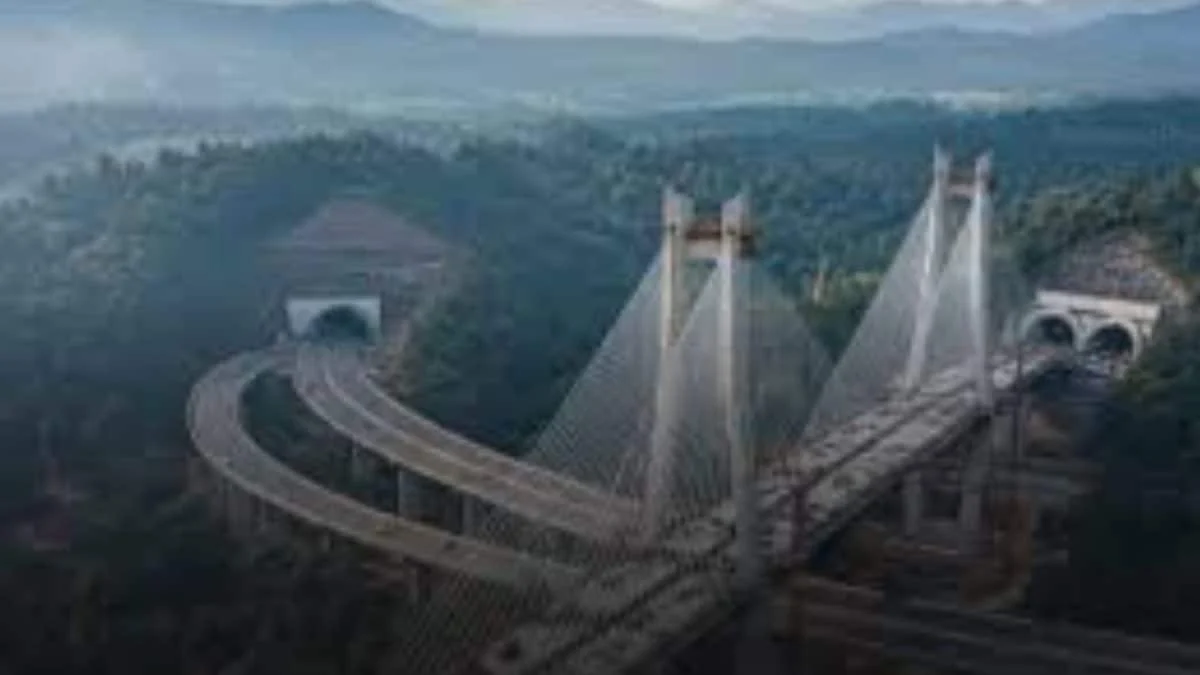
The project features the world’s widest twin tunnels, stretching approximately 10.55 kilometers, and a massive cable-stayed bridge that stands as a testament to modern Indian infrastructure. By bypassing the traditional ghat section, the project effectively reduces the distance between the two cities by 6 kilometers and, more importantly, cuts travel time by 20 to 30 minutes.
The Real Estate Magnet
In the world of property investment, there is an ironclad rule: infrastructure precedes appreciation. The Missing Link has acted as a catalyst for institutional developers. Major players like Godrej Properties and NeoLiv have already staked their claims in the Raigad district.
- Godrej Properties: Has acquired a massive 90-acre land parcel in Khalapur with a development potential of 1.7 million square feet.
- NeoLiv: Backed by 360 ONE, the firm has entered the Khopoli market, focusing on high-end plotted developments and villas.
Chronology: From Bottleneck to Breakthrough
To understand the magnitude of the Missing Link, one must look at the evolution of the Mumbai-Pune connectivity:
- 2002: The Mumbai-Pune Expressway, India’s first six-lane high-speed, access-controlled toll expressway, is fully opened. It revolutionizes travel but leaves the 19-km "Ghat" section shared with the old NH-4, creating a massive traffic bottleneck.
- 2017-2018: The Maharashtra State Road Development Corporation (MSRDC) conceptualizes the "Missing Link" to bypass the landslide-prone and congested Bor Ghat.
- 2019: Construction begins on the ambitious project, involving deep tunneling using contemporary "New Austrian Tunneling Method" (NATM) techniques.
- 2021-2023: Despite the challenges of the pandemic, tunneling milestones are achieved. The project gains "Mega Project" status due to its complexity and scale.
- 2024-2025: Finishing touches on the cable-stayed bridges and advanced ventilation systems in the tunnels are completed.
- May 2026: The Missing Link is officially operational, fundamentally altering the commute for over 60,000 vehicles daily.
Supporting Data: The Economics of the Corridor
The impact of the Missing Link is quantifiable across two major sectors: transportation efficiency and real estate valuation.
Traffic and Safety Data
Before the Missing Link, the Khandala Ghat section was a hotspot for accidents and monsoon-related landslides. MSRDC data suggested that traffic slowed to a crawl of 20-30 km/h during peak hours. The new link allows for a consistent speed of 100 km/h, significantly reducing carbon emissions from idling engines and improving the logistics efficiency for freight moving from Mumbai’s ports to the hinterlands.
Real Estate Appreciation
Market research from firms like Colliers and JLL indicates a sharp uptick in interest in the "Mumbai 3.0" zone:
- Khopoli: Ranked as a top investment micro-market due to its industrial base and newfound proximity to the Expressway bypass.
- Karjat/Neral: Land prices in these regions have seen a Year-on-Year (YoY) growth of 12-15% since the Missing Link’s completion became imminent.
- Plotted Developments: There is a 40% increase in inquiries for "NA" (Non-Agricultural) plots compared to 2023, as buyers seek low-density living options.
Official Responses: A Vision for Integrated Growth
Government bodies and industry leaders view the Missing Link as the linchpin of a much larger ecosystem.
The MSRDC Perspective:
Officials from the MSRDC have noted that the Missing Link is not an isolated project. It is designed to work in tandem with the Mumbai Trans-Harbour Link (MTHL) and the upcoming Virar-Alibaug Multimodal Corridor. "We are creating a seamless loop around the Mumbai Metropolitan Region. The Missing Link ensures that the ‘choke point’ of the expressway is gone forever," an MSRDC engineer stated during the inauguration.
Industry Leadership:
Gautam Thacker, Founder President of NAREDCO Raigad, highlights the shift in buyer sentiment. "The improved connectivity is already translating into heightened interest from Pune-based developers and Mumbai homebuyers alike. They no longer see Karjat or Khopoli as ‘remote.’ They see them as highly accessible destinations for both lifestyle and investment," Thacker noted.
Developer Strategy:
Mohit Malhotra, Founder of NeoLiv, emphasizes the strategic importance of the micro-markets. By targeting Khopoli for luxury plotted developments, developers are betting on the "reverse migration" of affluent professionals looking for space, air quality, and connectivity.
Implications: What This Means for Investors and Residents
The opening of the Missing Link carries deep implications for the socio-economic fabric of the region.
1. The Rise of "Hybrid Living"
The reduction in travel time has transformed Lonavala and Karjat from "weekend getaway" spots to potential "first home" or "hybrid home" locations. With the post-pandemic acceptance of remote and hybrid work, a professional can now live in the serene hills of Lonavala and commute to a Mumbai or Pune office two days a week without the exhaustion of the old ghat climb.
2. Diversification of the Investment Portfolio
The focus has shifted from high-rise apartments in congested city centers to "plotted developments." Investors are buying land parcels to build bespoke villas. This trend is fueled by the desire for "wellness-focused" living, where air quality and open spaces are prioritized.
3. Industrial and Logistics Boost
Beyond residential real estate, the Khalapur-Khopoli belt is set to become a massive logistics and warehousing hub. The ease of movement for heavy vehicles means that companies can set up distribution centers that can serve both Mumbai and Pune markets with unprecedented speed.
4. A Word of Caution for Investors
While the "Missing Link" narrative is overwhelmingly positive, experts urge first-time investors to exercise due diligence. The "infrastructure boom" often attracts unscrupulous elements.
- Title Verification: Many areas in the Raigad and Karjat belt involve complex land titles, including tribal land and forest-adjacent plots. Investors must ensure clear, marketable titles.
- RERA Compliance: Always opt for RERA-registered projects, especially when dealing with plotted developments that promise future amenities like clubhouses and roads.
- The "Hype" Premium: Some micro-markets may already have priced in the benefits of the Missing Link. Investors should look for "entry-level" pricing in emerging pockets rather than overpaying for "peak-hype" locations.
Conclusion: Mapping the Future
The Mumbai-Pune Missing Link is more than a shortcut; it is a bridge to a new way of living in Western India. By taming the rugged terrain of the Sahyadris, the project has unlocked thousands of acres of land for sustainable development.
As Godrej, NeoLiv, and other giants continue to reshape the skyline of the Raigad district, the corridor is set to become a testament to how infrastructure can decentralize urban congestion. For the savvy investor, the map has been redrawn. The challenge now lies not in reaching the destination, but in choosing the right spot along this high-speed path to prosperity. The "Missing Link" has been found, and with it, a new era for Maharashtra’s real estate has begun.
