

For decades, the prevailing narrative in global ecology has suggested that the wealthy, industrialized nations of the Global North are the primary victims of biological invasions. With their massive trade networks and high volumes of international travel, countries like the United States, Germany, and Australia have recorded thousands of non-native species establishing themselves within their borders. However, a groundbreaking study published in the journal Science has fundamentally challenged this perspective.
The research reveals a stark and troubling reality: while the Global North may document more invasive species, it is the Global South that bears the brunt of their most severe environmental impacts. This discrepancy, the study argues, is not a reflection of ecological reality but is instead a byproduct of profound research bias and a lack of management capacity in developing nations. By shifting the focus from the sheer number of invasive species to the severity of their impact, the study exposes a hidden crisis that threatens the world’s most biodiverse regions.
Main Facts: A Paradigm Shift in Invasion Science
The core of the study, led by Sven Bacher, Petr Pyšek, and Hanno Seebens, lies in its critique of how we measure ecological damage. Traditionally, global biodiversity assessments have relied on "species counts"—simply listing how many invasive alien species (IAS) are present in a country. Because wealthy nations have the funding, infrastructure, and scientific workforce to monitor their ecosystems, they naturally report higher numbers of invasive species.
The Science study introduces a more nuanced metric: average impact severity. Rather than asking "How many invasive species are there?", the researchers asked, "When an invasive species is present, how much damage does it do?"
Key Findings:
- Severity Disparity: The average environmental impact of invasive species is significantly higher in the Global South than in the Global North.
- The Research Bias: High research effort in wealthy nations creates an "illusion of impact," where the abundance of data is mistaken for an abundance of ecological destruction.
- Governance as a Buffer: The study identifies strong governance and management capacity as the primary reasons why wealthy nations can withstand biological invasions better than poorer nations.
- India as a Case Study: India represents a unique intersection—a large, emerging economy with high documented impacts but also a disproportionately high level of impact severity compared to its Northern counterparts.
- Vulnerability of Emerging Economies: Countries experiencing rapid economic growth are at the highest risk, as increased trade brings in new species before management systems are robust enough to handle them.
Chronology: Building the Global Picture
The journey to these findings involved the synthesis of decades of ecological data. The researchers did not conduct new field experiments; instead, they performed a massive meta-analysis of existing global databases to uncover patterns that had previously been obscured by the "noise" of research bias.
The Data Integration Phase
The study relied on two primary global datasets:
- SInAS (Global Database on Alien Species): This database records the distribution of more than 39,700 alien species worldwide, providing a baseline for where these species are located.
- GIDIAS (Global Invasive Species Database of Impacts and Actions): This contains more than 22,000 documented impacts involving over 3,300 invasive alien species. The data was drawn from over 6,700 scientific and "grey-literature" sources (government reports, NGO white papers) across 172 countries.
The Application of EICAT (2020-Present)
To standardize the assessment of damage, the team utilized the Environmental Impact Classification for Alien Taxa (EICAT), a protocol adopted by the International Union for Conservation of Nature (IUCN). EICAT categorizes impacts based on their severity, ranging from "Minimal Concern" to "Massive" (global extinction).
By applying this standardized framework to the GIDIAS and SInAS datasets, the researchers were able to filter out the "volume" of reports and focus on the "intensity" of the ecological consequences. The study, published in late 2024, represents the culmination of years of data harmonization aimed at correcting the North-centric view of global ecology.
Supporting Data: The Metric of Severity
To understand why the Global South is more vulnerable, one must look at the data through the lens of the EICAT scale. Under this system, an impact is considered "severe" when an invasive species causes:
- A significant decline in a native population.
- Local extirpation (the disappearance of a species from a specific area).
- Global extinction.
The "Research Effort" Distortion
The study highlights a massive imbalance in scientific output. In many Global North countries, there are thousands of published papers on a single invasive species, such as the zebra mussel or the emerald ash borer. In contrast, in parts of Southeast Asia, Central Africa, or South America, a highly destructive invasive species might only be mentioned in a handful of local reports.
When the researchers calculated the proportion of documented impacts that are severe, the results flipped the traditional map. While the U.S. and Europe have more total documented impacts, a smaller percentage of those impacts reach the "severe" or "massive" threshold compared to the impacts documented in the Global South.
The Governance Factor
The researchers correlated impact severity with indicators of governance, such as the World Bank’s Worldwide Governance Indicators. The data showed a clear inverse relationship: as governance and management capacity increase, the average severity of invasive species impacts decreases. Wealthy nations utilize:

- Strict Biosecurity: Rigorous inspections at ports and airports to prevent entry.
- Early Detection and Rapid Response (EDRR): Systems that identify and eradicate a new species before it can spread.
- Long-term Mitigation: Funding for mechanical, chemical, or biological control of established pests.
In many Global South nations, these systems are either underfunded or non-existent, allowing invasive species to reach "severe" impact levels unchecked.
Official Responses and Perspectives
The findings have sparked a call for a radical reallocation of global biodiversity funding. While official government responses are often slow, the scientific community and international bodies like the Intergovernmental Science-Policy Platform on Biodiversity and Ecosystem Services (IPBES) have long warned of the "taxonomic and geographic bias" in ecology.
The Call for Global Equity
The authors of the study, along with biodiversity advocates, argue that the current focus on the Global North is a form of "scientific myopia." By neglecting the Global South, the international community is ignoring the areas where the most permanent damage—such as the extinction of endemic species—is occurring.
"Failure to recognize the Global South as facing the highest IAS impacts diverts attention and resources away from the most threatened regions," the paper notes. This sentiment echoes the goals of the Kunming-Montreal Global Biodiversity Framework, specifically Target 6, which aims to reduce the rate of invasive species introduction and establishment by 50% by 2030. Experts argue that achieving this target is impossible without a massive transfer of resources and expertise from the North to the South.
The Case of India
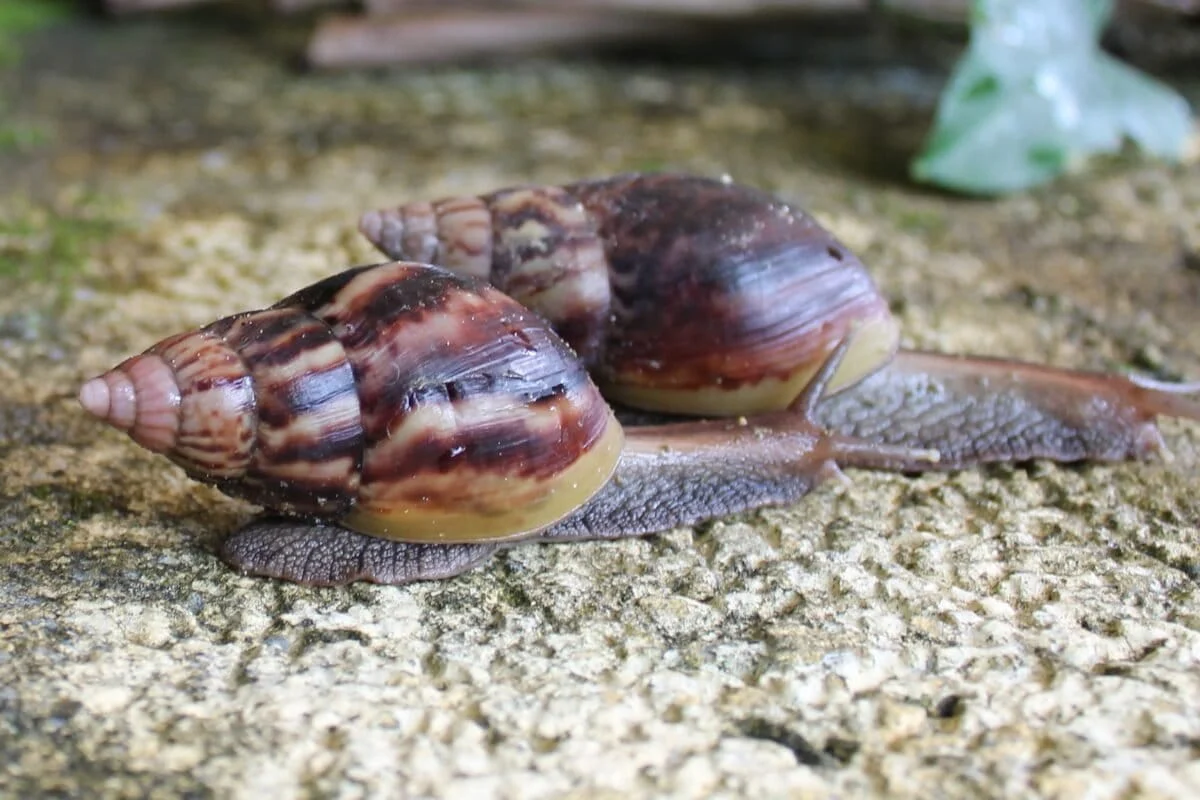
Indian ecologists have pointed to the "Giant African Snail" and invasive weeds like Lantana camara as prime examples of the study’s findings. India, categorized as a large, high-income developing economy in the context of this study, shows a high absolute number of impacts. However, unlike the U.S., India’s average impact severity remains high. This suggests that even as India grows economically, its management capacity has not yet caught up to the scale of the biological threats it faces.
Implications: A New Strategy for Biodiversity
The implications of this study are profound for both conservation policy and international development.
1. Reforming Funding Mechanisms
Currently, much of the global funding for invasive species management stays within the borders of wealthy nations. The Science study suggests that for every dollar spent on managing a localized pest in a wealthy nation, a dollar spent on biosecurity in a biodiversity hotspot in the Global South might prevent a global extinction. International aid agencies must prioritize "biosecurity capacity building" as a core component of environmental aid.
2. Knowledge Transfer
There is an urgent need for "open-science" initiatives that allow researchers in the Global South to access high-tech monitoring tools, such as environmental DNA (eDNA) tracking and satellite-based mapping, to compensate for the lack of boots-on-the-ground researchers.
3. The Trade Paradox
As emerging economies integrate more deeply into global trade, the risk of "hitchhiking" species increases. The study implies that economic development must be decoupled from ecological degradation. For nations in the Global South, this means building "green infrastructure" for trade—automated detection systems at shipping hubs—simultaneously with the expansion of the trade itself.
4. Redefining "Success" in Conservation
Success should no longer be measured by how many species we record, but by how many severe impacts we prevent. This requires a shift in scientific publishing and grant-making to value "impact assessments" from data-poor regions as much as high-resolution studies from data-rich ones.
Conclusion
The Science study serves as a wake-up call for the global scientific community. It exposes the fact that our understanding of the world’s biodiversity crisis has been filtered through a lens of privilege and data abundance. By unmasking the research bias that favored the Global North, the study brings the true victims of biological invasions into focus.
The "Invasion Gap" between the North and South is not a matter of biology, but of resources and governance. As the planet faces an unprecedented loss of species, the message is clear: we cannot protect global biodiversity if we only look at the parts of the world that can afford to be studied. The fight against invasive species must move South, where the stakes are highest and the impacts are most severe.
