

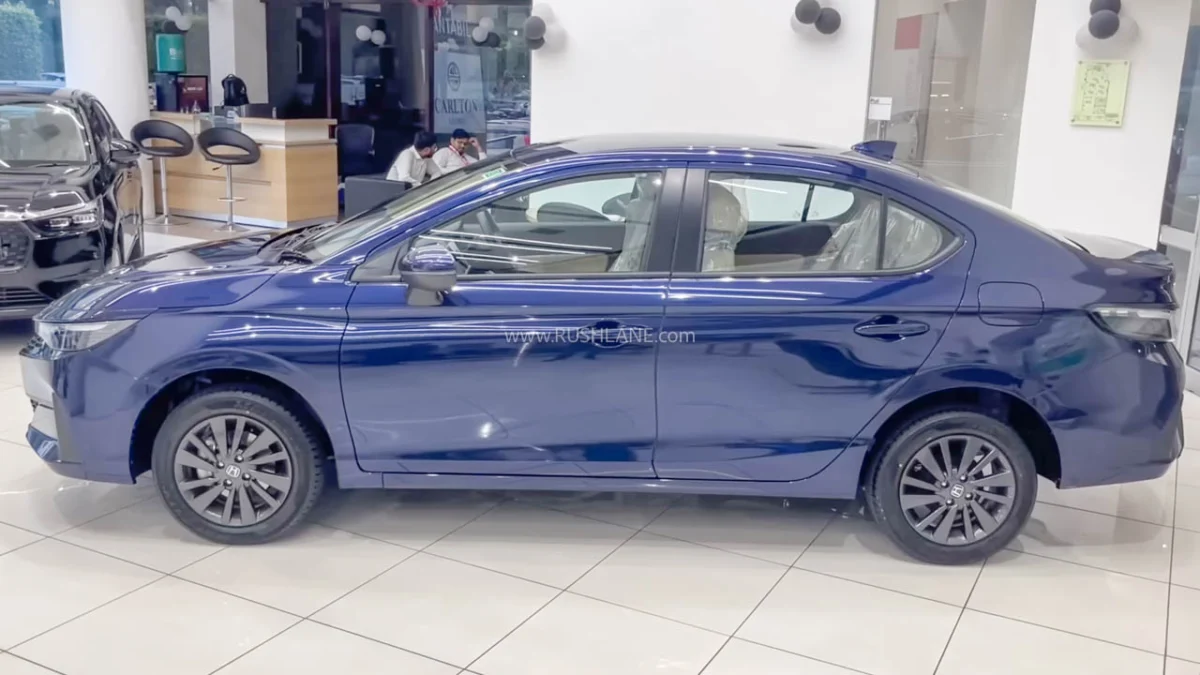
The Indian automotive landscape, long characterized by the relentless "SUV-ification" of consumer preferences, witnessed a surprising and robust display of resilience from the sedan segment in April 2026. Despite the overwhelming market share held by sub-compact and mid-size SUVs, the traditional sedan managed to carve out a significant growth trajectory, posting a year-on-year (YoY) increase of nearly 22%.
According to the latest retail and dispatch data, the sedan segment recorded total sales of 35,218 units in April 2026, a substantial leap from the 28,887 units sold during the same period in 2025. This volume gain of 6,331 units underscores a persistent, albeit specialized, demand for the three-box silhouette. However, the narrative is not one of universal success; while the YoY figures paint a picture of expansion, a month-on-month (MoM) comparison reveals an 8.52% decline from March 2026’s 38,500 units, suggesting a cooling period following the typical end-of-fiscal-year surge.
The Maruti Suzuki Dzire: An Unstoppable Force
At the heart of the sedan segment’s growth lies a single, dominant performer: the Maruti Suzuki Dzire. In April 2026, the Dzire did more than just lead its class; it redefined the parameters of market dominance. With 23,580 units sold, the Dzire alone accounted for a staggering 66.95% of the entire sedan market.
The Dzire’s performance represents a 38.74% YoY growth, up from 16,996 units in April 2025. Perhaps more impressively, it was the only major sedan to post positive growth on a month-on-month basis, climbing 11.10% from March 2026. This performance solidifies the Dzire’s position not just as a sedan leader, but as one of the top-selling passenger vehicles in India across all categories.
Industry analysts attribute this dominance to the Dzire’s "dual-threat" appeal. It remains the undisputed choice for the commercial fleet and taxi-aggregator sectors due to its low cost of ownership and high fuel efficiency, particularly in its CNG avatar. Simultaneously, its refined AMT (Automated Manual Transmission) and updated safety features continue to attract budget-conscious family buyers who prioritize the security of a trunk and the prestige associated with a sedan.
The Compact Sedan Trio: Holding the Line
While the Dzire occupies a league of its own, the Hyundai Aura and Honda Amaze continue to serve as the "silver and bronze" pillars of the segment. Together with the Dzire, these three compact sedans commanded an 88% share of the total sedan market in April 2026.
Hyundai Aura: Consistent Performance
The Hyundai Aura secured the second spot with 4,587 units. While it posted a respectable YoY growth of 8.59%, it faced a significant MoM hurdle, dropping 31.16% from its March performance. The Aura’s appeal remains rooted in its feature-rich cabin and Hyundai’s extensive service network, though it increasingly feels the pressure from the sub-four-meter SUV segment.

Honda Amaze: The Growth Outlier
The Honda Amaze emerged as the fastest-growing model among the major players in terms of percentage, recording a 41.46% YoY increase with 2,856 units sold. Despite this yearly triumph, the Amaze suffered a 33.78% MoM decline. With rumors of a next-generation Amaze on the horizon, the current model’s strong YoY performance suggests that Honda’s reputation for reliability and the Amaze’s smooth CVT gearbox continue to resonate with urban commuters.
Mid-Size Sedans: A Segment in Flux
While the compact sedan space showed YoY growth, the premium mid-size sedan segment—once the aspirational heart of the Indian middle class—told a more sobering story. Models like the Volkswagen Virtus, Skoda Slavia, and Hyundai Verna all faced declines, reflecting the intense competition from mid-size SUVs like the Hyundai Creta and Maruti Grand Vitara.
- Volkswagen Virtus: The German-engineered sedan recorded ,162 units, a 27.60% YoY decline. More concerning was the 42.16% MoM drop, the steepest among the mainstream mid-size players.
- Hyundai Verna: Despite its futuristic design and Level 2 ADAS (Advanced Driver Assistance Systems), the Verna saw sales fall 13.93% YoY to 865 units.
- Skoda Slavia: The Slavia followed a similar path, declining 20.80% YoY to 830 units.
These figures suggest that while "driving enthusiasts" still prefer the low center of gravity and handling of these European and Korean sedans, the broader consumer base is increasingly lured by the high seating position and ground clearance of SUVs.
The Honda City Anomaly: A Strategic Reset
One of the most striking figures in the April 2026 report was the performance of the Honda City. Traditionally a benchmark for the segment, the City recorded only 177 units, representing a catastrophic 56.40% YoY drop and a 78.01% MoM decline.
However, industry insiders caution against interpreting this as the "end of an era" for the City. The sharp decline is primarily attributed to a strategic inventory reset. Honda recently updated the City lineup, introducing the new ‘V’ variant equipped with ADAS as a value-for-money trim. The low sales figures in April reflect a transition period where old stock was depleted and the new variants were just beginning to reach showroom floors. Sales are widely expected to bounce back in the second quarter of the year as production of the updated model ramps up.
Supporting Data: Sales Breakdown (April 2026)
| Model | April 2026 Sales | April 2025 Sales | YoY Growth | March 2026 Sales | MoM Growth | Market Share |
|---|---|---|---|---|---|---|
| Maruti Dzire | 23,580 | 16,996 | 38.74% | 21,224 | 11.10% | 66.95% |
| Hyundai Aura | 4,587 | 4,224 | 8.59% | 6,663 | -31.16% | 13.02% |
| Honda Amaze | 2,856 | 2,019 | 41.46% | 4,313 | -33.78% | 8.11% |
| VW Virtus | 1,162 | 1,605 | -27.60% | 2,009 | -42.16% | 3.30% |
| Tata Tigor/EV | 962 | 1,296 | -25.77% | 981 | -1.94% | 2.73% |
| Hyundai Verna | 865 | 1,005 | -13.93% | 1,399 | -38.17% | 2.46% |
| Skoda Slavia | 830 | 1,048 | -20.80% | 887 | -6.43% | 2.36% |
| Toyota Camry | 199 | 288 | -30.90% | 219 | -9.13% | 0.57% |
| Honda City | 177 | 406 | -56.40% | 805 | -78.01% | 0.50% |
| Total | 35,218 | 28,887 | 21.92% | 38,500 | -8.52% | 100% |
Official Industry Perspective and Analyst Response
While manufacturers have remained cautious in their official statements, the sentiment from dealership associations suggests a "stabilization" of the sedan market. A representative from a leading Maruti Suzuki dealership in Delhi noted, "The demand for the Dzire remains unfazed by the SUV trend. For many of our customers, the priority is mileage and a boot for family luggage. The SUV might be the ‘style’ choice, but the sedan remains the ‘sensible’ choice."
Honda India, addressing the City’s performance, hinted at a logistical shift. "Our focus in April was on aligning our production cycle with the newly introduced ADAS-equipped variants. We are seeing strong booking numbers for the new V-variant, which we believe will democratize safety technology in the sedan segment," a company source mentioned.

Market analysts suggest that the YoY growth in sedans is also a result of a low base effect from the previous year and a resurgence in the hospitality and travel sectors, which has spurred demand for fleet vehicles like the Dzire and Tigor.
Implications for the Future: A Two-Tiered Market
The April 2026 sales data points toward a bifurcated future for the Indian sedan.
On one hand, the Compact Sedan (Sub-4m) segment appears to be thriving. Driven by high-volume players like Maruti and Hyundai, these cars offer a value proposition—price, efficiency, and practicality—that SUVs struggle to match at the same price point. The continued dominance of the Dzire suggests that as long as fuel prices remain a concern and the fleet market grows, the compact sedan is safe.
On the other hand, the Premium Mid-Size Sedan segment is becoming a "niche" market. To survive, brands like Volkswagen, Skoda, and Honda are pivoting toward technology (ADAS) and performance (Turbo-petrol engines) to attract enthusiasts who find SUVs too cumbersome or uninspiring to drive.
The MoM decline across almost all models except the Dzire serves as a reminder that the Indian market is still heavily influenced by seasonal cycles. April is traditionally a slower month following the high-intensity sales pushes of March. However, the 22% YoY growth proves that reports of the sedan’s "death" in India have been greatly exaggerated. The three-box car is not disappearing; it is evolving into a more specialized, value-driven, and technology-focused alternative to the high-riding SUV.
