

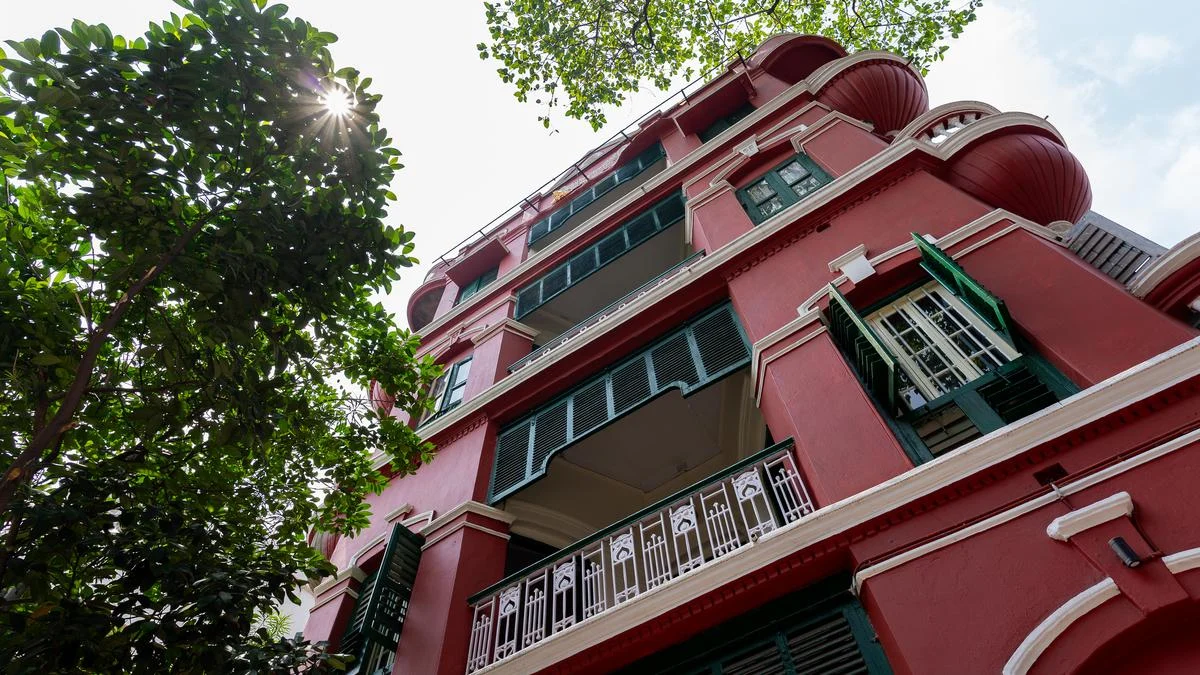
The heritage buildings of Kolkata rise against the city’s skyline like the sturdy chords of an ancient chamber organ. For decades, these architectural reeds—ranging from the grand Edwardian edifices of the central business district to the intimate, red-tiled mansions of North Kolkata—seemed to play a dirge of decay. Today, however, the music is changing. A new movement of "adaptive reuse" is transforming these structures from crumbling relics of a colonial past into vibrant, self-sustaining hubs of modern culture.
This shift represents a fundamental change in how the "City of Joy" views its history. No longer content with mere nostalgia, a new generation of entrepreneurs, conservationists, and artists is proving that preservation is not just about keeping a building standing; it is about giving it a reason to exist in the 21st century.

Main Facts: The Performance of Preservation
At the heart of this revival is a departure from the traditional "museum" approach to heritage. Instead of roping off old buildings, initiatives like "Kolkata Unforgettable" are turning them into "pre-made backdrops" for immersive cultural experiences.
On March 27, the 109-year-old Royal Insurance Building in Dalhousie Square served as the flagship for this concept. Facing the stately General Post Office (GPO), this Edwardian-Classical structure had spent decades as a cog in the city’s bureaucratic machine. However, under the guidance of Shailaja Mundra and her daughter Vasudha Pachisia, the building’s creaking stairwells were washed in neon pink and blue lights. Flamenco dancers in high heels performed on the steps, while audiences moved through the building’s various levels, experiencing history not as a lecture, but as a living performance.

The logic behind this "experiential tourism" is economic. Heritage owners often lack the financial incentive to maintain aging properties. By animating these spaces through curated performances—ranging from jazz concerts to theatrical productions—organizers generate the revenue necessary for upkeep. As Vasudha Pachisia notes, the goal is to make the venue itself the "hero" of the story.
Chronology: From Stagnation to Rebirth
The timeline of Kolkata’s architectural renaissance is marked by a shift from individual efforts to a broader, community-driven ecosystem.

- The Era of Neglect (Late 20th Century – 2010s): For years, Kolkata’s heritage was defined by "The Calcutta Rent Control Act" and a lack of clear conservation policies, leading to the slow decay of iconic structures. Many buildings were either demolished for high-rises or left to rot.
- The Return of the Diaspora (2017–2019): In 2017, Munir Mohanty returned to Kolkata from the United States. His search for a space to foster his passion for jazz led to the 2019 acquisition of a 109-year-old late colonial building on Manoharpukur Road. This would eventually become "Skinny Mo’s Jazz Bar," a landmark in the city’s adaptive reuse movement.
- The Rise of Experiential Tourism (2020–2023): Despite the pandemic, interest in "local heritage" spiked. Initiatives like "Kolkata Unforgettable" began experimenting with storytelling, music, and dance in non-traditional venues. Past events included a Dastangoi performance on filmmaker Guru Dutt inside a North Kolkata rajbari and a rare pipe organ concert at St. John’s Church.
- Structural Formalization (2022–Present): In October 2022, Avantika Jalan and John Grams acquired a 90-year-old building in Kalighat, transforming it into "The Red Bari." Simultaneously, platforms like "Jugaadopolis" emerged to provide owners with an "open-source restoration toolbox," signaling a move toward professionalizing the DIY restoration movement.
Supporting Data: The Engineering of the Old
Restoring a century-old building is not merely a cosmetic endeavor; it is a complex engineering feat that requires balancing modern safety standards with historical integrity.
The "Brick Shell" Approach
Munir Mohanty’s restoration of the Manoharpukur Road building (housing Skinny Mo’s and the cocktail parlour Nutcase) took over a year. The process involved stripping the building down to its "brick shell," removing decades of damp-ridden plaster and outdated electrical and sewage systems. To maintain the aesthetic:

- Materials: Red oxide flooring was retained, and tiles were sourced specifically from Bikaner, where palaces still utilize traditional patterns.
- Soundproofing: Modern glass was avoided to preserve the acoustic profile; instead, sound-insulated aluminum windows were integrated into the old frames.
Structural Challenges at The Red Bari
The Red Bari, a quintessential Bengali urban mansion characterized by curved balconies and khorkhori (slatted) windows, presented unique structural hurdles for owners Avantika Jalan and John Grams.
- The Fire Escape Paradox: To comply with modern safety regulations, a fire escape was required. However, the old walls could not bear the load of a new steel structure. The solution was to build the fire escape as an external, self-supporting structure that does not rely on the original building for stability.
- Plumbing and Drainage: Rather than drilling new holes through thick masonry—which can compromise structural integrity—the owners decided to replace all existing lines without changing their locations. This means the building’s old drains must be cleaned four times more frequently than those in a modern establishment to prevent blockages in the narrow, original pipes.
Official Responses: The Battle for the City’s Identity
While private citizens are leading the charge in adaptive reuse, the official landscape remains contentious. The Indian National Trust for Art and Cultural Heritage (INTACH) has been a vocal critic of the city’s current trajectory regarding unprotected structures.

The Legal Front
GM Kapur, Convenor of INTACH’s West Bengal Chapter, recently highlighted a petition filed before the Calcutta High Court. The petition raises alarms over the "weakening" of heritage protections due to redevelopment pressures. Key concerns include:
- Lost Landmarks: The demolition of the residence of legendary filmmaker Pramathesh Barua.
- Uncertain Futures: The fate of the Roxy Cinema and landmark institutional buildings like the Alipore and Presidency jails.
- The "Flattening" Trend: INTACH argues that heritage status is often altered or removed to facilitate lucrative real estate deals.
A New Marketplace for Heritage
To counter the trend of demolition, INTACH is developing a platform to bridge the gap between heritage owners (sellers) and conservation-minded investors (buyers). The goal is to create a marketplace where a building’s historical value is factored into its commercial potential, ensuring that "adaptive reuse" becomes the default option rather than the exception.

Implications: Continuity Over Nostalgia
The success of projects like Skinny Mo’s, The Red Bari, and the "Kolkata Unforgettable" series suggests a paradigm shift in urban development. The implications for Kolkata—and other heritage-rich Indian cities—are profound.
1. Economic Sustainability
The movement proves that heritage is not a financial liability. When transformed into cafes, jazz bars, or boutiques (like "Bombaim" in Kalighat), these buildings generate the revenue needed for their own survival. This "circular economy" approach reduces the burden on the state and empowers private owners to become custodians of history.

2. Cultural Continuity
Architect Aishwarya Tipnis, co-founder of Jugaadopolis, notes that most successful restorers are well-traveled individuals who view heritage as "continuity." By integrating modern lifestyle needs—such as high-end dining and alternative performance spaces—into old walls, the city avoids becoming a "museum piece" and remains a living, breathing metropolis.
3. Urban Cooling and Ecology
The "bones" of these old buildings often provide better ventilation and light flow than modern concrete blocks. Avantika Jalan points out that the thick walls and high ceilings of The Red Bari are essential to the building’s "breathability." In an era of climate change, the adaptive reuse of these structures offers a more sustainable alternative to the energy-intensive process of demolition and new construction.

4. The Restoration of Memory
Ultimately, the truest restoration is not of brick and lime, but of a city’s memory. When a 109-year-old insurance building becomes a stage for flamenco, or a 90-year-old mansion hosts a Halloween workshop, the past is no longer a distant, dusty chapter. It becomes part of the city’s current rhythm.
As Kolkata continues to navigate the tension between development and preservation, these "pockets of revival" offer a blueprint for the future. They prove that while the chords of the city’s architectural organ are ancient, they are still capable of playing new, vibrant music. The challenge now lies in ensuring that the rest of the city learns to play along.
