

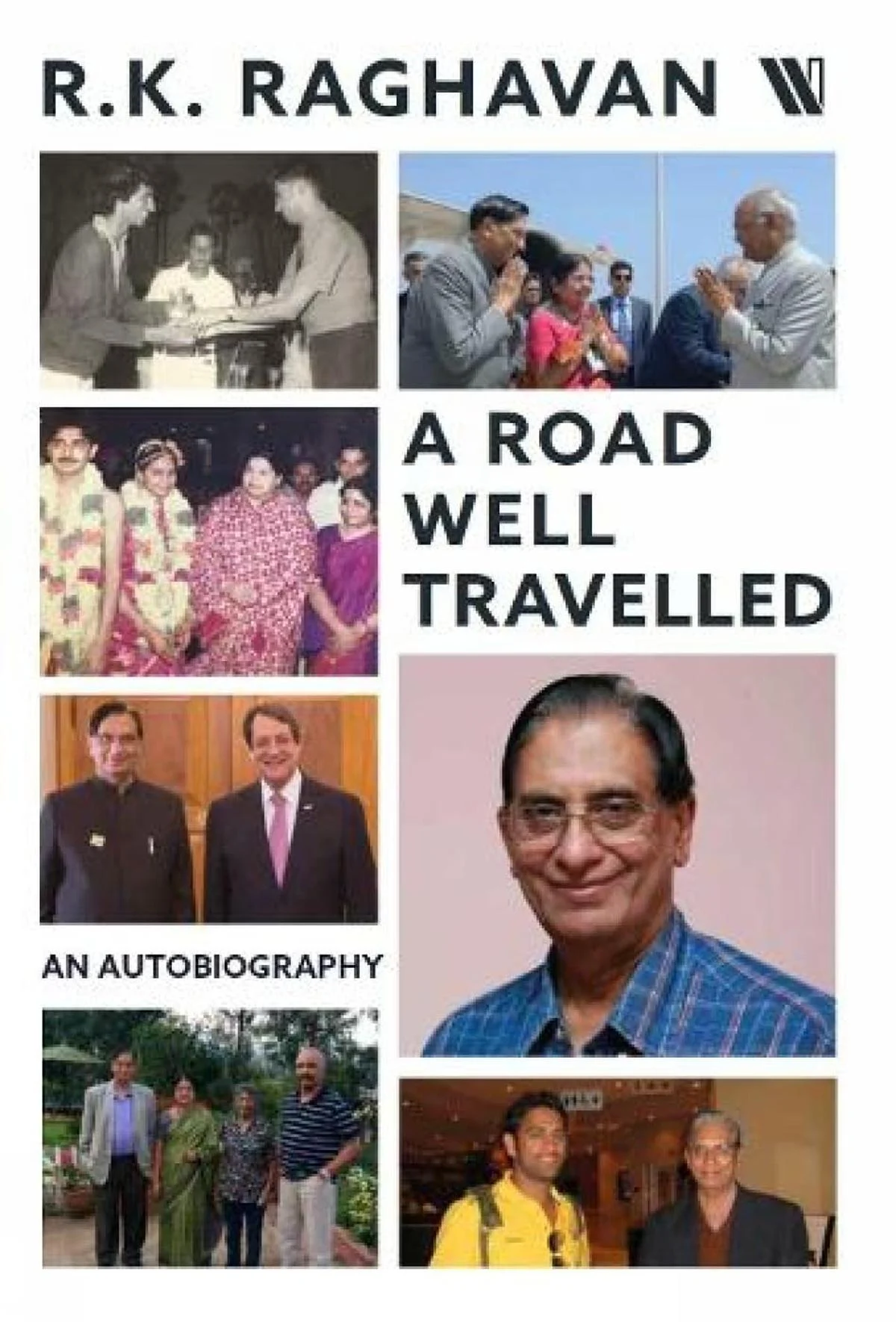
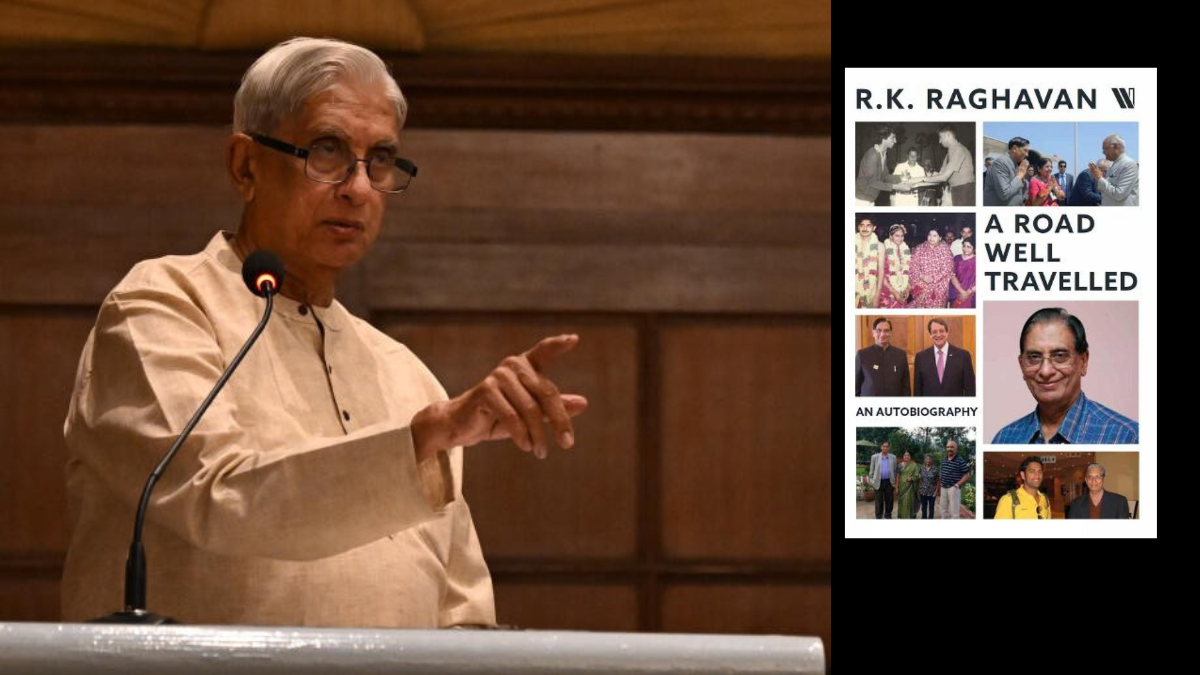
CHENNAI – In the annals of Indian law enforcement, few names carry as much weight as Dr. R.K. Raghavan. As a former Director of the Central Bureau of Investigation (CBI) and a member of the 1963 batch of the Indian Police Service (IPS), Raghavan has been at the epicenter of some of the most defining moments in India’s post-independence history. The recent release of the second edition of his autobiography, A Road Well Travelled (Westland), in Chennai on April 5, 2026, serves as more than just a personal memoir; it is a critical autopsy of the Indian state’s successes and failures in justice, security, and integrity.
At 85, Dr. Raghavan remains a formidable intellectual presence, bridging the gap between the gritty reality of field policing and the nuanced world of academic research. His career, spanning decades of service in the Tamil Nadu cadre and central agencies, provides a rare vantage point into the "chronic issues" that continue to plague the nation’s administrative and criminal justice frameworks.
Main Facts: A Career Defined by High-Stakes Justice
Dr. Raghavan’s professional portfolio reads like a history of modern India’s greatest scandals and security crises. During his tenure at the helm of the CBI and other investigative bodies, he oversaw:
- The Bofors Case: A probe into alleged kickbacks in a multi-million dollar defense deal that shook the foundations of the Indian government in the late 1980s.
- The 2000 Cricket Match-Fixing Scandal: An investigation that led to the lifetime ban (later overturned in court) of then-Indian captain Mohammad Azharuddin, forever changing the landscape of sports integrity in India.
- The Bihar Fodder Scam: The relentless pursuit of justice in the embezzlement of nearly ₹950 crore, which eventually led to the conviction of former Chief Minister Lalu Prasad Yadav.
- The 2002 Gujarat Riots SIT: Serving as the head of the Supreme Court-appointed Special Investigation Team (SIT), a role that remains his most scrutinized and controversial assignment.
Beyond these headlines, Raghavan’s memoir delves into the systemic rot he witnessed within the service, the nuances of minority representation in police forces, and the delicate balance of power between the executive and the judiciary.
Chronology: From the 1963 Batch to the Global Stage
The trajectory of R.K. Raghavan’s career reflects the evolution of the Indian Police Service itself.
- 1963: Raghavan joins the IPS under the Tamil Nadu cadre.
- The 1980s: He serves in various capacities, including a 15-year stint in the Intelligence Bureau (IB). During this period, he engaged with key figures in the Sri Lankan Tamil movement, including TULF leader A. Amirthalingam and LTTE ideologue Anton S. Balasingham, following the 1983 anti-Tamil pogroms.
- 1991: The assassination of Rajiv Gandhi at Sriperumbudur. Raghavan was the Inspector General of Police (Forest Cell) at the time and was intimately involved in the security assessments and the aftermath of the tragedy.
- 1999–2001: Raghavan serves as the Director of the CBI, navigating the complex intersection of law and politics during the NDA-1 era.
- 2008: The Supreme Court of India appoints him to lead the SIT investigating the 2002 Gujarat riots.
- Post-Retirement: His career took a diplomatic turn when he was appointed India’s High Commissioner to Cyprus, a move that drew both praise for his versatility and criticism regarding the timing of the appointment relative to the SIT’s findings.
Supporting Data: The Erosion of Institutional Integrity
In his reflections, Dr. Raghavan provides a sobering assessment of the current state of Indian bureaucracy. While he acknowledges the "brilliance" of younger officers entering the IAS and IPS—many of whom possess advanced technical and academic backgrounds—he highlights a disturbing trend: the rapid decline of integrity.
The Crisis of Morale and Leadership
Raghavan notes that the morale of the IPS is a "mixed bag," largely dependent on the state of service. He identifies two primary culprits for the low morale:
- Internal Leadership: A failure of senior officers to protect their subordinates and maintain professional rectitude.
- Political Interference: The "blatant politicization" by the executive branch, which often treats police stations as tools for political leverage rather than instruments of public service.
Training Disparities
Data from the Bureau of Police Research and Development (BPR&D) often suggests a gap in training quality, a point Raghavan emphasizes. He argues that while the National Police Academy in Hyderabad has seen significant improvements, state-level training institutes remain "poorly rated." He attributes this to the fact that training assignments are viewed as "low-glamour" postings, often used as "punishment" for officers who do not toe the political line.
The Collapse of High-Profile Cases
When asked why high-profile criminal cases frequently collapse in court, Raghavan points to a three-pronged failure:
- Poor Police Handling: Laxity and lack of scientific rigor in initial investigations.
- Public Non-Cooperation: A lack of witness protection and public trust in the system.
- Political Interference: Deliberate sabotage of investigations to protect influential figures.
Official Responses and Controversies
One of the most striking elements of Dr. Raghavan’s recent discourse is his willingness to assign historical blame, while also maintaining a strategic silence on more contemporary controversies.
The V.P. Singh Controversy
In A Road Well Travelled, Raghavan is unsparing in his critique of former Prime Minister V.P. Singh. He characterizes the withdrawal of the Special Protection Group (SPG) cover for Rajiv Gandhi as a "political decision" that was "unwarranted," even if it was technically legal under the framework of the time (which limited SPG cover to sitting PMs). Raghavan argues that this "tendentious action" created the security vacuum that allowed the LTTE to carry out the assassination in May 1991.
However, he also extends the blame to the succeeding Chandra Shekhar government for failing to restore the cover and to the Congress party for "callousness" in organizing the fateful Sriperumbudur rally.
The Question of Propriety
Perhaps the most tense moment in Raghavan’s recent public appearance was the inquiry into his appointment as High Commissioner to Cyprus. Critics have long questioned the propriety of accepting a prestigious diplomatic post shortly after the SIT he headed cleared then-Chief Minister Narendra Modi of conspiracy charges in the 2002 riots.
When pressed on whether this violated the principle of propriety, Dr. Raghavan’s response was succinct: "I decline to answer this question." This silence speaks volumes about the delicate tightrope retired officials must walk when their professional findings intersect with their subsequent career advancements.

Implications: The Future of the Indian Police Service
The reflections of Dr. R.K. Raghavan serve as a clarion call for systemic reform. His observations suggest that without a fundamental shift in how the police are governed, the "road well travelled" by future officers will only become more treacherous.
1. The Need for Insulated Investigations
The collapse of major cases due to political interference suggests an urgent need for the "insulation" of the CBI and state investigative wings from executive whims. Raghavan’s career demonstrates that while individual officers can show "rectitude," the system itself is designed to exert pressure.
2. Modernizing Training
If India is to leverage the "brilliant youngsters" entering the force, the BPR&D and state governments must revitalize training institutes. Raghavan’s critique suggests that training should not be an afterthought but the cornerstone of a professionalized force.
3. Institutional Integrity vs. Political Expediency
Raghavan’s "disillusionment" with the declining standards of integrity in the IAS and IPS is a warning. When the country’s top administrators are perceived as being susceptible to corruption or political bias within a few years of service, the social contract between the state and the citizen begins to fray.
4. Representation and Governance
His focus on minority representation—drawing parallels between the U.S. and India—highlights a growing realization that a police force must reflect the diversity of the community it serves to be effective. In the Indian context, this remains a work in progress, often hindered by rural inter-group tensions and historical biases.
Conclusion
R.K. Raghavan’s autobiography is not merely a collection of "war stories" from a veteran cop. It is a scholarly and experiential critique of the Indian Republic’s machinery of justice. While his refusal to engage with the Cyprus controversy may leave some questions unanswered, his career remains a testament to the complexities of policing a nation as diverse and politically volatile as India. As he stands at 85, his journey reminds the next generation of officers that while the road may be well-travelled, it remains one that requires constant vigilance, professional integrity, and an unwavering commitment to the rule of law.
