

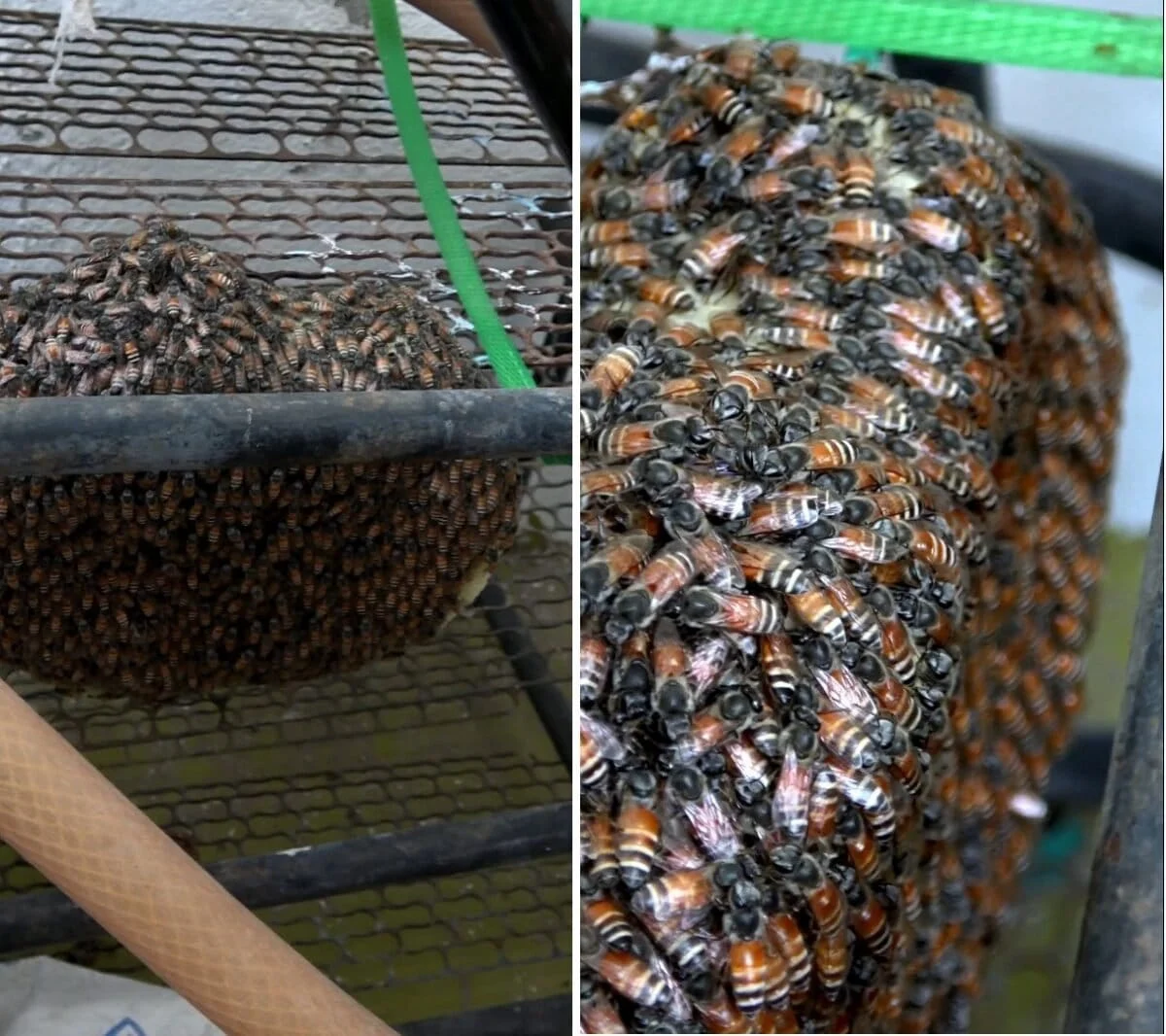
In April 2024, as the mercury in Bengaluru climbed to a staggering 38.5°C—the city’s second-hottest day in half a century—the usual midday chorus of the garden was replaced by an unsettling silence. Akshay Vidhate, a natural landscape architect whose terrace garden is a sanctuary for 30 varieties of flowering plants, was among the first to notice the void. The rhythmic hum of the dwarf honey bee, a staple of the city’s backyard ecology, had ceased.
Disturbed by the absence, Vidhate fashioned a makeshift feeder from a plastic bottle, filling it with a delicate sugar-water solution and hanging it in the shade of his terrace. "For the first few days, nothing happened," he recalls. "Then, suddenly, there were bees everywhere. Now they arrive every morning, almost on schedule."
Vidhate’s experience is more than a suburban anecdote; it is a microcosm of a profound ecological shift occurring across India’s urban landscapes. As cities expand and temperatures soar, the environments that once naturally sustained wild, open-air bees are failing. We are entering an era where essential ecosystem functions—once the invisible background noise of nature—increasingly require human intervention to survive.
Main Facts: The Generalist Pollinator at Risk
While global pollinator research has historically fixated on the Western honey bee (Apis mellifera)—a species managed in commercial hives—India’s agricultural and urban health rests on the wings of its wild, free-living cousins. Chief among these are the giant rock bee (Apis dorsata) and the diminutive dwarf honey bee (Apis florea).

The dwarf honey bee, often overlooked due to its small stature, serves as a foundational ecological safety net. "The size of a pollinator is often proportional to the size of the flower it pollinates," explains Apoorva B.V., an apiarist and founder of HoneyDay Bee Farms and the Hive Trust. Having tracked wild colonies across Karnataka for over a decade, Apoorva notes that the A. florea is a "versatile, generalist pollinator."
Its small size allows it to navigate the intricate architecture of tiny blossoms—backyard kitchen gardens, wild weeds, and essential urban crops like gourds, drumsticks, and mangoes. These are flowers that the larger, more aggressive giant rock bees often cannot effectively utilize. Despite this critical role in local food security, these bees are facing what scientists describe as a "quiet crisis," driven by the triple threat of urbanization, erratic weather, and chemical toxicity.
Chronology: From Garden City to Thermal Trap
The decline of the dwarf honey bee in Bengaluru follows a timeline that mirrors the city’s rapid transformation from a temperate "Garden City" to a sprawling, concrete-heavy "Silicon Valley."
- The Early 2010s: Bengaluru maintained a relatively stable balance of green cover. Wild colonies of A. florea were commonly found in residential hedges and low-hanging fruit trees.
- 2021: A landmark study on the functional diversity of farmland bees, published in Ecological Applications, confirmed a disturbing trend. Researchers found that social bee abundance—which accounts for 85% of all recorded bees—declined sharply as "gray areas" (construction and concrete) increased. A. florea showed the most significant negative response to urban construction.
- 2023-2024: Intense heatwaves and a deepening water crisis in Karnataka began to push these insects to their biological limits. Axel Brockmann, an associate professor at the National Centre for Biological Sciences (NCBS), notes that when local temperatures permanently exceed a species’ thermal tolerance, they are forced to retreat to higher altitudes, such as the Himalayas.
- April 2024: The record-breaking 38.5°C heatwave serves as a tipping point, leading to the mass "absconding" (nest abandonment) observed by residents like Vidhate.
Supporting Data: The Molecular Blueprint of Vulnerability
To understand why the dwarf honey bee is failing while other species persist, researchers have looked into the insect’s genetic and hormonal makeup. A recent comparative study published in the Journal of Experimental Biology has provided the first comprehensive molecular profile of A. florea.

The "Living Curtain" Strategy
Unlike cavity-nesting bees (like the Indian honey bee, Apis cerana) that live protected inside tree hollows or man-made boxes, the dwarf honey bee builds its nest entirely in the open. They suspend a single comb from exposed branches or shrubs. To survive this exposure, the species has evolved a unique biological trait: they maintain high levels of a protective protein called vitellogenin throughout their lives.
This protein allows the colony to form a "living curtain"—a dense, multi-layered shield of worker bees that clings to the exterior of the nest. This curtain regulates the temperature of the brood and protects it from predators and rain. However, this evolutionary strategy comes with a high metabolic cost.
The Staggered Maturation Cycle
The study revealed that dwarf honey bees develop significantly slower than their cavity-dwelling relatives. It takes more than three weeks for a worker to transition from nursing duties inside the nest to foraging for food outside.
In a stable environment, this slow maturation acts as a buffer. But in a volatile urban setting, it is a liability. "A single instance of spraying pesticides will wipe out most of the foragers," warns Apoorva. "Because of their biology, the colony simply cannot replace its workforce overnight. The timeline is broken."

Habitat Fragmentation
Field studies in the Kalaburagi region of Karnataka further support the data that colony size and honey production are directly tied to the availability of local flowering plants. As urban sprawl fragments these floral resources, the "foraging range" for a small bee like A. florea becomes an exhausting gauntlet of concrete, leading to smaller, more fragile colonies that are prone to abandoning their nests at the slightest disturbance.
Official Responses: The Need for an Urban Pollinator Policy
The scientific community and conservationists are increasingly vocal about the lack of institutional protection for wild bees. Because A. florea cannot be domesticated or kept in commercial boxes, it has largely been ignored by agricultural policies.
Axel Brockmann of NCBS emphasizes the data gap: "India lacks a centralized, long-term monitoring database for wild insects. There is very little research on how honey bees suffer from heat stress and pollution in India." This lack of data makes it difficult to lobby for legislative change.
M. Soubadra Devy, a Senior Fellow at the Ashoka Trust for Research in Ecology and the Environment (ATREE), argues that the current preference for "managed" bees is short-sighted. "Many people prefer stingless bees or managed hives because they can be controlled and commercialized," she says. "But dwarf bees perform the ecological heavy lifting for urban green spaces. They are free-roaming generalists that cannot be replaced by a box."

Devy and other experts are calling for a formal Urban Pollinator Policy. Such a framework would involve:
- Habitat Protection: Identifying and preserving "scrubby" or thorny vegetation—often dismissed as wasteland—which provides the ideal nesting sites for dwarf bees.
- Expert Risk Assessment: Creating panels to evaluate when a wild colony actually poses a risk to the public and when it should be left alone.
- Relocation Protocols: Moving colonies safely rather than exterminating them when they appear in residential areas.
Implications: Biosensors and Food Security
The disappearance of the dwarf honey bee is not merely a loss of biodiversity; it is a warning for human health and the economy.
Urban Food Yields
For the millions of urban residents who have turned to terrace gardening and "kitchen farming" to supplement their diets, the loss of A. florea could be devastating. Without these small-scale pollinators, yields for essential crops like gourds, tomatoes, and drumsticks are likely to crash. While larger bees can step in temporarily, they cannot sustain the same breadth of pollination across a fragmented city.
Bees as Urban Biosensors
Dhruba Naug, a social insect biologist at Colorado State University, suggests that because these bees live in open-air nests, they are uniquely exposed to the environment. "Their health directly reflects local pollution levels," Naug notes. This makes A. florea colonies potential "urban biosensors," providing real-time data on air quality and chemical toxicity that traditional sensors might miss.

The Climate Canary
Ultimately, the dwarf honey bee is the "canary in the coal mine" for urban climate change. Their struggle to regulate nest temperatures in the face of rising heat reflects the broader struggle of tropical cities to remain habitable.
As Akshay Vidhate watches the bees return to his sugar-water feeder, he is mindful of the fragility of the arrangement. "Coexistence requires balance," says M. Soubadra Devy. If Bengaluru—and cities like it—cannot find a way to integrate the needs of these wild pollinators into their urban design, the silence of April 2024 may become a permanent feature of the Indian summer. The transition from a self-sustaining ecosystem to one on life support has begun, and the humble dwarf bee is the first to feel the weight of the change.
