

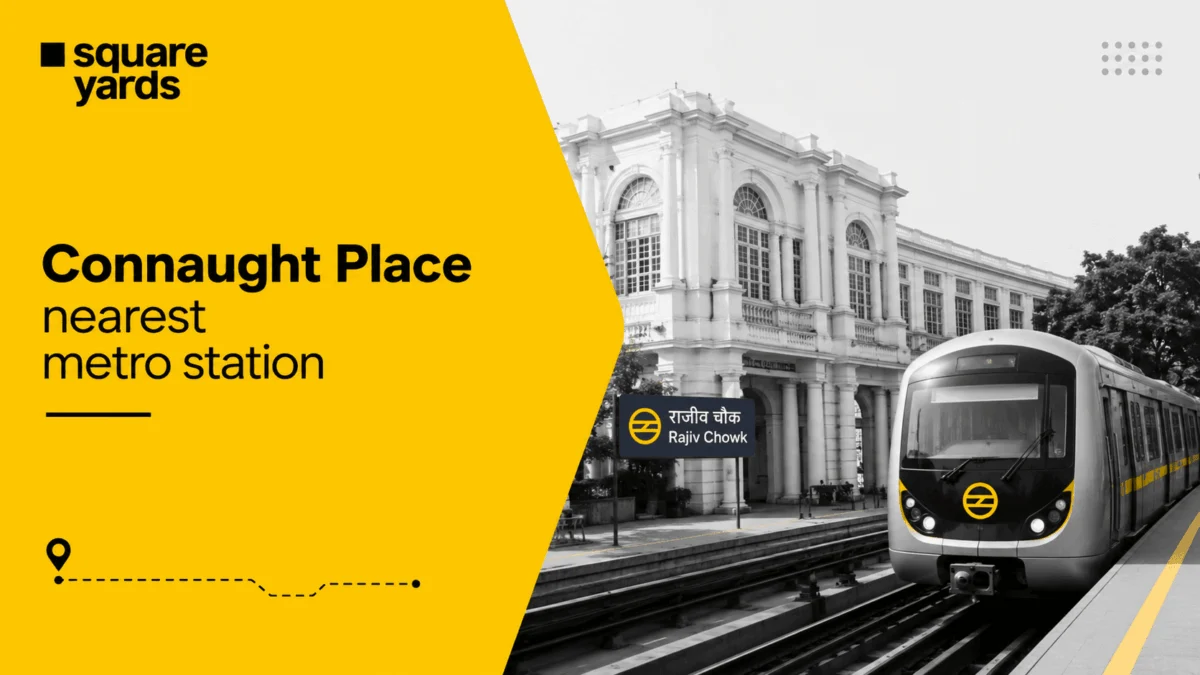
NEW DELHI – In the sprawling urban landscape of India’s capital, few addresses carry the weight, history, and commercial gravity of Connaught Place (CP). As the city’s premier financial and commercial hub, CP represents a unique intersection of colonial heritage and modern economic vitality. Central to this vitality is an intricate subterranean network: the Delhi Metro. Unlike other Delhi localities that struggle with "last-mile connectivity," Connaught Place is a rare example of a district built literally on top of its primary transit artery.
Recent data from real estate platform Square Yards highlights the staggering economic premium associated with this connectivity. While the citywide average sale price in Delhi hovers around ₹16,400 per sq. ft., Connaught Place commands a premium of nearly five times that, with average prices reaching approximately ₹83,600 per sq. ft. This article explores the logistical nuances of CP’s metro network, the strategic importance of its surrounding stations, and the profound implications of this infrastructure on the region’s real estate market.
Main Facts: The Transit Nexus of the Capital
Connaught Place is served by a multi-layered metro infrastructure that caters to hundreds of thousands of commuters daily. The primary gateway, Rajiv Chowk, serves as the ultimate interchange between the Yellow Line (connecting North and South Delhi) and the Blue Line (connecting East Delhi/Noida/Vaishali to West Delhi/Dwarka).
However, the "nearest metro station" to Connaught Place is a nuanced concept. Depending on whether a visitor is heading to the upscale showrooms of the Inner Circle, the high-rise corporate offices on Barakhamba Road, or the bustling stalls of Janpath Market, the "best" station changes. Currently, there are 181 properties for sale and 94 for rent listed in the CP vicinity on Square Yards, all of which cite metro proximity as their primary value driver.
Chronology of Navigation: Selecting the Right Gateway
Navigating Connaught Place requires an understanding of its radial geometry. The district is organized into an Inner, Middle, and Outer Circle, with several radial roads branching out like spokes on a wheel. Selecting the wrong metro station or exit gate can result in a 15-minute detour through heavy pedestrian and vehicular traffic.
1. Rajiv Chowk: The Central Nervous System
- Distance: 0.1 to 0.3 km
- Lines: Yellow and Blue
- Walking Time: 2 to 5 minutes
Rajiv Chowk is technically the same geographical entity as Connaught Place. The station was named after former Prime Minister Rajiv Gandhi, mirroring the official renaming of the Inner Circle. For the majority of visitors, this is the default destination. It is the most strategically located station in the entire Delhi Metro Rail Corporation (DMRC) network.
2. Janpath: The Artisanal Entry
- Distance: 0.5 to 0.7 km
- Line: Violet
- Walking Time: 7 to 10 minutes
For those arriving from South-East Delhi or Central Secretariat, Janpath station on the Violet Line offers a calmer alternative. It drops commuters at the foot of the famous Janpath Market, bypassing the overwhelming crowds of the Rajiv Chowk interchange.
3. Barakhamba Road: The Corporate Conduit
- Distance: 0.6 to 0.8 km
- Line: Blue
- Walking Time: 10 to 11 minutes
This station is the preferred choice for white-collar professionals working in the high-rise office blocks of the East Side, such as the Statesman House or the various bank headquarters located on Kasturba Gandhi Marg.
4. Patel Chowk: The Quiet Alternative
- Distance: 0.7 to 1 km
- Line: Yellow
- Walking Time: 10 to 12 minutes
Located one stop south of Rajiv Chowk, Patel Chowk is often overlooked. It serves the government administrative belt but remains a vital "relief valve" for commuters who wish to avoid the peak-hour rush of the main CP hub.
5. Shivaji Stadium: The Global Link
- Distance: 1 to 1.2 km
- Line: Airport Express (Orange Line)
- Walking Time: 15 to 16 minutes
Primarily used by international travelers and business executives, this station connects CP directly to Indira Gandhi International Airport in under 20 minutes, a feat impossible by road during Delhi’s notorious traffic hours.
Supporting Data: Real Estate and Connectivity Metrics
The relationship between transit proximity and property value is nowhere more evident than in the "CP Corridor." According to Square Yards’ locality data, the price disparity between CP and the rest of Delhi is a reflection of its status as a "zero-distance" transit hub.
Table 1: Comparative Metro Access and Distance
| Metro Station | Line Serving | Distance from CP Center | Walking Time |
|---|---|---|---|
| Rajiv Chowk | Yellow & Blue | 0.2 km | 3 min |
| Janpath | Violet | 0.6 km | 8 min |
| Barakhamba Road | Blue | 0.7 km | 10 min |
| Patel Chowk | Yellow | 0.9 km | 11 min |
| Shivaji Stadium | Airport Express | 1.1 km | 15 min |
Table 2: Economic Indicators (Source: Square Yards)
| Metric | Connaught Place | Delhi City Average |
|---|---|---|
| Avg. Sale Price (per sq ft) | ₹83,600 | ₹16,400 |
| Properties for Sale | 181 | N/A |
| Properties for Rent | 94 | N/A |
| Primary Commercial Use | Retail & Banking | Mixed Residential/Commercial |
The data suggests that while CP is the commercial peak, the "halo effect" of its connectivity extends to adjacent residential neighborhoods. Localities like Karol Bagh and Patel Nagar have become highly sought-after residential hubs for those who work in CP, offering better residential amenities while remaining only 10–15 minutes away via the Blue Line.
Official Context and Operational Standards
The Delhi Metro Rail Corporation (DMRC) maintains Rajiv Chowk as one of its flagship stations. To manage the immense footfall, the station features multiple levels and dozens of exit gates. Official guidance from DMRC suggests that commuters should identify their destination "Block" (A through N) before exiting. For instance, Exit Gate 7 is ideal for the Regal Cinema side, while Gate 1 and 2 serve the B and C blocks.
Metro Operational Hours:
- Yellow Line: First train ~5:30 AM; Last train ~11:30 PM.
- Blue Line: First train ~5:30 AM; Last train ~11:45 PM.
- Frequency: During peak hours (9:00 AM – 11:00 AM and 5:00 PM – 8:00 PM), trains run every 2.5 to 3 minutes.
Last-mile connectivity from these stations is robust. While walking is the most efficient method within the Inner Circle, auto-rickshaws (faring between ₹30 to ₹80) and E-rickshaws (₹20 to ₹40) are ubiquitous for those heading to the outer peripheries of the district.
Implications: The Future of the CP Corridor
The unparalleled connectivity of Connaught Place has led to several long-term urban and economic implications:
- Commercial Resilience: Despite the rise of new business districts in Gurgaon and Noida, CP has maintained its status. The ability to draw a workforce from all four corners of the National Capital Region (NCR) via the Yellow and Blue lines ensures that corporate tenants are willing to pay the ₹83,600 per sq. ft. premium.
- Residential Spillover: As CP remains almost exclusively commercial, the "metro-linked" residential areas are seeing a surge. Areas like Gole Market and Patel Nagar are witnessing a transformation, with older properties being redeveloped into premium apartments for professionals who value a 10-minute metro commute.
- Traffic Decongestion: The success of the Shivaji Stadium and Rajiv Chowk stations has significantly mitigated what would otherwise be a total collapse of the road network in Central Delhi. Urban planners point to CP as a successful model of Transit-Oriented Development (TOD).
- Pedestrianization Trends: There are ongoing discussions within the New Delhi Municipal Council (NDMC) regarding the full pedestrianization of the Inner Circle. This move would rely entirely on the efficiency of the metro stations, effectively turning the Rajiv Chowk exits into the "front doors" of all CP businesses.
Conclusion
Connaught Place stands as a testament to the transformative power of integrated urban transport. It is no longer just a shopping destination; it is a logistical marvel where the "nearest metro station" is not a destination to be reached, but the very foundation upon which the district operates. For investors and businesses tracking the Delhi real estate market, the data is clear: proximity to the Rajiv Chowk-Janpath-Barakhamba triangle remains the gold standard for value and accessibility. As Delhi continues to expand, the gravitational pull of this centrally connected hub is only expected to intensify.
