

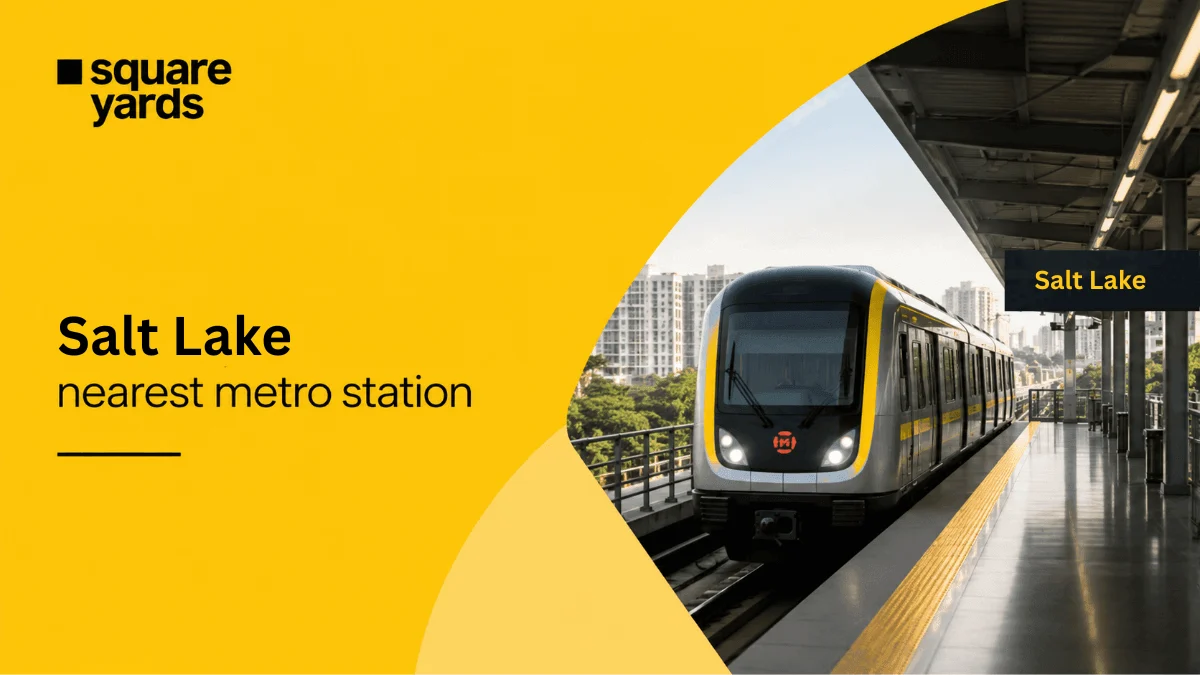
Salt Lake, officially known as Bidhannagar, has long been celebrated as Kolkata’s premier planned township. However, its reputation for orderly blocks and wide boulevards was historically tempered by the challenges of internal transit and its relative isolation from the central business districts of Dalhousie and Esplanade. This narrative has been fundamentally rewritten by the Green Line—Kolkata’s East-West Metro.
Unlike other parts of the city where a single station serves a vast radius, Salt Lake is uniquely positioned with six distinct metro stations. This infrastructure has turned the township into one of the most evenly metro-served localities in India, creating a "15-minute city" dynamic where most residents and commuters are within walking distance of a high-speed transit node.
Main Facts: A Township Built on Transit-Oriented Development
Salt Lake is not a monolithic address; it is a sprawling grid of numbered sectors, each with its own character. The Green Line acts as the township’s central nervous system, running straight through its core and terminating at the Salt Lake Sector V station.
The Six-Station Network
The density of stations within Salt Lake is unprecedented for a residential and commercial suburb in Kolkata. The stations include:
- Salt Lake Stadium: Serving the northern edge of Sector 1 and the sports precinct.
- Bengal Chemical: Anchoring the border between Sector 1 and Sector 2.
- City Centre: Providing direct access to the township’s retail and residential heart.
- Central Park: Situated near the township’s primary green lung and administrative buildings.
- Karunamoyee: A critical multi-modal hub connecting the metro to the major long-distance bus terminus.
- Salt Lake Sector V: The eastern terminus and the primary gateway to the city’s IT and electronics hub.
This granular coverage ensures that whether one is heading to a corporate office in Sector 5 or a residential block in Sector 1, the "nearest" station is rarely more than a 10-minute walk or a short auto-rickshaw ride away.
Chronology: From Sectoral Isolation to Subaqueous Connectivity
The evolution of Salt Lake’s connectivity can be traced through the phased rollout of the East-West Metro, a project that overcame significant engineering hurdles to link the township with the rest of the metropolis.
- February 2020: The Birth of the Green Line: The first phase of the East-West Metro was inaugurated, connecting Salt Lake Sector V to Salt Lake Stadium. This 5.8 km stretch introduced the township to a new era of air-conditioned, rapid transit.
- October 2020: Phoolbagan Extension: The line moved beyond the township borders to Phoolbagan, providing Salt Lake residents with their first real link toward the city’s northern residential fringes.
- July 2022: The Sealdah Link: This was a watershed moment. By connecting Salt Lake to Sealdah Station—one of the busiest railway terminals in the world—the Metro allowed thousands of daily commuters from the suburbs to reach the IT hub of Sector 5 without relying on congested road transport.
- March 2024: The Underwater Milestone: The completion of the Esplanade-Howrah Maidan stretch, featuring India’s first underwater metro tunnel beneath the Hooghly River, finally integrated Salt Lake into a cross-city corridor.
- The Future (Target December 2026): The Orange Line Integration: The next major chronological milestone is the completion of the "IT Centre" station at Sector V, which will serve as an interchange between the Green Line and the Orange Line (New Garia to Airport).
Supporting Data: Logistics, Fares, and Connectivity
The efficiency of the Green Line is reflected in its operational data and its impact on travel times across the Kolkata Metropolitan Area (KMA).
Comparative Travel Times
| Route | Mode: Bus/Cab | Mode: Metro | Time Saved |
|---|---|---|---|
| Howrah Maidan to Sector V | 75–90 mins | 40–50 mins | ~40 mins |
| Sealdah to Karunamoyee | 45–60 mins | 18 mins | ~30 mins |
| Esplanade to City Centre | 40–50 mins | 22 mins | ~20 mins |
Operational Logistics
The Green Line operates with a frequency of 8 to 12 minutes during peak office hours (9:00 AM – 11:30 AM and 5:00 PM – 7:30 PM). On weekdays, services typically begin at 6:50 AM and conclude around 9:30 PM.
Last-Mile Connectivity Costs
While the metro provides the primary haul, the "last mile" is serviced by a robust network of local transport:
- Auto-Rickshaws: Operating on fixed routes from stations like Karunamoyee and Sector V, with fares ranging from ₹20 to ₹60.
- WBTC Buses: Frequent services along the First, Second, and Third avenues, with fares starting at ₹10.
- E-Rickshaws (Totots): Prevalent in the inner lanes of Sectors 1, 2, and 3 for short-distance residential drops.
The Sector V Pivot: A Dual-Line Future
While all of Salt Lake benefits from the Green Line, Sector V is poised for a secondary transformation. As the city’s primary IT corridor, Sector V generates the highest footfall in the township.
The upcoming Orange Line interchange at the "IT Centre" station is the most significant infrastructure project currently underway in the area. This line will connect the southern fringes of the city (Garia/Ruby) and the northern extension (New Town/Rajarhat/Airport) directly to Sector V.
Currently, commuters from New Town—a neighboring IT hub—must rely on road transport to reach Salt Lake. The Orange Line will bridge this gap, creating a seamless "IT Corridor" that allows workers to move between Sector V and New Town in under 15 minutes. Metro Railway Kolkata has set a target of December 2026 for this integration, though engineering complexities in the VIP Road stretch remain a variable.
Official Responses and Infrastructure Challenges
While the Metro has been a resounding success, it has also highlighted the need for local infrastructure upgrades. Bidhannagar Municipal Corporation (BMC) officials have frequently addressed the "complementary infrastructure" required to support metro footfall.
Waterlogging and Road Quality
One recurring complaint from residents in the older sectors (Sectors 1 and 2) is the state of internal roads and drainage. During the monsoon, certain approaches to the Bengal Chemical and Salt Lake Stadium stations are prone to waterlogging. Official responses from the BMC suggest that a comprehensive drainage overhaul is in the planning stages, though implementation has been slow.
Multi-modal Integration
The Karunamoyee Station is often cited by urban planners as a model for multi-modal integration. By placing a metro station within walking distance of a major bus terminus, the state government has successfully reduced the "friction" of travel for long-distance commuters. Plans are reportedly in place to further enhance the pedestrian walkways and signage between these two hubs to improve the commuter experience.
Implications: Real Estate and Economic Impact
The "Metro Effect" on property values in Salt Lake has been nuanced. Because the Green Line has been operational in some capacity since 2020, much of the immediate appreciation has already been "priced in."
Real Estate Valuation Trends
| Locality | Avg. Price per Sq. Ft. | Annual Trend |
|---|---|---|
| Salt Lake (Sectors 1-3) | ₹10,250 – ₹12,350 | -1% (Stabilizing) |
| Salt Lake Sector V | ₹8,800 – ₹10,200 | +2% (Commercial Demand) |
| New Town | ₹6,000 – ₹9,000 | +5% (Speculative Growth) |
Analysis of the Price Gap
The higher price point of residential Salt Lake (Sectors 1-3) compared to Sector V is a reflection of land use. Salt Lake is a high-demand residential zone with limited new supply, maintaining its premium status. Sector V, being primarily commercial, sees prices driven by office space yields rather than residential scarcity.
The Shift Toward New Town
The real implication of Salt Lake’s metro success is felt in New Town. As Salt Lake reaches saturation, the promise of the Orange Line connecting back to the Green Line at Sector V has made New Town a hotspot for investors. Buyers are betting that the connectivity Salt Lake enjoys today will be replicated in New Town by 2027.
Conclusion: The Model Township of the 21st Century
Salt Lake’s transition from a quiet residential suburb to a hyper-connected urban core is a testament to the power of planned transit. By running the Green Line through the heart of the township rather than along its periphery, planners have ensured that the benefits of the metro are distributed equitably across all sectors.
As the Orange Line nears completion and the Green Line continues to carry record-breaking numbers of commuters from Howrah and Sealdah, Salt Lake stands as a blueprint for how older planned townships can be revitalized through modern infrastructure. For the resident, the worker, and the investor, the message is clear: Salt Lake is no longer just an address; it is the center of Kolkata’s new transit reality.
