The Indian automotive landscape in October 2026 presented a paradox of unprecedented growth for some and unexpected contraction for others. At the center of this narrative is Toyota Kirloskar Motor (TKM). While the top five automotive manufacturers in India celebrated all-time high monthly sales, Toyota reported a significant year-on-year decline, slipping to the sixth position in the domestic market rankings for the second consecutive month.
Toyota Kirloskar Motor recorded total sales of 30,360 units in October 2026. This figure, which encompasses both domestic dispatches and export shipments, represents a substantial 29.22% decline compared to the 42,892 units sold in October 2025. Despite this sharp annual drop, the company found a silver lining in sequential growth and a resilient year-to-date (YTD) performance that keeps the brand in positive territory for the calendar year.
The Statistical Breakdown: Domestic Recovery vs. Export Volatility
The October 2026 sales data for Toyota reveals a tale of two markets. The domestic sector showed signs of a festive-led recovery, while the export segment faced a severe downturn.
Domestic Performance
Toyota’s domestic sales for October 2026 stood at 29,521 units. When compared to the 40,257 units sold in the same month of the previous year, the company witnessed a contraction of 26.67%, amounting to a loss of 10,736 units in volume.
However, the month-on-month (MoM) trajectory offers a more optimistic perspective. In September 2026, Toyota’s domestic sales had dipped to 25,027 units. The October figures represent a 17.96% increase (4,494 units) over September. This sequential uptick suggests that the festive season, traditionally a period of high consumer spending in India, provided a much-needed stimulus to Toyota’s local operations. Domestic sales accounted for a dominant 97.24% of the company’s total volume for the month.

The Export Slump
The most dramatic decline occurred in Toyota’s export business. The company shipped only 839 units to overseas markets in October 2026, a staggering 68.16% drop from the 2,635 units exported in October 2025.
The sequential decline in exports was even more pronounced. Compared to September 2026, when Toyota exported ,3191 vehicles, the October shipments fell by 73.71% (2,352 units). This sharp contraction in exports significantly dampened the overall growth achieved in the domestic market, limiting the total MoM volume increase to just 2,142 units. Such volatility in exports often points toward shifting global demand, logistics bottlenecks, or a strategic reallocation of inventory to satisfy high domestic demand during the Indian festive window.
Chronology of 2026: A Resilient Year-to-Date Trajectory
While the October year-on-year figures appear grim, a broader look at the first ten months of 2026 paints a picture of a brand that is still growing, albeit at a moderated pace.
From January to October 2026, Toyota Kirloskar Motor achieved cumulative sales of 3,25,274 units. This is a 3.03% increase over the 3,15,716 units sold during the same period in 2025. This cumulative growth of 9,558 vehicles indicates that Toyota’s performance in the first half of the year was robust enough to absorb the recent volatility.
Cumulative Domestic Growth:
The domestic market has been the primary engine of this YTD growth. Between January and October 2026, domestic sales reached 2,99,140 units, up 4.11% from 2,87,338 units in the previous year. This represents an additional 11,802 units entering the Indian market.

Cumulative Export Decline:
Conversely, the YTD export figures reflect the struggles seen in the October report. Cumulative exports for the first ten months of 2026 fell to 26,134 units, a 7.91% decrease from the 28,378 units exported in the same period of 2025. The domestic growth of nearly 12,000 units was essential in offsetting the 2,244-unit deficit in the export sector.
Competitive Landscape: The Shift to Sixth Gear
The most significant takeaway from the October 2026 data is Toyota’s shifting position within the Indian automotive hierarchy. For the second month in a row, Toyota has been overtaken by Kia India, pushing the Japanese-Indian joint venture to the sixth spot in the sales rankings.
This shift is particularly noteworthy because it occurred during a month where the "Big Five"—Maruti Suzuki, Hyundai, Tata Motors, Mahindra, and Kia—all posted their highest-ever monthly sales figures. While the industry leaders capitalized on the festive surge to reach record peaks, Toyota’s YoY decline suggests a mismatch between its current inventory/product lifecycle and the prevailing market demand.
The competitive pressure is mounting as Kia continues to strengthen its portfolio with refreshed SUVs, and Mahindra maintains a massive backlog of orders for its XUV and Thar series. Toyota, which relies heavily on its premium offerings like the Innova and Fortuner, as well as its partnership-driven models like the Glanza and Hyryder, finds itself in a challenging position to maintain volume dominance against aggressive mid-market competitors.
Official Response: Focusing on Value and Experience
In response to the monthly performance, Toyota Kirloskar Motor’s leadership emphasized long-term strategy over short-term fluctuations. Sabari Manohar, Executive Vice President of Sales-Service-Used Car Business at TKM, noted that customer interest remains high despite the shifting numbers.

"The festive season has brought encouraging customer interest across our various market segments," Manohar stated. He highlighted that the company remains committed to evolving alongside market conditions, focusing not just on sales volumes but on the "ownership experience" and various "customer-centric initiatives."
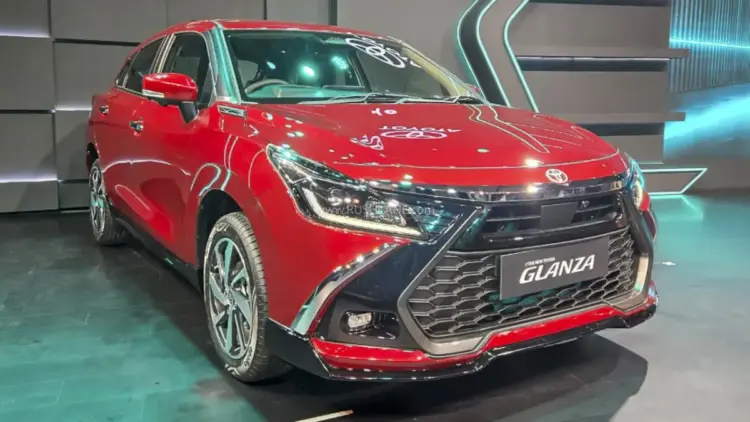
Manohar specifically pointed to the positive reception of the newly launched Toyota Glanza. While the company did not provide specific breakdown figures for the hatchback, they asserted that its updated design, feature set, and value proposition have resonated well with the younger demographic. The Glanza, a product of the Toyota-Suzuki global alliance, continues to be a critical volume driver for TKM, serving as an entry point for customers into the Toyota ecosystem.
Implications and Future Outlook: The Innova Factor
The current sales dip for Toyota may be temporary, linked to a transition phase in its product lineup. A major catalyst for a potential year-end rebound is the scheduled launch of the updated Toyota Innova Hycross.
The Hycross Catalyst
Expected to debut on November 26, 2026, the updated Innova Hycross is anticipated to feature significant enhancements, including dual 12.3-inch screens, integrated DVRs, and enhanced connectivity features. As the Innova remains the "gold standard" in the MPV segment in India, a refreshed model is likely to trigger a surge in bookings. Historically, Toyota’s sales have seen significant spikes following the refresh of its core "IMV" platform products (Innova and Fortuner).
The Hybrid Strategy
Toyota’s long-term strategy in India is heavily hedged on Strong Hybrid Electric Vehicle (SHEV) technology. As the Indian government and consumers navigate the transition from internal combustion engines (ICE) to electric vehicles (EVs), Toyota’s hybrid offerings (Hycross, Hyryder, and Camry) provide a middle ground that appeals to a vast section of the premium market concerned about charging infrastructure. The success of the upcoming Hycross will be a litmus test for the continued appetite for premium hybrids in a market increasingly crowded by sub-compact and mid-size SUVs.

Strategic Re-alignment
To reclaim its spot in the top five, Toyota may need to address the supply-side constraints that have occasionally plagued its high-demand models. Long waiting periods for the Hycross and Fortuner have previously pushed customers toward competitors. Furthermore, as Maruti Suzuki—Toyota’s partner—continues to refresh the models they share, Toyota must ensure that its versions (Glanza, Hyryder, Taisor) offer enough brand-specific value to justify their positioning.
Conclusion
October 2026 was a month of contrasts for Toyota Kirloskar Motor. The 29% YoY decline and the slip to the sixth market position highlight the intense competitive pressure in the Indian automotive sector, where rivals are hitting record-breaking strides. However, the 18% month-on-month domestic recovery and the 3% year-to-date growth suggest that Toyota’s fundamentals remain healthy.
With the festive season momentum and the impending launch of the updated Innova Hycross, the final quarter of 2026 will be crucial for Toyota. The company’s ability to convert "encouraging interest" into actual deliveries while stabilizing its export numbers will determine if it can climb back into the top five or if it must settle for a new role as a premium, high-margin player sitting just outside the volume leaders’ circle. For now, Toyota remains a resilient giant, navigating a complex market with a focus on hybrid technology and a legendary reputation for reliability.