

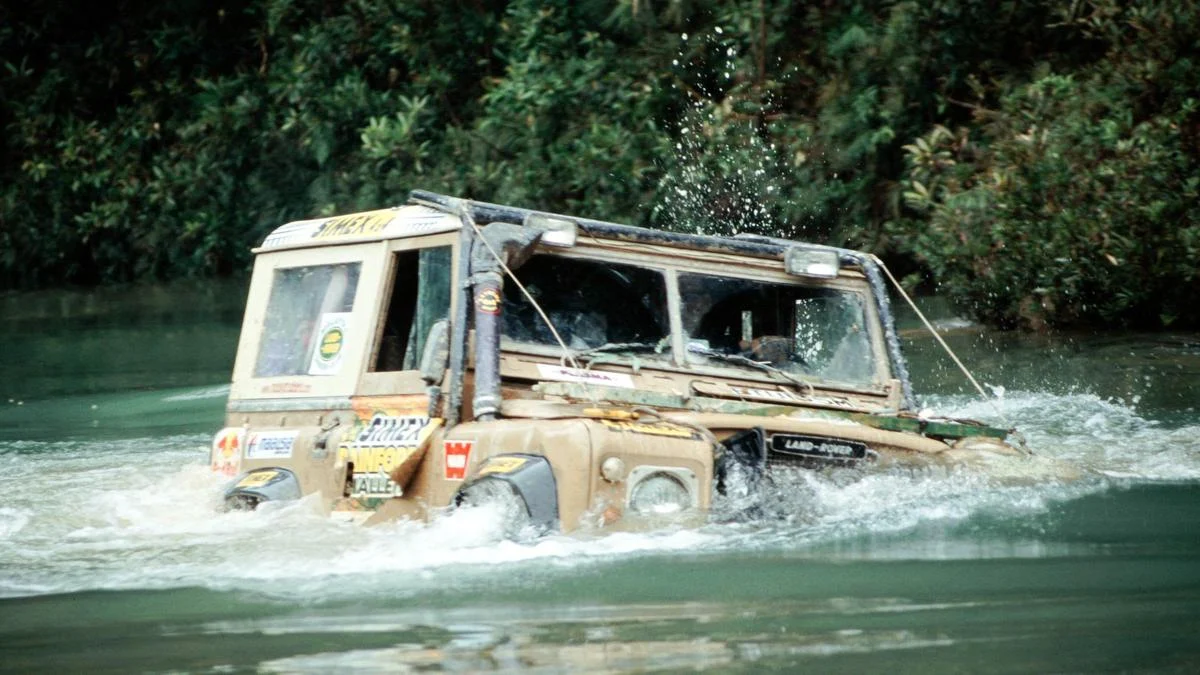
GOA – In the heart of the Goan monsoon, where the tropical canopy thickens and the earth dissolves into a treacherous slurry of red clay and debris, a new chapter in Indian motorsports has been written. Athul Thomas and Binil Babu, representing the southern state of Kerala under the banner of "Team Killerbull," have emerged as the undisputed champions of the 4X4 Stock class at the prestigious Rainforest Challenge (RFC) India.
The victory, secured behind the wheel of a Maruti Jimny, marks a significant milestone for Kerala’s off-roading community. While the state has long been a powerhouse of driving talent, Thomas and Babu’s win represents the first time a team from Kerala has stood atop the podium in the Stock category of this globally renowned event. Their performance—a masterclass in technical precision and psychological endurance—has refocused national attention on the growing off-road culture in India.
The Crucible of Off-Roading: Understanding RFC India
The Rainforest Challenge, headquartered in Malaysia and founded by Luis J.A. Wee, is internationally recognized as one of the most punishing automotive endurance tests on the planet. Ranked among the top ten toughest motor races globally and consistently cited as one of the top five most grueling off-road competitions, the Indian edition has become a pilgrimage for those seeking to test the limits of man and machine.
The 2026 edition, which concluded on August 1, lived up to its formidable reputation. Supported by the State Government of Goa, the event utilized the state’s rugged interior, transforming dense forests and steep riverbanks into a series of "Special Stages" (SS) designed to break vehicles and spirits alike. Unlike traditional rally racing, which emphasizes flat-out speed, RFC is a test of "crawling," recovery techniques, navigational synergy, and the ability to maintain composure when a vehicle is tilted at a 45-degree angle in waist-deep slush.
Chronology of a Championship: Four Days of Intensity
The path to victory for Team Killerbull was not a single moment of glory but a sustained four-day battle against 24 other competitors in the Stock category.
The Opening Salvo (Days 1 & 2)
The competition began with the "Prologue" stages, designed to weed out the unprepared. For Athul Thomas, a veteran with a decade of experience and over 300 events under his belt, the challenge was familiar. For his co-driver, Binil Babu, it was a baptism by fire. Babu, a manager at Ducati Kochi and a seasoned motorbike racer, was stepping into a competitive four-wheeler for the first time.
"I brought my experience as a bike racer to the cockpit," Babu noted. "In bike racing, you develop an instinct for traction and balance. I had to translate that into the language of four wheels while navigating a terrain that barely qualifies as a path."
The Deep Forest (Days 3 & 4)
As the event moved into the "Predator" and "Terminator" stages, the difficulty escalated. The 14 different stages were marked not by roads, but by narrow corridors defined by cones. Touching a cone resulted in stiff point penalties, demanding surgical precision from Thomas.

The Goan monsoon provided a relentless backdrop. Incessant rain turned the forest floor into a moving landscape. Team Killerbull had to navigate vertical climbs and deep pits where the Maruti Jimny’s lightweight frame and specialized 4X4 system were put to the ultimate test. By the final day, the duo had amassed a staggering 1,247 points out of a possible 1,400, securing their lead through a combination of clean runs and rapid recovery maneuvers.
Supporting Data: Technical Specifications and Scoring
The 4X4 Stock class is often considered the "purest" form of the competition. Unlike the Extreme or Modified categories—where vehicles are often custom-built "monsters" with massive tires, external roll cages, and hydraulic winches—the Stock class requires the vehicle to remain largely true to its factory specifications.
The Maruti Jimny Factor
The choice of the Maruti Jimny was instrumental in Team Killerbull’s success. While larger SUVs often struggle with the narrow, winding paths of the Goan jungle, the Jimny’s compact wheelbase and "AllGrip Pro" 4WD system allowed Thomas to maneuver through gaps that stymied larger competitors.
- Weight Advantage: The Jimny’s lower curb weight prevented it from sinking as deeply into the soft silt.
- Approach/Departure Angles: Factory-standard clearances proved sufficient for most of the 14 stages, though the duo had to use every inch of the vehicle’s capability to avoid bottoming out.
The Scoring Metric
RFC scoring is based on a "Max Points" system for each stage. Points are deducted for:
- Safety Violations: Failing to wear helmets or seatbelts.
- Environmental Impact: Damaging trees or flora outside the designated track.
- Technical Failures: Requiring outside assistance or failing to finish a stage within the allotted time.
Thomas and Babu’s score of 1,247 reflects a "clean" performance, indicating they avoided the major penalties that often plague less experienced teams.
Official Responses and the Quest for Recognition
While the victory has been celebrated within the motorsports community, it has also highlighted a glaring disparity in support for the sport across different Indian states.
The Sponsorship Gap
Binil Babu was vocal about the financial hurdles facing independent racers. The cost of preparing the Jimny, transporting it to Goa, registration fees, and logistics for the four-day event totaled approximately ₹6 lakh.
"We dipped into our personal savings to make this happen," Babu revealed. "It is a significant financial burden for an individual to carry. We saw the winners of the Extreme class from Arunachal Pradesh receive a hero’s welcome and substantial state backing. While we aren’t necessarily looking for that level of fanfare, local sponsorship is crucial for the sustainability of the sport in Kerala."

Government and Corporate Potential
The Goa State Government’s continued support of RFC India is seen as a blueprint for sports tourism. By hosting the event, Goa attracts high-spending enthusiasts and global media attention. Advocates for the sport in Kerala suggest that similar backing could turn the state’s hilly terrains—such as those in Idukki or Wayanad—into hubs for regulated off-roading, providing an alternative to the dangerous and illegal "street racing" that often makes headlines.
Implications: A New Perspective on Speed and Safety
The victory of Team Killerbull carries implications that extend beyond the trophy cabinet. It serves as a case study for the professionalization of motorsports in India.
Shifting the Youth Perspective
One of the most profound arguments made by Babu is the psychological impact of off-roading on young drivers. "This is a great outlet for youngsters who love speed," he explained. "When you participate in an event like RFC, your entire attitude toward speed changes. It becomes healthy."
In a controlled environment like RFC, "speed" is secondary to "control." Drivers learn the mechanics of their vehicles, the physics of terrain, and the importance of safety gear. This disciplined approach often translates to safer driving habits on public roads, as the "need for speed" is satiated in a legal, competitive arena.
The Future of Kerala Motorsports
The success of Thomas and Babu, alongside other Kerala teams who won in the Extreme and Modified categories, suggests that the state is currently experiencing a "Golden Age" of off-roading talent. However, without a formal structure for sponsorships or dedicated off-road parks, this talent risks being stifled by the high barrier to entry.
The 2026 Rainforest Challenge India has proven that Indian drivers—and specifically those from Kerala—can compete at a world-class level in stock vehicles. As the mud dries on Thomas and Babu’s Maruti Jimny, the conversation now shifts from their technical prowess to the future of the sport itself. For Team Killerbull, the win is a testament to ten years of grit; for the Indian off-roading community, it is a call to action for better infrastructure, more robust sponsorship, and a wider recognition of motorsports as a legitimate and beneficial pursuit.
About the Rainforest Challenge India:
Launched in 2014, RFC India is the Indian chapter of the global Rainforest Challenge. It remains the only off-road event in the country that provides a platform for Indian off-roaders to compete in a format that is internationally standardized, with the overall winners often gaining an automatic entry into the RFC Mother Event in Malaysia.
