

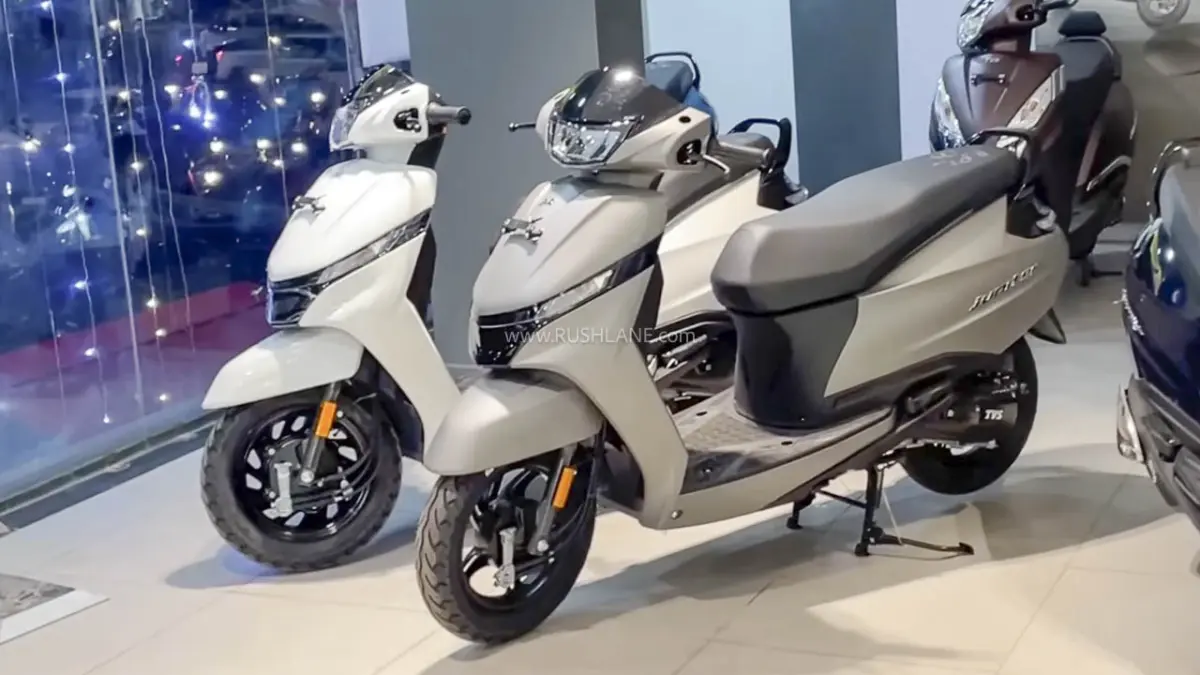
CHENNAI – TVS Motor Company, one of the world’s leading manufacturers of two and three-wheelers, has reported a blockbuster performance for September 2026, underscored by a massive surge in electric vehicle (EV) adoption and a robust recovery in international markets. The company recorded total sales of 6,72,790 units in September 2026, representing a significant 24.35% year-on-year (YoY) growth compared to the same month in the previous year.
This performance not only highlights the brand’s resilience in a competitive domestic market but also signals its growing dominance on the global stage. With the festive season providing a tailwind, TVS has managed to outpace industry averages, particularly in the green mobility sector, where its electric scooter portfolio has more than doubled its volume.
Main Facts: A Quarter of Unprecedented Scale
The September figures capped off a stellar second quarter (Q3 of the calendar year 2026) for the Chennai-based automaker. Between July and September 2026, TVS Motor Company’s total sales rose by 27.34%, reaching an impressive 19.19 lakh (1.919 million) units.
Key highlights from the September 2026 report include:
- Total Sales: 6,72,790 units, up 24.35% YoY.
- Electric Vehicles: 65,799 units sold, marking a 110.45% YoY increase.
- Exports: A 48% growth in two-wheeler exports, indicating strong demand in African, Southeast Asian, and Latin American markets.
- Three-Wheelers: A 56.55% jump in sales, driven by both domestic demand and a steady export pipeline.
- Sequential Growth: A 9.12% increase in sales over August 2026, showcasing strong month-on-month momentum heading into the peak Indian festive period.
While the company has transitioned to a reporting structure that combines motorcycles, scooters, and mopeds into a single "two-wheeler" category, the underlying data suggests that the recently refreshed TVS Jupiter and the premium Apache series remain the primary volume drivers in the internal combustion engine (ICE) segment.
Chronology: The Road to 1.9 Million Units in Q3
The trajectory of TVS Motor’s performance throughout the third quarter of 2026 reveals a steady build-up of market pressure and supply chain optimization.
July 2026: Setting the Foundation
The quarter began with a focus on stabilizing the supply chain for semiconductor components, which had previously hindered the production of high-end electric variants. July saw a moderate uptick in domestic dispatches as dealers began stocking up for the early festive demand.
August 2026: The Momentum Shifts
By August, the impact of new product launches, including updated iterations of the TVS Jupiter, began to reflect in the numbers. The company reported a steady climb, but it was the export sector that started showing signs of a major breakout. August served as the launchpad for the aggressive 9.12% sequential growth witnessed in the following month.

September 2026: The Record-Breaking Month
September acted as the crescendo for the quarter. The convergence of Navratri preparations in India and a resurgence in purchasing power in key export markets led to the 6.72 lakh unit milestone. This month specifically saw the EV segment cross the 10% contribution mark for the first time in the company’s history, a psychological and financial win for TVS’s "Future of Mobility" strategy.
Supporting Data: A Deep Dive into the Numbers
To understand the scale of TVS Motor’s success, one must look at the granular data across segments.
Two-Wheeler Performance
TVS’s core business—two-wheelers—grew by 23.29% YoY, reaching 6,45,955 units in September.
- Domestic Market: Domestic two-wheeler sales stood at 4,82,073 units, a healthy 16.65% increase. This growth is attributed to the rural recovery and the continued popularity of the "Jupiter" brand in urban centers.
- Exports: The export of two-wheelers saw a staggering 48.12% growth, with 1,63,882 units shipped overseas. Currently, international markets account for roughly 25% of TVS’s total two-wheeler volumes, providing a natural hedge against domestic economic fluctuations.
The Electric Revolution: iQube and Orbiter
The most striking data point is the growth of electric scooters. Selling 65,799 units in a single month is a testament to the maturing EV infrastructure in India and the brand equity of the TVS iQube and the newer Orbiter series.
- YoY Growth: 110.45%.
- Quarterly Growth: For the July–September period, EV sales rose by 132.71% to 1,86,186 units.
- Market Share: EVs now constitute 10.19% of TVS’s total two-wheeler sales, up from just 6% in September 2025. This indicates that TVS is successfully transitioning its customer base from petrol to electric without losing volume.
Three-Wheeler Segment
Often the "silent performer" in the TVS portfolio, the three-wheeler segment saw a 56.55% YoY growth in September with 26,835 units.
- Domestic Growth: 76.45% (10,017 units).
- Export Growth: 46.70% (16,818 units).
The data shows that while domestic sales are growing faster, the three-wheeler business remains export-heavy, with nearly 63% of units heading to international markets where TVS remains a preferred brand for last-mile connectivity.
Official Responses and Strategic Outlook
While TVS Motor Company maintains a quiet, execution-focused public profile, the latest sales data aligns with the strategic vision laid out by the leadership earlier this year. The company has focused on three pillars: EV Leadership, Global Expansion, and Premiumization.
According to industry analysts, the doubling of EV sales is a direct result of TVS’s aggressive dealership expansion for the "iQube" and the introduction of multiple battery pack options to cater to different price points. "The 10% contribution from EVs is a significant milestone," noted a senior automotive analyst. "It shows that TVS has moved past the ‘early adopter’ phase and is now capturing the mass market."
Furthermore, the surge in exports is seen as a validation of TVS’s partnership with BMW Motorrad and its independent efforts to establish assembly plants in regions like Southeast Asia. By diversifying its geographical footprint, TVS has mitigated the risks of a slowdown in any single market.

The company’s decision to stop sharing individual breakdowns for motorcycles, scooters, and mopeds is also seen as a strategic move to focus the narrative on "Total Mobility Solutions" rather than individual product silos. This reflects a broader industry trend where manufacturers want to be judged on their overall ecosystem rather than just engine displacement categories.
Implications: What This Means for the Industry
The September 2026 sales figures from TVS Motor Company have several far-reaching implications for the Indian and global automotive landscape.
1. The Intensifying EV War
TVS’s triple-digit growth in the EV space puts immense pressure on rivals like Bajaj Auto, Hero MotoCorp (Vida), and Ola Electric. While Ola has traditionally led the volume charts in the E2W (Electric Two-Wheeler) space, TVS’s legacy service network and reputation for build quality are clearly winning over skeptical ICE-to-EV converts. If TVS maintains this 10%+ share, it could become the largest "legacy" player to successfully pivot to electric.
2. Export Dominance as a Buffer
With a 48% growth in exports, TVS is positioning itself as an Indian multinational. As domestic markets face inflationary pressures and changing regulatory norms (such as stricter emission standards), a strong export book provides the necessary capital to continue R&D investments. TVS is no longer just competing with Indian brands; it is taking on Japanese giants in African and Asian markets.
3. The Resilience of the Three-Wheeler
The 56% growth in three-wheelers suggests a booming "gig economy" and a demand for affordable public transport in developing nations. TVS’s ability to grow this segment both at home and abroad indicates that their product reliability in the commercial space remains high.
4. Festive Season Optimism
The 9.12% month-on-month growth suggests that the Indian consumer sentiment is strong. High sales in September usually predict a record-breaking October and November. This is a positive sign for the broader Indian economy, as two-wheeler sales are often considered a primary indicator of rural and middle-class financial health.
Conclusion
TVS Motor Company’s performance in September 2026 is a masterclass in balanced growth. By doubling down on electric mobility while simultaneously expanding its global ICE footprint, the company has created a diversified revenue stream that is less susceptible to localized volatility.
With 19.19 lakh units sold in a single quarter and a clear upward trend in high-margin segments like EVs and exports, TVS is well-positioned to end the 2026-27 fiscal year on a record high. The challenge moving forward will be maintaining this momentum as competition in the EV space intensifies and global economic conditions remain fluid. However, for now, the "Jupiter" is rising, and the TVS stable is running at full gallop.
