

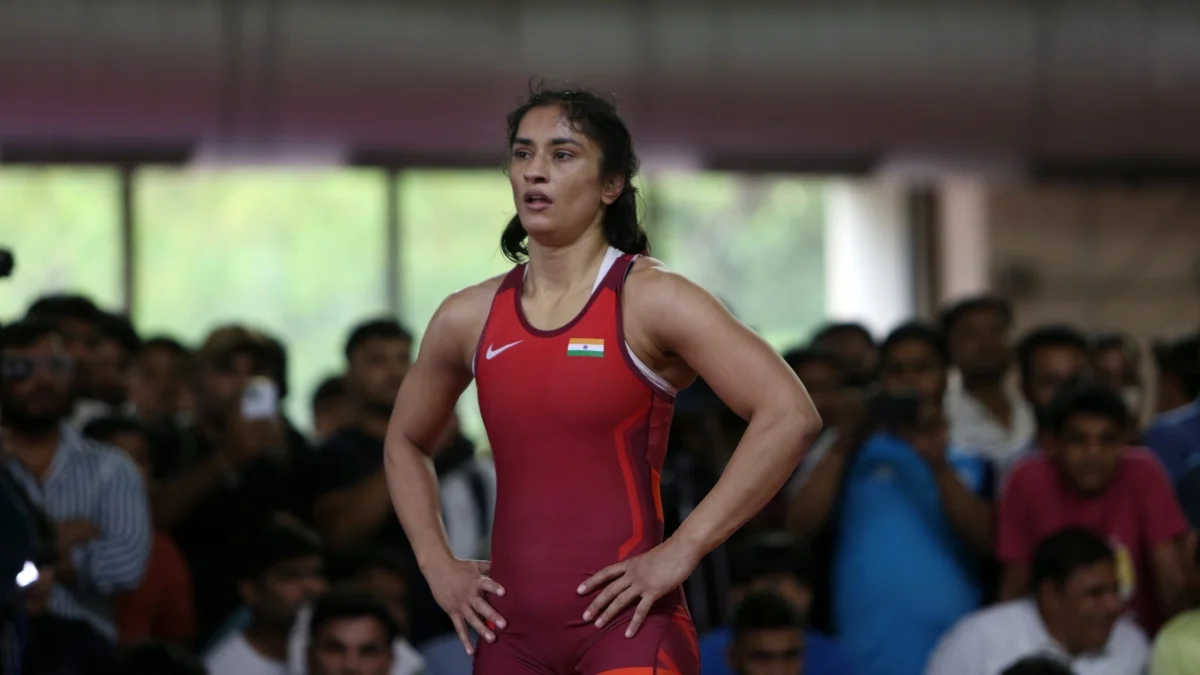
New Delhi, India – June 4, 2026 – The landscape of Indian wrestling has been significantly stirred this week, with star wrestler Vinesh Phogat facing a dual challenge on both the administrative and competitive fronts. The Wrestling Federation of India (WFI) confirmed today the receipt of Vinesh Phogat’s reply to a show-cause notice, an administrative action that coincided with a crucial Supreme Court ruling and, most notably, Phogat’s unexpected elimination from the Asian Games selection trials last Saturday.
The confluence of these events – a high-stakes legal battle, a rigorous selection process, and the WFI’s ongoing scrutiny – paints a complex picture for one of India’s most decorated athletes. Phogat, a World Championships medallist and multiple-time Asian Games champion, found her aspirations for the upcoming continental spectacle cut short after a hard-fought 4-6 loss to Meenakshi Goyat in the 53kg category semi-final at the Indira Gandhi Indoor Stadium in New Delhi. This athletic setback, arriving amidst an administrative standoff with the WFI, casts a long shadow over her immediate competitive future and raises pertinent questions about athlete-federation dynamics within Indian sports.
The WFI, in a statement released on Thursday, confirmed that it had received Phogat’s response to the show-cause notice issued on May 9. This administrative development followed a significant legal turn, as the Supreme Court, earlier the same day, dismissed a plea filed by the WFI challenging a Delhi High Court order. The High Court’s earlier directive had allowed Phogat to participate in the very selection trials from which she has now been eliminated, rendering the WFI’s Supreme Court appeal "infructuous" in light of subsequent developments.
"WFI has received the Respondent’s (Vinesh’s) reply to the Show Cause Notice, which shall be adjudicated in accordance with WFI’s rules and procedures," stated WFI president Sanjay Kumar Singh, as per a PTI report. He further added, "WFI further notes that the conduct of certain wrestlers at the Selection Trials is under consideration and a decision in that regard is yet to be taken." This latter comment hints at broader issues possibly simmering beneath the surface, suggesting that Vinesh Phogat might not be the only athlete under the federation’s scanner for perceived disciplinary infractions or conduct during the intensely competitive trials.
A Chronology of Conflict and Competition
The recent developments surrounding Vinesh Phogat are not isolated incidents but rather the culmination of a series of events that have unfolded over several weeks, highlighting a strained relationship between the athlete and the national federation.
Early May 2026: The "Retirement" Controversy and Show-Cause Notice
The genesis of the current administrative tangle can be traced back to early May, when the WFI declared Vinesh Phogat ineligible to participate in domestic events until June 26. This decision was based on a mandatory six-month notice period, a rule typically invoked for athletes returning from retirement under anti-doping regulations. Phogat’s situation, however, was reportedly more nuanced, with questions raised about the nature and timing of her supposed "retirement" and subsequent return. The WFI’s insistence on adhering to these rules, ostensibly to maintain regulatory integrity, set the stage for a direct confrontation.
On May 9, the WFI issued a show-cause notice to Phogat, demanding an explanation for her actions, particularly her defiance of the federation’s directive. Despite being declared ineligible, a defiant Phogat had, earlier in May, shown up at the National Open Ranking Tournament in Gonda, Uttar Pradesh, signaling her intent to compete and challenging the WFI’s authority. This act of defiance escalated the administrative dispute, pushing it into the public domain and setting the stage for legal intervention.
Mid-May 2026: Judicial Intervention and Trial Eligibility
With her participation in crucial Asian Games selection trials hanging in the balance, Vinesh Phogat sought legal recourse. The Delhi High Court, recognizing the urgency and the potential irreversible impact on an athlete’s career, ruled in her favor. The High Court’s order allowed Phogat to participate in the selection trials, thereby providing a temporary reprieve and ensuring her athletic opportunity despite the ongoing administrative dispute. This ruling underscored the judiciary’s role in protecting athletes’ rights when facing what they perceive as arbitrary or unduly restrictive federation policies.
The WFI, however, viewed this as an overreach into its autonomous functioning and immediately appealed the Delhi High Court’s decision to the Supreme Court. The federation argued that such judicial interventions undermined its authority to enforce rules and maintain discipline, which it deemed essential for the orderly conduct of sports.
June 4, 2026: Supreme Court Dismissal and WFI’s Response
The Supreme Court’s dismissal of the WFI’s plea on Thursday, June 4, marked a pivotal moment. The apex court deemed the WFI’s challenge "infructuous" – meaning it had become pointless or academic – in light of "subsequent developments." This crucial legal phrasing referred directly to Phogat’s participation in the trials as per the Delhi High Court’s order, and crucially, her subsequent elimination from the competition. Since the primary objective of the WFI’s appeal was to prevent her from competing, and she had both competed and been eliminated, the legal ground for the appeal had effectively dissolved.
Simultaneously, the WFI confirmed receipt of Phogat’s reply to the show-cause notice. This indicates that while the legal battle over her participation in the trials has concluded, the administrative review of her conduct and potential disciplinary actions by the WFI remains an active and internal process.
The Asian Games Selection Trials: A Battle on the Mat
Amidst the legal and administrative wrangling, Vinesh Phogat’s focus had to shift to the wrestling mat, where her fate for the Asian Games would ultimately be decided. The Asian Games selection trials are notorious for their intensity and unforgiving nature, bringing together the nation’s best to vie for a coveted spot on the international stage.
A Return to the Mat After Two Years
The trials marked Phogat’s highly anticipated return to competitive wrestling after a hiatus of nearly two years. This extended break, necessitated by injuries, recovery, and personal challenges, made her comeback all the more scrutinized. Her presence alone injected a significant amount of drama and expectation into the 53kg category, a weight class where she has historically dominated.
Early Bouts: Glimpses of Vintage Phogat and Early Scares
Vinesh Phogat started her campaign with a decisive 7-1 victory over Jyoti, showcasing flashes of her characteristic aggression and technical prowess. This initial win fueled hopes among her supporters that the champion was back to her formidable best. However, her next bout against Nishu proved to be a far more arduous affair. The contest was highly charged, marked by multiple stoppages and a scuffle at the end, indicative of the high stakes and raw emotions involved. Phogat ultimately prevailed, but not without demonstrating some vulnerability and the clear rust that comes with a long layoff. The intensity of this bout highlighted the competitive depth within the 53kg category, where even a seasoned veteran like Phogat could not afford to underestimate any opponent.
The Semi-Final Showdown: Phogat vs. Goyat
The semi-final clash against Asian Championships silver medallist Meenakshi Goyat was the ultimate test. Goyat, a rising talent known for her aggressive style, wasted no time in asserting her dominance. From the opening whistle, she attacked relentlessly, putting immense pressure on Phogat. The bout was a masterclass in tactical wrestling, with Goyat capitalizing on Phogat’s moments of hesitation and executing timely takedowns.
Despite a late surge from Phogat in the second half, where she desperately tried to bridge the gap and leverage her experience, Goyat maintained her composure. The final score of 6-4 in favor of Meenakshi Goyat sealed Phogat’s fate, knocking her out of contention for the Asian Games. The loss was a stark reminder of the unforgiving nature of sports, where past laurels offer no guarantees against present form and the hunger of emerging talents. For Phogat, it was a heartbreaking end to a comeback bid that had captured national attention.
Supporting Data: The Stakes of the 53kg Category
The 53kg women’s freestyle category is one of the most competitive in Indian wrestling. It has historically been a stronghold for India on the international stage, thanks in large part to Vinesh Phogat’s consistent performances. However, her absence has allowed other talented wrestlers like Meenakshi Goyat to emerge and stake their claim.
The Asian Games represent a significant stepping stone towards the ultimate goal of the Olympic Games. A strong showing at the Asian Games not only boosts a wrestler’s confidence but also provides crucial ranking points and international exposure. For Meenakshi Goyat, this victory against Phogat is a career-defining moment, propelling her into the national spotlight and positioning her as a frontrunner for future international assignments. For Vinesh, the immediate consequence is the loss of an opportunity to compete at a major multi-sport event, forcing a recalibration of her competitive calendar and future aspirations.
Official Responses and Future Adjudication
WFI President Sanjay Kumar Singh’s statements are carefully worded, reflecting the federation’s intent to proceed with due process while maintaining its authority. The confirmation of receiving Vinesh’s reply to the show-cause notice signifies the commencement of an internal review. "Adjudicated in accordance with WFI’s rules and procedures" implies a formal hearing or committee review, where Phogat’s explanations will be considered against the backdrop of the federation’s code of conduct and administrative regulations. The outcome of this adjudication could range from a simple warning to a more severe penalty, such as a temporary ban from future domestic or international events, though the latter seems less likely given the recent court interventions and her competitive elimination.
Even more intriguing is Singh’s additional comment: "WFI further notes that the conduct of certain wrestlers at the Selection Trials is under consideration and a decision in that regard is yet to be taken." This broad statement suggests that the WFI’s scrutiny extends beyond just Vinesh Phogat. It could be a reference to other instances of perceived misconduct, altercations during bouts (such as the one involving Phogat and Nishu), or any other breaches of discipline observed during the high-pressure environment of the trials. This indicates a proactive stance by the WFI to reinforce disciplinary standards across the board, potentially as a response to recent criticisms regarding governance and athlete relations.
Implications for Vinesh Phogat’s Career
For Vinesh Phogat, the current juncture is arguably one of the most challenging of her illustrious career. A champion with multiple Commonwealth and Asian Games gold medals, and a historic World Championships bronze, she has long been a standard-bearer for Indian wrestling. This latest setback – both on the mat and administratively – marks a significant deviation from her usual trajectory of success.
The immediate implication is her absence from the Asian Games, a major blow for any elite athlete. Beyond this, the ongoing WFI inquiry into her conduct could potentially impact her future competitive calendar, depending on the outcome of the adjudication. The physical and mental toll of battling injuries, administrative hurdles, and then suffering a defeat in a crucial trial cannot be underestimated. Phogat’s resilience has been tested before, and her ability to bounce back from adversity will once again be under the microscope.
Her next major goal will undoubtedly be the Paris 2024 Olympics. To qualify, she will need to compete in upcoming ranking series, continental championships, and Olympic qualification tournaments. The process will be arduous, and she will face fierce competition from both domestic rivals and international contenders. This current period demands introspection, strategic planning, and a renewed focus on her training regimen to regain her peak form and mental fortitude.
Broader Implications for Indian Wrestling
The saga involving Vinesh Phogat and the WFI holds broader implications for the landscape of Indian wrestling. It underscores the delicate balance between athlete autonomy and federation authority. While athletes strive for competitive opportunities, federations are tasked with maintaining discipline, ensuring fair play, and adhering to established rules.
The repeated judicial interventions, first by the Delhi High Court and then the Supreme Court’s dismissal, highlight the judiciary’s increasing willingness to step in when athletes’ careers are at stake due to administrative disputes. This sets a precedent, empowering athletes to challenge federation decisions they perceive as unjust or arbitrary. However, it also raises questions about the long-term impact on the autonomy of sports bodies to govern themselves effectively.
The WFI’s firm stance on rules, such as the "retirement" notice period, and its current scrutiny of "certain wrestlers’ conduct" signals a desire to assert its authority and establish clearer disciplinary frameworks. This push for stricter governance, while potentially beneficial for long-term order, must also be balanced with transparent processes and fair hearings to avoid alienating athletes.
The emergence of new talent like Meenakshi Goyat, who managed to defeat a decorated champion, also speaks volumes about the growing competitive depth within Indian wrestling. This internal competition, while challenging for established stars, is ultimately healthy for the sport, pushing all athletes to elevate their game and ensuring a strong contingent for international competitions.
Looking Ahead: The Road to Paris and Beyond
With the Asian Games selection trials concluded, the focus for Indian wrestling now shifts to preparing the selected contingent for the continental multi-sport event. For Vinesh Phogat, the immediate task will be to navigate the WFI’s administrative review and then meticulously plan her competitive schedule to ensure she remains in contention for Olympic qualification. Her journey to Paris 2024, already challenging, has now become even more complex.
Meenakshi Goyat, on the other hand, will carry the hopes of the nation in the 53kg category at the Asian Games. Her victory against Phogat is a testament to her talent and hard work, and she will be eager to translate this domestic success into international medals.
The WFI’s adjudication process for Vinesh Phogat and other wrestlers whose conduct is under review will be closely watched. The decisions made will not only impact individual careers but also shape the future relationship between athletes and the federation, potentially setting new standards for governance and discipline in Indian wrestling. The coming months promise to be critical, both on and off the mat, as Indian wrestling navigates these complex challenges on its path to global excellence.
