

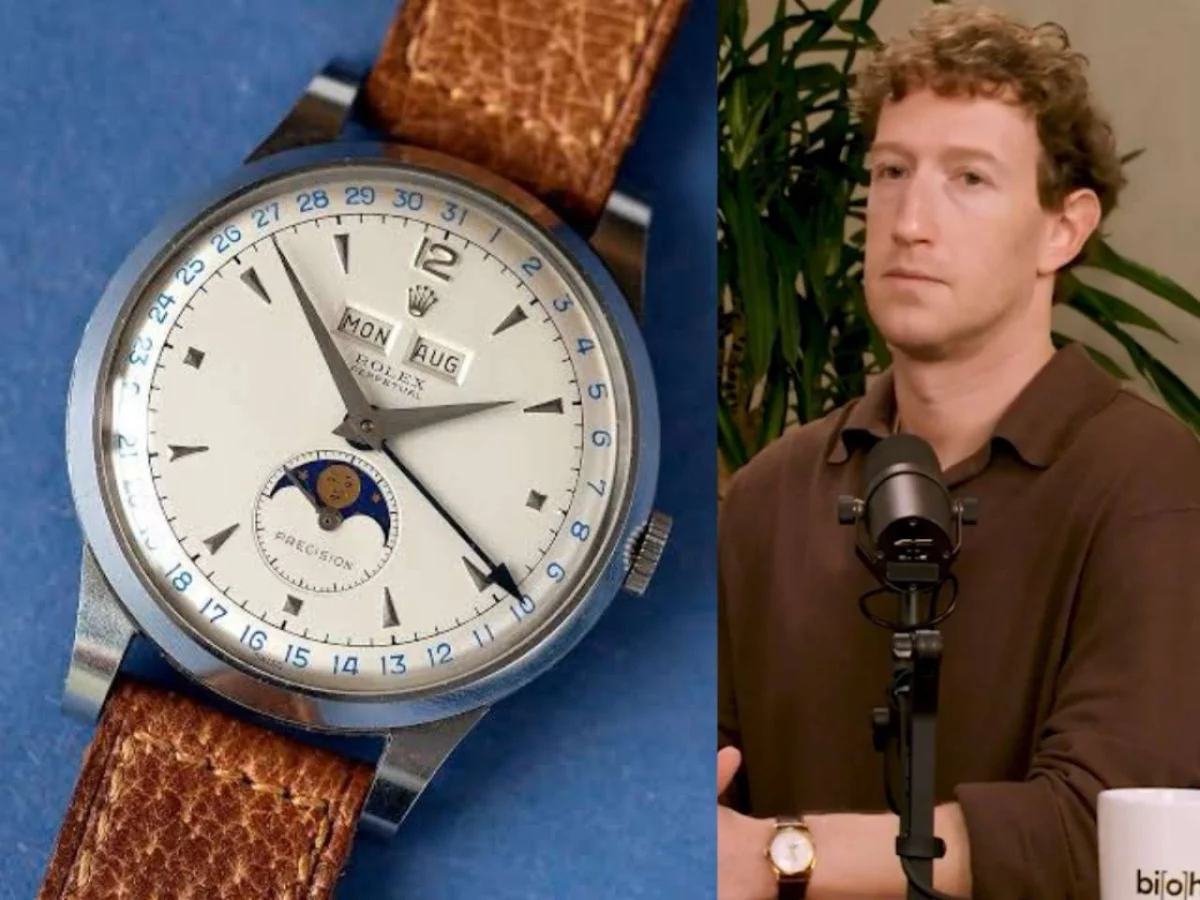
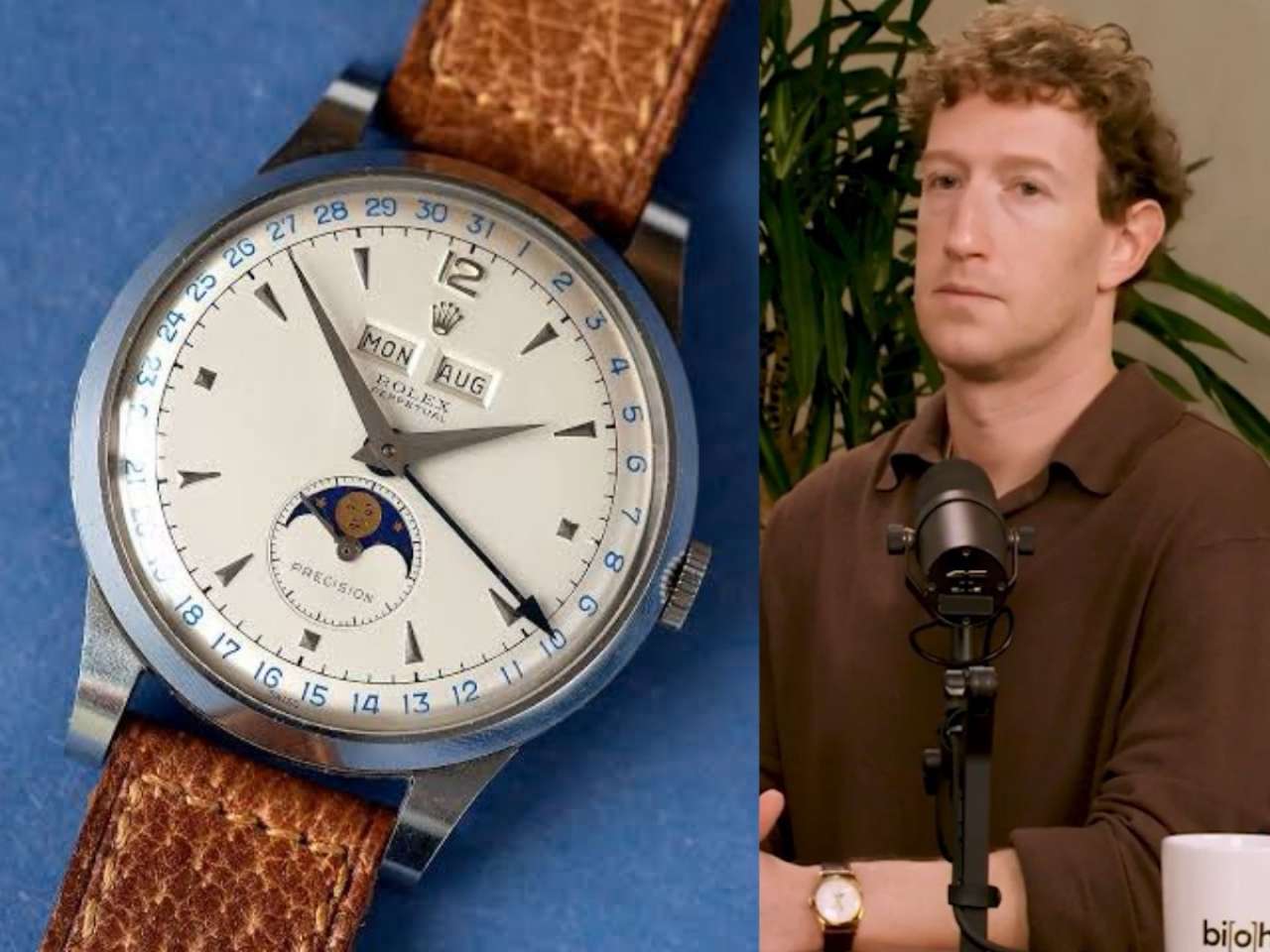
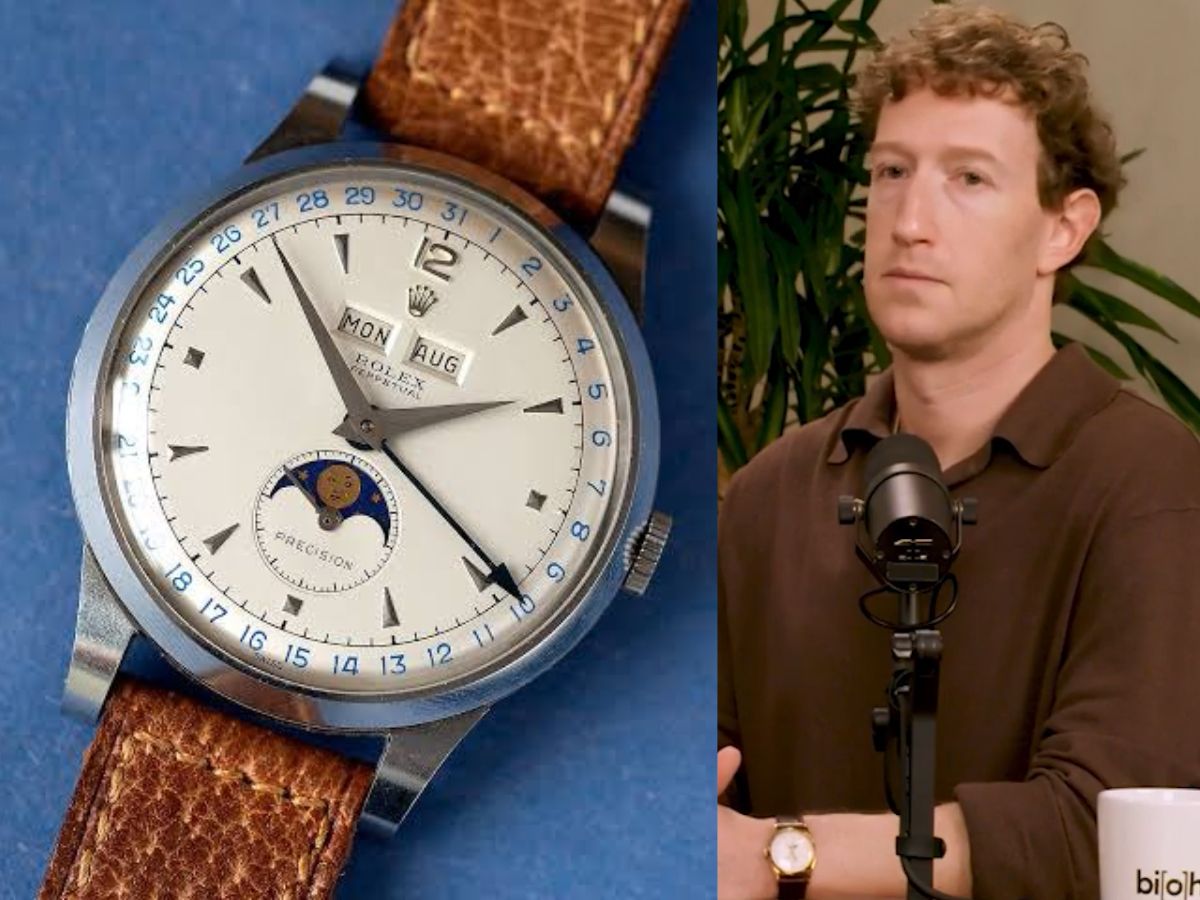
San Francisco, CA – In a recent appearance on the "No Priors" podcast, Meta CEO Mark Zuckerberg inadvertently turned the spotlight from his ambitious discussions on the future of artificial intelligence in biomedical research to a vintage timepiece gracing his left wrist. The watch, a remarkably rare Rolex Ref. 6062 "Stelline," is estimated to be worth a staggering $2 million. This exquisite piece of horological artistry, known for its intricate moon phase complication, offered a striking contrast to the cutting-edge technological discourse that dominated the conversation, highlighting a confluence of historical craftsmanship and futuristic vision.
Zuckerberg, accompanied by his wife Priscilla Chan, engaged in a deep dive into the philanthropic endeavors of the Chan Zuckerberg Initiative (CZI), particularly its Biohub projects. The couple articulated their ambitious vision to leverage advanced AI to revolutionize biomedical research, aiming to identify, treat, and ultimately eradicate human diseases. However, amidst the pronouncements of digital science and algorithmic breakthroughs, it was the vintage Rolex, a testament to mechanical ingenuity from a bygone era, that captured the attention of many observers.
)
The Allure of the Stelline: A Rare Gem in Horology
The Rolex Ref. 6062, affectionately nicknamed "Stelline" due to its distinctive star-shaped hour markers on some dial variations, is not merely a watch; it’s a piece of history. Manufactured for a limited period in the mid-20th century, it represents one of Rolex’s most complex and sought-after creations before the brand became synonymous with rugged, professional-grade timepieces like the Submariner and GMT-Master. Its allure lies in its rarity, sophisticated design, and the intricate complications it houses.

"The Stelline is an exceptional piece in Rolex’s history," explains renowned watch historian and collector, Dr. Eleanor Vance. "It was one of the few Rolex models of its era to feature an automatic movement with a triple calendar and moon phase complication. This level of complexity, combined with Rolex’s meticulous craftsmanship, makes it incredibly desirable for collectors."
)
The astronomical price tag of $2 million is not an arbitrary figure. It is a reflection of the watch’s extreme rarity and the meticulous preservation required for such vintage pieces to retain their value. The Ref. 6062 was produced in relatively small numbers, and only a fraction of those have survived the decades in pristine condition. The value is significantly influenced by the material of the case – often 18k yellow gold, rose gold, or even platinum – and, crucially, the condition of the original dial, case, and movement. Timepieces that have remained untouched by aggressive polishing, retain their original dials, and exhibit a well-functioning movement can command prices well into the seven figures at prestigious auction houses. The rarest configurations, particularly those with unique dial layouts or specific historical provenance, can indeed push the valuation to the $2 million mark, as is the case with Zuckerberg’s watch.
)
A Glimpse into the Past: The Ref. 6062’s Historical Significance
The Rolex Ref. 6062 emerged around 1950, a period when Rolex was still solidifying its identity in the watchmaking world. While brands like Patek Philippe and Vacheron Constantin were already well-established for their complicated dress watches, Rolex was beginning to carve out its niche with robust and reliable timepieces. The Ref. 6062 was a bold statement from the Swiss manufacturer, showcasing its capability to produce elegant and technically sophisticated watches.
)
"Before the advent of the Submariner, the Explorer, and the GMT-Master, Rolex was experimenting with more elaborate complications," notes vintage watch dealer, Mr. Julian Sterling. "The Ref. 6062 was a pinnacle of their efforts in this regard. It’s a watch that appeals to collectors who appreciate both the historical context of Rolex’s evolution and the sheer artistry of traditional watchmaking."
)
The moon phase complication itself is a testament to horological artistry. It’s a mechanical indicator that tracks the cyclical phases of the moon, typically requiring adjustment only once every 122 years to remain perfectly accurate. This intricate mechanism, powered by gears and springs, stands in stark contrast to the digital displays and algorithmic predictions that dominate our modern technological landscape.
)
The Paradox of the Tech Titan and the Analog Timepiece
Mark Zuckerberg, a figure synonymous with the digital revolution and the architect of platforms that connect billions, sporting a mechanical watch from the 1950s presents an intriguing paradox. His wealth, estimated to be in the region of $200 billion, allows him access to the most cutting-edge and technologically advanced timekeeping devices, or indeed, the ability to forego a watch altogether. Yet, his choice of the Ref. 6062 Stelline suggests a deeper appreciation for craftsmanship, history, and perhaps a personal connection to the enduring value of analog precision.
)
"It’s fascinating to see a leader in the tech world, someone who is pushing the boundaries of AI and digital innovation, embrace such a classic mechanical marvel," observes Dr. Vance. "It speaks to a broader trend where even in our hyper-digital age, there’s a renewed appreciation for tangible, expertly crafted objects that possess a soul and a story. The Stelline is not just an instrument to tell time; it’s a miniature engineering feat that has stood the test of time."
)
The watch’s presence on Zuckerberg’s wrist during a discussion about solving complex biological problems with AI also raises questions about the interplay between tradition and innovation. While AI promises to unlock new frontiers in scientific discovery, the enduring legacy of human craftsmanship, as embodied by the Stelline, continues to hold a unique appeal. It suggests that even as we race towards the future, there’s an inherent value in understanding and appreciating the foundations upon which our progress is built.
)
The Chan Zuckerberg Initiative: A Deeper Dive into the Vision
While the Rolex undoubtedly stole some of the limelight, the core of the podcast discussion revolved around the ambitious goals of the Chan Zuckerberg Initiative. The couple detailed their commitment to leveraging technology, particularly AI, to accelerate progress in biomedical research. The Biohub, a key component of CZI, aims to bring together scientists, engineers, and clinicians to tackle some of humanity’s most pressing health challenges.
)
"Our goal is to build tools and platforms that can help scientists understand human biology at a fundamental level," explained Priscilla Chan during the podcast. "We believe that by applying cutting-edge AI and computational approaches, we can identify new targets for therapies, develop more effective treatments, and ultimately prevent diseases from occurring in the first place."
)
The initiative’s focus on interdisciplinary collaboration and the application of computational power to biological questions underscores a significant shift in scientific research. By pooling resources and expertise, CZI is fostering an environment where breakthroughs can be accelerated, moving beyond traditional silos of research. The emphasis on creating open-source tools and data sharing further aims to democratize scientific progress, allowing a broader community of researchers to benefit from their work.
)
The Broader Implications: Legacy, Value, and the Human Touch
Mark Zuckerberg’s choice of the Rolex Ref. 6062 Stelline transcends a simple display of wealth. It invites contemplation on several fronts:
)
- The Enduring Value of Craftsmanship: In an era of planned obsolescence and disposable technology, the $2 million valuation of a 70-year-old mechanical watch underscores the lasting appeal of superior craftsmanship and enduring quality. It highlights that true value can be found in objects designed to last and to be passed down through generations.
- The Intersection of Technology and Tradition: The juxtaposition of Zuckerberg’s tech-centric ambitions with his appreciation for a vintage mechanical marvel suggests a nuanced perspective on progress. It implies that the future doesn’t necessarily negate the past, but rather can be informed and enriched by it.
- The Symbolism of Complexity: The moon phase complication, a purely mechanical feat, can be seen as symbolic of the complex biological systems that the Chan Zuckerberg Initiative aims to understand and manipulate. It’s a reminder that even in the age of digital complexity, the elegance of mechanical precision holds a unique allure.
- Investment in Heritage: For collectors and enthusiasts, acquiring such a timepiece is not merely a purchase but an investment in heritage. These watches are not just assets; they are carriers of history, stories, and the artistry of a bygone era, appreciating in value both intrinsically and financially.
As the discussions about AI in medicine continue to evolve, the image of Mark Zuckerberg, a pioneer of the digital age, wearing a piece of horological history on his wrist, serves as a potent reminder of the multifaceted nature of human endeavor. It bridges the gap between the relentless pursuit of the future and a deep-seated appreciation for the enduring legacy of human ingenuity and timeless craftsmanship. The Stelline, with its celestial complications, silently observes this confluence, a testament to the enduring power of both innovation and tradition.
