

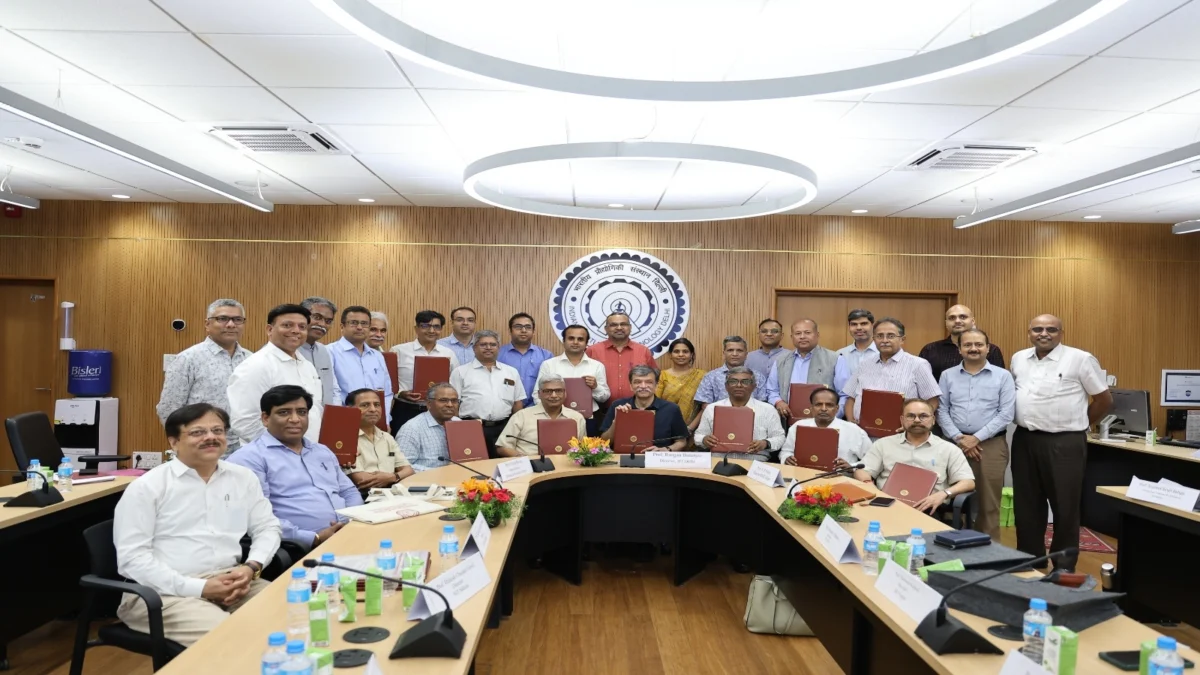
New Delhi, June 5, 2026 – In a landmark move poised to reshape India’s technical education landscape, the Indian Institute of Technology (IIT) Delhi has officially inked Memoranda of Understanding (MoUs) with 18 National Institutes of Technology (NITs) nationwide. This comprehensive academic partnership framework, officially launched on June 4, 2026, at IIT Delhi, signifies a profound commitment to fostering an integrated ecosystem for academic exchange, collaborative research, enhanced student mobility, and accelerated talent development. The initiative is meticulously designed to align with and amplify the transformative objectives of the National Education Policy (NEP) 2020, aiming to create a more robust, interconnected, and globally competitive higher education system.
The momentous occasion was graced by the virtual presence of Saumya Gupta, Joint Secretary, Ministry of Education, Government of India, who underscored the strategic importance of such collaborations in realizing the nation’s educational aspirations. The event also saw the active participation of Directors from the 18 partner NITs and senior faculty members from IIT Delhi, signifying a shared vision and a collective drive towards academic excellence and innovation.
This expansive network of collaboration includes some of India’s most prestigious NITs, such as NIT Tiruchirappalli, NIT Warangal, NIT Surathkal, NIT Calicut, NIT Rourkela, Visvesvaraya National Institute of Technology (VNIT) Nagpur, Malaviya National Institute of Technology (MNIT) Jaipur, Motilal Nehru National Institute of Technology (MNNIT) Allahabad, Maulana Azad National Institute of Technology (MANIT) Bhopal, Sardar Vallabhbhai National Institute of Technology (SVNIT) Surat, NIT Kurukshetra, NIT Silchar, NIT Jamshedpur, NIT Raipur, NIT Srinagar, NIT Meghalaya, NIT Sikkim, and Dr. B. R. Ambedkar National Institute of Technology (NIT) Jalandhar. The inclusion of these institutions underscores the nationwide reach and the profound impact this alliance is expected to have on technical education across the country.
A Paradigm Shift: Early Admission and Student Mobility
A cornerstone of this groundbreaking partnership is the introduction of an Early Admission Scheme. This innovative provision aims to streamline the pathway for high-achieving students from the partner NITs to pursue advanced postgraduate and doctoral studies at IIT Delhi. Under this scheme, exceptionally meritorious NIT students will be eligible to apply for M.Tech, M.S. (Research), and Ph.D. programs at IIT Delhi without the mandatory requirement of qualifying through the Graduate Aptitude Test in Engineering (GATE) or other national-level examinations. This exemption is contingent upon their demonstrable academic prowess and a strong track record in research, as per the prescribed criteria. This initiative is designed to nurture and retain top talent within the Indian higher education system, providing a more direct and efficient route for academic progression.
Furthermore, the framework opens doors for undergraduate students from the partner NITs to immerse themselves in the academic environment of IIT Delhi. Eligible undergraduate students will have the opportunity to spend their final year at IIT Delhi as Special Exchange Students. During their tenure, they will engage in advanced coursework and undertake cutting-edge research projects under the guidance of distinguished IIT Delhi faculty. This experiential learning opportunity will expose them to world-class research facilities and methodologies, fostering a deeper understanding of their chosen fields and preparing them for future academic and professional endeavors.
Synergistic Academic Integration: Credit Transfer and Advanced Standing
Beyond direct admission and exchange programs, the collaboration meticulously incorporates provisions for credit transfer and credit sharing. This signifies a significant step towards academic synergy, allowing students to fulfill a portion of their academic requirements at IIT Delhi while earning credits that are recognized and transferable by both institutions. This mechanism is particularly beneficial for students pursuing advanced degrees, as it can potentially expedite their academic journey by allowing them to leverage coursework completed at their home institutions. The concept of advanced standing further empowers students by acknowledging prior learning and achievements, enabling them to commence their studies at a more advanced level. This integrated approach to credit recognition is expected to foster greater flexibility and efficiency in postgraduate education, encouraging more students to pursue higher degrees.
ALIGN: A Multifaceted Engine for Innovation and Growth
To effectively operationalize these ambitious MoUs, IIT Delhi has launched a comprehensive initiative named ALIGN (Academic Linkages for Innovation and National Growth). This multifaceted program is structured around three key components, each designed to foster a vibrant ecosystem of collaboration and knowledge creation:
-
Predoctoral Fellowship Scheme: This scheme is specifically tailored for students who aspire to pursue doctoral studies at IIT Delhi. It aims to provide them with the necessary support, mentorship, and research exposure to strengthen their applications and prepare them for the rigors of doctoral research. This proactive approach to nurturing future researchers is crucial for building a strong pipeline of Ph.D. graduates in critical disciplines.
-
Research Seed Grant Scheme: Recognizing the importance of collaborative research, this scheme will provide seed funding to support joint research projects undertaken by faculty from IIT Delhi and its partner NITs. This financial impetus will encourage inter-institutional research collaborations, leading to novel discoveries and technological advancements. The scheme will also facilitate faculty exchanges, allowing researchers to share expertise, leverage specialized facilities, and foster a culture of joint inquiry.
-
Research Immersion Visit Scheme: To bridge the geographical distances and foster closer working relationships, IIT Delhi faculty delegations will undertake visits to partner institutions. The primary objective of these visits will be to identify promising research opportunities, explore potential areas of synergy, and lay the groundwork for impactful collaborative research endeavors. This hands-on approach will ensure that the collaborations are not merely administrative but are deeply rooted in shared research interests and mutual understanding.
Visionary Leadership and the Path Forward
Professor Rangan Banerjee, Director of IIT Delhi, articulated the profound significance of this alliance, stating, "The partnership between IIT Delhi and NITs embodies the spirit of NEP 2020 and contributes to building a more interconnected and globally competitive higher education system. This initiative is a testament to our commitment to collaborative excellence and our belief in the collective strength of India’s premier technical institutions." His words encapsulate the forward-thinking vision driving this collaboration.
The current phase of this initiative is strategically focused on establishing a robust network with the 18 NITs. However, the long-term vision is far more expansive, encompassing a future where this partnership model is extended to include a wider array of higher education institutions across the country. This phased approach ensures a systematic and effective implementation, paving the way for a truly integrated national higher education system. The success of this IIT Delhi-NIT alliance is anticipated to serve as a blueprint for future collaborations, driving innovation, enhancing research output, and ultimately, strengthening India’s position as a global leader in technical education and research.
This historic collaboration marks a pivotal moment in India’s pursuit of educational excellence, promising to unlock new avenues for academic growth, research innovation, and the holistic development of its future engineers and scientists. The synergy between IITs and NITs, fueled by the progressive policies of NEP 2020, is set to usher in an era of unprecedented academic achievement and national development.
