

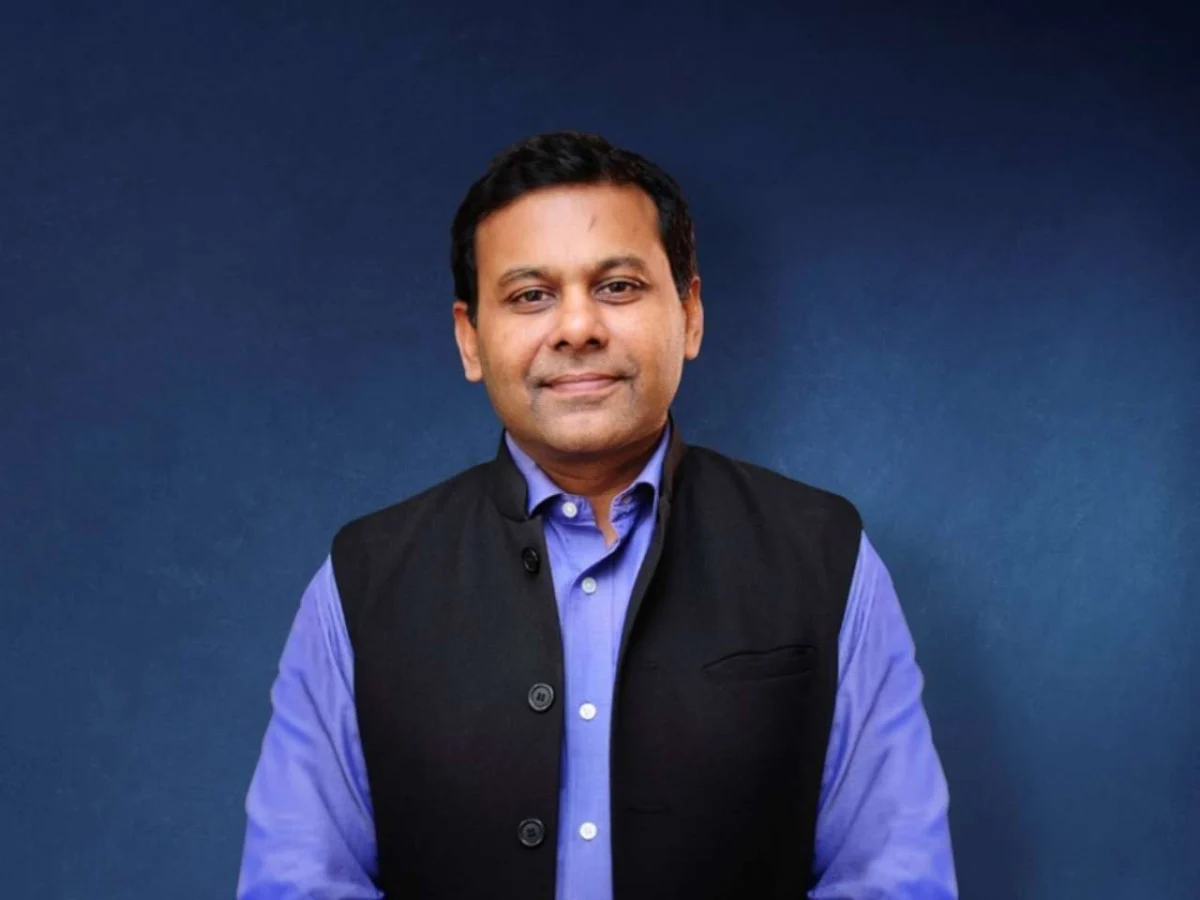
New Delhi, India – Vineet Gupta’s life story is a compelling narrative of entrepreneurial spirit, a deep-seated commitment to education, and a profound desire to nurture India’s intellectual capital. What began with a humble upbringing in Chandigarh, navigating the financial constraints of a middle-class household, has culminated in the establishment of two of India’s most respected private universities: Ashoka University and Plaksha University. His journey is a testament to the power of identifying a critical societal need and dedicating oneself to its comprehensive solution, transforming the landscape of higher education in India.
Gupta’s initial foray into the world of education was not through building institutions, but by facilitating access to them abroad. Through Jamboree Education, he guided thousands of bright Indian students through the intricate labyrinth of international university admissions. Yet, as he witnessed an unending stream of India’s brightest minds seeking knowledge and opportunities beyond national borders, a poignant question began to echo in his mind: Why should Indian students be compelled to leave their homeland to access world-class higher education? This very question became the crucible in which Ashoka and Plaksha were forged, institutions designed to offer unparalleled academic experiences within India itself.
)
The Genesis of a Vision: From Chandigarh to IIT Delhi
Vineet Gupta’s formative years were spent in Chandigarh, within a conventional, middle-class Indian family. His father, a senior civil servant, instilled in him the importance of education as a cornerstone of a secure future. While the family ensured access to good schooling, financial considerations were a constant reality. Gupta’s early education at St. John’s School in Chandigarh was characterized by a disciplined environment where academic pursuits were paramount. His daily commute, often on a bicycle, underscored the grounded values that shaped his upbringing.

A pivotal shift occurred when his father was transferred to Delhi. Gupta then enrolled at Delhi Public School (DPS) RK Puram, an institution renowned for its academic rigor and its strong emphasis on preparing students for the fiercely competitive Indian Institutes of Technology (IITs). Immersed among some of the nation’s sharpest young minds, Gupta experienced a profound sense of intellectual camaraderie and competition. This period at DPS RK Puram, he describes, was a humbling experience, as students from diverse backgrounds and top schools across India converged, pushing each other to excel. The rigorous preparation culture at DPS RK Puram ultimately propelled him to IIT Delhi, a prestigious institution that would further hone his analytical skills and broaden his perspective.
)
Diverging from the Conventional Path: Entrepreneurship and a Garage-Born Dream
Upon graduating from IIT Delhi, Gupta found himself at a familiar crossroads, presented with a plethora of conventional career options. A job offer from a public sector undertaking, the allure of pursuing higher studies abroad, and the traditional aspiration of entering the civil services were all within his grasp. However, Gupta chose a different, less trodden path. Around 1992, he ventured into entrepreneurship, launching a styrofoam packaging business with modest capital, supplemented by his father’s support and a business partner. The venture demonstrated early success, but the inherent challenges of manufacturing in India, coupled with evolving market dynamics, led Gupta to sell the business by 2005.
)
This period of entrepreneurial exploration coincided with the nascent stages of another significant undertaking, one that would profoundly shape his future. His wife, Akrita Kalra, a gifted educator, had already embarked on a journey of her own, establishing Jamboree Education from their home garage. What began as a small initiative to provide test preparation services for overseas education soon blossomed into one of India’s most recognized and respected names in the field. Following the sale of his packaging business, Gupta became deeply involved in Jamboree, leveraging his strategic acumen and operational expertise to expand its reach from a few centers to a formidable national presence.
)
The Catalyst for Change: Recognizing a National Deficit
It was during his extensive involvement with Jamboree Education that Vineet Gupta began to observe a persistent and troubling trend. He witnessed a stark dichotomy: Indian students, often achieving exceptional academic scores of 94-95 percent, were securing admissions to globally renowned universities such as UC Berkeley and the University of Wisconsin-Madison. Conversely, these same bright minds often found themselves struggling to gain admission into leading Indian institutions, where admission cut-offs frequently soared to 98 or 99 percent. This created a paradoxical situation where India’s most talented youth were being nudged towards international shores due to perceived limitations in domestic higher education accessibility and quality.
)
A particular incident profoundly impacted Gupta, serving as a powerful catalyst for his vision. He recalls a brilliant student who, despite receiving an offer from a top-tier university abroad, could not pursue it due to his family’s apprehension about sending their only son overseas. Years later, this student returned to Jamboree seeking preparation for an MBA program. However, Gupta observed a palpable loss of the intellectual spark that had once defined him. The intervening undergraduate years, spent in an evening college with limited academic engagement, had diminished his potential.
)
Reflecting on such experiences, Gupta candidly shared in a recent conversation, "Somewhere, I felt maybe we are letting down our students." This profound realization marked the genesis of what would eventually evolve into Ashoka University. The conviction that India possessed the talent and the potential to foster world-class educational institutions within its own borders solidified, setting Gupta on a new, transformative trajectory.
)
The Birth of Ashoka University: Championing Liberal Arts and Critical Thinking
Driven by this profound sense of responsibility and a shared vision, Vineet Gupta began engaging with like-minded individuals who harbored similar aspirations for elevating Indian higher education. This collaborative spirit coalesced into a group of founders who were committed to establishing a university of exceptional quality in India. The conceptualization of Ashoka University began around 2007, with its doors officially opening in 2014. Ashoka was meticulously designed to address a significant gap in the Indian educational landscape, particularly at a time when private engineering colleges were proliferating. The university’s core mission was to champion a robust liberal arts education, encompassing humanities, social sciences, and sciences, fostering a holistic and critical approach to learning.
)
For Gupta, the concept of liberal education was not merely an importation of Western pedagogical models. He ardently believes that a truly engaged and responsible citizen must possess the ability to read deeply, write with clarity, engage in robust debate, think critically, and cultivate a desire to contribute positively to society. "Technology has to solve for people and society," he asserts, emphasizing that in the rapidly advancing era of artificial intelligence, a strong foundational understanding of humanistic principles and societal dynamics is more critical than ever. Ashoka University, therefore, aimed to cultivate graduates who are not just technically proficient but also intellectually curious, ethically grounded, and socially conscious.
)
Reimagining Engineering Education: The Genesis of Plaksha University
With Ashoka University firmly established and making significant strides in liberal arts education, Vineet Gupta and his collaborators turned their attention to the realm of engineering and technology. Recognizing the evolving demands of the global technological landscape, they set out to reimagine engineering education in India. This endeavor led to the inception of Plaksha University, which took shape between 2015-16 and officially commenced operations in 2021.
)
Plaksha University was conceived with a departure from the rigid, siloed approach to engineering disciplines. Instead, it embraced a project-based, interdisciplinary model designed to foster innovation and problem-solving skills. The university’s curriculum was crafted to reflect cutting-edge fields, with programs such as Computer Science and Artificial Intelligence (launched in 2021, predating the widespread AI boom), Robotics and Autonomous Systems, Biosystems Engineering, and Data Science, Economics, and Business. Plaksha’s research initiatives are strategically focused on addressing grand challenges in critical sectors like health, agriculture, energy, and cybersecurity, aiming to produce graduates who can contribute impactful solutions to real-world problems.
)
The Road Ahead: Deepening Roots and Strengthening Foundations
As of the latest reports, Ashoka University is home to approximately 4,000 students, with aspirations to grow to around 8,000. Plaksha University, being a younger institution, currently has about 800 students. Vineet Gupta and the leadership teams at both universities are committed to a strategy of deepening and strengthening their existing institutions rather than immediate expansion to new geographical locations. The focus remains on enhancing academic quality, fostering research excellence, and ensuring a transformative learning experience for every student.
)
Vineet Gupta is often lauded as an "institution builder," a title he accepts with characteristic humility. "I don’t think I ever thought that I want to be called that," he remarks. "The idea was just to create good institutions." His journey, from facilitating Indian students’ access to global universities to establishing institutions that offer world-class education within India, represents a remarkable full circle. His vision and dedication have not only created academic spaces but have also nurtured a new generation of Indian thinkers, innovators, and leaders, poised to shape the future of the nation and the world.
)
The impact of Vineet Gupta’s work extends far beyond the campuses of Ashoka and Plaksha. He has demonstrably shifted the discourse on higher education in India, proving that world-class academic environments can indeed flourish within the country. His unwavering commitment to nurturing intellectual curiosity, critical thinking, and a sense of social responsibility has set a new benchmark, inspiring a wave of educational reform and innovation across the nation. The legacy of Vineet Gupta is not merely in the bricks and mortar of universities, but in the minds and capabilities of the thousands of students who will benefit from his visionary foresight for generations to come.
