

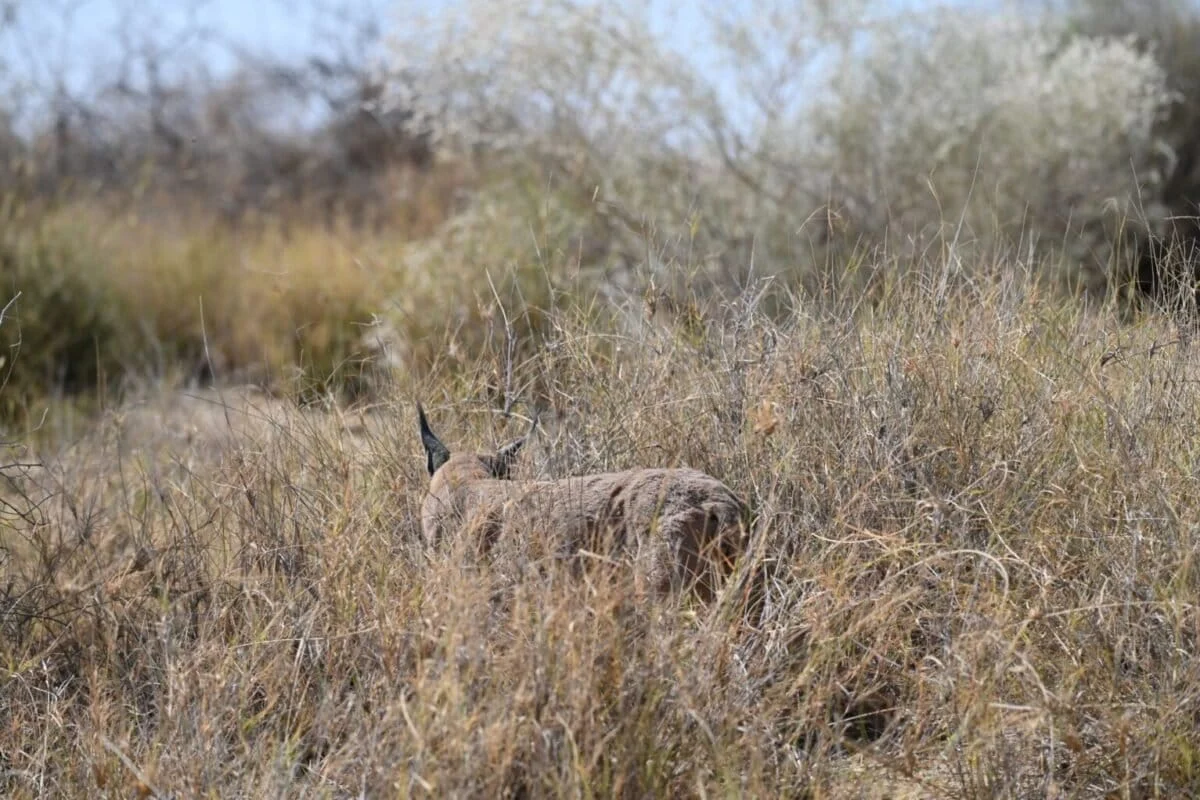
The arid landscapes of Rajasthan, characterized by shifting dunes and scrub forests, are home to one of India’s most elusive predators: the caracal (Caracal caracal schmitzi). Known for its iconic tufted ears and extraordinary leaping ability, this medium-sized wild cat has long been a phantom of the desert. However, a series of recent events—ranging from a brutal act of animal cruelty to the launch of a high-level conservation mission—has thrust the caracal into a national spotlight it has rarely occupied.
As the species teeters on the brink of localized extinction, the struggle to balance the livelihoods of pastoralist communities with the survival of a critically endangered carnivore has reached a tipping point.
Main Facts: A Brutal Catalyst for Conservation
In March 2026, the fragile peace between humans and wildlife in the Jaisalmer district of the Thar Desert was shattered. A video surfaced on social media depicting a caracal being burnt alive on a pyre of wood. The graphic footage, which sparked national outrage, led the Rajasthan police to arrest three individuals identified from the recording. While the partially burnt remains were recovered and sent to the Wildlife Institute of India (WII) for forensic analysis, the incident served as a grim reminder of the threats facing the species.
The caracal is protected under Schedule I of the Wildlife Protection Act, 1972, the highest level of legal protection in India, placing it on par with the Bengal tiger and the Asiatic lion. Despite this, the suspects claimed the killing was an act of retaliation. They alleged the cat had predated upon more than 50 of their livestock animals. Curiously, despite the heavy losses claimed, neither the accused nor the local villagers had applied for the state-mandated compensation provided for livestock lost to wild predators.
This incident has highlighted a massive disconnect between government policy and grassroots reality. While the law mandates imprisonment—the suspects were sent to a 14-day judicial remand—the underlying cause of the conflict remains unaddressed: a lack of awareness, a slow compensation process, and the increasing overlap between human settlements and the caracal’s shrinking habitat.

Chronology of Recent Events
The timeline of the caracal’s recent history in India is a study in contrasts, moving from scientific breakthroughs to tragic setbacks.
- March 2025: A significant milestone was achieved when a caracal was captured on a camera trap in the Mukundra Hills Tiger Reserve. This was the first time the elusive cat had been documented in this specific landscape, renewing hope that the species was expanding its range or, at the very least, persisting in protected corridors.
- March 14, 2026: The retaliatory burning incident occurred in the Shahgarh region of Jaisalmer. The video went viral shortly after, prompting immediate police and forest department action.
- March 16, 2026: Rajasthan Police arrested three men in connection with the burning. Samples were dispatched to the WII in Dehradun to confirm the species and cause of death.
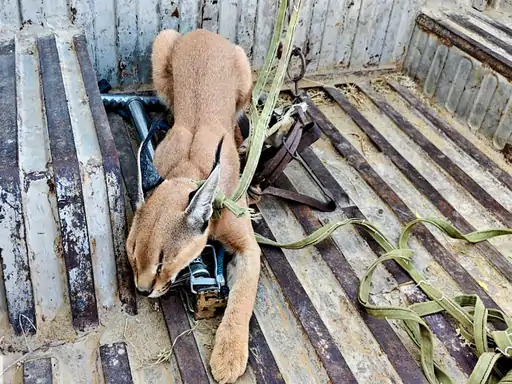
- Late March 2026: In a proactive move following the killing, the Wildlife Institute of India successfully fitted a radio collar on a caracal in the Jaisalmer desert to monitor its movements and understand its proximity to human settlements.
- April 15, 2026: "Project Caracal" was officially launched during a high-level workshop involving the WII, the Salim Ali Centre for Ornithology and Natural History (SACON), the Rajasthan Forest Department, and the NGO Tiger Watch. This marked the beginning of a structured, state-wide conservation strategy.
Supporting Data: A Species in Freefall
The caracal’s decline in India is one of the most dramatic documented range contractions of any carnivore in the subcontinent. Historically, the caracal was found across 13 Indian states, spanning nearly 800,000 square kilometers. It was a fixture of the semi-arid plains and scrublands of Central and Western India.
However, data compiled by conservation biologists paints a harrowing picture:
- 1948–2000: The species’ range contracted by approximately 48%.
- 2001–2020: The range plummeted by a further 96%.
- Current Status: The caracal is now believed to occupy less than 17,000 square kilometers—roughly 5% of its mid-20th-century range.
Today, potentially sustainable populations are restricted to only two or three states, with Rajasthan being the primary stronghold. Within Rajasthan, sightings are mostly confined to the Ranthambore Tiger Reserve, the Kutch region bordering Gujarat, and the remote sections of the Thar Desert.
While forest department records suggest a mere handful of caracals exist in the Thar, local experts suggest otherwise. Chatar Singh Jam, an environmentalist from Ramgarh with deep traditional knowledge of the desert, estimates there could be as many as 100 caracals in the Thar. However, these animals largely inhabit the "no-man’s-land" along the India-Pakistan border—a region where patrolling is difficult and formal ecological surveys are rare.

Official Responses and Strategic Initiatives
In the wake of the Jaisalmer incident, the Rajasthan Forest Department has shifted into high gear. K.C.A. Arun Prasad, the Additional Principal Chief Conservator of Forests and Chief Wildlife Warden, has outlined an ambitious 18-month roadmap for the species.
The Caracal Census
A comprehensive census is set to be conducted across the Ranthambore and Dholpur-Karauli landscapes. This will cover four major tiger reserves: Sawai Madhopur, Dholpur-Karauli, Ramgarh Vishdhari, and Mukundra. By using camera traps and scat analysis, researchers hope to establish a baseline population count that has eluded them for decades.
Educational Outreach
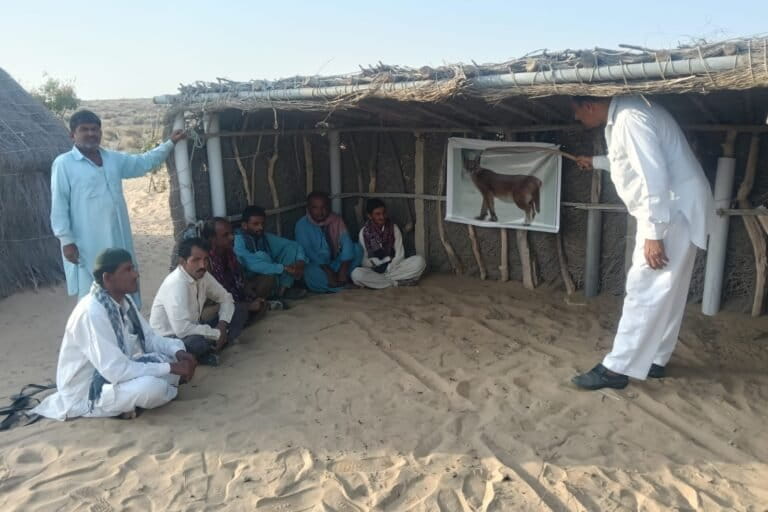
Anoop Kumar, the Chief Conservator of Forests, noted that the department is now engaging in "door-to-door" diplomacy. Officials are visiting settlements in the Thar Desert, showing residents photographs of caracals to distinguish them from more common desert cats. "We are telling them to inform the department immediately if they see such an animal," Kumar stated, adding that an incentive system for information and successful rescues is being implemented.
Scientific Research
The Caracal Working Group, established under Project Caracal, is tasked with creating a conservation policy within two years. This group will study behavior, diet, and habitat use, particularly focusing on how the cats navigate the semi-arid ecosystems of Gujarat and Rajasthan.
Implications: The Conflict Between "Green" Energy and Conservation
While retaliatory killings are the most visible threat, a more silent and systemic danger looms over the caracal: the rapid industrialization of the desert. The Thar Desert, once dismissed as a "wasteland," is now the frontier for India’s renewable energy revolution.
Chatar Singh Jam highlights a growing tension between conservation and development. "Over the last few decades, many development projects, especially solar plants, have come to the desert," Jam explained. He suggested that the government might be hesitant to officially acknowledge the full extent of the caracal population in Jaisalmer, as a "Critically Endangered" designation for the habitat could obstruct large-scale land acquisitions for solar parks.
The fragmentation of habitat by power lines, fences, and roads not only restricts the caracal’s movement but also increases the likelihood of roadkills—a threat cited by Dharmendra Khandal, Executive Director of Tiger Watch. Khandal’s research shows that between 2000 and 2020, a significant percentage of recorded caracal deaths were due to vehicular accidents or pastoralist attacks.
The Compensation Crisis
The failure of the compensation system is a recurring theme in the caracal’s struggle. In the Jaisalmer case, the shepherd’s choice to burn the animal rather than seek compensation speaks volumes about the bureaucracy involved. Sumit Dookia, a wildlife biologist at Guru Gobind Singh Indraprastha University, argues that for conservation to work, the compensation process must be "immediate and simplified."
"If a shepherd loses a goat—which is often their primary source of wealth—they cannot wait months for a government check," Dookia said. He also emphasized the need for collaboration with the Border Security Force (BSF), given that the caracal’s remaining habitat is intertwined with international border security zones.
Conclusion: A Turning Point for the Mysterious Cat
The caracal stands at a crossroads. It is a victim of its own elusiveness; because it is rarely seen, it is often forgotten in large-scale conservation funding, which typically favors "charismatic megafauna" like tigers and elephants. However, the brutal incident in Jaisalmer has acted as a wake-up call.
The success of Project Caracal will depend on more than just camera traps and radio collars. It will require a fundamental shift in how the state perceives the desert—not as a wasteland for industrial expansion, but as a complex ecosystem that requires protection. Furthermore, it requires the cooperation of the pastoralist communities who share the land with the "ghost of the desert."
Without timely compensation, habitat protection, and a robust census, the caracal may soon vanish from the Indian landscape entirely, leaving behind only the stories of a tufted-eared cat that once leaped through the dunes of the Thar.
