

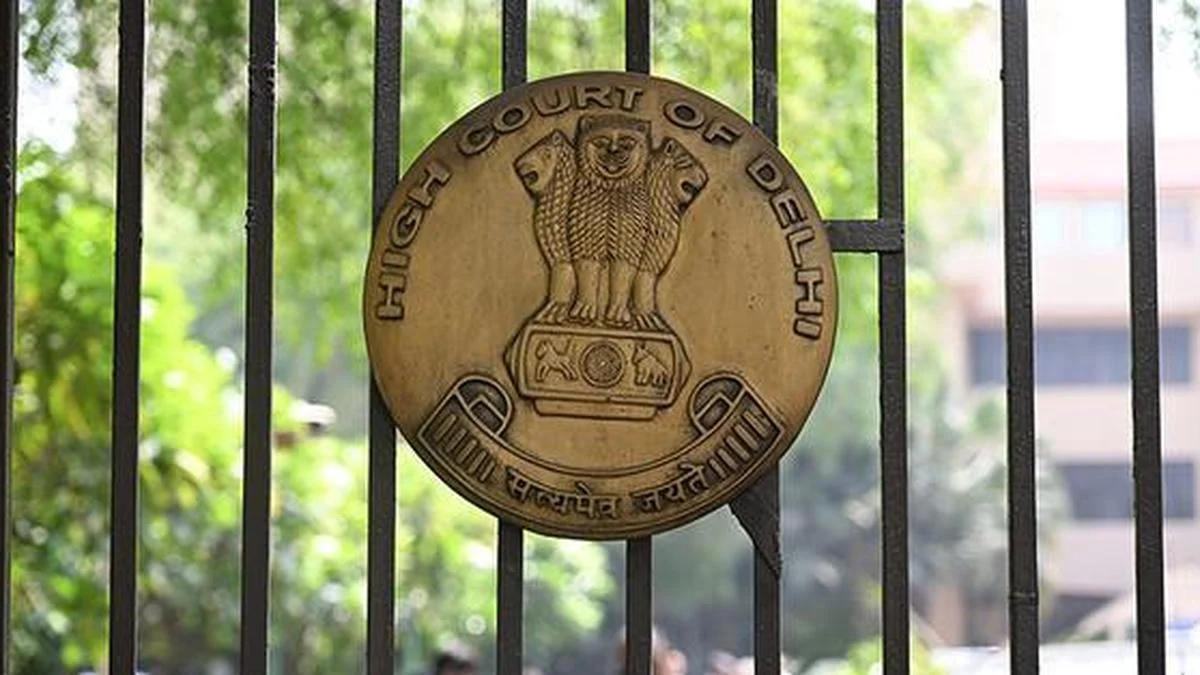
New Delhi, June 17, 2026 – In a development poised to significantly shape the landscape of digital platform regulation and user rights in India, the Delhi High Court today issued a formal notice to the Union government, challenging its decision to temporarily suspend access to the Telegram messaging application across the nation. The drastic measure, effective until June 22, has been enacted by the Ministry of Electronics and Information Technology (MeitY) under Section 69A of the Information Technology Act, 2000, citing grave concerns over the alleged misuse of the platform in coordinating and disseminating fraudulent materials related to the NEET-UG re-examination.
Justice Tejas Karia, presiding over the urgent petition filed by Telegram FZ-LLC, directed the government to submit its comprehensive response by Thursday, June 18, 2026, with the matter slated for a crucial follow-up hearing at 2:30 p.m. The High Court’s swift intervention underscores the high stakes involved – balancing the integrity of a critical national examination with the fundamental rights of millions of digital citizens.
The government’s decision to restrict Telegram comes amidst heightened anxiety surrounding the NEET-UG examination, which has been mired in controversy following widespread allegations of question paper leaks and other malpractices. The re-examination, scheduled for June 21, is intended to restore faith in the country’s medical entrance system. Authorities contend that Telegram’s features, particularly its channels and message editing capabilities, were being actively exploited by organized cheating networks to circulate leaked or fabricated question papers and facilitate fraudulent activities, thereby jeopardizing the fairness of the re-test.
This unprecedented move against a major messaging platform has ignited a fierce debate, pitting national security and examination integrity against principles of free speech, access to information, and digital business operations. Telegram, for its part, has vehemently challenged the legality and proportionality of the blocking order, asserting its consistent cooperation with Indian authorities and highlighting the adverse impact on its vast user base, which includes students, educators, and businesses reliant on the platform for legitimate communication. The upcoming hearing is expected to delve deep into these complex legal and ethical considerations, setting a potential precedent for future digital content regulation in India.
Chronology of a Crisis: From NEET-UG Scrutiny to Digital Blackout
The current legal tussle at the Delhi High Court is the latest chapter in a rapidly unfolding crisis that began with the initial conduct of the National Eligibility-cum-Entrance Test (Undergraduate) – NEET-UG – several weeks prior. This highly competitive examination, a gateway to undergraduate medical and dental courses in India, was originally held across the country, attracting millions of aspirants. However, soon after its conclusion, a deluge of allegations emerged, pointing towards widespread irregularities, including the leakage of question papers, instances of proxy candidates, and suspicious score patterns.
The outcry from students, parents, and educational activists was immediate and intense, leading to nationwide protests and calls for a re-examination. Recognizing the gravity of the situation and the imperative to uphold the sanctity of the examination process, the National Testing Agency (NTA) and the Union Ministry of Health and Family Welfare eventually announced a re-examination for specific batches of candidates, scheduled for June 21, 2026. This decision, while aimed at rectifying past wrongs, placed immense pressure on authorities to ensure a foolproof and leak-proof re-test.
It was during this period of heightened vigilance that government agencies, particularly MeitY and intelligence units, reportedly intensified their monitoring of digital platforms. Concerns began to mount specifically regarding Telegram, which was allegedly identified as a primary conduit for organized syndicates to not only disseminate previously leaked papers but also to circulate fabricated question papers, create confusion, and solicit money from desperate students. According to government sources, these networks were reportedly leveraging Telegram’s anonymous channels and the ability to edit messages post-delivery to evade detection and manipulate timestamps, making it difficult for law enforcement to track and verify information.
The Solicitor-General Tushar Mehta, representing the Centre, would later inform the court that authorities had repeatedly engaged with Telegram, sharing specific examples of problematic channels and content. Despite these alerts, the government contended that the issues persisted, necessitating a more decisive intervention.
On an unspecified date prior to June 17, 2026, and following what it deemed insufficient action from the platform, MeitY issued a directive under Section 69A of the IT Act, ordering the temporary suspension of Telegram’s services across India. The order stipulated that the restriction would remain in force until June 22, effectively covering the period immediately before and after the NEET-UG re-examination. Concurrently, a separate, more specific direction was issued, mandating Telegram to disable the editing of previously sent messages until June 30. This latter measure aimed to counter the alleged manipulation of message timestamps, a tactic believed to be employed by fraudulent actors.
Telegram, arguing that the blocking order was disproportionate and violated its operational rights and user freedoms, swiftly moved the Delhi High Court. Its petition, filed on June 16, challenged the legality and necessity of the government’s action. The High Court’s hearing on June 17, 2026, marked the formal commencement of the legal battle, with Justice Karia calling for the government’s detailed justification. The stage is now set for a rapid legal adjudication, with the next hearing scheduled just hours before the crucial NEET-UG re-examination.
Supporting Data and Legal Framework
The government’s decision to suspend Telegram is anchored in Section 69A of the Information Technology Act, 2000, a potent provision that grants the Centre significant powers to block public access to information. Enacted to address various forms of cybercrime and threats, Section 69A states that where the Central Government or any officer authorized by it is satisfied that it is necessary or expedient so to do, in the interest of the sovereignty and integrity of India, defence of India, security of the State, friendly relations with foreign States or public order or for preventing incitement to the commission of any cognizable offence relating to above, it may, by order, direct any agency of the Government or intermediary to block for access by the public or cause to be blocked for access by the public any information generated, transmitted, received, stored or hosted in any computer resource.
The legal framework surrounding Section 69A has been a subject of considerable debate, particularly concerning its potential for misuse and its impact on freedom of expression. Critics often point to the lack of transparency in the blocking process, as orders are frequently issued confidentially. However, the government has consistently maintained that such measures are essential tools for national security and public order, especially in preventing the spread of misinformation, incitement to violence, and coordination of illegal activities. In this instance, the "public order" and "preventing incitement to the commission of any cognizable offence" clauses are likely being invoked, with exam malpractice being classified as a cognizable offence.
From a technical perspective, Telegram’s architecture and features are central to the government’s concerns. The platform’s ‘channels’ allow for broadcasting messages to an unlimited number of subscribers, making them ideal for rapid, widespread dissemination of content, including potentially leaked exam materials. While Telegram offers end-to-end encryption for ‘secret chats,’ group chats and channels are cloud-based, meaning messages are encrypted between the client and server. The ability for channel administrators or even individual users in group chats to ‘edit’ messages after they have been sent is another feature highlighted by authorities. This capability, designed for correcting typos or updating information, could, in the context of exam leaks, be exploited to alter timestamps or content to mislead investigators or to make it appear as if information was shared at a later point than it actually was.

Telegram, in its defense, has presented data on its proactive measures. Senior Advocate Dhruv Mehta informed the court that the company had removed over 900 links identified as being associated with NEET-related unlawful material. This action, according to Telegram, was undertaken through a combination of artificial intelligence tools, machine learning systems, and dedicated human moderators, demonstrating a commitment to platform integrity. The company further asserted that discussions with government agencies had been ongoing since early June, and it had acted promptly on lists of objectionable channels provided by authorities.
The petition also draws a comparison with other social media intermediaries, arguing that the blanket ban on Telegram is discriminatory. Many other platforms, including WhatsApp, Facebook, and various social media sites, also host content that could potentially be misused for similar nefarious purposes. Telegram’s contention is that singling out one platform for a complete shutdown, while others continue to operate without similar restrictions, constitutes an unequal application of regulatory power and violates principles of fairness and proportionality. This aspect of the argument directly challenges the government’s justification for the specific and extensive nature of the ban.
Official Responses: A Clash of Imperatives
The Delhi High Court hearing on June 17 laid bare the starkly contrasting positions of the Union government and Telegram, each arguing from a distinct imperative.
The Union Government’s Stance: Safeguarding National Examination Integrity
Representing the Centre, Solicitor-General Tushar Mehta presented a forceful argument, emphasizing the critical need to safeguard the integrity of the NEET-UG re-examination. He painted a grim picture of organized cheating networks that, according to government intelligence, were exploiting Telegram to a significant degree.
"Several channels on the platform were allegedly being used to offer leaked examination questions in exchange for money," Mehta stated, highlighting the commercial aspect of the illicit activities. He stressed that these were not isolated incidents but rather a systemic problem, suggesting a sophisticated operation designed to subvert the examination process for financial gain. The Solicitor-General further asserted that authorities had repeatedly alerted Telegram to these concerns, providing specific examples of problematic channels and content. Despite these repeated warnings, the issues allegedly persisted, forcing the government’s hand.
Mehta underscored the vulnerability of the re-examination process, arguing that Telegram’s features could be easily manipulated to spread misleading content, create panic, and exploit students’ anxieties. The ability to edit messages and the broad reach of channels were identified as key enablers for these fraudulent activities. He robustly defended the measures as "necessary to safeguard the integrity of the NEET-UG re-examination," positioning the government’s action as a pre-emptive strike against further attempts to compromise the sanctity of the test.
In a dramatic appeal to the court, the Solicitor-General requested additional time to present further evidence. "If you give me time till tomorrow morning at 8 a.m., I will place shocking things before the court," he declared, suggesting that the government possessed compelling and perhaps hitherto undisclosed information that would fully justify the extreme step of a nationwide ban. This statement signals the government’s confidence in its evidence and its determination to convince the court of the severe threat posed by Telegram’s continued operation in the current context.
Telegram’s Defense: Upholding Digital Rights and Platform Responsibility
Senior Advocate Dhruv Mehta, appearing for Telegram, mounted a vigorous challenge to the government’s blocking order, framing it as an arbitrary and disproportionate measure that overlooked the company’s diligent efforts and the broader implications for digital rights.
Mehta unequivocally "challenged the legality of the blocking order issued by the Centre," contending that it reflected a "failure to consider the company’s responses and actions." He outlined a history of cooperation between Telegram and Indian authorities, stating that "discussions between the platform and government agencies had been ongoing since early June." During these interactions, Telegram had allegedly "acted on lists of objectionable channels supplied by authorities," demonstrating a proactive approach to content moderation. "We have removed all the contents that you have pointed out and that we found objectionable too," he asserted, emphasizing the company’s commitment to self-regulation and adherence to legal directives.
The Senior Advocate elaborated on Telegram’s robust content moderation infrastructure, highlighting its reliance on "artificial intelligence tools, machine learning systems and human moderators to detect and remove violations." This suggests a multi-layered approach to combating illicit content, not just a reactive response to government requests.
Crucially, Telegram’s petition argued that the government’s action was "discriminatory" because "other social media intermediaries continued to operate without similar restrictions." This point highlights a perceived unequal application of regulatory standards and questions why Telegram alone was subjected to a complete shutdown when other platforms might also carry similar risks of misuse.

Beyond operational concerns, Telegram framed the ban as a severe infringement on "constitutional guarantees, including the right to free speech and access to information." Dhruv Mehta passionately articulated the platform’s diverse utility: "Our app is used by students who regularly get study material over it. Teachers use our platform to teach. It’s used for business purposes and even for several other things. This is a curtailment of fundamental rights of those who use our app." This argument broadens the scope of the legal challenge beyond Telegram’s corporate interests to encompass the rights of its millions of legitimate users, many of whom rely on the platform for essential communication, education, and commerce.
The Court’s Observation: Seeking Balance and Clarity
After listening intently to both sides, Justice Tejas Karia made a pertinent observation, acknowledging the inherent challenge of regulating digital platforms. The court "observed that any digital platform could potentially be misused," implicitly recognizing the complexity of singling out one service. This statement suggests the court’s awareness that the issue extends beyond Telegram to the broader ecosystem of online communication.
To gain a clearer understanding of the factual basis for the government’s drastic measure, Justice Karia "sought clarification from the government regarding the scale and extent of the alleged illegal activity taking place on Telegram." This query indicates the court’s intention to scrutinize the proportionality of the ban – whether a complete shutdown is truly justified by the magnitude and nature of the alleged malpractices, especially when balanced against the rights of innocent users. The court’s directive for a detailed response from the government by the following day underscores the urgency and gravity of the matter.
Implications: A Precedent for Digital Regulation in India
The Delhi High Court’s ongoing deliberation on the Telegram suspension carries far-reaching implications, not just for the messaging app and the NEET-UG re-examination, but for the broader landscape of digital rights, platform governance, and government oversight in India. The outcome of this case could establish significant precedents for how digital intermediaries are regulated in the face of national crises or concerns.
For Telegram and Other Digital Platforms:
A favorable ruling for Telegram could reinforce the principle that blocking orders must be proportionate, non-discriminatory, and adequately justified by concrete evidence of widespread, unmitigated harm. It would also underscore the importance of due process and consultation with platforms before enacting such sweeping measures. Conversely, if the government’s ban is upheld, it could empower authorities to impose similar restrictions on other platforms in future scenarios, creating a more stringent regulatory environment. This would compel all digital intermediaries operating in India to reassess their content moderation policies, their responsiveness to government requests, and their legal strategies in challenging state directives. The ban also creates significant business disruption and reputational damage for Telegram, regardless of the final legal outcome.
For Digital Rights and Freedom of Speech:
The core of Telegram’s argument rests on the curtailment of fundamental rights, particularly the right to freedom of speech and expression (Article 19(1)(a)) and the right to carry on any occupation, trade or business (Article 19(1)(g)) for its users and the company itself. The court’s decision will be closely watched by civil liberties advocates, human rights organizations, and internet freedom groups. A ruling that prioritizes the government’s broad powers under Section 69A without robust scrutiny of proportionality could be seen as a setback for digital rights in India, potentially leading to a "chilling effect" where platforms self-censor or face arbitrary bans. Conversely, a ruling that emphasizes the need for a balanced approach could strengthen the legal safeguards for online expression and access to information.
For Students and the Education System:
The immediate implication for students preparing for the NEET-UG re-examination is paramount. The government’s stated aim is to ensure a fair and transparent process, free from the shadow of leaks and fraud. If the ban effectively prevents further malpractices, it could restore some faith in the integrity of the examination system. However, for the many legitimate students and educators who rely on Telegram for study groups, material sharing, and online teaching, the ban has disrupted their learning environment at a critical time. The case highlights the dual-edged nature of technology – a tool for education and connection, but also a potential conduit for illicit activities.
For Government Regulation and Policy:
The outcome will test the limits of Section 69A of the IT Act and the government’s interpretation of its powers to block online content. It will provide clearer guidance on the standard of evidence required to justify a nationwide ban on a communication platform. The case could also prompt a broader discussion on modernizing India’s IT Act to better address the complexities of digital platforms, balancing national security concerns with the imperative of protecting user rights and fostering a vibrant digital economy. The "shocking things" Solicitor-General Mehta promised to reveal could significantly influence public perception and future policy debates.
Wider Societal Implications:
The incident underscores the growing tension between national governance and global digital platforms. As more aspects of daily life, from education to commerce, migrate online, governments grapple with regulating these vast digital spaces, often encountering resistance from platforms that champion user privacy and freedom. The Telegram case serves as a microcosm of this global challenge, demonstrating the difficulties in enforcing national laws on cross-border digital services and the constant need to adapt legal frameworks to rapidly evolving technologies. The precedent set here could influence how India, a burgeoning digital economy, navigates its relationship with major tech companies in the years to come.
As the Delhi High Court prepares for its next session, the legal and ethical scales hang precariously. The decision will not only determine the immediate fate of Telegram in India but also cast a long shadow over the future of internet governance, digital freedom, and the delicate balance between security and liberty in the world’s largest democracy.
