

For decades, the Indian traveler’s itinerary for Europe was as predictable as the monsoon. The migration pattern was fixed: a concentrated surge between May and September, peaking during the school-holiday window of May and June, and tapering off through the golden European summer of July and August. The allure was simple—the promise of long, sun-drenched days and the vibrant energy of a continent in full bloom. However, the dream of a Mediterranean summer is increasingly colliding with a harsh reality: a continent buckling under the weight of its own popularity.
As 2025 approaches, a fundamental shift is occurring. Driven by a combination of geopolitical volatility, soaring costs, and the sheer physical exhaustion of "overtourism," travelers are beginning to look toward the "shoulder" and "off-peak" seasons. This pivot is not merely a matter of convenience; it is a strategic reimagining of what a holiday should be.
Main Facts: The Changing Face of Continental Tourism
The traditional European holiday is facing a triple threat: overcrowding, rising costs, and shifting accessibility. Historically, the concentrated demand during the summer months has turned iconic destinations into high-priced, high-stress environments. In 2019, Europe recorded approximately 270 million international tourist arrivals during the core July–August period. By the summer of 2025, that figure is projected to exceed 300 million.

This growth is not distributed evenly. It is aggressively concentrated in a handful of "bucket list" cities and islands. This concentration has pushed infrastructure to a breaking point, leading to a phenomenon where the visitor experience is often defined by queues rather than culture.
Simultaneously, the logistics of reaching Europe are changing. Unrest in the Persian Gulf and subsequent airspace restrictions have made traditional transit hubs in the Middle East more challenging to navigate, often leading to costlier connections to North America and Europe. In response, major European carriers like Germany’s Lufthansa have pivoted, significantly increasing direct flight frequencies to European hubs to capture the shifting demand.
The result is a growing movement toward the "unhurried" holiday—trips taken in December, January, or April, where the objective is not just to see the sights, but to inhabit the space.

Chronology: From Peak-Season Obsession to the Off-Season Evolution
The Pre-2019 Equilibrium
Before the global pandemic, European travel followed a steady, seasonal rhythm. For Indian families, the May-June window was non-negotiable due to the academic calendar. Europe was marketed as a summer destination, and the industry was built to support this five-month frenzy.
2022-2023: The "Revenge Travel" Surge
Following the lifting of COVID-19 restrictions, the world witnessed "revenge travel." Volume took precedence over value. Travelers were willing to endure record-high airfares and suffocating crowds just to be back in the streets of Paris or on the canals of Venice. It was during this period that the infrastructure strain became impossible to ignore.
2024: The Breaking Point
The summer of 2024 served as a catalyst for change. Cities like Barcelona and Venice saw locals protesting against the sheer volume of tourists. The "human traffic jam" on Barcelona’s La Rambla and the 14-to-1 tourist-to-local ratio in Mallorca became headline news. Travelers began to realize that the "summer dream" was becoming a logistical nightmare.

2025 and Beyond: The Strategic Pivot
We are now entering an era of "seasonal spreading." Airlines are adjusting schedules, and savvy travelers are intentionally booking trips for the late autumn and winter months. The focus has shifted from "the best weather" to "the best experience."
Supporting Data: A Case Study in Mallorca
To understand the impact of this shift, one must look at Mallorca, the crown jewel of Spain’s Balearic Islands. Mallorca provides a stark statistical contrast between the chaos of summer and the serenity of winter.
The Summer Surge by the Numbers
In July of last year, Mallorca—an island with a permanent population of roughly 920,000—welcomed over 2.5 million visitors. Annually, the island sees 14 million arrivals. During the peak weeks, tourists outnumber locals by more than 14 to one. The pressure on local services is so intense that residents report a "seven-minute culture" in cafes, where tourists are pressured to finish their meals and move on to make room for the next wave of arrivals.

The Winter Alternative
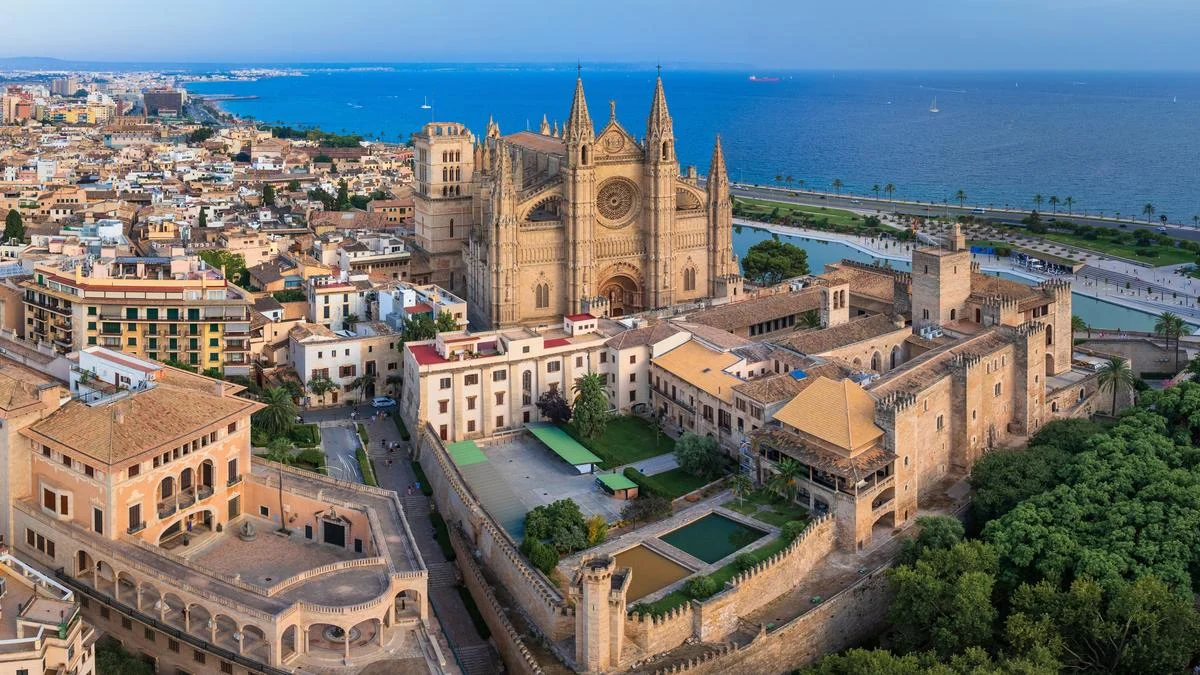
Contrast this with a visit in December. Landing in Palma de Mallorca during the winter months offers a different sensory experience. The "steel-and-concrete" rhythm of hubs like Frankfurt or Amsterdam gives way to sandstone terraces and sea-soaked promenades that are actually navigable.
In the capital, Palma, the difference is felt immediately in the hospitality sector. Historic establishments like Can Joan de s’Aigo, a bakery dating back to 1700, regain their soul in the off-season. In July, such a venue is a battleground for a table. In December, it is a sanctuary where locals and slow-travelers linger over ensaimada (a spiral-shaped pastry filled with pumpkin jam or chocolate) and thick, decadent hot chocolate.
Beyond the Urban Hubs
The data supports a similar story in the island’s interior:

- Sóller: Located 30 kilometers from Palma, this town is famous for its vintage wooden tram. In summer, the lines for the 5-kilometer journey to the harbor can stretch for blocks. In the off-season, the half-hour ride through citrus groves and sun-warmed stone houses is a peaceful commute, not a crowd-control exercise.
- Pollença: In the north, the famous Calvari staircase—365 stone steps leading to a chapel—is a site of quiet reflection in the winter. During the peak season, the sweeping views are often obscured by hundreds of selfie-taking tourists.
The Overtourism Crisis: Official Responses and Global Context
Mallorca is not an isolated case. Across the continent, the "summer tide" has forced municipal governments to take drastic action.
- Venice: With 25 million annual visitors and a dwindling resident population of under 50,000, the city has implemented an entry fee for day-trippers on peak days—a world-first attempt to regulate human flow through a city.
- Santorini: The Greek island can see 10,000 cruise passengers disembark in a single day. The local government has recently moved to cap the number of cruise arrivals to prevent the island’s narrow streets from becoming completely impassable.
- Dubrovnik: The "Game of Thrones" effect turned this walled Croatian city into a year-round high-demand zone. The city has had to implement "Respect the City" protocols to manage the surge of cruise ship passengers that can overwhelm the Old Town within hours of docking.
The official response across these regions is clear: the current model of concentrated summer tourism is unsustainable. Governments are now actively marketing the "secret" seasons of winter and spring to protect their infrastructure and the quality of life for their citizens.
Implications: The Trade-offs of the New Travel Paradigm
The move toward off-season travel is not without its compromises. A journalistic assessment must acknowledge that "different" does not always mean "easier."

The Economic Trade-off
While hotel rates are significantly lower and airfares more competitive, some seasonal businesses—particularly beach clubs, high-end nightlife venues, and boutique restaurants in coastal towns—close their doors from November to March. The traveler trades the "full menu" of tourist amenities for a more authentic, albeit limited, selection of local life.
The Climatic Shift
The Mediterranean in winter is mild, not hot. Daytime temperatures in Mallorca or Sicily hover between 15 and 20 degrees Celsius. While pleasant for walking, the sea is rarely warm enough for swimming, and the shorter daylight hours require a more disciplined approach to sightseeing.
The Psychological Benefit
The most profound implication, however, is psychological. When the crowds recede, the "stage set" feel of European cities disappears. You are no longer a "visitor number" to be processed in seven minutes; you are a guest in a living city.

Conclusion: Picking the Right Time
The future of travel to Europe for the discerning Indian tourist is no longer about finding a hidden, undiscovered village—those are increasingly rare in the age of social media. Instead, the "new luxury" in travel is space.
The key to enjoying Europe’s timeless beauty—from the La Seu Cathedral in Palma to the canals of Venice—is no longer about where you go, but when you go. By stepping outside the traditional May-September window, travelers are discovering that the continent’s true charm isn’t found in the heat of the summer sun, but in the quiet, unhurried moments of the off-season. As infrastructure strain continues to grow, the "Great European Pivot" may soon become the only way to experience the continent as it was meant to be seen.
