

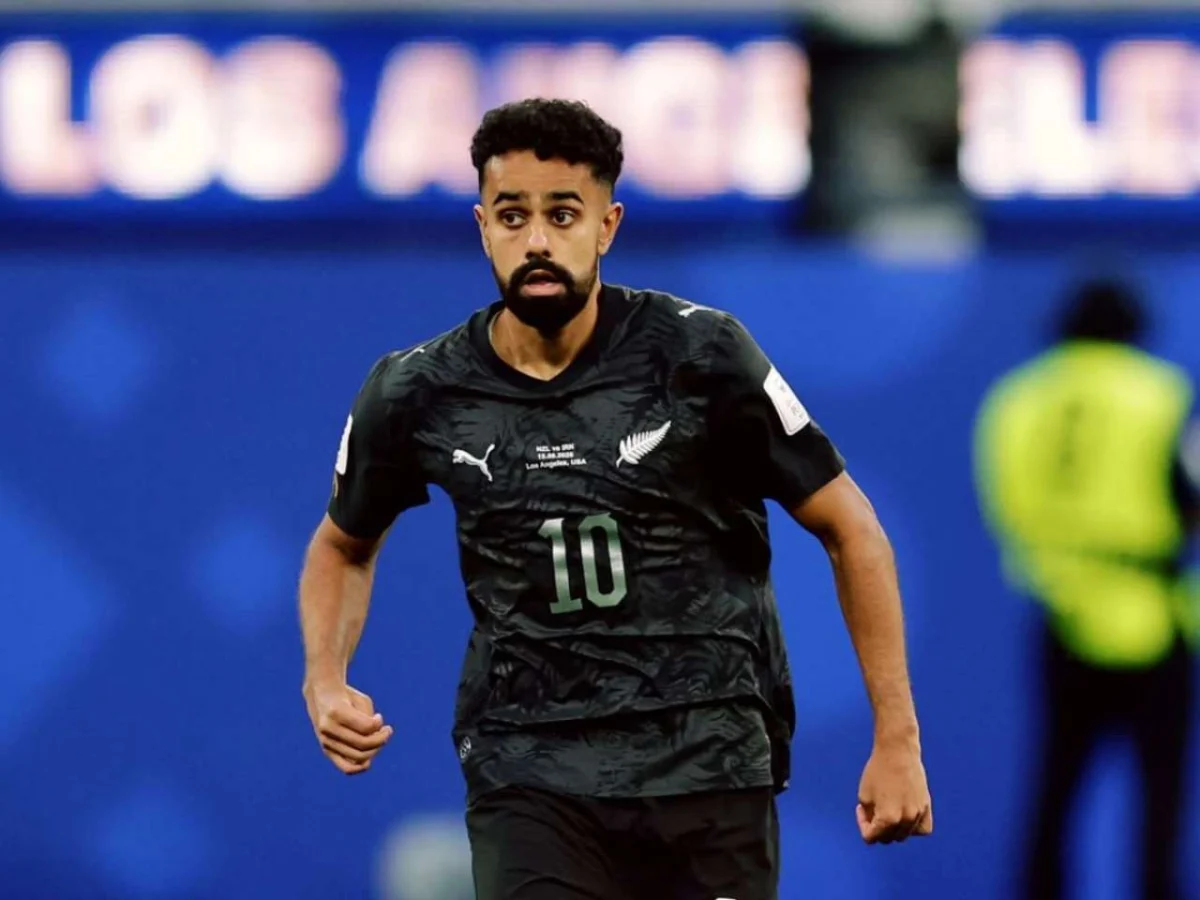
Los Angeles, USA – June 19, 2026 – As the FIFA World Cup 2026 continues to captivate audiences worldwide, a pivotal moment on June 16 in Los Angeles has not only etched itself into the annals of New Zealand football history but has also rekindled a vital discussion within Indian football circles. Sarpreet Singh, the talented 27-year-old midfielder for New Zealand, made history by becoming the first Sikh and Indian-origin player to start a FIFA World Cup match, a landmark achievement that has resonated deeply across the global South Asian diaspora. His performance during New Zealand’s spirited 2-2 draw against Iran has thrown a spotlight on the untapped potential of Indian-origin footballers playing at the highest levels abroad, reigniting calls for India to re-evaluate its approach to leveraging this global talent pool in its persistent pursuit of a maiden World Cup appearance.
Singh’s historic debut transcends mere sporting achievement; it serves as a powerful symbol of representation and a poignant reminder of India’s enduring wait to grace football’s grandest stage. While India remains one of the most populous nations yet to qualify for the World Cup, the sight of players with Indian heritage excelling for other nations underscores a burgeoning global presence that many believe could be harnessed to elevate the Blue Tigers.
The Historic Moment: Sarpreet Singh’s World Cup Debut
Sarpreet Singh’s journey to the FIFA World Cup is a testament to perseverance, talent, and cultural pride. Born in Auckland, New Zealand, to parents of Indian heritage, Singh’s footballing odyssey began in the youth academies of his home country before he made his professional debut with Wellington Phoenix in the A-League. His exceptional playmaking abilities and vision quickly caught the eye of European scouts, leading to a dream move to German giants Bayern Munich II in 2019. This transfer marked a significant milestone, positioning him as one of the few players of South Asian descent to join such an elite club. While his time at Bayern Munich saw him primarily feature for the reserve team, it provided invaluable experience, training alongside world-class talents and adapting to the rigorous demands of European football. Subsequent loan spells at clubs like Jahn Regensburg, Werder Bremen II, and Hansa Rostock further honed his skills, making him a versatile and experienced midfielder.
On June 16, 2026, against Iran at the iconic Rose Bowl in Los Angeles, Singh stepped onto the pitch not just as a New Zealand international, but as a beacon for millions. His inclusion in the starting eleven for the All Whites’ opening Group G fixture against a formidable Iranian side was a moment fraught with emotion and significance. "It means a lot to me, it means a lot to my people, my family, my community," Singh shared during an interview at the team hotel in San Diego, his voice reflecting the weight of the moment. "I’m very happy to be the first, and pave the way for the rest of them coming through. I hope to see many more Singhs and Sikhs and Punjabi footballers coming through, and Indian heritage footballers."
)
His performance in the match was marked by composure and flashes of brilliance, contributing to New Zealand’s commendable 2-2 draw. This result not only gave the All Whites a crucial point in their group but also amplified the significance of Singh’s personal achievement. He is not only the first Indian-origin player but specifically the first Sikh player to start a match in a FIFA World Cup, a distinction that carries immense cultural and communal pride, particularly within the global Sikh and Punjabi diaspora.
Chronology of India’s World Cup Quest and the Diaspora’s Rise
India’s relationship with the FIFA World Cup has been one of tantalizing proximity and prolonged absence. The nation’s closest brush with participation came in 1950 when India famously qualified for the tournament in Brazil. However, largely due to financial constraints and, as legend has it, a FIFA ruling against playing barefoot, the team ultimately withdrew, a decision that remains a source of lament for Indian football enthusiasts. Since then, the dream of playing on football’s biggest stage has remained elusive, despite sporadic improvements in domestic league structures and growing fan interest.

For decades, the idea of an Indian-origin player making a significant impact on the global football scene seemed distant. However, the turn of the millennium witnessed a gradual but steady rise of players of Indian descent in professional leagues across Europe, North America, and Australia. These individuals, often born and raised in countries with established footballing cultures and superior infrastructure, benefited from early access to quality coaching, competitive youth leagues, and professional pathways that were largely unavailable in India.
Sarpreet Singh himself is a prime example of this phenomenon. His development within the New Zealand football system, coupled with his exposure to German football, has shaped him into the caliber of player capable of competing at the World Cup. His journey, from Auckland to Bayern Munich and now to the global stage, serves as a powerful narrative for aspiring footballers of Indian heritage worldwide.
)
Beyond Singh, the 2026 World Cup features other notable players of South Asian descent, further highlighting this expanding global footprint. Australia’s dynamic forward Nishan Velupillay, whose mother hails from southern India, is another prominent figure. His pace and goal-scoring ability have made him a vital asset for the Socceroos. Similarly, Qatar’s winger Tahsin Jamshid, with roots in the Indian subcontinent, showcases the diverse origins of talent now gracing the tournament in North America. These players, while representing different nations, collectively symbolize the growing influence and talent pool emerging from the Indian diaspora.
Singh’s remarks about representing his heritage, alongside New Zealand, are particularly poignant. He recounted the overwhelming support he received during a tournament in India a few years prior, an experience that deepened his connection with fans from the region. "I always know I’m representing them, as well as New Zealand, so I always try and do my best," he affirmed, acknowledging the dual identity many diaspora players embrace.
)
Supporting Data and the Global Indian Diaspora
The global Indian diaspora is one of the largest and most widespread in the world, with millions of people of Indian origin residing across every continent. This vast demographic represents an enormous, largely untapped talent pool for Indian football. While precise statistics on the number of Indian-origin professional footballers are hard to come by, anecdotal evidence and the increasing visibility of players like Singh, Velupillay, and Jamshid suggest a growing contingent of individuals with a direct ancestral link to India thriving in footballing nations.
Many of these players benefit from developmental systems far superior to those currently available in India. Countries like the United Kingdom, Canada, Australia, New Zealand, the United States, and various European nations boast extensive youth academies, professional coaching licenses, and competitive league structures from a very young age. This provides a fertile ground for talent to blossom, nurturing skills, tactical understanding, and physical conditioning to international standards.
)
The argument for integrating these players into the Indian national team hinges on several key points:
- Immediate Quality Injection: Players from top European or Australian leagues would instantly raise the technical and tactical quality of the national squad.
- Professionalism and Experience: They bring a professional mindset, experience of high-pressure environments, and exposure to diverse playing styles.
- Role Models: Their success can inspire a new generation of footballers within India, demonstrating what is achievable.
- Global Network: They can act as ambassadors for Indian football, fostering connections and potentially opening doors for young Indian talents to train or play abroad.
This strategy is not without precedent. Numerous countries, particularly those with significant diasporas in Europe, have successfully leveraged this talent pool to bolster their national teams. Morocco’s historic run at the 2022 FIFA World Cup, for instance, was heavily reliant on players born and raised in Europe, who chose to represent their ancestral homeland. Similarly, Turkey, Algeria, and even European nations like Germany (with its Turkish diaspora) and France (with its diverse colonial heritage) have benefited immensely from integrating players from various backgrounds. These examples serve as a powerful blueprint for India to consider.
)
However, a significant hurdle for India lies in its strict citizenship laws. India does not permit dual citizenship, and while Overseas Citizen of India (OCI) status offers many benefits, it does not grant full citizenship, which is typically a prerequisite for representing a national team under FIFA regulations (though exceptions exist for players who have never held citizenship of another country at a senior level). This legal framework necessitates players of Indian origin to renounce their current citizenship to represent India, a decision with profound personal and professional implications, often proving to be a deterrent.
Official Responses and Policy Debates
The ongoing debate surrounding the inclusion of Indian-origin players has seen various stakeholders voice their opinions, ranging from cautious optimism to fervent calls for policy reform.
)
Historically, the All India Football Federation (AIFF) has been constrained by existing government regulations. While acknowledging the potential benefits, AIFF officials have often reiterated that the decision rests with the government to amend citizenship laws or provide special dispensations for athletes. "We understand the immense talent pool out there," stated a senior AIFF official, speaking on condition of anonymity due to the sensitivity of the topic. "We monitor players of Indian origin globally, and we are certainly keen to have the strongest possible team. However, our hands are tied by the current legal framework. We have engaged in discussions with the Ministry of Youth Affairs and Sports and other government bodies to explore potential solutions, but it is a complex issue involving national identity and legal precedent."
Football pundits and former players have been more vocal in their advocacy. Renowned Indian football analyst and former national team captain, Bhaichung Bhutia, has frequently championed the cause. "Sarpreet Singh playing in the World Cup should be a wake-up call for us," Bhutia might have commented, echoing sentiments he has expressed in the past. "We have so much talent abroad, players who are playing in top leagues and receiving world-class training. If we want to compete with the best, we must find a way to include them. This requires a progressive outlook from the government, perhaps a special clause for athletes to hold OCI status while representing India, without requiring them to renounce their birth citizenship."
)
The Ministry of Youth Affairs and Sports, while emphasizing the development of domestic talent, has indicated an openness to review existing policies in light of national interest. A hypothetical statement from a Ministry spokesperson could suggest: "The government is committed to promoting sports excellence and will always consider measures that strengthen our national teams. Any policy adjustments regarding citizenship for athletes would involve thorough deliberation, balancing the interests of our domestic players with the potential to elevate India’s standing on the global stage. We are continuously evaluating international best practices."
The discussion often revolves around the perceived trade-off between nurturing homegrown talent and fast-tracking success through diaspora players. Critics argue that an influx of foreign-born players might stifle the growth of Indian-raised footballers, potentially impacting the domestic leagues. However, proponents counter that the presence of higher-quality players can elevate the overall standard of play, pushing domestic players to improve and creating a more competitive environment beneficial for all. Moreover, the argument is often made that India’s diaspora talent is not "foreign" in the traditional sense, but rather an extension of India’s global identity.
)
Implications for Indian Football
Sarpreet Singh’s historic World Cup appearance, alongside the growing visibility of other Indian-origin players, carries profound implications for the future trajectory of Indian football.
1. Policy Reform and Dual Citizenship: The most immediate implication is the intensified pressure on the Indian government to reconsider its stance on dual citizenship, at least for elite athletes. A more flexible policy, perhaps allowing OCI cardholders to represent India without renouncing their foreign citizenship, could unlock a treasure trove of talent. Such a change would require political will and a re-evaluation of national identity in a globalized world, but the potential rewards for Indian football are immense.
)
2. Elevating the National Team’s Quality: Should a policy shift occur, the Indian national team could see a significant influx of talent, instantly raising its competitive level. Players from European academies and leagues bring a tactical sophistication, physical conditioning, and mental fortitude often acquired in more demanding environments. This could drastically improve India’s chances in World Cup qualifiers and other international tournaments, transforming them from perennial underdogs to genuine contenders.
3. Impact on Domestic Football and Youth Development: While some fear that an influx of diaspora players might overshadow domestic talent, the counter-argument is that it would raise the bar for everyone. Domestic players would be pushed to compete at a higher level, learn from experienced professionals, and adapt to more sophisticated playing styles. This could, in turn, accelerate the development of the Indian Super League (ISL) and I-League, making them more attractive to both players and fans. Furthermore, the success of diaspora players can inspire Indian youth, demonstrating clear pathways to international football.
)
4. Enhanced Scouting and Talent Identification: The discussion also highlights the need for a more robust and proactive scouting network to identify and track Indian-origin talent globally. The AIFF and Indian clubs could invest in dedicated scouts based in key diaspora hubs (UK, Canada, USA, Australia, New Zealand, Europe) to monitor promising young players from an early age, fostering connections and potentially paving the way for future representation.
5. Global Brand Building for Indian Football: The presence of Indian-origin players at the World Cup, even if representing other nations, helps to raise the global profile of Indian football. It creates narratives, fosters fan interest, and positions India as a significant contributor to the global footballing landscape, not just as a market but also as a source of talent. This, in turn, could attract more investment, sponsorship, and expertise into Indian football.
)
6. Cultural Connection and Fan Engagement: For millions of Indian football fans, seeing players of Indian heritage succeed on the world stage, irrespective of the flag they play under, is a source of immense pride. If these players were to represent India, the emotional connection would be even stronger, potentially galvanizing fan support and creating a more vibrant football culture within the country.
New Zealand, with Sarpreet Singh as a key player, is set to continue its World Cup journey, taking on Egypt in their Group G matchup on June 21 in Vancouver, as they seek their first victory of the tournament. As Singh and other diaspora talents continue to shine, their achievements will undoubtedly fuel the ongoing discourse in India. The question is no longer if India has the talent, but how it chooses to embrace its global identity to fulfill its long-cherished World Cup dream. The path forward for Indian football may very well lie in recognizing and integrating its scattered but shining stars.
