

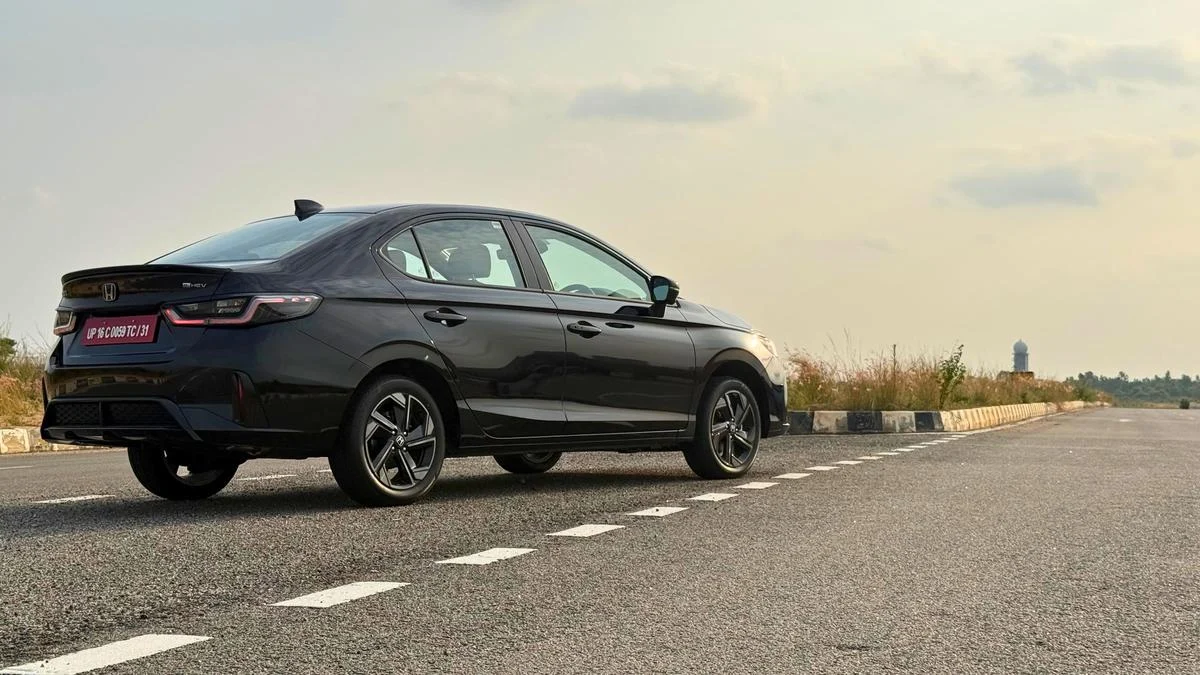
The Indian midsize sedan segment, once the crown jewel of the automotive market before the SUV onslaught, has recently undergone a dramatic transformation. For the past few years, the narrative has been dominated by the "European Invasion"—specifically the Volkswagen Virtus and the Skoda Slavia. These vehicles, with their punchy turbocharged engines and taut driving dynamics, successfully captured the imagination of driving enthusiasts. However, as the market matures and fuel prices fluctuate, a veteran player is reclaiming its throne.
The 2026 Honda City, recently put to the test on the diverse terrains surrounding Bengaluru, suggests that Honda has not merely updated a car; they have refined a philosophy. By blending its legendary reputation for space and comfort with a sophisticated strong-hybrid powertrain, Honda is offering a compelling alternative to the "performance-at-all-costs" approach of its rivals.
Main Facts: The 2026 Refresh at a Glance
The 2026 Honda City arrives with a dual-pronged strategy: aesthetic modernization and mechanical sophistication. Priced between INR 11.99 lakh and INR 20 lakh (ex-showroom), it occupies a strategic position that caters to both value-conscious buyers and those seeking premium technology.
Key highlights of the new model include:
- Powertrain: A 1.5-litre Atkinson-cycle i-VTEC petrol engine paired with a dual-motor self-charging hybrid system.
- Performance: A combined output of 126 PS and a class-leading 253 Nm of torque.
- Efficiency: An extraordinary real-world fuel economy of approximately 23.5 km/l, even under spirited driving conditions.
- Safety: The standardized "Honda Sensing" ADAS suite across higher trims, complemented by six airbags as standard.
- Design: A "Man Maximum, Machine Minimum" approach that prioritizes cabin volume and ergonomic efficiency.
Chronology: The Evolution of an Icon
To understand the significance of the 2026 update, one must look at the City’s trajectory in the Indian market. Launched in the late 1990s, the City became the aspirational symbol for the Indian middle class. Through five generations, it transitioned from a lean, enthusiast-focused machine to a plush, executive sedan.
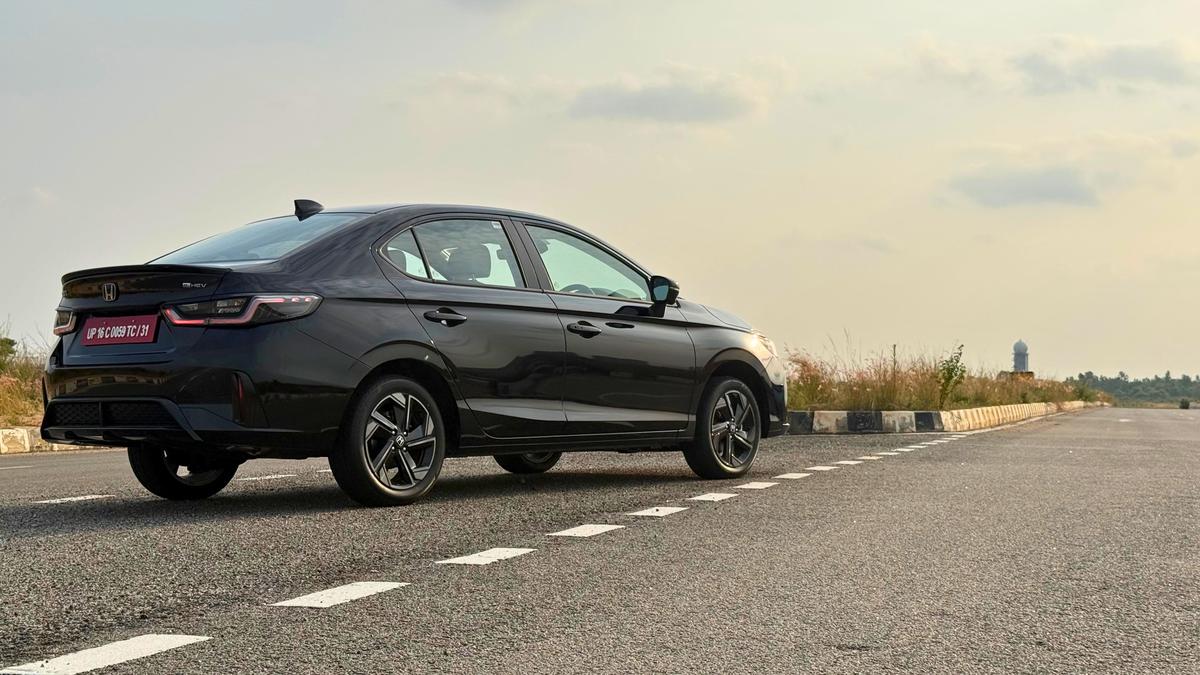
In 2022, Honda introduced the City e:HEV (Hybrid), marking the first time a mainstream midsize sedan in India offered a strong-hybrid system. This move was a gamble, considering the segment’s lean toward naturally aspirated or turbocharged petrol engines. However, as global trends shifted toward electrification, Honda’s "bridge technology"—the hybrid—began to gain traction.
The 2026 refresh represents the culmination of this journey. It addresses the criticisms of the earlier iterations—such as dated infotainment and conservative styling—while doubling down on the hybrid technology that differentiates it from the Volkswagen Group’s offerings.
Supporting Data: Engineering a Sophisticated Drive
The Hybrid Heart
The centerpiece of the 2026 Honda City is the e:HEV system. Unlike mild hybrids that merely assist the engine, Honda’s strong-hybrid system allows the car to run on pure electricity for significant periods, especially in urban stop-and-go traffic.
The system operates in three distinct modes:
- EV Drive Mode: The car runs entirely on the lithium-ion battery, providing a silent, emission-free experience.
- Hybrid Drive Mode: The petrol engine acts as a generator, supplying power to the electric motor, which then drives the wheels.
- Engine Drive Mode: At high cruising speeds, a lock-up clutch connects the engine directly to the wheels for maximum efficiency.
During testing on the climb to Nandi Hills, the 253 Nm of near-instant torque proved to be the car’s "secret weapon." While the 126 PS peak power might seem modest on paper compared to the Virtus GT’s 150 PS, the City’s electric torque provides a level of low-end responsiveness that makes overtaking effortless.
Interior and Practicality Metrics
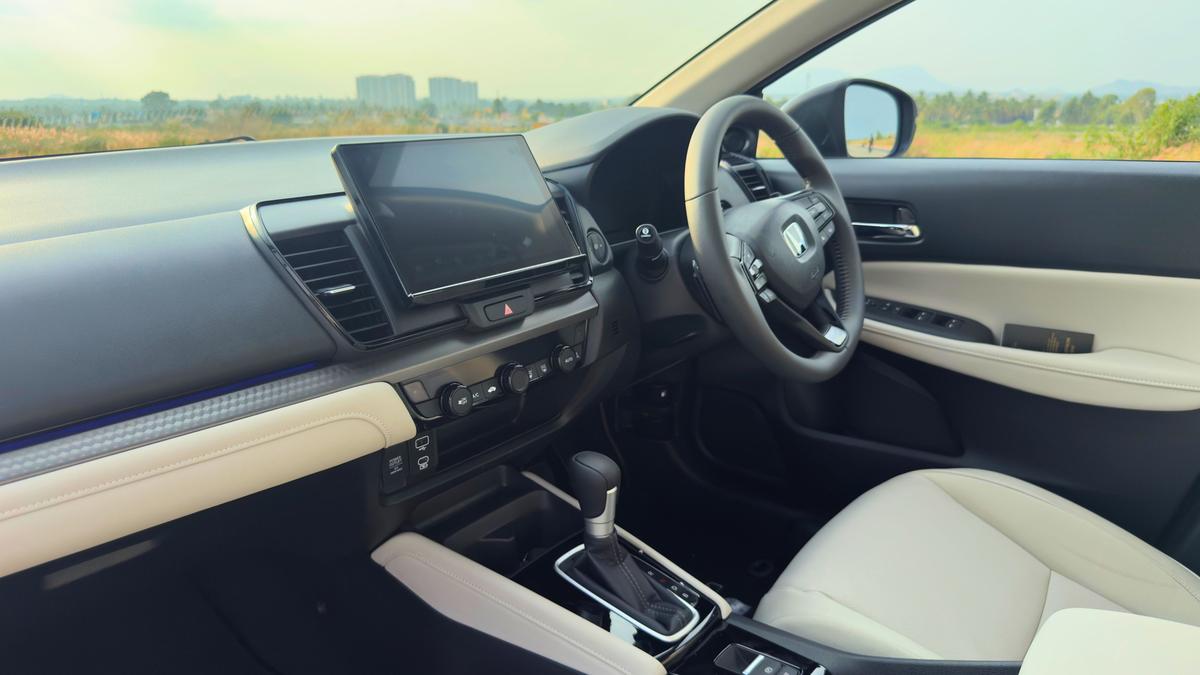
The City remains the "gold standard" for interior packaging. With a length of 4,594 mm, Honda has maximized the wheelbase to offer rear-seat legroom that rivals sedans from two segments above.
- Boot Capacity: The petrol variants offer a massive 506 litres. The hybrid variant, while slightly compromised by the battery pack, still offers sufficient space for family luggage, maintaining its status as a practical long-distance tourer.
- Connectivity: The updated 8-inch touchscreen now supports wireless Apple CarPlay and Android Auto, solving a major gripe of previous owners.
Official Responses and Market Positioning
Honda’s approach with the 2026 City reflects a conscious decision to move away from the "spec-sheet war." Company representatives have emphasized that while rivals focus on 0-100 km/h sprints (where the City still clocks a respectable 7.9 seconds), Honda’s priority is "Total Quality of Life" for the owner.
The inclusion of Honda Sensing is a testament to this. By making ADAS (Advanced Driver Assistance Systems) more accessible, Honda is positioning the City as the safest and most technologically "intelligent" choice in the segment. Features like Collision Mitigation Braking and Road Departure Mitigation are no longer luxuries but essentials in Honda’s 2026 lineup.
Market analysts suggest that Honda is playing a long game. While the enthusiast market is vocal, the "silent majority" of car buyers in India prioritize reliability, resale value, and running costs. By delivering 23+ km/l in a car that feels premium, Honda is targeting the heart of the Indian executive class.
Design: Restraint Meets Modernity
The 2026 aesthetic updates are subtle but effective. The new "Blade-Eye" LED headlamps are slimmer and more technical in appearance. The front grille has been decluttered, moving away from the heavy chrome of the past toward a more sophisticated, "global" Honda look.
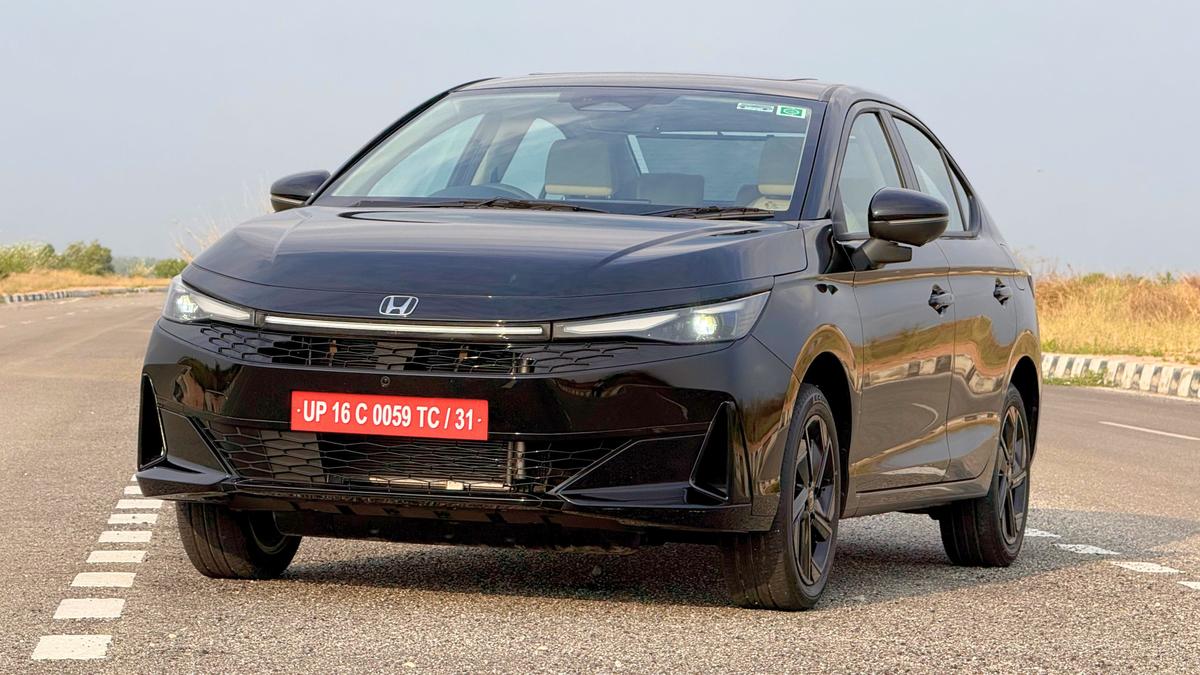
The side profile remains classic sedan—a three-box silhouette with a strong character line running from the headlamps to the taillights. The new 16-inch diamond-cut alloy wheels add a touch of athleticism. This design language contrasts sharply with the Hyundai Verna’s "Parametric Dynamism," which some buyers find polarizing. The City, by contrast, aims for timelessness.
Ride Quality: The Bengaluru Outskirts Test
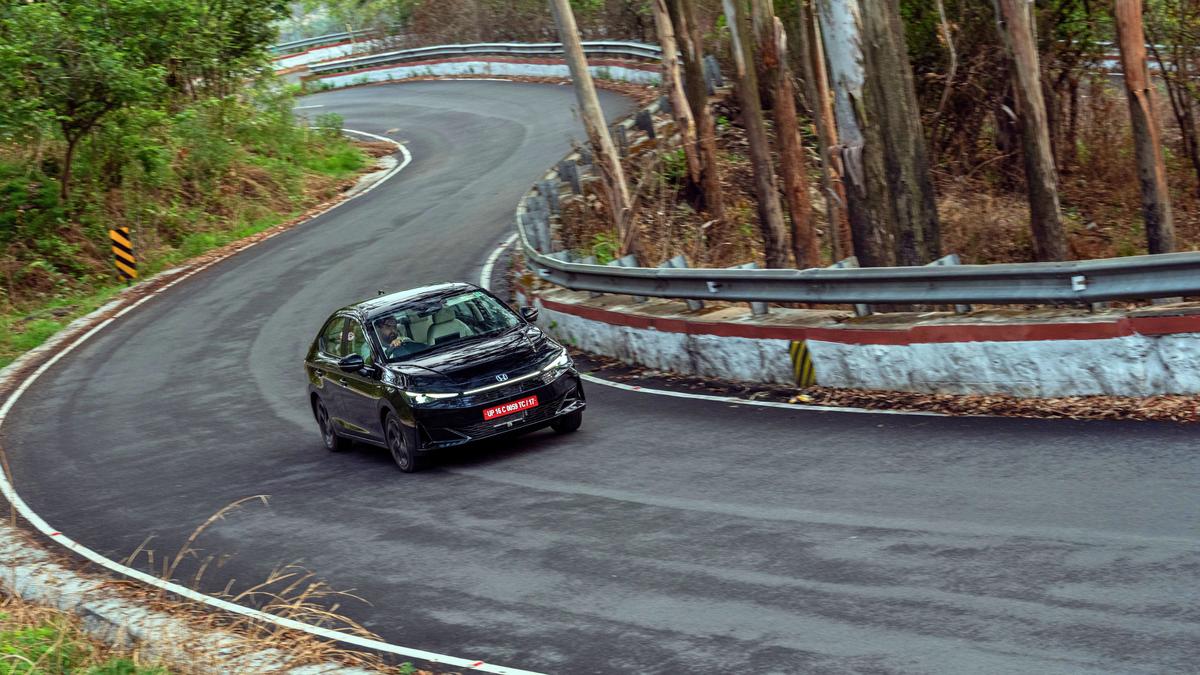
The true character of the 2026 City was revealed on the undulating roads outside Bengaluru. The suspension tuning is arguably the best in its class for Indian conditions. It strikes a fine balance; it is soft enough to iron out the sharp edges of potholes and expansion joints, yet disciplined enough to prevent the "boaty" feeling often associated with comfort-oriented sedans.
On the winding roads of Nandi Hills, the steering felt light yet precise. While it may not offer the raw feedback of a Skoda Slavia, it inspires confidence. The transition between electric and petrol power is so seamless that, without looking at the energy flow diagram on the dashboard, the driver is often unaware of what is powering the wheels.
Implications: The Future of the Midsize Sedan
The arrival of the 2026 Honda City has significant implications for the Indian automotive landscape:
- The Hybrid vs. Turbo Debate: The City proves that you don’t need a thirsty turbocharged engine to achieve performance. Hybrids offer a "best of both worlds" scenario—performance when needed and frugality when cruising.
- The Survival of the Sedan: In an era dominated by SUVs, the City makes a strong case for the sedan format. Its superior aerodynamics, lower center of gravity, and "lounge-like" rear seat comfort are attributes that similarly priced compact SUVs struggle to match.
- Safety Democratization: By standardizing high-end safety tech, Honda is forcing other manufacturers to rethink their safety packages, which ultimately benefits the Indian consumer.
Final Verdict
The 2026 Honda City is a masterclass in incremental improvement. It doesn’t scream for attention with flashy lights or aggressive body kits. Instead, it earns respect through its refinement, its "bulletproof" engineering, and a hybrid system that feels like the right technology for the right time.
While the Volkswagen Virtus and Skoda Slavia will continue to be the darlings of the enthusiast community, the Honda City remains the "smartest" buy for the pragmatist. It is a car that understands the reality of Indian driving—traffic, rising fuel costs, and the need for a serene cabin. In the 2026 City, Honda hasn’t just built a car; they have reinforced a legacy. It may not be the loudest contender in the room, but its quiet competence speaks volumes.
