

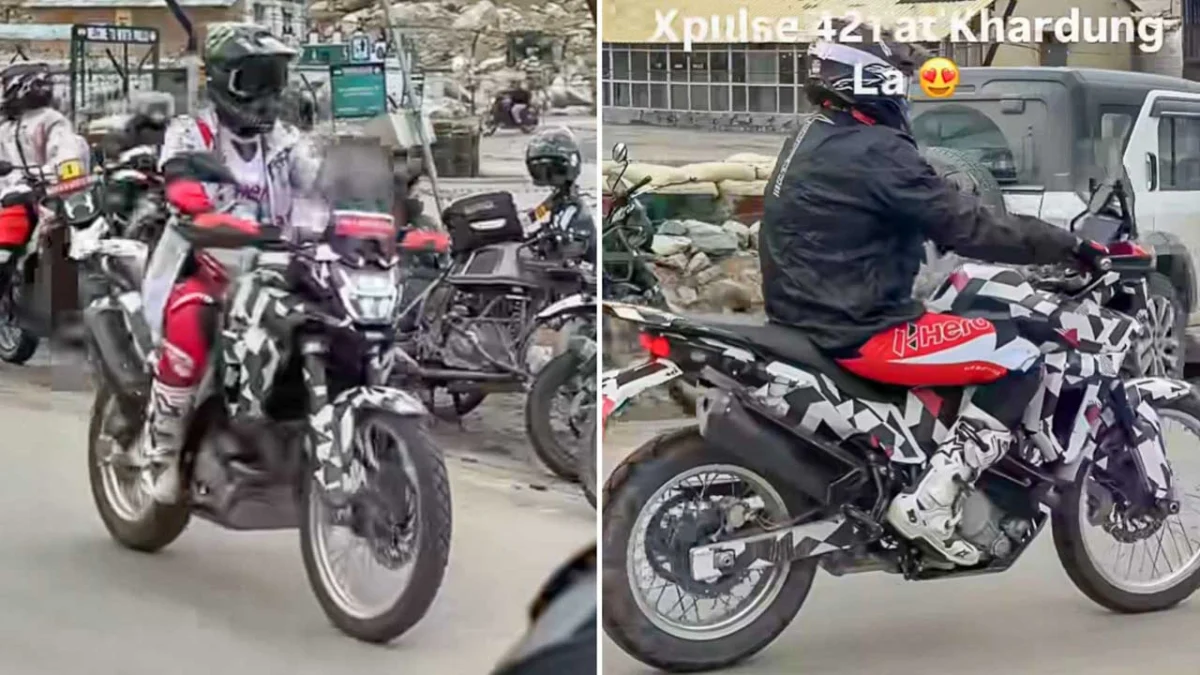
The Indian motorcycling landscape is currently witnessing a tectonic shift. For decades, Hero MotoCorp has been the undisputed king of the commuter segment, providing reliable, fuel-efficient mobility to millions. However, the tides are turning toward the premium, "lifestyle" motorcycling sector. The latest evidence of this transformation comes from the rugged terrains of Ladakh, where a new predator has been spotted undergoing rigorous high-altitude testing: the Hero Xpulse 421 ADV.
This is not merely a bored-out version of the existing Xpulse 200; it represents a completely new platform, a new engine architecture, and a new era for India’s largest two-wheeler manufacturer. With the legendary Dakar Rally riders Ross Branch and Nacho Cornejo at the helm of the test mules, Hero is sending a clear message—they aren’t just building a bigger bike; they are building a world-class adventure machine.
I. Main Facts: A New Benchmark in Displacement and Design
The "Xpulse 421" (a name currently used by enthusiasts and industry insiders, though not yet officially confirmed by Hero) is poised to be the most powerful and technologically advanced motorcycle to ever roll out of a Hero MotoCorp facility.

The Powerhouse: A 421cc Liquid-Cooled Heart
At the center of this project is a rumored 421cc, single-cylinder, liquid-cooled engine. This is a significant departure from Hero’s traditional focus on air-cooled or oil-cooled engines. While the company recently launched the Mavrick 440, that motorcycle utilizes an air/oil-cooled engine designed for low-end torque and relaxed cruising. The 421cc unit in the Xpulse, however, is expected to be a high-compression, high-performance engine aimed at delivering a competitive power-to-weight ratio, likely producing in the neighborhood of 40 to 45 BHP.
The "Dakar" Pedigree
Perhaps the most striking fact about the recent sightings in the Ladakh region is the presence of Hero MotoCorp’s Dakar Rally team. Seeing Ross Branch (the "Kalahari Ferrari" and runner-up in the 2024 Dakar Rally) and Nacho Cornejo testing these prototypes suggests that the Xpulse 421 is being tuned for genuine off-road capability, not just "adventure-styling."
Visual Identity
The latest spy shots have revealed a vertically stacked LED headlight design, housed within a rally-inspired fairing. This design language aligns the bike with Hero’s modern aesthetic while paying homage to the Dakar-spec Hero 450 RR.

II. Chronology: The Evolution of the Xpulse Brand
To understand the significance of the 421 ADV, one must look at the timeline of Hero’s adventure aspirations:
- The Impulse Era (2011): Hero launched the 150cc Impulse, a bike ahead of its time. While it gained a cult following, the Indian market wasn’t ready for a dual-sport, and it was eventually discontinued.
- The Birth of Xpulse 200 (2019): Hero returned to the segment with the Xpulse 200. It was affordable, lightweight, and accessible. It became the default choice for budding off-roaders in India.
- The 4V Upgrade (2021): Responding to demands for more "highway legs," Hero introduced the 4-valve head, which improved top-end performance and cooling.
- The 210cc Transition (2024-2025): The introduction of the liquid-cooled 210cc engine (shared with the Karizma XMR) into the Xpulse chassis marked Hero’s first serious foray into liquid cooling for their ADV line.
- The 421 Project (Present): Recognizing that the "middle-weight" (400cc-500cc) segment is the most competitive and profitable globally, Hero began development of the 421cc platform to challenge established giants like Royal Enfield and KTM.
III. Supporting Data: Technical Specifications and Componentry
Based on the detailed analysis of the spy shots from Khardung La and the surrounding Himalayan passes, several key technical details have emerged.
1. Suspension and Chassis
The test mules feature beefy Upside-Down (USD) front forks. Given the "Rally Pro" ethos Hero has cultivated, it is highly probable that these forks will offer adjustability for compression and rebound. The rear is handled by a link-type monoshock, likely featuring preload and rebound adjustment. The chassis appears to be a trellis or a modified diamond frame designed to handle the stresses of high-speed off-roading.

2. Wheel and Tire Setup
The Xpulse 421 is seen sporting wire-spoke wheels, which are essential for absorbing impacts on rocky trails. Industry speculation suggests a 21-inch front and an 18-inch rear setup—the gold standard for off-road performance. A major question remains whether Hero will provide cross-spoke wheels to allow for tubeless tires, a feature much requested by long-distance tourers.
3. Ergonomics and Touring Features
- Fascia: A tall, smoked windshield is integrated into the front fairing, designed to reduce wind blast during highway transit.
- Seating: The bike features a single-piece seat with a distinct "scooped-out" section for the rider. This design serves two purposes: it lowers the center of gravity and provides a lower seat height for shorter riders, while still allowing for a flat profile at the rear for luggage.
- Protection: Standard equipment on the test mules includes wrap-around knuckle guards, a robust engine bash plate, and fork gaiters or covers to protect the seals from dust and grit.
- Exhaust: An upswept exhaust canister is clearly visible, ensuring high water-wading depth—a critical metric for Indian monsoon conditions and Himalayan stream crossings.
IV. Official Responses and Industry Context
While Hero MotoCorp has remained officially tight-lipped regarding the specific launch date or final displacement of the engine, their actions speak louder than press releases.
The "Silent" Strategy
Hero’s strategy of testing in plain sight in Ladakh is a calculated move. By involving their Dakar stars, they are building "street cred" before the bike even hits the showroom floor. When asked about upcoming premium models in recent investor calls, Hero executives have confirmed a "pipeline of premium products" aimed at doubling their market share in the 250cc+ category.

The Competitive Landscape
The Xpulse 421 is entering a "War Zone" of motorcycles. It will have to face:
- The Royal Enfield Himalayan 450: The current segment leader, known for its Sherpa 450 engine and immense brand loyalty.
- The KTM 390 Adventure: The choice for those seeking electronics and high-revving performance.
- The Yezdi Adventure: A rugged, budget-friendly alternative.
- Upcoming TVS Apache RTX 300: A rumored ADV based on the 310cc platform.
Hero’s advantage will lie in its massive service network and its ability to price the Xpulse 421 more aggressively than KTM or the upcoming European imports.
V. Implications: What This Means for Hero and the Rider
The development of the Xpulse 421 has profound implications for both the manufacturer and the global motorcycling community.

1. A Global Aspirant
Hero is no longer looking at just the Indian market. A 400cc-class ADV is a "Global Product." This bike will likely be exported to Latin America, Africa, and potentially Europe as an A2-license-compliant adventure bike. It represents Hero’s intent to be seen as a premium global player, moving away from the "commuter-only" label.
2. The Tech Trickle-Down
The 421cc engine platform will not be limited to the Xpulse. We can expect a "Mavrick 421" or a "Karizma 421" in the future. This platform gives Hero a modular base to build nakeds, scramblers, and sportbikes, significantly reducing development costs for future models.
3. Democratizing Performance
If Hero follows its traditional pricing strategy, the Xpulse 421 could be the most affordable 40+ HP adventure bike in the world. By making high-performance adventure touring accessible to the middle class, Hero could trigger a new wave of motorcycling tourism in emerging markets.

4. Reliability Under Pressure
Testing in Ladakh is not just for marketing. The thin air at 18,000 feet tests the Electronic Fuel Injection (EFI) maps to their limit. The steep inclines test the cooling system’s efficiency under load. By the time this bike reaches the customer, it will have been "Himalayan-certified," a badge of honor in the ADV world.
Conclusion: The Wait for the Production Model
The Hero Xpulse 421 ADV is more than just a motorcycle; it is a symbol of Hero MotoCorp’s maturity. From the spied LED fascia to the box-section swingarm and the Dakar-inspired silhouette, every element suggests a machine built for purpose.
While enthusiasts eagerly await an official launch—likely at the next EICMA or a special event in early 2026—the sight of Ross Branch kicking up dust in the Ladakh highlands is proof enough: Hero is no longer following the trail; they are blazing a new one. The 400cc segment is about to get a lot more interesting, and the "Xpulse" nameplate is about to go from being a lightweight favorite to a heavyweight contender.
