

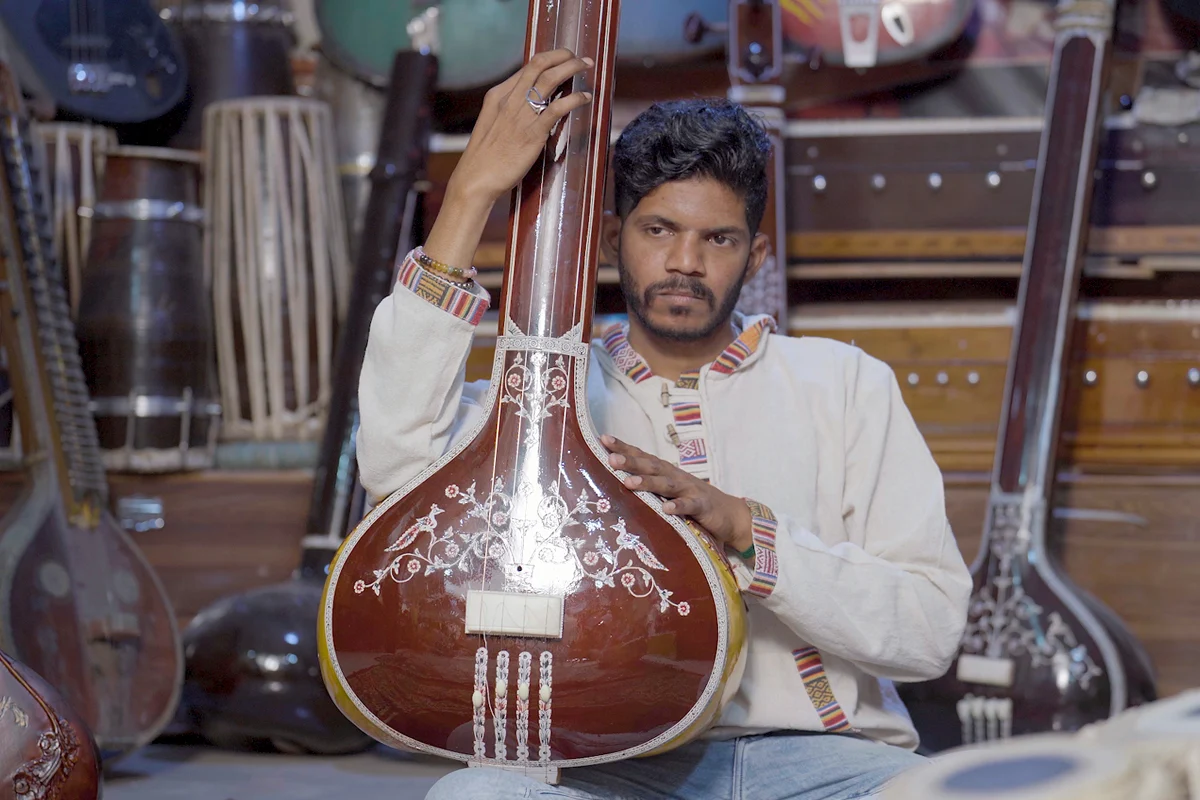
The steady, meditative drone of the tanpura is the bedrock of Indian classical music. For centuries, this four- or five-stringed instrument has provided the harmonic canvas upon which vocalists and instrumentalists paint the intricate patterns of ragas. Yet, the foundation of this ancient sound is not made of wood or metal, but of a humble, sun-dried fruit: a specialized variety of large gourd.
Today, this foundational sound is under threat. From the fertile plains of West Bengal to the artisanal workshops of Miraj in Maharashtra, the tanpura’s resonance is thinning. A combination of extreme weather, shifting agricultural patterns, and environmental degradation is causing the gourds to shrink and weaken, jeopardizing a craft that bridges the gap between nature, agriculture, and high art.
Main Facts: The Anatomy of a Sound
The tanpura (or tambura) is a long-necked lute, but unlike the sitar or sarod, it is not a melodic instrument. Its purpose is to provide a continuous, rich drone that establishes the fundamental pitch and the fifth (pa) or fourth (ma) for the performer. The "soul" of this drone resides in the tumba—the large, bulbous resonator at the base of the instrument.
While the neck of the tanpura is typically crafted from tun or teak wood, the resonator must be made from a specific variety of bottle gourd (Lagenaria siceraria). These are not the common culinary gourds found in vegetable markets; they are massive, thick-skinned varieties cultivated specifically for musical instruments.
The Geography of Craft
The production of a tanpura is a cross-continental endeavor within India:
- Cultivation: Primarily concentrated in the riverbeds of the Pandharpur region in Maharashtra and certain districts of West Bengal.
- Manufacturing: The town of Miraj, in Maharashtra’s Sangli district, remains the global epicenter for tanpura and sitar making, home to families who have practiced the craft for over 150 years.
- Utility: The gourds are also essential for the sitar, the veena, and the ektara, making their health vital to the entire ecosystem of Indian stringed instruments.
Chronology: From Seed to Stage
The journey of a tanpura gourd is a slow, meticulous process that spans several years from the time a seed is planted to the moment a musician strikes the first note.
1. The Growing Season (6–9 Months)
Farmers plant the seeds in late summer or at the start of the monsoon. The vines require specific soil nutrients and a delicate balance of water. As the gourds grow, they are often supported by wooden frames or left to rest on beds of straw to ensure they develop a symmetrical shape. The most prized gourds are those that reach a circumference of 50 to 60 inches with a thick, woody shell.
2. The Curing Process (1 Year)
Once harvested, the gourds cannot be used immediately. they must be cleaned and left to dry in the sun for several months. During this period, the internal pulp decays and dries out, leaving a hollow, hardened exterior. A well-cured gourd becomes "dead" organic matter that possesses the structural integrity of wood but the acoustic resonance of a hollow chamber.
3. The Miraj Transformation (3–6 Months)
The dried shells are transported to workshops in Miraj. Here, hereditary artisans (often from the Shikarigar community) inspect each gourd. They look for cracks, wall thickness, and "voice." The gourd is cut, joined to the wooden neck using a mixture of natural resins and adhesives, and then meticulously shaved. The thickness of the gourd wall is critical; if it is too thin, it will crack under the tension of the strings; if too thick, it will sound dull.
4. The Final Tuning
After the instrument is polished and decorated with bone or plastic inlays, the Javari (the bridge) is shaped. This is the most delicate part of the process, where the curvature of the bridge is filed to create the "buzzing" overtones characteristic of the tanpura.
Supporting Data: The Environmental Toll
The delicate lifecycle described above is being disrupted by the volatile climate of the 21st century. Reports from farmers in the Maharashtra-Karnataka border regions and Bengal indicate a steady decline in both the quality and quantity of "musical grade" gourds.
Shrinking Dimensions
In the past, it was common to find gourds with a diameter of 18 to 22 inches. Today, farmers report that the average size has dropped to 12–15 inches. For a professional-grade male tanpura, which requires a massive resonator to produce a deep, bass-heavy drone, these smaller gourds are insufficient.

The Impact of Heat and Rainfall
- Extreme Heat: During the flowering stage, temperatures exceeding 40°C (104°F) lead to "flower drop," where the plant sheds its blossoms before they can be pollinated. This reduces the overall yield.
- Unseasonal Rain: The Cucurbitaceae family is highly susceptible to fungal infections. Unseasonal rains during the drying phase cause the gourds to rot from the inside out, or develop "black spots" that weaken the shell’s structural integrity.
- Soil Degradation: Increased use of chemical fertilizers to combat declining yields has, ironically, made the gourd shells more brittle. Artisans note that modern gourds often "crack like glass" when being carved, whereas older gourds had a fibrous, leather-like resilience.
Economic Pressure
The success rate for a "perfect" gourd has plummeted. Out of a harvest of 1,000 gourds, perhaps only 50 to 100 are now deemed fit for high-end instruments. This scarcity has caused the price of raw gourds to triple over the last decade, a cost that is passed down to artisans and musicians.
Official Responses and Stakeholder Perspectives
The crisis has elicited a range of responses from the three pillars of the industry: the growers, the makers, and the performers.
The Farmers’ Plight
Agricultural experts in West Bengal have noted that the "Tanpura Gourd" is becoming a high-risk, low-reward crop. Unlike food crops, there is no government-mandated Minimum Support Price (MSP) for musical gourds. "When the rain comes in December, we lose everything," says one farmer featured in the Mongabay documentary. "The gourd looks fine from the outside, but when you open it, it is black. We are moving toward growing pumpkins and watermelons instead; they are faster and safer."
The Artisans’ Warning
In the narrow lanes of Miraj, the Shikarigar family—instrument makers for generations—express deep concern. They argue that the environmental shift is altering the very "tonal DNA" of Indian music. "The resonance comes from the density of the fiber," explains a master craftsman. "If the gourd is forced to grow too fast due to chemicals, or if it is stunted by heat, it doesn’t have a ‘soul.’ We are spending more time patching cracks than we are tuning instruments."
The Musicians’ Adaptation
Renowned classical vocalists have begun to notice the difference. While the elite performers can still afford to commission instruments made from "vintage" gourds (shells harvested decades ago), younger students are struggling. This has led to a reluctant but widespread adoption of electronic alternatives.
Implications: A Cultural and Ecological Crossroads
The decline of the tanpura gourd is not merely an agricultural footnote; it represents a significant shift in the heritage of Indian classical music.
1. The Digital Transition
The most immediate implication is the rise of the "Electronic Tanpura" and mobile apps like iTanpura. While convenient and immune to climate change, these digital devices use looped samples. They lack the "live" acoustic interaction—the way a physical gourd vibrates against the musician’s back, creating a symbiotic resonance that helps the singer find their pitch. The loss of the acoustic tanpura is, for many purists, the loss of the music’s meditative essence.
2. Loss of Traditional Knowledge
As gourds become harder to source and the craft of instrument-making becomes less economically viable, younger generations of the Shikarigar community are moving into more stable professions like IT or retail. Once this specialized knowledge of "shaving" a gourd to find its voice is lost, it cannot be easily recovered.
3. The Need for Conservation
There is an urgent need for "Agro-Acoustic" research. Botanical institutes could play a role by:
- Developing climate-resilient seeds for these specific gourd varieties.
- Creating protected cultivation zones (Greenhouses) that mimic the ideal humidity and temperature for gourd growth.
- Establishing a formal supply chain that protects farmers from the financial shocks of crop failure.
4. A Microcosm of Global Change
The story of the tanpura gourd is a microcosm of how climate change affects intangible cultural heritage. Often, we discuss environmental impact in terms of sea levels or crop yields for food security. However, the "cultural yield"—the materials required for art, music, and ritual—is equally vulnerable.
Conclusion
The tanpura is an instrument of patience. It takes years to grow, months to dry, and hours to tune. It represents a world that moves at the pace of nature. As the climate becomes more erratic, the "steady drone" that has anchored Indian music for centuries is wavering.
The Mongabay-India documentary serves as a vital wake-up call. It reminds us that the music we hear on stage is inextricably linked to the soil of a distant farm and the health of a vine. To save the sound of the tanpura, we must first save the environment that allows its heart—the humble gourd—to grow. Without intervention, the rich, vibrating legacy of the tumba may soon be replaced by the sterile, unwavering hum of a silicon chip, leaving the soul of the raga just a little more hollow.
