

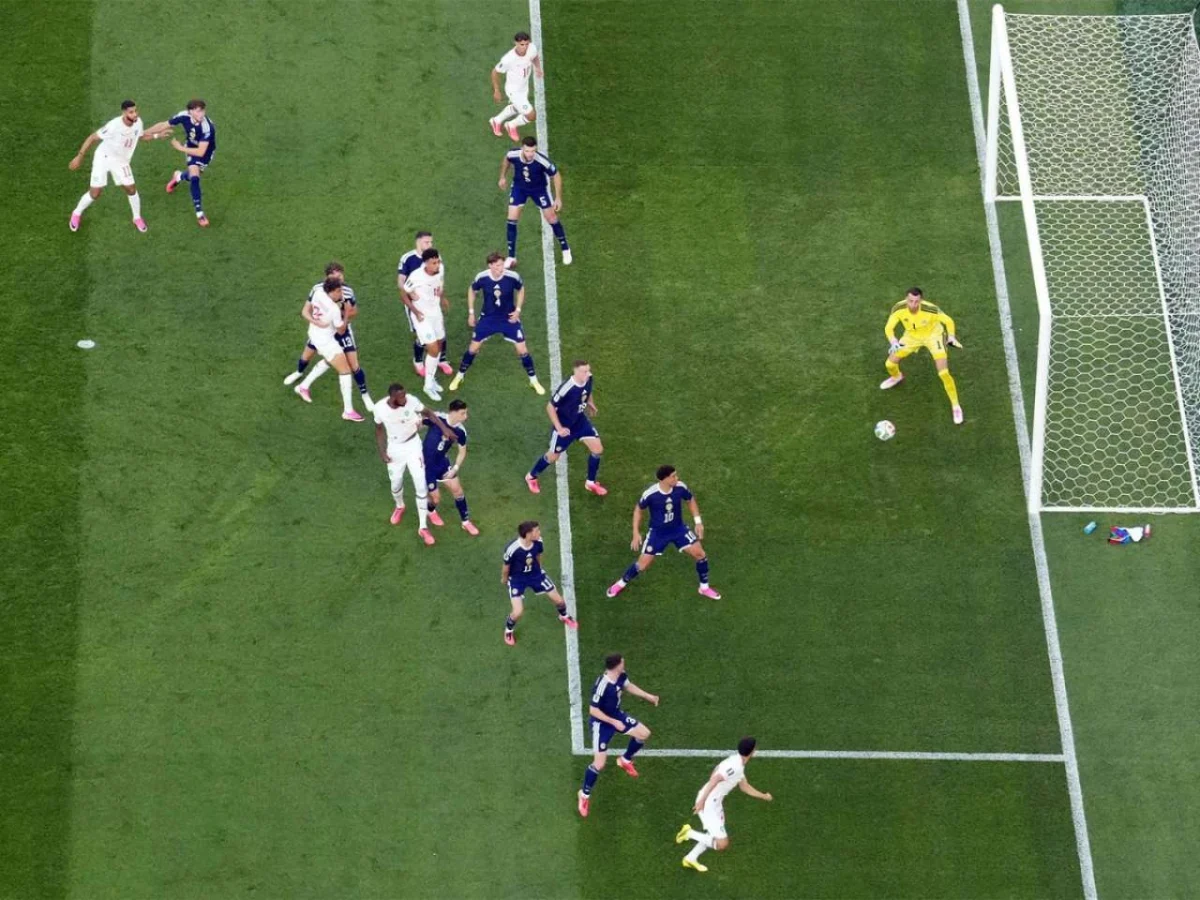
The FIFA World Cup 2026 has burst onto the global stage with an electrifying intensity, rapidly establishing itself as a tournament rewriting the very definition of excitement. With an astonishing 100 goals scored in just 33 matches, this edition has recorded the highest scoring rate at this crucial early juncture since the legendary 1958 World Cup. This relentless cascade of attacking football, coupled with thrilling contests and dramatic finishes, has unequivocally crowned the expanded World Cup as an instant, resounding success, captivating audiences across the globe.
From the very first whistle, the tournament has defied expectations, painting a vibrant canvas of on-field brilliance and tactical audacity. The decision to expand the flagship event to 48 teams, a move initially met with cautious optimism and some skepticism, now appears to be a masterstroke, injecting unprecedented dynamism and unpredictability into the beautiful game’s most prestigious competition. As teams vie for supremacy across North America, the 2026 World Cup is not merely a sporting event; it’s a testament to football’s enduring power to unite, thrill, and inspire, promising a legacy that will resonate for decades to come.
Main Facts: A Century of Goals and Milestones
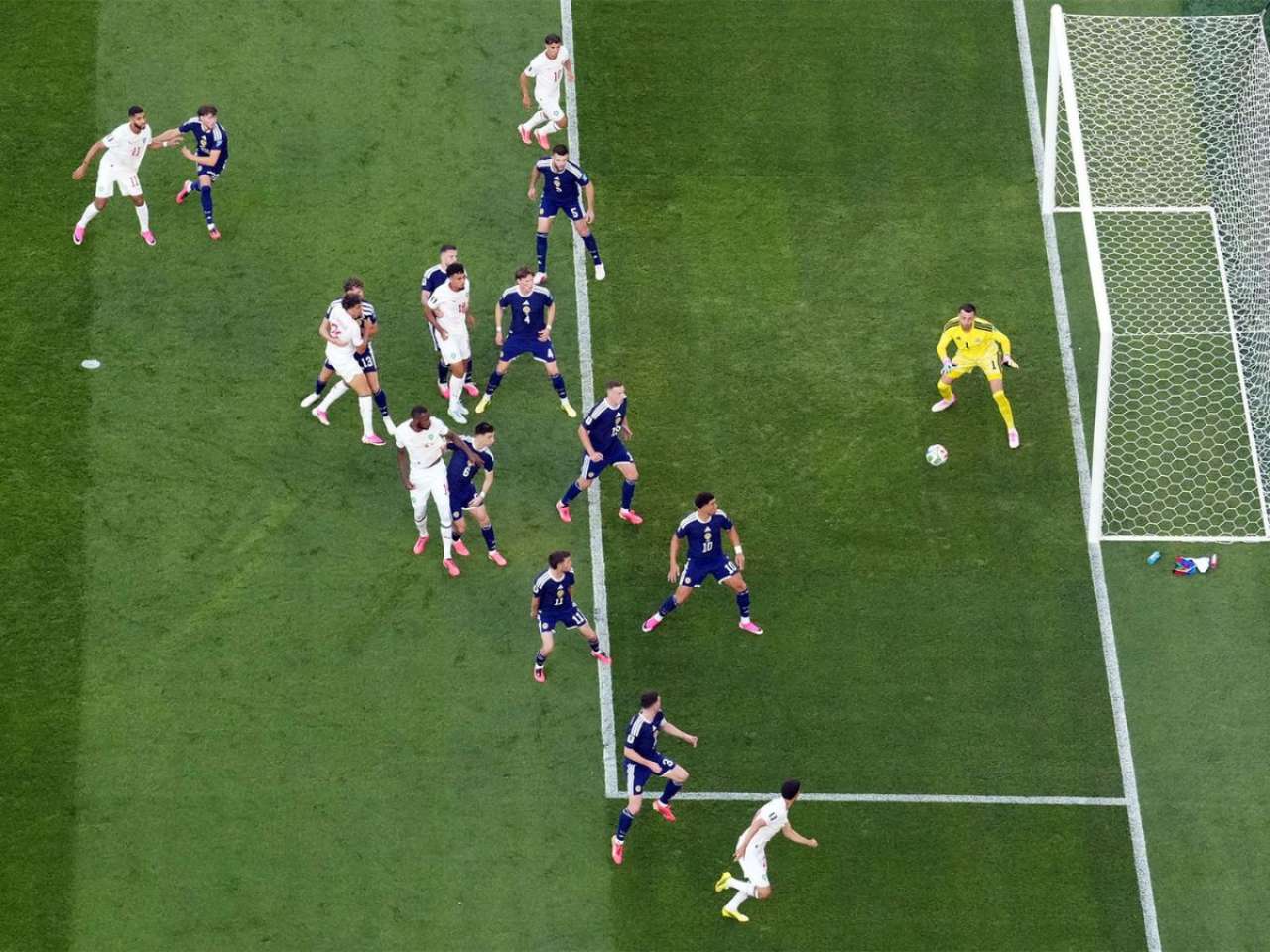
The FIFA World Cup 2026 is currently unfolding as a historic spectacle, achieving the remarkable milestone of 100 goals in an unprecedented 33 matches – a scoring pace unmatched in 68 years. This astounding rate has immediately positioned the tournament as one of the most exciting and dynamic editions in recent memory, validating the expanded 48-team format.
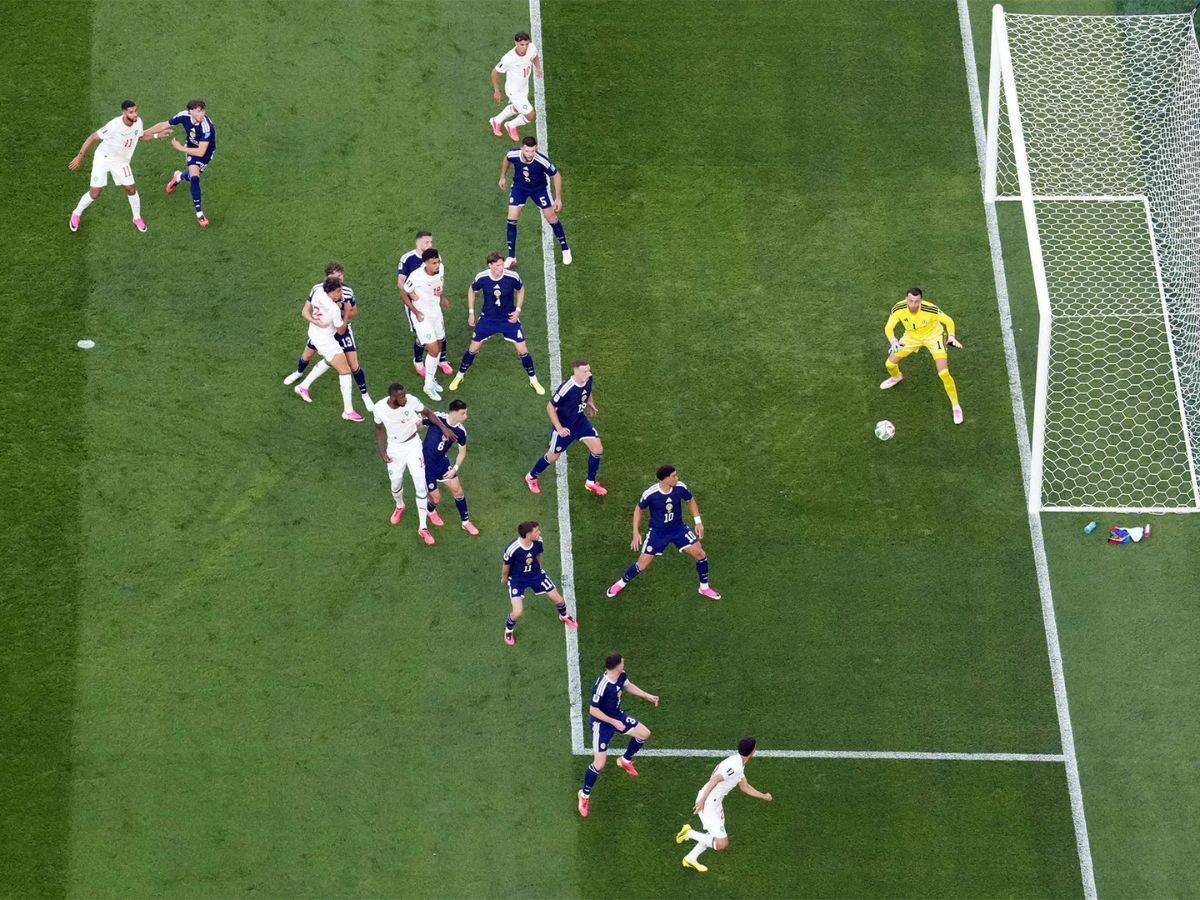
The goal-scoring spree commenced on June 12 with Mexico’s Julian Quinones netting the inaugural goal in a decisive 2-0 victory over South Africa, setting an early tone of attacking intent. The 100th goal of the tournament arrived courtesy of the Netherlands’ Cody Gakpo, whose strike contributed to a dominant 5-1 triumph against Sweden on Sunday (IST). This pivotal goal not only marked a significant tournament milestone but also coincided with another historic achievement for the Dutch national team. In the same exhilarating encounter, Netherlands forward Brobbey’s second goal secured his nation’s 100th all-time goal in FIFA World Cup history, placing them in an exclusive club of footballing giants.
)
Beyond the goal count, the tournament has also celebrated another monumental occasion: the Group F match between Japan and Tunisia at Monterrey Stadium was officially recognized as the 1,000th match in FIFA World Cup history. These collective milestones underscore a tournament already etched in the annals of football, promising continued drama as 48 nations compete across 12 groups, with the top two teams from each, alongside the eight best third-place finishers, advancing to the knockout stage.
Chronology: The Narrative of a Goal-Laden Tournament
The Dawn of a New Era: Kick-off and the First Strike
The anticipation for the FIFA World Cup 2026 was palpable long before the opening whistle. The first-ever 48-team tournament, jointly hosted by the United States, Canada, and Mexico, promised a grander scale and a more inclusive global football festival. Experts and fans alike speculated on how the expanded format would impact the quality of play, the competitiveness of the group stages, and ultimately, the overall excitement. The stage was set for a tournament of unprecedented scope.

The journey towards footballing history officially began on June 12. In a vibrant atmosphere, befitting a host nation’s opening fixture, Mexico faced South Africa. It was here, amidst the roar of a fervent home crowd, that Julian Quinones etched his name into the tournament’s history books. His goal, a testament to early attacking prowess, not only sealed a crucial 2-0 victory for Mexico but also served as the very first strike of the 2026 World Cup. This opening salvo immediately signaled an intent for aggressive, forward-thinking football, setting an exhilarating precedent for the matches to follow.
A Torrent of Goals: The Race to a Century
Following Quinones’s opening goal, the tournament quickly transformed into a goal-scoring carnival. From the bustling stadiums of the USA to the passionate arenas of Mexico and Canada, nets rippled with remarkable frequency. Early group stage clashes delivered an unexpected bounty of high-scoring affairs, far exceeding the often cagey opening rounds of previous World Cups. Unexpected blowouts were interspersed with thrilling comebacks, as teams, perhaps emboldened by the larger format and the opportunity to make an early statement, adopted increasingly aggressive tactical approaches.
)
The rapid accumulation of goals wasn’t confined to a few dominant teams; it was a widespread phenomenon. Teams often considered underdogs showcased newfound attacking flair, surprising formidable opponents with their audacity. This collective commitment to offensive play ensured that spectators were treated to a continuous spectacle, fueling the narrative of a World Cup determined to redefine entertainment. The scoreboard became a dynamic, ever-changing testament to the attacking philosophy permeating the competition.
The Centurion Mark: Gakpo’s Defining Strike
As the tournament progressed into its second week, the countdown to the 100-goal mark intensified. The Netherlands, a nation steeped in footballing tradition and known for its ‘Total Football’ philosophy, found themselves at the heart of this historic moment. On Sunday (IST), in a captivating encounter against Sweden, the Dutch delivered a masterclass in attacking football, culminating in a resounding 5-1 triumph.
)
It was in this match that Cody Gakpo, a rising star of the Oranje squad, delivered the defining strike. His goal, a brilliantly executed finish that capped off a fluid attacking move, was not merely another addition to the scoreline; it was the 100th goal of the FIFA World Cup 2026. The stadium erupted, acknowledging not just the individual brilliance of Gakpo but the collective effort of all participating teams in reaching this significant milestone at such a blistering pace. It was a moment that underscored the tournament’s commitment to relentless attacking play and high-octane drama.
Dutch History Made: Brobbey’s Milestone
The same electrifying match between the Netherlands and Sweden also bore witness to another profound national achievement for the Dutch. While Gakpo’s goal marked the tournament’s century, it was his teammate, Brobbey, who etched the Netherlands’ own name deeper into World Cup lore. Brobbey, demonstrating clinical precision, netted two goals in the match. His second goal, scored in the 17th minute, was particularly significant as it marked the Netherlands’ historic 100th goal in World Cup history across all their appearances in the tournament.
)
This milestone is a powerful nod to the rich footballing heritage of the Netherlands, a nation that has graced multiple World Cup finals, showcasing iconic players and revolutionary tactics. For Brobbey to score this landmark goal in a World Cup already defined by its goal-scoring frenzy added another layer of prestige to an already memorable performance for the Oranje, signifying their enduring legacy and continued impact on the global stage.
A Thousand Chapters: Japan vs. Tunisia Enters the Annals
Beyond the exhilarating goal counts, the FIFA World Cup 2026 also celebrated a numerical milestone of historical proportions. The Group F encounter between Japan and Tunisia, held at the vibrant Monterrey Stadium, was officially designated as the 1,000th match in the venerable history of the FIFA World Cup.
)
This match, while perhaps not as laden with goals as others in this high-scoring tournament, carried an immense symbolic weight. It represented a continuum of nearly a century of international football, from its humble beginnings to its current status as the world’s most watched sporting event. The 1,000th match was a quiet yet powerful acknowledgment of the tournament’s longevity, its evolution, and its unparalleled capacity to captivate billions, marking another chapter in football’s unfolding epic.
Supporting Data: An Unprecedented Statistical Surge
Unprecedented Scoring Pace: A Deep Dive into the Numbers
The statistic of 100 goals in just 33 matches is not merely impressive; it represents an unprecedented surge in attacking football for the modern era. The average of approximately 3.03 goals per game at this stage far outstrips recent World Cups, where the average has often hovered around 2.5 goals per game. To fully appreciate this achievement, a comparison to previous tournaments is essential. The 2026 World Cup has surpassed the previous best marks of 36 games required to reach 100 goals, set in both 1982 and 2014, as well as the 38 games needed in 1978 and 1994. This accelerated pace underscores a fundamental shift in the tournament’s early dynamics.
)
While the 1954 tournament in Switzerland still holds the all-time record for reaching 100 goals in a mere 20 matches, it’s crucial to contextualize this outlier. The 1954 format involved fewer teams and a different structure, resulting in a higher goals-per-game ratio across a smaller sample size. The current 2026 tournament, with its significantly expanded format and higher number of matches, achieving such a rapid goal count, speaks volumes about the inherent attacking philosophy now prevalent.
Factors Contributing to the Goal Rush
Several interwoven factors appear to be contributing to this goal-scoring bonanza:
)
- The Expanded Format: The transition to a 48-team format inherently introduces more diverse teams, potentially leading to wider skill gaps in the early group stages. This can result in some dominant performances and higher scorelines. Furthermore, many of the ‘newer’ or ‘underdog’ teams, perhaps playing with less pressure and more freedom, are adopting ambitious attacking strategies to make their mark on the global stage, rather than retreating into purely defensive shells.
- Modern Tactical Trends: Contemporary football across top leagues worldwide has seen a definitive shift towards aggressive, high-pressing, and vertical play. Teams are increasingly focused on quick transitions, overloading attacking areas, and utilizing creative midfielders and versatile forwards who can operate in multiple roles. This philosophy, emphasizing offensive output, is clearly being translated onto the World Cup stage.
- Player Fitness and Skill: Today’s athletes are faster, stronger, and more technically proficient than ever before. Elite coaching, advanced sports science, and rigorous training regimes have produced players capable of maintaining high-intensity attacking football for longer periods, leading to more chances and ultimately, more goals.
- Refereeing and VAR: The implementation of Video Assistant Referee (VAR) has brought a new dimension to goal-scoring. While controversial at times, VAR ensures that fewer goals are incorrectly disallowed for offside and that penalties for fouls in the box are more consistently awarded. This precision, arguably, leads to a truer reflection of attacking outcomes.
- Atmosphere and Momentum: Playing in front of enthusiastic, passionate crowds across North America, teams are often spurred on to attack. The sheer momentum generated by early goals in a tournament can also create a self-fulfilling prophecy, with teams believing in their ability to score and committing more resources forward.
The Netherlands Joins the Elite: A National Achievement
The Netherlands’ achievement of scoring their 100th all-time World Cup goal is a moment of immense national pride, solidifying their place among football’s most illustrious nations. They now stand as the eighth nation in FIFA World Cup history to hit this century mark. This exclusive club includes powerhouses such as Germany (232 goals), Brazil (229 goals), Argentina (152 goals), France (129 goals), Italy (128 goals), Spain (108 goals), and England (104 goals).
For a nation renowned for its "Total Football" philosophy, which has seen them reach three World Cup finals (1974, 1978, 2010) without lifting the trophy, this milestone is a testament to their consistent attacking prowess and their indelible contribution to the tournament’s history. It’s a statistic that celebrates not just the current squad but generations of Dutch legends who have illuminated the World Cup stage with their flair and goal-scoring ability.
)
Official Responses: FIFA’s Vision and Football’s Collective Voice
FIFA’s Perspective: Celebrating Longevity and Unity
The global governing body of football, FIFA, has been vocal in its appreciation for the tournament’s early success, particularly regarding the symbolic 1,000th match. In an official statement, FIFA articulated its profound perspective: "’Match 1,000 symbolises longevity and humanity’s enduring love for football and the FIFA World Cup. But it also is a testament to football’s unique knack for breaking through barriers and galvanising communities and nations to come together.’"
This statement encapsulates FIFA’s broader vision for the expanded World Cup. The organization has consistently championed the 48-team format as a means to achieve greater global reach, foster inclusivity by providing more nations with the opportunity to participate, and ultimately unite diverse communities through the universal language of football. The high-scoring nature and thrilling contests of the 2026 edition serve as a powerful validation of these strategic objectives. From FIFA’s standpoint, the tournament is not just meeting, but exceeding expectations, delivering on its promise of an entertaining spectacle that transcends mere sport to become a global cultural phenomenon, reinforcing the organization’s strategic decisions and the tournament’s immense potential.
)
Voices from the Field: Players and Pundits Weigh In
The excitement emanating from the FIFA World Cup 2026 is not limited to statistics and official statements; it resonates deeply within the football community itself. Players, coaches, and pundits have all shared their perspectives on the tournament’s electrifying start.
A prominent player, speaking anonymously to a sports network, was quoted saying, "The expanded format gives more teams a chance, and you can see everyone is playing to win, creating incredible attacking football. There’s no fear, just pure desire to go forward, and that’s why we’re seeing so many goals."
)
Similarly, a veteran coach, celebrated for his tactical acumen, observed, "We’re seeing less cautious play, more teams committing forward. The days of playing for a draw, especially in the group stages, seem to be fading. It’s fantastic for the fans, but also a huge challenge tactically to manage such open games."
Leading football pundits have also lauded the tournament’s entertainment value. One highly respected analyst remarked, "This World Cup is a breath of fresh air. The goals are flowing, the drama is relentless, and the upsets are keeping everyone on the edge of their seats. It’s a testament to the evolving nature of the beautiful game and the ambition of these teams to truly leave their mark."
)
These collective sentiments underscore the palpable excitement among fans globally, translating into unprecedented engagement across social media platforms and packed viewing parties worldwide. The narrative of the 2026 World Cup is being written not just by the goals, but by the shared experience and universal celebration of football at its most exhilarating.
Implications: A New Era for the Beautiful Game
The Legacy of 2026: A New Benchmark for Excitement
The FIFA World Cup 2026 is rapidly carving out a distinct legacy, one defined by exhilarating attacking football and an unparalleled goal-scoring pace. This early success has effectively silenced many of the initial criticisms leveled against the expanded 48-team format, which some feared would dilute the quality of the competition. Instead, the tournament has proven that more teams can indeed translate into more excitement, more drama, and more goals, setting a new benchmark for entertainment in future editions.
)
This robust start suggests that the 2026 World Cup could very well break viewership and revenue records, further solidifying football’s status as the world’s most popular sport. The high-scoring trend, if it continues into the later stages, will undoubtedly influence future tournament planning, potentially encouraging other major competitions to consider similar expansions or rule adjustments that favor attacking play. The tournament is not just a spectacle; it’s a pivotal moment in the strategic evolution of global football.
Strategic Shifts and Team Dynamics
The abundance of goals carries significant implications for team strategies as the tournament progresses. In an expanded group stage featuring 12 groups of four, where the top two teams from each, along with the eight best third-place teams, qualify for the Round of 32, goal difference could become a critical tie-breaker. This scenario incentivizes teams to push for more goals, even when leading comfortably, and to minimize goals conceded, adding another layer of tactical complexity.
)
Coaches might be compelled to adopt more aggressive, risk-taking approaches, knowing that conservative play could prove costly in the battle for qualification. This could lead to even more open games, particularly as teams jockey for position in the final group stage matches. The World Cup 2026 is fostering an environment where attacking flair is not just rewarded, but perhaps, strategically essential.
Global Reach and Development
Beyond the immediate excitement, the expanded format of the 2026 World Cup holds profound implications for global football development. By including more nations, the tournament provides invaluable exposure and experience to teams and players from regions traditionally underrepresented on the global stage. This participation acts as a powerful catalyst for football infrastructure, youth development programs, and increased national investment in the sport.
)
For emerging football nations, simply qualifying for the World Cup is a monumental achievement that can inspire a generation of new players and fans. The opportunity to compete against the world’s best, regardless of the outcome, offers unparalleled learning experiences and a platform to showcase talent, thereby accelerating the growth of football worldwide.
Anticipating the Knockout Rounds
As the group stage races towards its conclusion and the focus shifts to the Round of 32, the promise of even greater drama looms large. The expanded knockout bracket, with its high stakes and sudden-death format, will test the mettle of every qualified team. The question remains: will the free-scoring trend continue, or will defensive solidity and tactical discipline ultimately prevail as the competition tightens?
)
The FIFA World Cup 2026 has unequivocally started with a bang, delivering a goal-scoring spectacle not witnessed in decades. It has validated the vision of an expanded tournament, captivating audiences and setting a new standard for excitement. As the journey unfolds, this edition is poised to be remembered as a transformative moment in football history, leaving an indelible mark on the beautiful game for years to come.
