

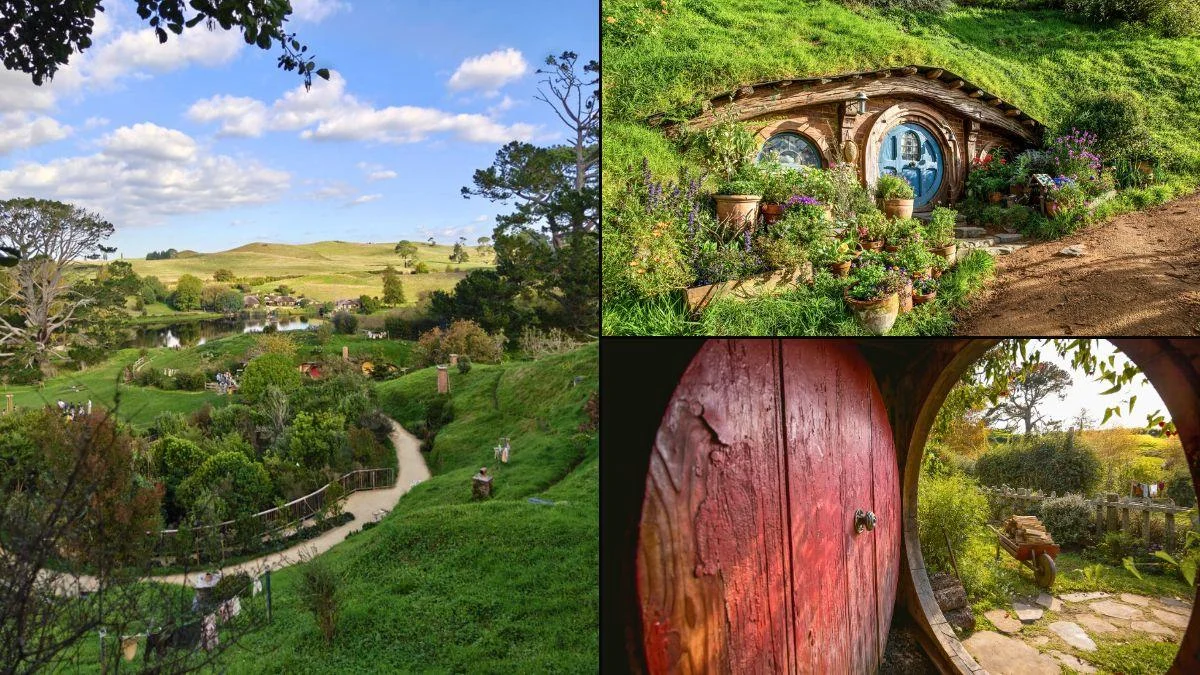
MATAMATA, NEW ZEALAND – For many, the rolling emerald hills of the Waikato region are merely a picturesque backdrop for New Zealand’s thriving agricultural industry. However, for a global community of bibliophiles and cinephiles, this landscape represents something far more profound: the physical manifestation of J.R.R. Tolkien’s "The Shire." What began as a temporary film set for Peter Jackson’s The Lord of the Rings trilogy has evolved into a permanent, world-class tourism landmark, bridging the gap between cinematic fantasy and tangible reality.
Main Facts: The Living Monument of Matamata
Hobbiton Movie Set, located on a private 1,250-acre sheep farm near Matamata, stands as a cornerstone of New Zealand’s "screen tourism" (or "film-induced tourism") sector. The site, which covers roughly 12 acres of the Alexander family farm, features 44 distinct Hobbit Holes, the Green Dragon Inn, the Mill, and the iconic Party Tree.

In recent years, the site has undergone a significant transformation. While the original sets were largely exterior facades, the "Hobbiton Movie Set" has recently unveiled fully realized interior experiences. Visitors can now step inside the "Proudfoot" and "Two-foot" dwellings on Bagshot Row, which have been meticulously designed to reflect the domestic life of Middle-earth’s smallest heroes. This expansion represents a shift from passive sightseeing to immersive storytelling, allowing tourists to interact with the environment in a way previously reserved for film crews.
The site remains one of New Zealand’s most visited attractions, drawing hundreds of thousands of international travelers annually. It serves not only as a nostalgic trip for fans of the Oscar-winning films but also as a testament to the meticulous craftsmanship of the New Zealand film industry, particularly Wētā Workshop and the construction teams who turned a sheep pasture into a global icon.

Chronology: The Construction of a Fantasy Realm
The journey from a working farm to a cinematic pilgrimage site was neither swift nor intentional. Its history is marked by three distinct phases of development:
1998–1999: The Initial Discovery and Temporary Build
The search for the Shire began in 1998 when director Peter Jackson conducted an aerial survey of the North Island. He was searching for a location that felt "untouched by time"—a place where the modern world vanished behind rolling hills. The Alexander farm, with its ancient Monterey pine overlooking a serene lake, fit the description perfectly.

In 1999, construction began for The Lord of the Rings trilogy. This was a massive logistical undertaking involving the New Zealand Army, which was drafted to move earth and cut a 1.5-kilometer road into the site using heavy machinery. The original set was built using temporary materials—untreated timber, ply, and polystyrene—designed to be demolished once filming concluded.
2002–2009: The Accidental Tourist Attraction
When filming for the original trilogy wrapped, the plan was to return the land to its natural state. However, a period of heavy rain delayed the demolition of the Hobbit-hole facades. During this delay, fans of the books and films began finding their way to the farm, asking for permission to see the remnants of the Shire. Recognizing the burgeoning interest, the Alexander family began offering guided tours in 2002, despite the set being in a state of partial deconstruction.

2010–Present: The Permanent Rebuild and Interior Expansion
The decision to film The Hobbit trilogy (2012–2014) provided the opportunity to turn Hobbiton into a permanent fixture. This time, Jackson and his team used long-lasting materials: stone, brick, and timber. The gardens were planted a year in advance to ensure they looked established, and the "fake" trees were adorned with thousands of hand-painted silk leaves.
The most recent evolution occurred in late 2023, with the opening of the interior Hobbit Holes. This project allowed visitors to move beyond the round green doors and into the subterranean world Tolkien described in his 1937 novel.

Supporting Data: The Economics of Middle-earth
The impact of Hobbiton on the New Zealand economy is substantial. According to data from Tourism New Zealand, the "Lord of the Rings" brand has been a primary driver of international arrivals for over two decades.
- Regional Growth: Before the films, Matamata was a quiet rural town known primarily for horse racing and dairy farming. Today, it is a bustling tourism hub with a visitor center designed to look like a Hobbit-hole, supporting hundreds of local jobs in hospitality and transport.
- The "Film-Induced" Factor: Surveys conducted by the New Zealand Ministry of Business, Innovation, and Employment (MBIE) have consistently shown that approximately 18% to 20% of international visitors cite The Lord of the Rings or The Hobbit as a reason for their visit.
- Infrastructure: The 12-acre set requires a full-time staff of gardeners, maintenance workers, and over 50 guides. During the peak season, the site manages thousands of visitors per day, transported by a fleet of dedicated "Shire" buses from the Shire’s Rest café to the movie set itself.
The craftsmanship on-site also utilizes "forced perspective"—a cinematic technique. For the films, Hobbit holes were built in different scales (60%, 90%, and 100%) to make the actors playing Hobbits look small and the actors playing Gandalf look large. For the tourism experience, these scales remain, providing a fascinating look at the technical "miracle" of industrial cinema.

Official Responses and the Visitor Experience
Tourism New Zealand, the government body responsible for marketing the country, views Hobbiton as more than just a movie set; it is a gateway to the "New Zealand brand."
"The Shire represents the warmth and hospitality that we want every visitor to experience in New Zealand," says a representative from the tourism board. "It is a place that bridges generations. We see parents who grew up with the books bringing their children who grew up with the films."

On the ground, the experience is curated by guides like Paul, who lead "fellowships" of tourists through the site. The tour is structured as a narrative journey, beginning at the same path where Gandalf the Grey first enters the Shire in The Fellowship of the Ring.
The guide’s role is to bridge the gap between the film’s artifice and the site’s reality. "We have people arrive with no context at all, and they still leave satisfied because of the sheer detail of the gardens and the architecture," Paul notes. For the devotees, however, the experience is emotional. It is common to see visitors moved to tears when standing before the "No Admittance Except on Party Business" sign at Bag End, or when sitting in the Green Dragon Inn with a mug of specially brewed Southfarthing ale.

Implications: The Future of Themed Travel
The success of Hobbiton has profound implications for the future of global tourism and the preservation of cinematic history. It has set a gold standard for how temporary film locations can be transitioned into permanent cultural assets.
The Shift to Immersive Realism
The opening of the interior Hobbit Holes on Bagshot Row signals a new era in themed entertainment. Unlike traditional theme parks that rely on high-tech rides, Hobbiton relies on "tactile realism." Visitors are encouraged to touch the copper pots, run their hands over the wooden tables, and look through the deep-set windows. This move toward immersion reflects a broader trend in travel where "authenticity"—even if it is the authenticity of a fictional world—is the most valued commodity.

Screen Tourism as Heritage
Hobbiton has transitioned from a commercial film set to a piece of New Zealand’s modern heritage. It challenges the traditional definition of "historical sites." While it may not house ancient ruins, it houses the collective memories of a global audience. The site’s preservation ensures that the artistry of the thousands of Kiwis who worked on the films—from carpenters to landscape architects—is not lost to time.
The "After-Adventure" Perspective
For the modern traveler, a visit to the Shire often serves as a meditative escape. In an increasingly digital and urbanized world, the appeal of Tolkien’s agrarian utopia is stronger than ever. The Shire is a place defined by "comfort"—a lack of "oozy smells" and "worm ends," as Tolkien famously wrote.

As the sun sets over the Waikato hills, casting long shadows across the Party Tree and the quiet lake, it becomes clear that Hobbiton is no longer just a location on a map. It is a psychological destination. Whether it is the heat of a record-breaking summer in Delhi or the bustle of a London office, the memory of the Shire remains a "half-reality" that travelers carry with them long after they have returned home.
The enduring popularity of the site suggests that as long as there are stories that move us, there will be a desire to find where those stories live in the earth. As Bilbo Baggins himself noted, "It’s a dangerous business, Frodo, going out your door. You step onto the road, and if you don’t keep your feet, there’s no knowing where you might be swept off to." For thousands of travelers every year, that road leads directly to a sheep farm in Matamata, where the magic of Middle-earth remains very much alive.

The information in this report was gathered through site visits and data provided by Tourism New Zealand.
