

In the annals of political imprisonment, the act of reading has often transcended mere leisure, evolving into a vital tool for psychological survival and intellectual defiance. For one particular Indian scholar and activist, currently awaiting trial and reflecting on years spent behind bars, the written word has served as the primary bulkhead against the encroaching tide of a "drab and monotonous" existence.
Drawing inspiration from Mahatma Gandhi—who, upon being sentenced in South Africa, famously welcomed the prospect of uninterrupted reading time—this account explores a curated list of ten seminal works that have sustained an individual through what he describes as an "Orwellian dystopia." These books, ranging from historical critiques of secularism to harrowing accounts of systemic violence and the delicate nuances of human longing, offer a window into the mind of a prisoner of conscience in modern India.

Main Facts: The Architecture of an Incarcerated Mind
The author of this reading list, a prominent voice in Indian civil society and the writer of the upcoming book Fractured Communities, has spent the better part of the last four years in detention. Arrested in the wake of the 2020 Delhi riots under the stringent Unlawful Activities (Prevention) Act (UAPA), his case has become a focal point for debates regarding free speech, the right to dissent, and the use of anti-terror laws against political activists.
In the months preceding his arrest, anticipating that his liberty was soon to be curtailed, the author began curating an extensive reading list. This list was not merely a collection of titles but a strategic map for intellectual survival. Despite reading "voraciously" across genres—including crime thrillers, memoirs, and 19th-century classics—he notes that after years of incarceration, he has barely checked off 10% of his original 2020 syllabus.

The core of his experience is the use of literature to escape an "oppressive" environment. By entering the "different worlds within books," he has managed to maintain emotional and intellectual equilibrium. The books he recommends are not chosen for their comfort, but for their ability to provide "methodological clarity" in understanding power, persecution, and the human condition.
Chronology: From Activism to the Library Cell
The timeline of this intellectual journey is inextricably linked to the political climate of India over the last decade.

- Pre-2020: The author is active in various social movements, particularly those focusing on the rights of marginalized communities and the preservation of secular values. As the political atmosphere thickens with the threat of legal action against dissenters, he begins "curating a reading list," realizing that "time was something I was going to have in abundance soon."
- September 2020: The arrest occurs. The transition from the chaotic life of an activist to the static, regulated environment of a prison cell begins. The "Orwellian dystopia" moves from a literary concept to a lived reality.
- 2020–2024: The "monotonous years" of incarceration. The author utilizes the prison library and external book deliveries to navigate his sentence. He reads through diverse genres, finding that historical works and journalistic accounts provide the most resonance with his own situation.
- Present Day: As he prepares for the publication of his own book, Fractured Communities, he reflects on the ten specific titles that have left the deepest mark on his psyche during his time in jail.
Supporting Data: A Curated Syllabus of Survival
The following ten books represent the intellectual pillars that have supported the author during his imprisonment. They are categorized by their thematic contribution to his understanding of the world.
I. Re-examining Faith and Identity
1. Desperately Seeking Paradise: Journeys of a Sceptical Muslim by Ziauddin Sardar
Sardar’s work is a journey through the multifaceted world of contemporary Islam. The author finds value in Sardar’s ability to historicize Islamic thought, moving beyond the stereotypes of mysticism or rigid Shariah-obsession. The book foregrounds a "rich rationalist and argumentative tradition" within the faith, providing a conversational yet profound intellectual history that remains rare in mainstream discourse.

2. The Non-Jewish Jew and Other Essays by Isaac Deutscher
Deutscher, a Polish communist of Jewish origin, explores the "genius and vulnerability" of revolutionary thinkers like Spinoza, Marx, and Trotsky—Jews who lived on the "borderlines of civilizations." The author identifies with Deutscher’s analysis of how these figures were often the first victims when "nationalist emotion was ascendant." The essays offer a "methodological clarity" in understanding persecution that remains hauntingly relevant.
II. The Indian Reality: Secularism and its Discontents
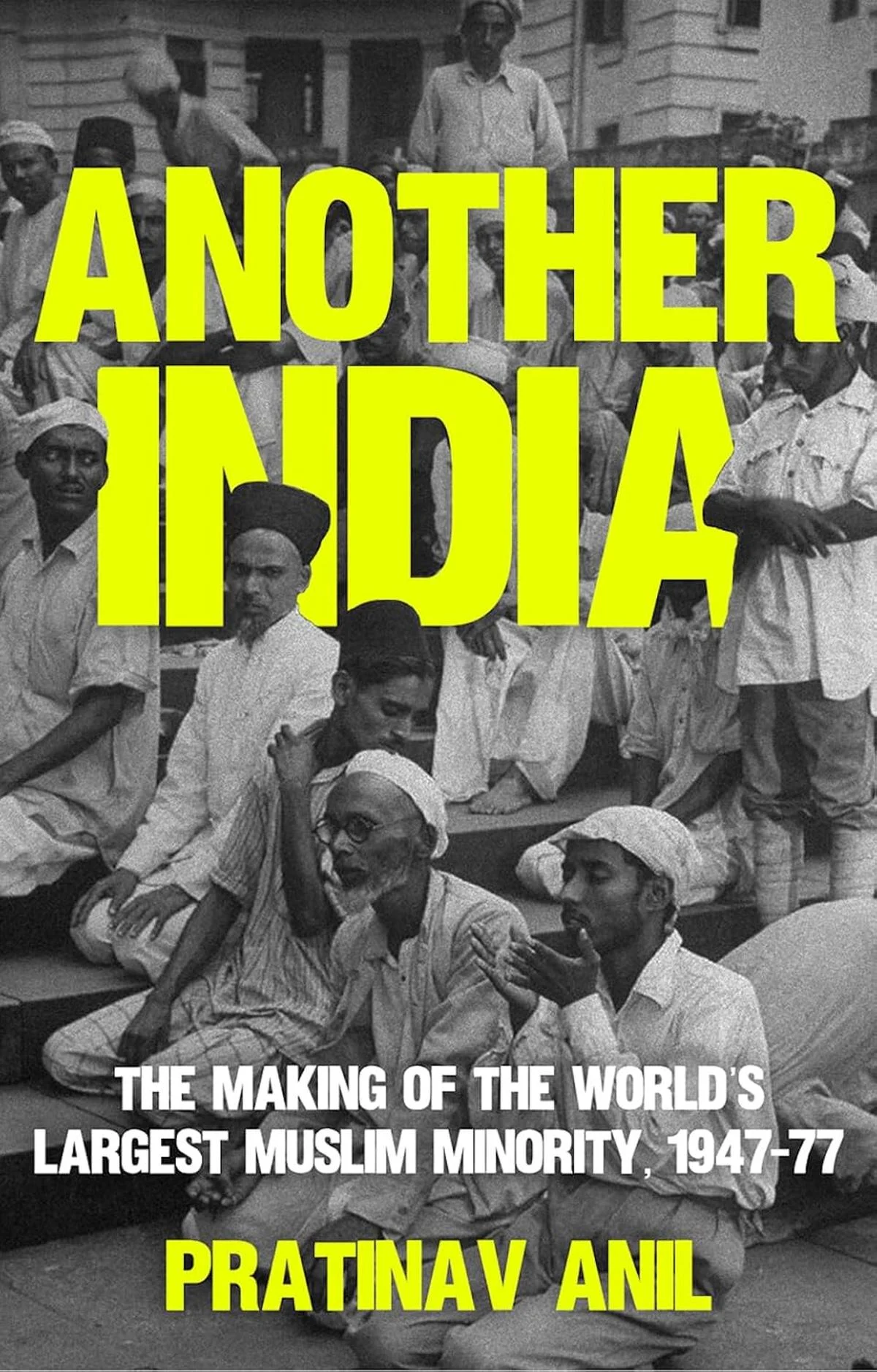
3. Another India: The History of the World’s Largest Muslim Minority, 1947-77 by Pratinav Anil
This provocative work challenges the "liberal nostalgia" for a golden age of Indian secularism. Anil argues that even during the Nehruvian era, the systematic "demobilization and depoliticization" of the Muslim minority was underway. The author finds this critique essential for understanding how the country’s largest minority was left "extremely vulnerable" to the subsequent rise of hegemonic Hindutva.

4. Undercover: My Journey into the Darkness of Hindutva by Ashish Khetan
Khetan’s investigative account of the 2002 Gujarat riots serves as a "struggle of memory against forgetting." By using hidden cameras to capture the gleeful confessions of perpetrators, Khetan documented a "bloody mayhem" protected by official impunity. The author notes with concern that this vital piece of investigative journalism is currently out of print, suggesting an active erasure of these events from collective memory.
5. The Lucky Ones by Zara Chowdhary
A memoir of the 2002 Gujarat violence through the eyes of a 16-year-old girl. The author highlights a chilling moment in the book where the protagonist realizes that for her non-Muslim friends, the months of violence were merely an "extended vacation." This work captures the "scars" left on childhoods and the profound sense of "homelessness" that follows communal trauma.

III. Global Parallels of Oppression
6. At the Hands of Persons Unknown: The Lynching of Black America by Philip Dray
Dray’s meticulous research into the history of lynching in the U.S. resonates with the author’s own campaigns against mob violence in India. The book posits that such violence is not "spontaneous mob fury" but a deliberate "project of subordinating a people." It serves as a grim reminder of how public spectacles of violence are used to enforce social hierarchies.
8. Sophie’s Choice by William Styron
Set in the aftermath of World War II, Styron’s novel delves into the "mechanics of the machinery of mass murder" at Auschwitz. For the author, the book’s power lies in its ability to hold the "historical and the human together," laying bare the "terrible choices" forced upon individuals by totalitarian regimes.

IV. The Human Condition and Literary Escapism
7. The Blind Assassin by Margaret Atwood
A Booker Prize-winning novel that explores whether we shape our lives or are shaped by "events far beyond our control." The author names this his favorite work of fiction from his years in jail, appreciating how Atwood connects personal narratives with larger political upheavals.
9. Broken Verses by Kamila Shamsie
Discovered in the jail library, this novel follows the daughter of a vanished feminist activist in Zia-ul-Haq’s Pakistan. It explores the "larger question of whether activists too can give up" and how they can challenge regressive regimes by reclaiming religious interpretations from the state.

10. Men Without Women by Haruki Murakami
In this collection of short stories, Murakami explores "loneliness, love, longing, and desire" in all their messiness. The author finds that these stories "stay with you long after you have finished them," providing a necessary emotional outlet in the sterile environment of a prison cell.
Official Responses and Legal Context
The author’s incarceration under the UAPA has drawn significant criticism from international human rights organizations. Amnesty International and Human Rights Watch have repeatedly called for the release of activists detained in connection with the 2020 protests, citing a lack of concrete evidence and the prolonged nature of pre-trial detention.

The Indian government and prosecution, however, maintain that the detentions are necessary for national security. They allege a "larger conspiracy" to incite violence and destabilize the state during the visit of then-U.S. President Donald Trump. Courts have repeatedly denied bail to the author, citing the "prima facie" strength of the prosecution’s case under the specific provisions of the UAPA, which makes the granting of bail exceptionally difficult.
The author’s reflection on his reading list serves as a silent rebuttal to the state’s narrative, framing his time not as a period of criminal penance, but as one of intellectual fortification and historical witness.

Implications: The Power of the Written Word
The implications of this curated list extend beyond the personal survival of one individual. They speak to a broader trend of "intellectual resistance" among political prisoners globally. When the state restricts physical movement, the mind seeks expansion through literature.
- Literature as a Historical Corrective: By choosing works that focus on "erased" histories (Khetan, Anil, Dray), the author suggests that reading is a way to preserve a counter-narrative against state-sponsored forgetting.
- The Universal Experience of Persecution: By bridging the gap between the Holocaust, the Jim Crow South, and modern India, the author finds a "methodological clarity" that universalizes the struggle for human rights.
- The Preservation of Sanity: In a "monotonous" environment designed to break the spirit, the "messiness and complexity" of fiction (Murakami, Atwood) provides a vital link to the human experience that the prison system seeks to strip away.
As the author’s own book, Fractured Communities, prepares for release, his reading list stands as a testament to the fact that while a body can be imprisoned, a mind fueled by the "rationalist and argumentative tradition" remains profoundly free. His journey underscores a timeless truth: in the struggle between power and memory, books remain the most potent weapons of the dispossessed.
