

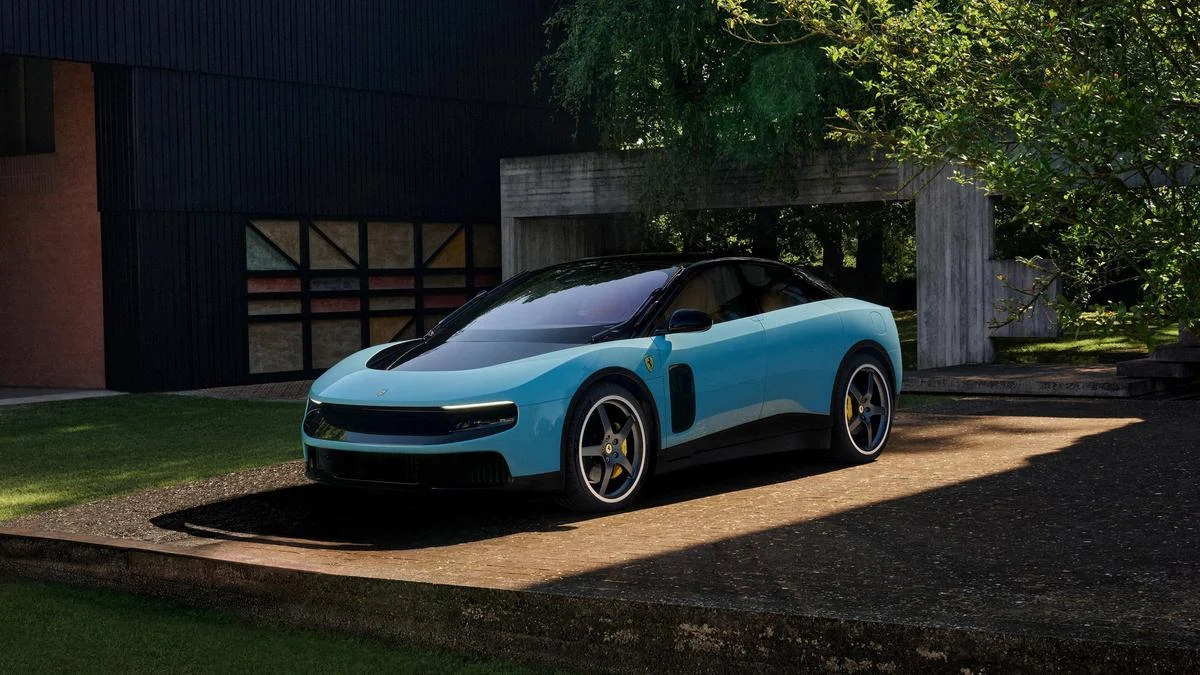
MARANELLO, ITALY — In a move that marks the most significant architectural pivot in its 79-year history, Ferrari NV has officially pulled the silk off the "Luce," the company’s first-ever fully electric vehicle (EV). The unveiling, which took place late Monday at the company’s historic headquarters, signals a definitive, albeit cautious, embrace of the zero-emissions era by the world’s most iconic purveyor of high-performance internal combustion engines.
The Luce—Italian for "Light"—represents a radical departure for the Prancing Horse. It is not merely a battery-powered version of an existing chassis but a ground-up reimagining of what a luxury grand tourer can be in a post-gasoline world. However, the debut arrives at a complex moment for the automotive industry, as cooling global demand for EVs forces even the most prestigious marques to recalibrate their long-term electrification strategies.
Main Facts: A New Paradigm for the Prancing Horse
The Ferrari Luce is a technical marvel that seeks to reconcile the inherent weight of battery technology with the agility expected of a Maranello-bred supercar. The specifications released by the company confirm that Ferrari is aiming for the top tier of the electric performance market, directly challenging rivals such as the Porsche Taycan Turbo GT and the upcoming electric successor to the Lamborghini Huracán.
Performance and Powertrain
The Luce is powered by a massive 122 kWh battery pack, one of the largest ever fitted to a passenger car in this segment. This energy density allows for a range of over 530 kilometres (approximately 330 miles) on a single charge, addressing the "range anxiety" that has often deterred luxury buyers from making the switch to electric.
In terms of raw speed, the Luce does not disappoint. It can sprint from 0 to 100 kph (62 mph) in a blistering 2.5 seconds, matching the acceleration of the hybrid SF90 Stradale. Its top speed is rated at over 310 kph (190 mph), a figure that places it among the fastest production EVs in existence.
Dimensions and Utility
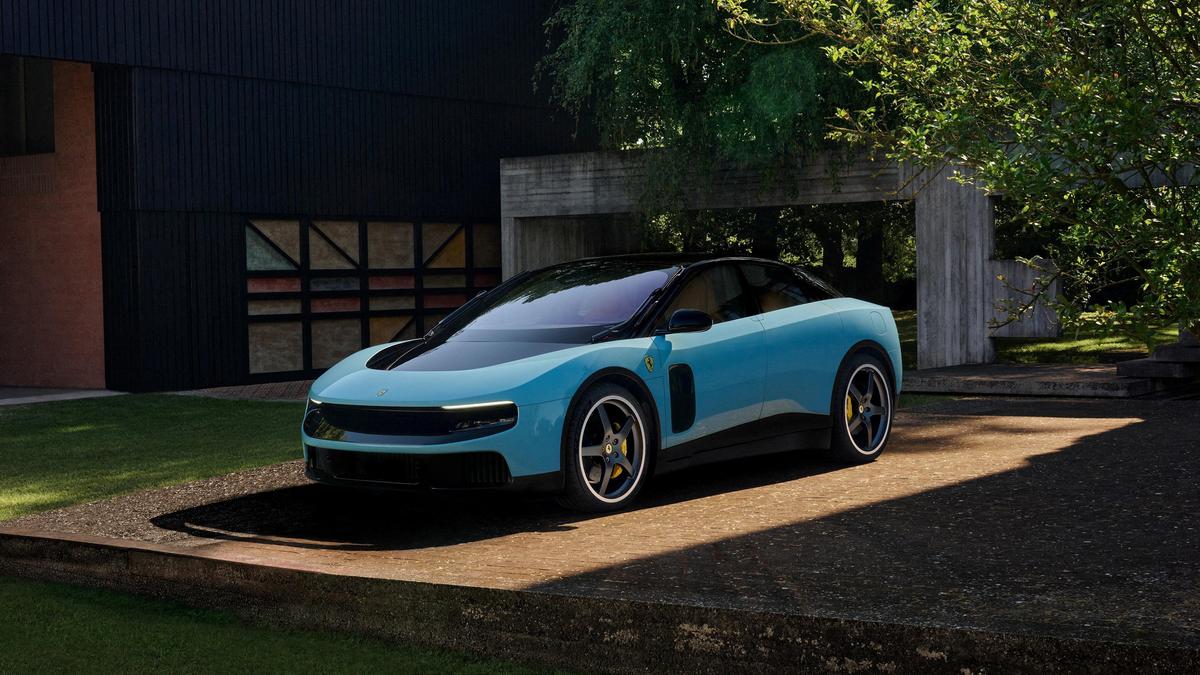
Perhaps the most shocking aspect of the Luce is its form factor. It is only the second four-door model in Ferrari’s history (following the Purosangue) and the first to offer a true five-seater configuration. This move signals Ferrari’s intent to capture a larger share of the "lifestyle" luxury market, where utility and performance must coexist.
However, this utility comes with a physical cost. The Luce weighs in at 2.26 tonnes (approximately 4,982 lbs), making it the heaviest vehicle Ferrari has ever produced. Managing this mass required a complete overhaul of Ferrari’s suspension geometry and the implementation of advanced active aerodynamics to ensure the car retains the brand’s signature "fun-to-drive" characteristics.
Chronology: The Long Road to Electrification
Ferrari’s journey to the Luce has been a decade-long exercise in strategic patience. While competitors rushed to market with early electric prototypes, Ferrari’s leadership maintained that the technology—specifically battery weight and "sound emotion"—was not yet ready to meet the brand’s exacting standards.
- 2013: The Hybrid Prelude: Ferrari introduced the LaFerrari, its first hybrid, proving that electric motors could enhance performance without sacrificing the V12 soul.
- 2019: Plug-in Proliferation: The launch of the SF90 Stradale, a plug-in hybrid (PHEV), served as a bridge, allowing customers to experience short bursts of silent, electric-only driving.
- 2022: The "e-building" Announcement: During its Capital Markets Day, Ferrari announced the construction of a dedicated "e-building" in Maranello, a specialized factory designed to manufacture electric motors, inverters, and battery modules in-house.
- 2024–2025: Strategic Recalibration: As the global EV market began to show signs of saturation and infrastructure bottlenecks, Ferrari leadership began subtly shifting its rhetoric, emphasizing "technological neutrality" while continuing the development of the Luce.
- May 25, 2026: The Luce is officially unveiled to the global press, marking the end of the internal combustion engine’s exclusive reign at Maranello.
Supporting Data: Engineering the "Ferrari Sound"
One of the primary concerns for Ferrari purists has been the loss of the visceral acoustic experience provided by a high-revving Italian engine. To address this, Ferrari has invested heavily in "acoustic engineering" for the Luce.
Synthetic Harmonics
Rather than using artificial speakers to mimic a V12, Ferrari engineers have developed a system that amplifies the natural resonance of the electric motors and the drivetrain. The frequency of these sounds is tied directly to the car’s speed and acceleration, providing the driver with the sensory feedback necessary for spirited driving.
Battery and Charging Infrastructure
The 122 kWh battery uses a proprietary cell chemistry developed in collaboration with leading energy firms. It supports ultra-fast charging, capable of replenishing the battery from 10% to 80% in just 18 minutes when connected to a 350 kW DC fast charger. This high-voltage architecture (800V) is essential for maintaining consistent performance during track use, where heat management is critical.
Weight Distribution
To counteract the 2.26-tonne curb weight, the Luce features a "low-slung" battery floor, giving it a center of gravity lower than any of Ferrari’s current mid-engine V8 or V12 models. The use of carbon fiber and magnesium alloys in the chassis has helped offset some of the battery’s bulk, though the car remains significantly heavier than the 1.5-tonnes typical of Ferrari’s legacy sports cars.
Official Responses: A Vision for the Future
The leadership at Ferrari is framing the Luce not as a concession to regulation, but as a bold step into a new era of luxury.
"Today, we are inaugurating a chapter that turns our vision into reality, strengthening Ferrari’s tradition of anticipating and shaping the future," said John Elkann, President of Ferrari, during the launch event. "The Luce is the purest expression of our DNA—innovation, performance, and an unwavering commitment to the thrill of the drive—now realized through the medium of electrons."
CEO Benedetto Vigna, who was brought in specifically for his background in the technology sector, emphasized that the Luce would remain an exclusive product. "We are not becoming a high-volume manufacturer of electric appliances. We are creating electric art. The Luce will be as rare and as coveted as any V12 that has left these gates."
However, Vigna also addressed the elephant in the room: the cooling market for EVs. Ferrari confirmed that it has revised its long-term sales targets. While the company previously estimated that 40% of its lineup would be fully electric by 2030, that target has been adjusted downward to 20%. The company intends to keep internal combustion and hybrid options available for as long as regulations and customer demand allow.
Implications: Navigating a Fractured Luxury Market
The launch of the Luce has profound implications for Ferrari, its shareholders, and the broader luxury automotive landscape.
Brand Dilution vs. Brand Evolution
The inclusion of four doors and five seats in a flagship electric model is a calculated risk. For decades, Ferrari’s exclusivity was tied to the "uncompromising" nature of its two-seater cockpits. By moving toward a more versatile "family-friendly" configuration, Ferrari is chasing the success of the Purosangue SUV, which currently has a multi-year waiting list. The risk is whether the Luce can maintain the "supercar" mystique while weighing as much as a mid-sized SUV.
The Challenge of Residual Values
The luxury car market is built on the premise of appreciating value. While vintage Ferraris often sell for millions at auction, the long-term value of an EV is hampered by battery degradation and rapid technological obsolescence. Ferrari will likely need to introduce bespoke battery-swap programs or "evergreen" hardware upgrades to ensure that a Luce purchased in 2026 remains a viable collector’s item in 2046.
The Broader Industry Slowdown
Ferrari’s decision to lower its 2030 EV targets mirrors a trend seen at Mercedes-Benz, Bentley, and Aston Martin. The "gold rush" toward electrification has hit the reality of insufficient charging infrastructure in key markets like the United States and parts of Europe. By pivoting to a more balanced 20% EV mix, Ferrari is hedging its bets, ensuring it doesn’t alienate its core base of "petrolheads" while still meeting the stringent ESG (Environmental, Social, and Governance) requirements of modern institutional investors.
Competitive Landscape
The Luce arrives just as the ultra-luxury EV space is becoming crowded. Lucid Motors, Rimac, and Tesla (with the long-delayed Roadster) are all vying for the same high-net-worth individuals. Ferrari’s advantage remains its heritage. While a Rimac may be faster on paper, it lacks the decades of racing pedigree and the "cult of the Prancing Horse" that allows Ferrari to command a premium price regardless of the powertrain.
Conclusion
The Ferrari Luce is a testament to the fact that even the most tradition-bound institutions must eventually adapt to the tides of change. By naming the car "Light," Ferrari suggests a path forward that is cleaner and more enlightened. Yet, the car’s record-breaking weight and the company’s tempered sales forecasts suggest that the road to a fully electric future will be heavier and more arduous than initially anticipated. For now, the Luce stands as a high-voltage bridge between a legendary past and an uncertain, silent future.
