

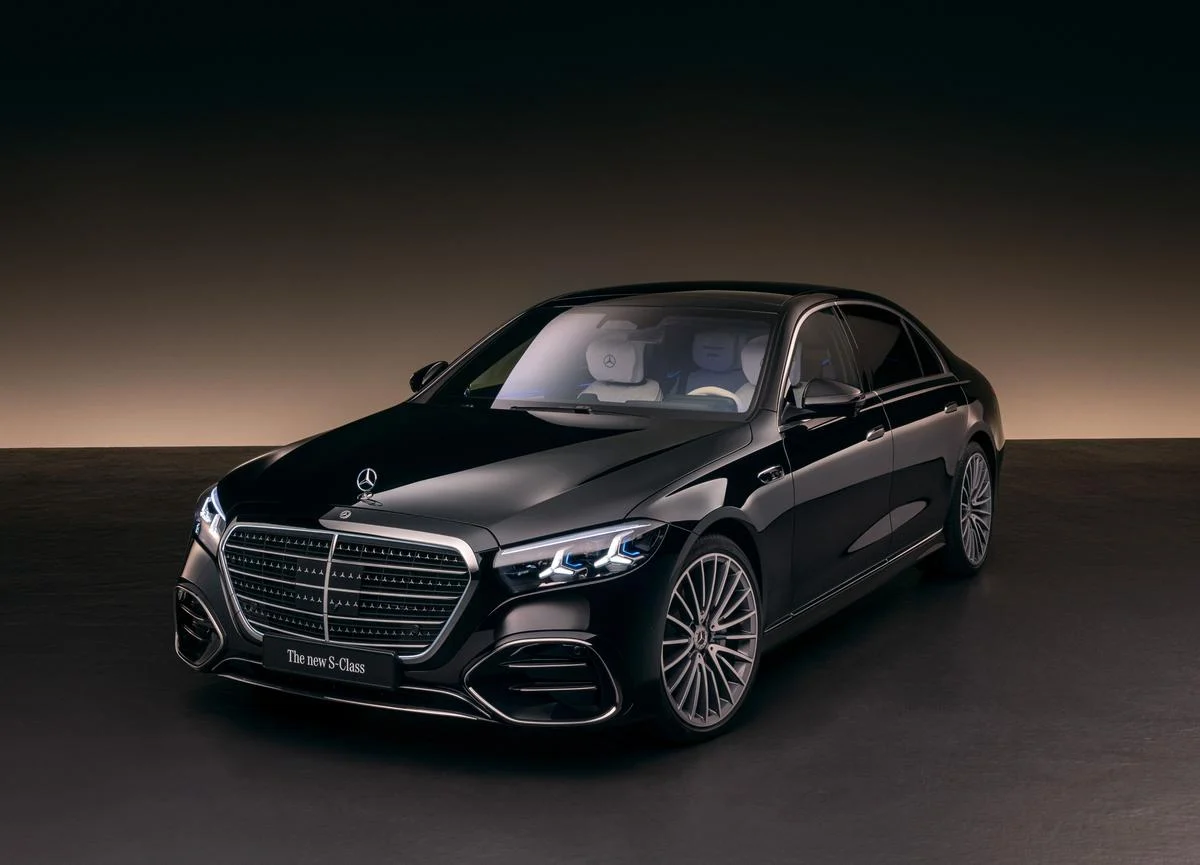
The Mercedes-Benz S-Class has long occupied a singular position in the global automotive hierarchy. Often referred to as the "best car in the world," it serves not merely as a mode of transportation but as a rolling laboratory for the future of the automobile. With the introduction of the S 450e plug-in hybrid (PHEV) in India, Mercedes-Benz is attempting to reconcile two traditionally opposing forces: the uncompromising indulgence of a flagship limousine and the urgent necessity of environmental stewardship.
Priced at ₹2.20 crore for the Launch Edition and ₹2.38 crore for the bespoke MANUFAKTUR Edition, the S 450e represents more than just a new powertrain variant. It is a strategic statement by Mercedes-Benz India, asserting that the path to a carbon-neutral future does not require the sacrifice of the refinement, prestige, or performance that has defined the "S" badge for over seven decades.
Main Facts: The Intersection of Efficiency and Power
The Mercedes-Benz S 450e is a sophisticated plug-in hybrid that bridges the gap between the traditional Internal Combustion Engine (ICE) and the brand’s fully electric EQ sub-brand. At its core, the vehicle utilizes a 3.0-litre inline-six turbocharged petrol engine. This refined powerplant is integrated with a permanently excited synchronous electric motor and a high-voltage 22kWh battery pack.
The combined system output is a staggering 435 PS of power and 680 Nm of peak torque. Despite weighing well over two tonnes, the S 450e maintains the effortless, "wafting" acceleration characteristic of the S-Class. However, the most disruptive figures lie in its efficiency metrics. Mercedes-Benz claims an electric-only range of up to 115 kilometres (WLTP), allowing for zero-emission daily commuting in urban environments. Furthermore, the combined fuel efficiency is rated at an extraordinary 32.33 kmpl—a figure that remarkably rivals entry-level economy hatchbacks, yet delivered within a sanctuary of leather, wood, and cutting-edge silicon.

Chronology: The Evolution of the Flagship
The journey to the S 450e is rooted in the S-Class legacy of pioneering "firsts." To understand the significance of this hybrid model, one must look at the lineage it inherits:
- 1970s-1980s (W116 & W126): The S-Class established the template for the modern luxury sedan, introducing Anti-lock Braking Systems (ABS) and airbags to the mass market.
- 1990s (W140): Known as the "over-engineered" S-Class, it introduced double-pane window glazing for unprecedented acoustic insulation.
- 2000s-2010s (W220 & W221): Mercedes-Benz began experimenting with mild-hybrid technology (S 400 Hybrid) and Pre-Safe systems, anticipating the shift toward integrated safety and efficiency.
- 2020-Present (W223): The current generation debuted with a focus on digitalization (MBUX) and rear-axle steering.
- 2024-2025 (The Hybrid Transition): The launch of the S 450e in India marks a pivotal moment. While previous S-Class models focused on downsizing or mild electrification, the S 450e is the first to offer a usable, long-range electric mode that makes it a "part-time EV" without the range anxiety of a "full-time EV."
This chronology illustrates a shift in the brand’s philosophy: from engineering purely for mechanical dominance to engineering for digital and environmental harmony.
Supporting Data: Engineering a Seamless Transition
The S 450e distinguishes itself through technical innovations that address the specific pain points of luxury car owners in India—specifically, charging infrastructure and urban congestion.
1. Fast-Charging Capabilities
A significant barrier for PHEVs has historically been slow charging speeds, often limited to 3.7kW or 7.4kW AC. The S 450e disrupts this by being the first plug-in hybrid luxury sedan in India to support 60kW DC fast charging. This allows the 22kWh battery to be replenished from 20% to 80% in approximately 20 minutes. For the chauffeur-driven owner, this means the car can be topped up at a public charger or a dealership while they attend a brief meeting, ensuring the vehicle remains in electric mode for the majority of city travel.

2. Intelligent Energy Management
The vehicle does not simply switch between petrol and electricity; it manages them through a predictive strategy. By using navigation data, the car’s computer analyzes the topography, speed limits, and traffic conditions of the planned route. It prioritizes electric mode for urban stop-and-go sections and utilizes the petrol engine for steady-state highway cruising, where internal combustion is most efficient.
3. The Digital Sanctuary
The interior remains a masterclass in craftsmanship. The dashboard is dominated by a 13.1-inch MBUX (Mercedes-Benz User Experience) OLED touchscreen. However, the true focus is the rear cabin. Designed for the "Boss Seat" experience, the rear features:
- Reclining seats with a maximum angle of 43.5 degrees.
- Ten different massage programs utilizing "hot stone" technology.
- The Burmester 4D surround sound system, which uses 31 speakers and exciters in the seats to allow passengers to "feel" the music through vibrations.
Official Responses and Strategic Vision
While Mercedes-Benz India has not released a singular "quote" in this specific report, the launch of the S 450e aligns with the company’s global "Ambition 2039" strategy. This corporate roadmap aims to have a carbon-neutral new car fleet by 2039.
In various industry briefings, Mercedes-Benz leadership has emphasized the "Top-End Luxury" (TEV) segment as their primary growth engine in India. The S 450e serves a dual purpose in this strategy. First, it caters to the "conscious" ultra-high-net-worth individual (UHNWI) who wants to reduce their carbon footprint without moving to a full Battery Electric Vehicle (BEV) like the EQS. Second, it serves as a "bridge technology," familiarizing traditional luxury buyers with the rituals of charging and electric driving before the brand moves to a purely electric portfolio.

The introduction of the MANUFAKTUR programme further highlights the official response to a changing market. By offering bespoke paint finishes and interior trims, Mercedes-Benz is acknowledging that at the ₹2 crore+ price point, exclusivity is just as important as efficiency.
Implications for the Indian Luxury Market
The arrival of the S 450e has far-reaching implications for the Indian automotive landscape and its competitors, such as the BMW 7 Series and the Audi A8 L.
The Death of "Range Anxiety"
The S 450e effectively kills range anxiety for the luxury buyer. With a total range (petrol + electric) likely exceeding 800-900 kilometres, it offers a level of freedom that full EVs cannot yet match in the Indian context, where highway charging infrastructure remains inconsistent. This makes it a more versatile tool for owners who travel between cities like Delhi and Jaipur or Mumbai and Pune.
Regulatory and Tax Considerations
In India, EVs enjoy a lower GST rate (5%) compared to ICE vehicles (up to 48% including cess). While PHEVs like the S 450e do not currently enjoy the same level of tax breaks as pure EVs, their high fuel efficiency figures make them more compliant with increasingly stringent CAFE (Corporate Average Fuel Efficiency) norms. As the Indian government continues to tighten emission standards, the PHEV model may become the default "standard" for the luxury segment.

Aesthetic and Social Status
The subtle exterior updates—the illuminated grille and the "star" pattern tail lamps—signal a shift in luxury aesthetics. The S-Class no longer needs to be loud or flamboyant to command respect; its status is now derived from its technological sophistication. The "jewel-like" quality of the Micro LED headlamps serves as a visual metaphor for the precision engineering underneath the hood.
Conclusion: The Future of the Flagship
The Mercedes-Benz S 450e is a testament to the fact that the automotive industry is in a state of profound transformation. By delivering the fuel economy of a budget car with the opulence of a private jet, Mercedes-Benz has redefined what is possible in the flagship segment.
For decades, the S-Class has asked: "How can we make a car more comfortable and faster?" Today, the question has evolved: "How can we make a car more sustainable without losing its soul?" The S 450e provides a compelling answer. It suggests that the future of luxury is not a compromise, but a seamless integration of heritage and high-tech, of silence and power, and of indulgence and responsibility. As it hits Indian roads, it doesn’t just represent a new model; it represents the blueprint for the next century of the Mercedes-Benz legacy.
