

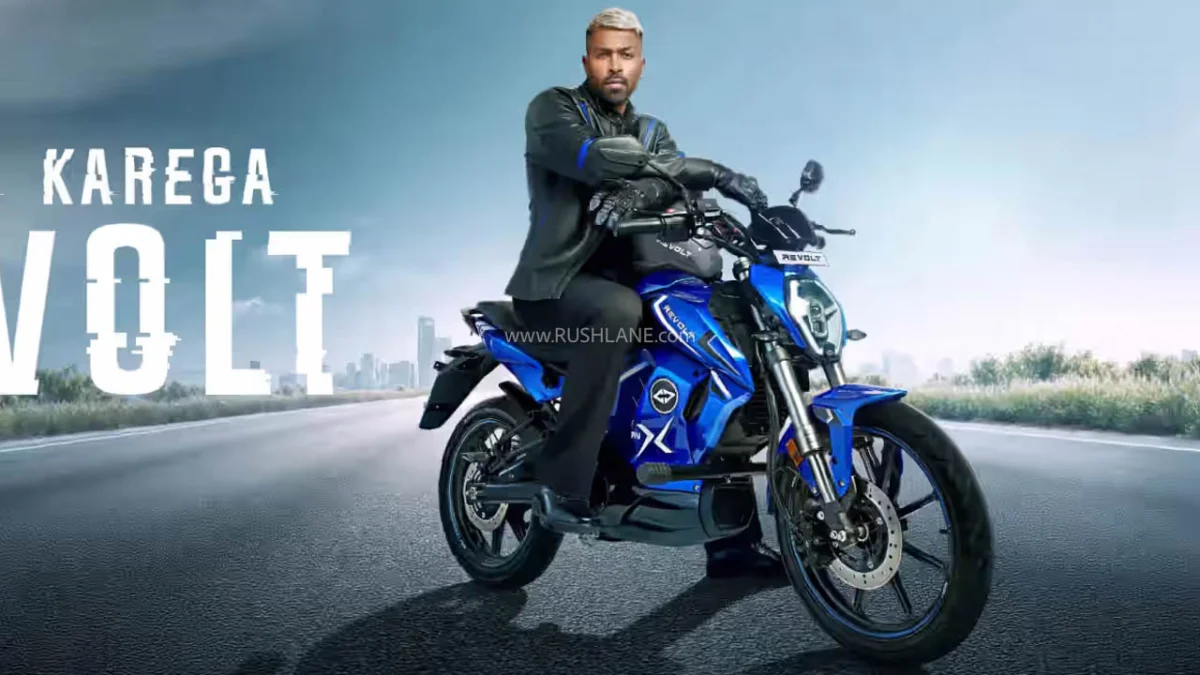
New Delhi, India – In a strategic move to solidify its dominance in the burgeoning Indian electric two-wheeler market, Revolt Motors has officially pulled the wraps off its latest offering: the Revolt RVX. Positioned as a versatile, high-performance electric motorcycle tailored for the next generation of riders, the RVX enters the market with an introductory price of Rs 1.3 lakh (Ex-showroom, excluding PM E-Drive incentives).
The launch comes at a pivotal time for the Indian automotive industry, as the transition from internal combustion engines (ICE) to electric vehicles (EV) accelerates under tightening emission norms and evolving consumer preferences. The RVX is not merely an addition to the lineup; it represents a refined synthesis of the brand’s existing technological prowess and a renewed focus on user convenience and aesthetic appeal.
1. Main Facts: The RVX at a Glance
The Revolt RVX is designed to bridge the gap between entry-level electric commuters and high-end performance electric bikes. By leveraging the proven platform of the RV400 while introducing significant powertrain enhancements, Revolt Motors aims to capture a larger share of the "youth" demographic.
Pricing and Availability
The introductory price of Rs 1.3 lakh makes the RVX a competitive entrant in the premium electric motorcycle segment. This pricing strategy is clearly aimed at disrupting the 150cc to 200cc ICE motorcycle segment, offering a tech-forward alternative at a comparable price point. The motorcycle will be available across Revolt’s expanding network of 200 dealerships nationwide, ensuring robust after-sales support and accessibility.
Visual Identity
To cater to varied tastes, the RVX is launched in three distinct colorways:
- Pearl Black: For a stealthy, sophisticated urban look.
- Eclipse Red: Aimed at riders seeking a sporty, aggressive presence.
- Electric Blue: Highlighting the futuristic, "zero-emission" nature of the vehicle.
While the design language stays true to the "street-naked" DNA seen in the RV400 and RV400 BRZ, the RVX features subtle refinements in its fairing and component finishing to distinguish it as a newer, more modern iteration.
2. Chronology: The Evolution of the Revolt Lineup
The journey of Revolt Motors has been one of consistent iteration. To understand the significance of the RVX, one must look at the timeline of the brand’s development:

- The Inception (RV400): Revolt entered the market with India’s first AI-enabled electric motorcycle, the RV400. It introduced the concept of "motorcycle sounds" and a subscription-based ownership model, which shook the industry.
- Market Diversification (RV400 BRZ & RV1): Recognizing the need for different price points, Revolt introduced the BRZ (a more streamlined version of the RV400) and later the RV1/RV1+ series. The RV1 served as the entry-level "workhorse" designed for the mass market and fleet operators.
- The Performance Gap: Despite having a solid entry-level and a flagship, there was a perceived gap for a "middle-weight" contender that offered flagship performance with updated battery technology and more aggressive tuning.
- The Launch of RVX (Present): The RVX arrives as the answer to this gap. It retains the premium "USD fork" chassis of the RV400 but introduces a more optimized powertrain and the latest NMC battery chemistry to ensure it remains competitive against newer rivals like Oben Electric and Tork Motors.
3. Supporting Data: Technical Specifications and Performance
The RVX is built on a foundation of impressive numbers that suggest it is more than just a city commuter; it is a capable machine for spirited riding.
Powertrain and Battery Technology
At the heart of the RVX lies a 3.2 kWh Lithium-ion battery pack utilizing NMC (Nickel Manganese Cobalt) chemistry. NMC is preferred in high-performance EVs for its high energy density and thermal stability.
- Range: The bike offers an IDC (Indian Drive Cycle) certified range of 160 km on a single charge. In real-world conditions, this is expected to translate to approximately 100-120 km in Normal mode, which is more than sufficient for the average Indian urban commute.
- Charging: Time is a critical factor for EV adoption. The RVX supports fast charging, capable of replenishing the battery from 0% to 80% in just 80 minutes. Furthermore, the battery is removable, allowing users who live in high-rise apartments to charge the pack in their homes or offices.
Motor Performance
The RVX utilizes a mid-mounted motor setup, which provides better weight distribution and handling compared to hub-mounted motors.
- Power Output: The motor has a rated power of 4 kW (5.36 bhp) and a peak power output of 5.3 kW (7.1 bhp).
- Torque: Revolt claims a staggering 230 Nm of torque at the rear wheel. While wheel torque figures are always higher than motor torque due to gear reduction, 230 Nm ensures instantaneous "off-the-line" acceleration.
- Acceleration and Speed: The RVX can sprint from 0 to 40 km/h in just 3.9 seconds, reaching a top speed of 90 km/h.
Riding Modes
The motorcycle features a sophisticated ride-by-wire system with four distinct modes:
- Eco Mode: Limits speed and acceleration to maximize range.
- Normal Mode: A balance of performance and efficiency for daily city traffic.
- Sport Mode: Unlocks the full 90 km/h top speed and aggressive torque curves.
- Boost Mode: A unique feature that allows the rider to access an extra surge of power for short durations—ideal for quick overtakes or navigating steep inclines.
4. Official Responses and Market Positioning
While formal executive quotes often highlight "sustainable mobility," the engineering choices behind the RVX reveal the company’s internal strategy. Sources close to the development indicate that the RVX was designed specifically to address feedback regarding "range anxiety" and "charging infrastructure."
By sticking with a removable battery, Revolt is doubling down on a solution that works for the current Indian infrastructure, where public charging stations are still in the growth phase.
Competitive Landscape
The RVX is positioned to go head-to-head with the Oben Rorr Evo. Both bikes hover around the Rs 1.2 to 1.5 lakh price bracket and offer similar performance metrics. However, Revolt’s advantage lies in its established brand presence and its extensive service network. While Oben offers a larger LFP battery, Revolt counters with the convenience of a removable NMC pack and a more established "motorcycle-like" aesthetic with its USD forks and monoshock suspension.

5. Implications: What the RVX Means for the Indian Market
The launch of the Revolt RVX has several far-reaching implications for the Indian two-wheeler ecosystem.
The Death of the 150cc Commuter?
For decades, the 150cc ICE motorcycle was the aspirational standard for young Indians. With the RVX offering 230 Nm of wheel torque and a 0-40 km/h time that beats many petrol bikes, the value proposition of ICE is shrinking. When factoring in the significantly lower "cost per kilometer" of electricity versus petrol, the RVX becomes a financially superior choice for high-mileage users.
Technological Trickle-Down
The inclusion of a 3.5-inch color LCD instrument cluster, Bluetooth connectivity, and Over-The-Air (OTA) updates as standard features signals a shift in consumer expectations. Modern riders no longer just want a vehicle; they want a connected device. The RVX’s ability to receive software improvements after purchase ensures that the vehicle remains "fresh" over its lifecycle, a feat ICE bikes cannot match.
Impact of Subsidy Transitions
The RVX is launched without the PM E-Drive incentives included in the introductory price. This suggests that Revolt is preparing for a post-subsidy market. By pricing the bike competitively even without heavy government backing, the company is demonstrating that electric motorcycles are reaching "price parity" with their petrol counterparts through manufacturing efficiency and localized sourcing.
Urban Infrastructure and the Removable Battery
The RVX’s removable battery is a silent protest against the slow rollout of universal charging standards. By allowing the rider to carry the "fuel tank" to the power source, Revolt is mitigating one of the biggest hurdles to EV adoption in dense urban clusters like Mumbai, Delhi, and Bangalore.
Conclusion
The Revolt RVX is a calculated, high-stakes evolution of a platform that has already proven its mettle on Indian roads. By refining the power delivery, updating the battery chemistry, and maintaining a price point that challenges the ICE establishment, Revolt Motors has positioned the RVX as a formidable contender for the title of India’s favorite electric street-bike.
As the 200-strong dealership network begins deliveries, the true test will be in the real-world performance and the reliability of the new NMC pack. However, on paper, the RVX offers a compelling blend of style, speed, and sustainability that is likely to resonate deeply with the "Gen Z" and "Millennial" cohorts it seeks to attract. The electric revolution in India is no longer just about scooters; with the RVX, the motorcycle is reclaiming its place on the electric throne.
