

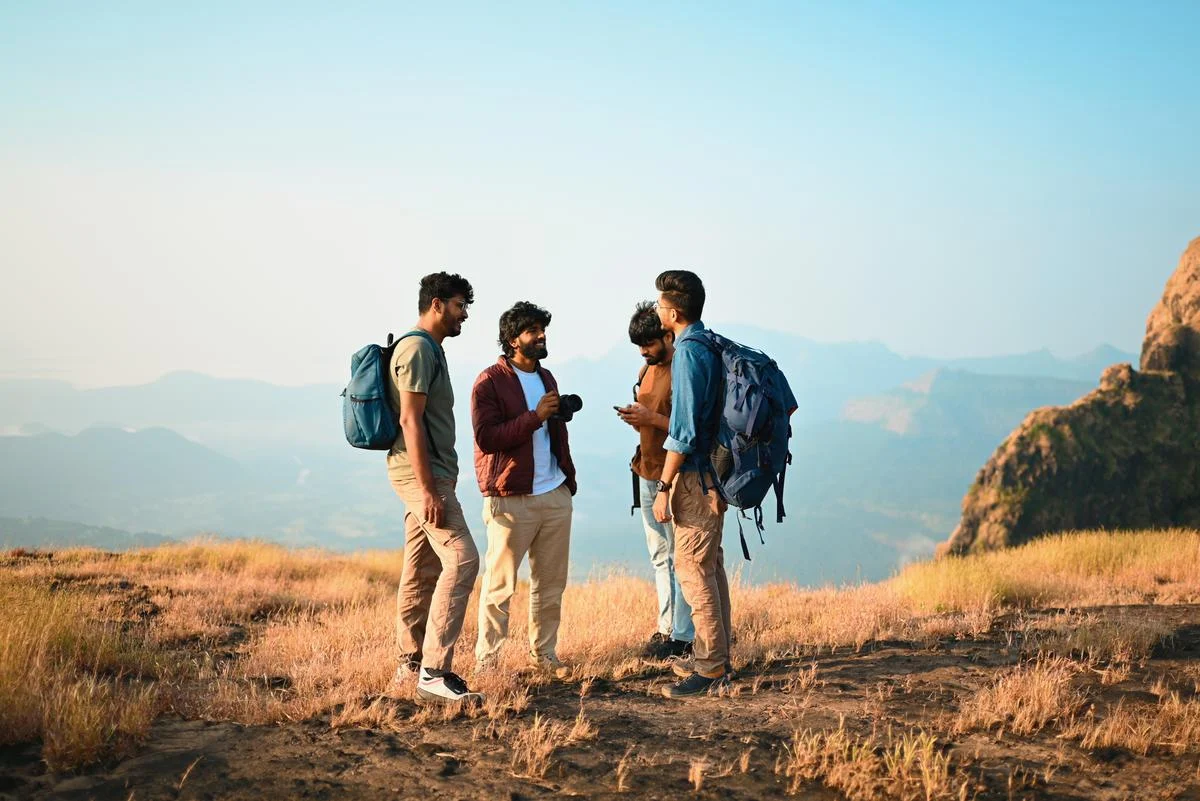
For a nation whose citizens are among the most sought-after travelers in the global tourism ecosystem, Indians spend a disproportionate amount of time navigating a complex duality. On one hand, they are the economic engine of a post-pandemic travel recovery; on the other, they are frequently the subjects of viral scrutiny and localized criticism regarding their travel etiquette.
As India’s outbound travel market continues its meteoric rise, a tension has emerged between the sheer spending power of the Indian middle class and the cultural friction that often accompanies large-scale tourism. This report examines the facts of the Indian travel boom, the regulatory shifts in key destinations, the historical context of "unruly" tourist reputations, and the broader implications for India’s global image.
1. Main Facts: The Economic Surge and the Regulatory U-Turn
The scale of Indian outbound travel is no longer a matter of speculation; it is a documented global phenomenon. According to the Mastercard Economics Institute’s Travel Trends 2025 report, India has solidified its position as one of the world’s fastest-growing source markets. Destinations across Southeast Asia and the Middle East—specifically Thailand, Vietnam, Japan, Indonesia, and the UAE—have reported unprecedented surges in Indian arrivals.

Thailand serves as the primary case study for this trend. In 2024, the Tourism Authority of Thailand (TAT) reported that the country welcomed more than 2.1 million Indian visitors, making India one of its largest and most lucrative source markets. However, this economic windfall has been accompanied by a significant regulatory pivot.
The Thailand Shift
In a surprising policy reversal, Thai authorities recently rolled back a 60-day visa-free scheme that had previously applied to 93 countries, including India. This move transitioned Indian travelers back to a paid Visa-on-Arrival (VoA) category.
- Cost: Travelers must now pay a fee of 2,000 Thai Baht (approximately ₹5,500–₹6,000).
- Formalities: The introduction of the mandatory Thailand Digital Arrival Card (TDAC) has added layers of entry bureaucracy.
- Official Justification: Thai immigration authorities cited concerns regarding overstays, illegal employment, and the systematic misuse of long-term tourist permissions.
This policy shift highlights a broader global tension: while countries crave the liquidity provided by Indian tourists, they are simultaneously tightening immigration controls to manage the logistical and social realities of mass tourism.

2. Chronology: From Volume to Value
The evolution of the Indian traveler has moved through distinct phases over the last three decades, culminating in the current "visibility crisis."
- The 1990s – Early 2000s: Outbound travel was a luxury reserved for the elite. Travelers were few, and their presence was largely inconspicuous in global hubs.
- The 2010s: The rise of Low-Cost Carriers (LCCs) and a booming middle class democratized travel. Southeast Asia became the "weekend getaway" for urban Indians.
- 2023–2025 (The Post-Pandemic Boom): India emerged as the "new China" of global tourism. With China’s outbound travel recovering slowly, global destinations pivoted their marketing budgets toward India.
- The Present: A surge in "unusual" behavior captured on social media—ranging from performing Garba at international airports to unpacking home-cooked meals (theplas) in Swiss meadows—has triggered a wave of internal and external criticism.
3. Supporting Data: The $40 Billion Footprint
To understand why destinations continue to court Indian travelers despite the occasional friction, one must look at the economic data. Keyur Joshi, founder of the eco-resort Tipai and a pioneer in India’s online travel industry, notes that the industry looks at growth and long-term value rather than viral reels.
Key Metrics:
- Departure Volume: Estimates suggest that India has reached upwards of 30 million international departures annually.
- Overseas Spending: Indian travelers have spent more than US$40 billion (approximately ₹3.3 lakh crore) overseas in recent years.
- Spending Habits: There is a marked shift from budget-conscious "sightseeing" to high-value "experiential" travel. Indian spending is increasingly directed toward luxury accommodations, curated gastronomy, wellness retreats, and adventure tourism.
Gcobani Mancotywa, Regional General Manager at South African Tourism, confirms this trend. India is now among South Africa’s top 10 source markets, with over 82,500 travelers visiting between January 2025 and March 2026. Mancotywa emphasizes that Indian travelers are valued not just for their numbers, but for their "meaningful engagement" with wildlife and local cultures.

4. Historical Context: The "New Economy" Syndrome
The current scrutiny of Indian travelers is not a unique historical event. Behavioral specialists and hospitality veterans argue that every rising economic power goes through a period of being the "problematic" tourist.
The British Precedent
For decades, the "British tourist" was synonymous with unruly behavior in Europe. Entire coastal towns in Spain and Greece built their reputations—and their policing strategies—around young Britons treating weekends abroad as endurance contests involving excessive alcohol consumption. The "stag do in Prague" remains a specific, often negative, cultural shorthand in Eastern Europe.
The Japanese and "Paris Syndrome"
In the 1980s, as Japan’s economy boomed, millions of Japanese tourists traveled abroad for the first time. They were often caricatured as being culturally oblivious, traveling in rigid groups, and obsessively photographing landmarks. This led to the coining of "Paris Syndrome," a psychological state of extreme disappointment experienced by some Japanese visitors when the reality of the French capital failed to meet their romanticized expectations.

The Chinese Decade
Throughout the 2000s and 2010s, Chinese tourists faced intense international scrutiny regarding public etiquette and heritage site behavior. This eventually led the Chinese government to issue "social credit" warnings and travel etiquette manuals for its citizens.
Sumir Nagar, a behavioral specialist, argues: "We are not the exception. We are the latest occupant of a chair the Japanese sat in, then the Chinese. Someone else will inherit the moment a new economy puts a few hundred million first-time passport-holders on planes."
5. Official Responses and Expert Perspectives
The discourse surrounding Indian travelers is often more polarized within India than it is abroad.

The "Visibility" Burden
Sumir Nagar points out a critical psychological factor: Visibility. When a German tourist behaves badly by a pool, they are viewed as an individual. When an Indian traveler does the same, they are viewed as a representative of a category. Because many Indians are "first-time" international travelers, they are more likely to be noticed when they inadvertently break a social norm.
The Social Media Amplifier
Journalist Prathap Nair, who resides in Germany, argues that social media rewards the exceptional rather than the mundane. "Nobody posts a video of tourists quietly following the rules. They post the one incident that gets clicks," he says. He observes that the vast majority of Indians he encounters in Europe are polite, eager to follow rules, and desperate to blend in.
The Domestic-International Link
An anonymous IT consultant from Bengaluru suggests that behavior abroad is often an extension of domestic social conditioning. In India’s deeply hierarchical society, class and status often dictate interactions. This can manifest as a sense of "entitlement" in destinations perceived as cheaper (like Southeast Asia) while shifting to "deference" in more powerful Western economies.

6. Implications: The Path Forward
The "unruly Indian" narrative, while amplified by social media, carries significant implications for the future of Indian soft power and ease of travel.
1. The Risk of Regulatory Friction
As seen in Thailand, concerns about behavior and "misuse of permissions" can lead to a rollback of visa privileges. If the perception of the Indian traveler shifts from "valuable guest" to "logistical burden," other nations may follow suit with tighter entry requirements, negating the progress made in visa-free access.
2. The Internalized Shame
Mansi Shah, a Mumbai-based journalist, notes that Indians are often their own harshest critics. There is a tendency to turn minor incidents (like dancing at an airport) into "national crises." This internal policing, while intended to improve behavior, can sometimes reinforce negative stereotypes that foreign observers might not have even noticed.

3. The Need for Public Space Literacy
Rahul Jagtiani, a luxury travel specialist, offers a structural explanation for behavioral friction. India is one of the most densely populated nations on earth with very little "public space." Habits formed in a crowded environment—where one must be loud or assertive to be heard—do not always translate well to the quiet, regulated public squares of Europe or Japan.
Conclusion: A Maturing Market
The Indian traveler is currently in a state of transition. As the market matures from "volume" to "value," and as more Indians become seasoned global citizens, the friction is expected to ease. However, the current "burden of representation" remains a reality. Every Indian abroad is, for better or worse, a micro-ambassador.
The travel industry’s verdict is clear: the economic benefit of the Indian traveler far outweighs the social media noise. Yet, for the individual traveler, the challenge remains to navigate the world with the awareness that in a hyper-connected age, a holiday is no longer a private event, but a public performance.
