

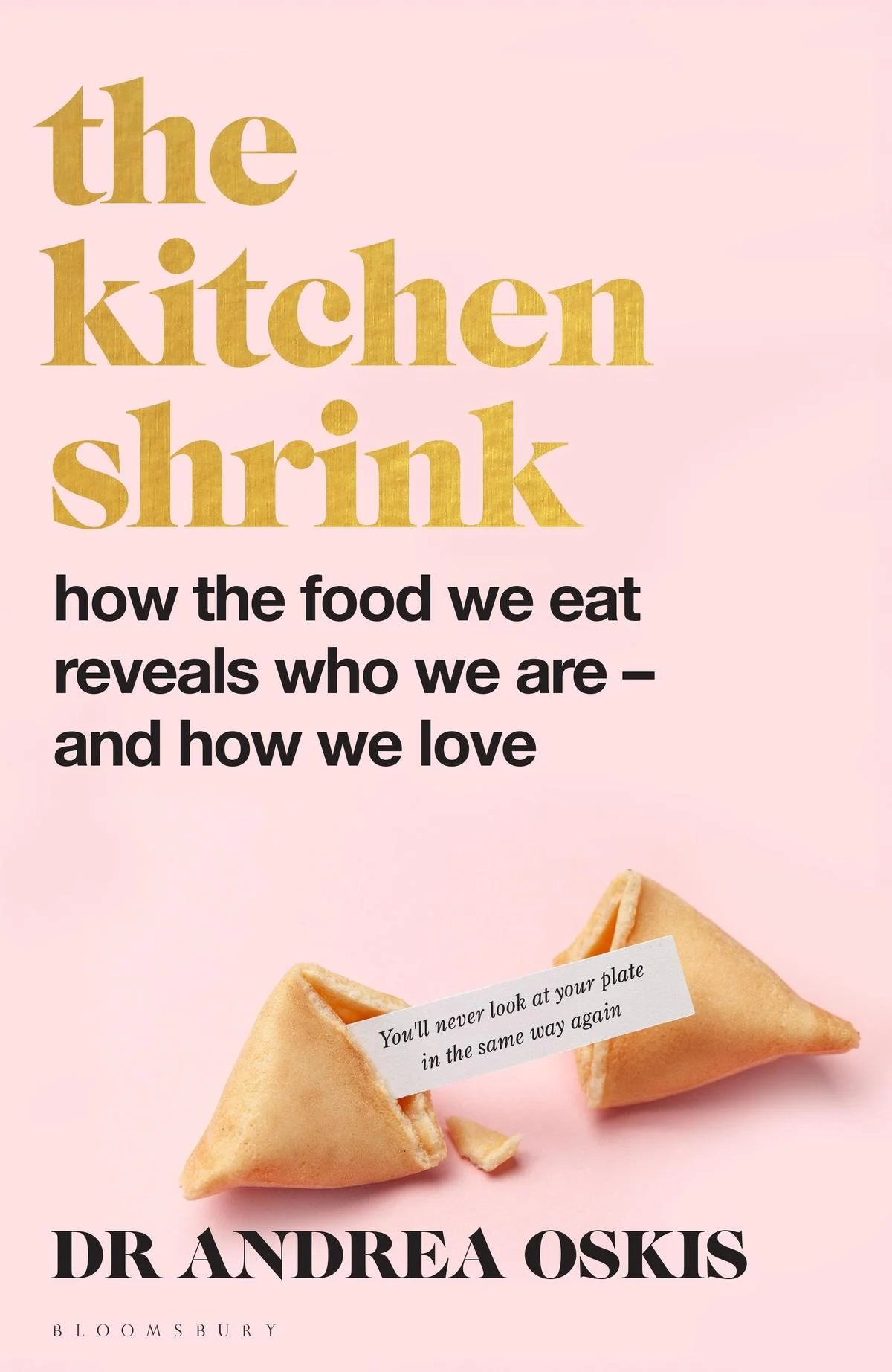
In the saturated market of culinary literature, where glossy recipe books and indulgent food memoirs compete for a permanent spot on the coffee table, a new work has emerged that demands a different kind of consumption. Dr. Andrea Oskis’s The Kitchen Shrink: How the Food We Eat Reveals Who We Are – and How We Love is not a guide on how to sear a steak or fold a pastry. Instead, it is a profound psychological autopsy of the dinner table.
A psychologist and psychotherapist with a doctorate in attachment theory, Oskis uses the medium of food to peel back the layers of human intimacy, trauma, and heritage. Her work suggests that our relationship with what is on our plate is inextricably linked to our relationship with those who put it there. In an era where "foodie" culture is often superficial, Oskis provides a clinical yet deeply empathetic look at the oral histories that define our domestic lives.
Main Facts: The Intersection of Psychology and the Plate
At its core, The Kitchen Shrink posits that food is the primary language of love and loss. Dr. Andrea Oskis, 43, brings a unique dual perspective to this study. On one hand, she is a rigorous academic and practitioner trained at The John Bowlby Centre—the UK’s premier institution for attachment-based psychotherapy. On the other, she is a woman of Greek Cypriot descent, a culture where food is the literal and figurative glue of the family unit.
The book, published by Bloomsbury, utilizes a series of oral histories to examine how food serves as a conduit for:
- Early Childhood Development: The act of feeding as the first bond between caregiver and infant.
- Generational Trauma: How food scarcities or rigid dining rituals are passed down through families.
- Ethnic Identity: The role of traditional recipes in maintaining a sense of self in a diasporic context.
- Marital Dynamics: How couples navigate intimacy through shared or conflicting culinary preferences.
Oskis argues that when patients enter a consulting room, their most "ordinary" stories—those involving a missed meal, a specific childhood dish, or a tense holiday dinner—are often the most revealing. These narratives serve as a "Trojan Horse" for deeper psychological truths regarding abandonment, control, and affection.

Chronology: From Cognitive Science to the "Kitchen Shrink"
Dr. Oskis’s journey into the "psychology of the stove" was not a linear one. Her professional path began at the University of Westminster, where she pursued an undergraduate degree in Cognitive Science. This foundation in the mechanics of the mind provided the analytical tools she would later apply to more abstract emotional constructs.
Following her undergraduate studies, Oskis transitioned into the clinical realm, enrolling in psychotherapy training at The John Bowlby Centre in London. It was here that she specialized in Attachment Theory—a psychological model that describes the dynamics of long-term interpersonal relationships. Her PhD work further solidified her expertise in how early bonds with caregivers shape an individual’s "internal working model" for the rest of their lives.
For the past two decades, Oskis’s life has been a balancing act between teaching, academic research, and private practice. However, it was within the quiet confines of the consulting room that the seeds for The Kitchen Shrink were sown. She began to notice a recurring pattern: when patients struggled to articulate their trauma or their needs, they often defaulted to stories about food.
"Food is a really powerful storyteller," Oskis observes. "It would always take me and the patient towards something about love or loss, and something really formative for their life." This realization led to the synthesis of her professional expertise and her cultural heritage, culminating in the publication of her landmark book.
Supporting Data: The Mechanics of Attachment Theory
To understand Oskis’s work, one must understand the fundamentals of Attachment Theory, pioneered by John Bowlby and Mary Ainsworth. The theory suggests that an infant’s survival depends on its ability to maintain proximity to a protective caregiver.

The Feeding Bond
The most basic act of caregiving is feeding. In The Kitchen Shrink, Oskis explains that the nutritional value of food is secondary to the emotional "attachment function" of the feeding process. If a caregiver provides food with warmth and responsiveness, the child develops a "secure attachment," viewing the world as a safe place. Conversely, if feeding is inconsistent, forced, or used as a tool for punishment, it can lead to "insecure attachment" styles (anxious, avoidant, or disorganized) that persist into adulthood.
The Case of Rose: Creation vs. Provision
Oskis illustrates this through the story of her patient, Rose. Rose described a childhood where her mother "created" food—investing time, creativity, and emotional presence into meals—while her father merely "put food on the table."
From a clinical perspective, Oskis notes that while both parents were providing for the child’s physical needs, only the mother was fulfilling the attachment function. "Whatever we provide has to have some notion of an emotional connection to the other person involved," Oskis says. For Rose, the father’s mechanical provision felt like an emotional void, leading to a complicated relationship with "sustenance" in her later life.
The Case of Leonard: The Table as a Battlefield
In another chapter, Oskis introduces Leonard, a man whose childhood memories of the dinner table were defined by fear. His father used the mealtime as a forum for threats and the withholding of dessert as a primary form of discipline.
Oskis argues that such environments physically and psychologically affect the way we "digest" our lives. When the dinner table becomes a site of cortisol-spiking stress rather than oxytocin-inducing connection, the biological process of eating becomes linked to the "fight or flight" response. This can manifest in adulthood as eating disorders, chronic anxiety, or an inability to find pleasure in domesticity.

Official Responses and Theoretical Insights
While Oskis’s work is deeply personal, it aligns with a growing body of psychological research into "commensality"—the act of eating together. Social scientists have long argued that the decline of the family dinner table correlates with rising rates of social isolation.
Oskis provides a nuanced response to this, noting that physical closeness at a table does not guarantee emotional intimacy. "Physical closeness does not guarantee emotional closeness," she explains. "That’s why things escalate [at the table] because the real emotional issue isn’t being spoken about."
She suggests that the table should be used as a "holding space"—a term in psychotherapy for an environment that allows for the safe expression of difficult feelings. Because dinner is a regular, rhythmic feature of human life, it offers a unique, recurring opportunity for "attachment repair" if handled with intentionality.
The Marriage Questionnaire
Oskis even turned her clinical lens on her own family, examining her parents’ marriage through a food-based questionnaire. Despite their different heritages and the health challenges that changed their diets over the decades, she found that their ability to name each other’s "favourite foods" served as a proxy for how well they "saw" one another. Interestingly, she noted that many of their preferences were "time-stamped" to the 1970s—the era of their early romance—suggesting that food preferences can act as a nostalgic anchor for long-term commitment.
Implications: Food as an Identity Beyond the Plate
The implications of Oskis’s research extend far beyond the kitchen. By understanding how our food histories shape our attachment styles, individuals can begin to decouple their past traumas from their current relationships.

- Parenting: Oskis’s work encourages parents to view mealtime not as a chore to be completed, but as a critical window for emotional bonding.
- Conflict Resolution: For couples, recognizing that a partner’s "picky eating" or "food hoarding" might be a trauma response rather than a personal slight can foster greater empathy.
- Self-Awareness: For the individual, The Kitchen Shrink offers a map to explore why they might use food to self-soothe or why they feel a sense of dread at the prospect of a large family meal.
Perhaps the most surprising revelation in the book is Oskis’s own confession: despite her deep intellectual and emotional fascination with food, she does not actually enjoy the process of cooking.
This irony serves to underscore her central point. You do not need to be a chef to understand the power of the kitchen. You only need to be human. By separating the labour of cooking from the symbolism of the meal, Oskis allows her readers to find their identity far beyond the dinner table.
The Kitchen Shrink stands as a testament to the idea that we are what we eat—not just in a biological sense, but in the way those meals were served to us, the conversations that seasoned them, and the love (or lack thereof) that was baked into them. As Dr. Oskis continues her work in London, her "oral histories" remain a vital contribution to our understanding of the most basic, yet most complex, human interaction: the sharing of a meal.
