

On July 5, 2026, the administration announced the suspension of eight high-ranking officials and the immediate blacklisting of two authors and a prominent publishing house. The controversy centers on a book titled “Personalities and Legends of J&K,” which was recently distributed to thousands of government schools across the region. The fallout has reignited a fierce debate over "academic subversion" and the vetting processes governing educational materials in a region historically sensitive to separatist narratives.
Main Facts: A Systemic Oversight and Swift Retribution
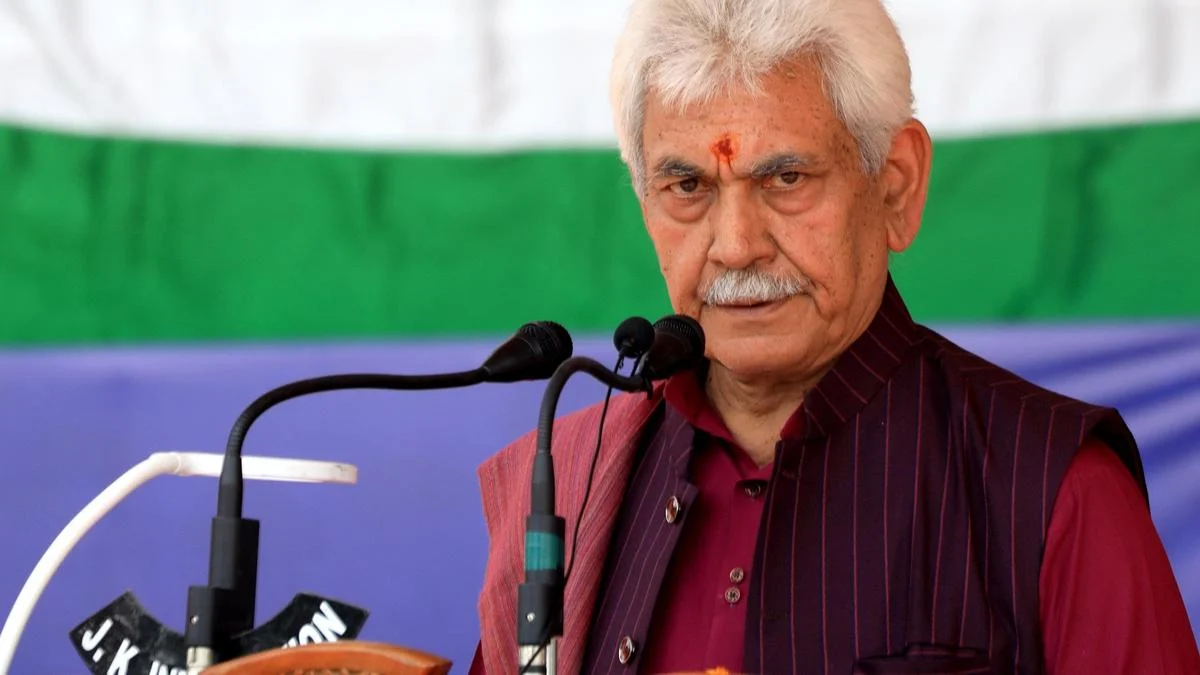
The administration of Lieutenant Governor Manoj Sinha took decisive action after protests erupted in Jammu, led primarily by the Bharatiya Janata Party (BJP) and various civil society groups. The book in question, “Personalities and Legends of J&K,” authored by Hilal Ahmad and Santosh Meena, was found to contain detailed profiles of figures central to the separatist movement, most notably Maqbool Bhat, the founder of the Jammu & Kashmir Liberation Front (JKLF).
The administrative response has been multi-pronged:
- Suspensions: Eight officials involved in the selection and vetting process have been placed under immediate suspension pending a formal inquiry.
- Disengagement: A Computer Assistant attached to the Coordinator of Library Services has been terminated from their position.
- Blacklisting: Authors Hilal Ahmad and Santosh Meena, along with the publisher, Oberoi Book Service (Jammu), have been banned from conducting any future business with the Union Territory’s government.
- Recall of Materials: All printed material authored or published by the blacklisted parties is to be withdrawn from public and school libraries across the UT.
- High-Level Inquiry: A formal probe has been ordered, with a mandate to submit a comprehensive report within 30 days to identify systemic failures and potential "conspiratorial" elements.
Chronology: From Selection to Scandal
The procurement of the controversial book was part of a broader initiative under the Samagra Shiksha program—a flagship central government scheme aimed at holistic school education.
The Selection Process:
The book was intended to serve as "age-appropriate" reading material for students. To ensure quality and relevance, the administration had constituted four specialized sub-committees composed of academic experts. These committees were tasked with reviewing and selecting titles that would be distributed to 18,328 government schools and 394 PM SHRI (PM Schools for Rising India) schools.

Distribution:
In the weeks leading up to the controversy, 251 copies of “Personalities and Legends of J&K” were distributed—123 to the Jammu division and 128 to the Kashmir division. While the number of physical copies was relatively small, their placement in the libraries of prestigious PM SHRI schools and primary government institutions raised immediate alarms regarding the "ideological grooming" of young minds.
The Trigger:
In late June 2026, local activists and political representatives in Jammu flagged specific chapters of the book. By early July, the protests intensified, with the BJP accusing the administrative machinery of "sleeping at the wheel" or, more severely, "deliberate infiltration." By July 5, the Lieutenant Governor’s office issued the formal order for suspensions and blacklisting, citing "serious negligence, dereliction of duty, and a total lack of due diligence."
Supporting Data: The Content Under Fire
The primary point of contention is the book’s portrayal of Maqbool Bhat. Bhat, who was executed in Tihar Jail in 1984, is a polarizing figure; while seen by separatists as the "father of the Kashmiri nation," the Indian state views him as a terrorist responsible for the murder of intelligence officials and the hijacking of an Indian Airlines flight.
According to official spokespersons, the book provided a "detailed and glorified write-up" on Bhat’s life and his quest for Kashmir’s independence. Furthermore, political leaders have alleged that the text subtly promotes the narratives of other hardline separatist figures, including:
- Syed Ali Shah Geelani: The late patriarch of the Hurriyat Conference.
- Masrat Alam: A key figure in the 2010 unrest.
- Mirwaiz Umar Farooq: The religious and political head of the Awami Action Committee.
The administration’s official statement noted that such content has the "potential to create law and order situations" and violates the fundamental tenets of the Indian Constitution as applied to the Union Territory.
Official Responses: "Academic Jihad" vs. "Deliberate Conspiracy"
The political reaction to the book has been characterized by sharp rhetoric and calls for a complete overhaul of the Education Department.

The BJP’s Stance:
Sunil Sharma, the Leader of the Opposition and a prominent BJP figure, launched a scathing attack on the National Conference-led local government (which operates alongside the LG administration). He termed the inclusion of the book as "Academic Jihad."
"This is not a matter of a simple oversight; this is academic subversion," Sharma stated during a press conference in Jammu. "It is a deliberate attempt to revive separatist ideology among the youth and spread hatred against the Indian state and its armed forces. We cannot allow the next generation to be poisoned by the narratives of Geelani and Bhat under the guise of ‘local legends’."
The Education Ministry’s Defense:
Sakeena Itoo, the Minister for School Education, sought to distance the elected government from the controversy while promising the harshest possible penalties.
"The moment this came to my notice, I instructed the Education Secretary to act immediately," Itoo said. "I had initially recommended termination for those involved. While suspension orders have been issued, the inquiry will determine if this was a deliberate conspiracy. We will not tolerate any attempt to influence young minds through subversive literature. Whoever is responsible—no matter how high their rank—will face the toughest action."
The LG Administration:
A spokesperson for Lieutenant Governor Manoj Sinha emphasized that the administration maintains a "zero-tolerance policy" toward any activity that undermines national integration. The spokesperson highlighted that the failure of the four sub-committees to flag the content was a "grave institutional lapse."
Implications: Security, Education, and Political Friction
The "Library Book Scandal" of 2026 carries significant implications for the future of Jammu & Kashmir’s governance and its educational landscape.

1. Security and De-radicalization
Since the abrogation of Article 370 in 2019, the Union Government has invested heavily in de-radicalization programs. The discovery of separatist literature in government-funded schools is seen as a major setback to these efforts. Security agencies are reportedly looking into whether the inclusion of the book was an "inside job" by sympathizers of the separatist cause remaining within the bureaucracy.
2. The Vetting Crisis
The fact that the book passed through four separate sub-committees of experts points to a systemic failure in the vetting process. This incident is likely to lead to a more centralized and stringent "Clearance Protocol" for all educational materials in J&K, potentially limiting the inclusion of local history if it is deemed "sensitive."
3. Political Polarization
The controversy has deepened the rift between the BJP and the National Conference (NC). While the LG administration holds the ultimate executive power, the BJP is using the incident to frame the NC-led assembly as "soft on separatism," a narrative that will likely play a central role in upcoming local elections.
4. Impact on the Publishing Industry
The blacklisting of Oberoi Book Service and the authors sends a chilling message to the local publishing industry. While the government maintains this is a matter of national security, some educators—speaking on condition of anonymity—worry that it might lead to "over-censorship," where authors avoid writing about J&K’s complex history altogether for fear of administrative retribution.
Conclusion
As the 30-day inquiry begins, the J&K administration faces the difficult task of purging its libraries of controversial material while attempting to restore public trust in the state’s educational institutions. For a region striving to move past decades of conflict, the battle over the pages of a schoolbook proves that the struggle for the "narrative" of Kashmir remains as volatile as ever.
The report, expected by early August 2026, will likely result in permanent dismissals and a total restructuring of the Samagra Shiksha procurement wing, marking a turning point in how the Union Territory manages its intellectual and academic boundaries.
