

New Delhi, July 2026 – The Indian two-wheeler industry has demonstrated remarkable resilience and strategic agility, closing the first month of the second quarter of 2026 with a significant double-digit growth trajectory. According to the latest sales data for June 2026, the top six manufacturers in the country collectively dispatched 2,253,314 units, marking a healthy 21.66% Year-on-Year (YoY) increase compared to the 1,852,076 units recorded in June 2025.
While the domestic market remains the primary engine of growth, the narrative of June 2026 is defined by a massive surge in exports and a historic shift in overall volume leadership. In a surprising turn of events, TVS Motor Company outperformed industry stalwarts Hero MotoCorp and Honda Motorcycle & Scooter India (HMSI) in total monthly volumes, driven by an aggressive international strategy and a burgeoning domestic portfolio.
Main Facts: A Market in Flux
The performance of the two-wheeler sector in June 2026 highlights several critical shifts in consumer behavior and corporate strategy.
- Combined Growth: The industry saw a 21.66% YoY jump in total sales (domestic + exports).
- Domestic Dominance: Domestic sales accounted for 1,744,010 units, a 16.64% YoY increase, though there was a marginal Month-on-Month (MoM) dip of 2.82% compared to May 2026.
- Export Surge: Shipments to international markets reached 509,304 units, a staggering 42.70% YoY increase, signaling a robust recovery in African, Latin American, and Southeast Asian markets.
- TVS Overtakes: For the first time in recent history, TVS Motor Company took the top spot in total sales for the month, leveraging its balanced domestic and export portfolio.
- Hero’s Domestic Defense: Hero MotoCorp maintained its lead in the domestic market with over 5 lakh units, but its total volume was eclipsed by TVS as Hero faced a slight YoY decline in its home turf.
Chronology of Performance: June 2026 Sales Breakdown
The Domestic Battleground: Hero vs. Honda
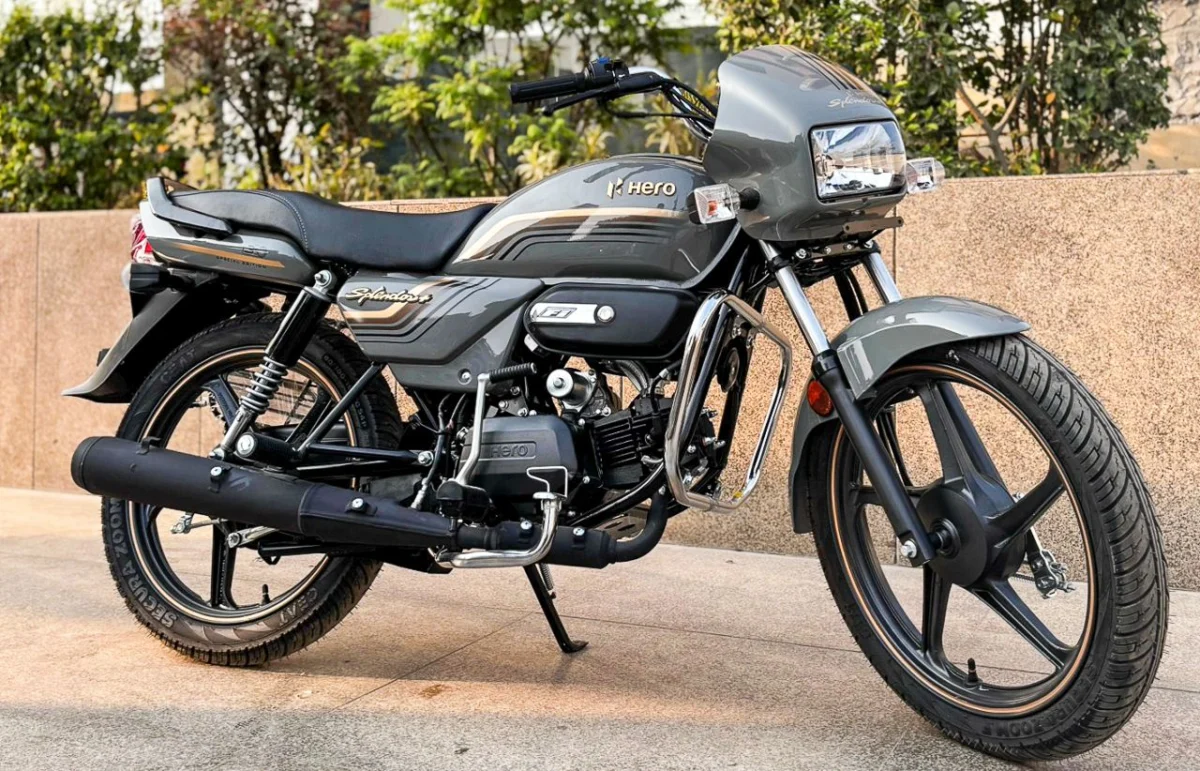
In the domestic arena, Hero MotoCorp continues to hold the largest piece of the pie, but the walls are closing in. Hero sold 502,890 units in June 2026. While this secured a 28.84% market share, the brand registered a 4.24% YoY decline and a 6.31% MoM drop. This suggests a potential saturation in the entry-level commuter segment or a shift in consumer preference toward more premium or tech-laden offerings.

Conversely, Honda Motorcycle & Scooter India (HMSI) continues to apply pressure. With 468,956 units sold, Honda posted a 20.61% YoY growth and a 2.03% MoM increase. Honda’s market share has now climbed to 26.89%, narrowing the gap with Hero to less than two percentage points. The success of the Activa and Shine brands continues to be the bedrock of Honda’s Indian operations.
The TVS Phenomenon
TVS Motor Company was undoubtedly the "star performer" of June. The Chennai-based manufacturer saw domestic sales of 4,11,014 units, a massive 46.26% YoY growth. When combined with its stellar export performance, TVS’s total volume reached 565,417 units, making it the highest-selling two-wheeler brand in India for the month of June 2026. This growth is attributed to the diversified success of the Jupiter scooter range, the Apache series, and its expanding electric vehicle (EV) footprint.
Bajaj’s Export Mastery and Domestic Stability
Bajaj Auto remains the undisputed king of exports. While its domestic sales grew by a modest 11.81% YoY to 166,956 units (facing a significant 20.32% MoM decline), its export numbers tell a different story. Bajaj shipped 222,439 units abroad, accounting for nearly 44% of all Indian two-wheeler exports in June. This "export-first" strategy has allowed Bajaj to maintain high margins despite domestic fluctuations.
Premiumization and Niche Growth: Royal Enfield and Suzuki
The premium segment, led by Royal Enfield, showed no signs of slowing down. Royal Enfield crossed the psychological milestone of 1 lakh units in domestic sales, recording 102,930 units—a 33.75% YoY growth. This indicates that the "leisure motorcycling" trend is moving from a niche hobby to a mainstream aspiration.

Suzuki Motorcycle India also posted a steady performance with 91,264 domestic units, a 23.44% YoY increase, driven largely by the popularity of its 125cc scooter segment (Access and Burgman Street).
Supporting Data: The Statistical Landscape
The following tables summarize the performance metrics that defined the month:
| Table 1: Top 6 Two-Wheeler Domestic Sales (June 2026) | Manufacturer | June 2026 Units | June 2025 Units | YoY % Change | Market Share |
|---|---|---|---|---|---|
| Hero MotoCorp | 5,02,890 | 5,25,154 | -4.24% | 28.84% | |
| Honda | 4,68,956 | 3,88,819 | 20.61% | 26.89% | |
| TVS Motor | 4,11,014 | 2,80,998 | 46.26% | 23.57% | |
| Bajaj Auto | 1,66,956 | 1,49,315 | 11.81% | 9.57% | |
| Royal Enfield | 1,02,930 | 76,954 | 33.75% | 5.90% | |
| Suzuki | 91,264 | 73,928 | 23.44% | 5.23% | |
| Total | 17,44,010 | 14,95,168 | 16.64% | 100% |
| Table 2: Top 6 Two-Wheeler Exports (June 2026) | Manufacturer | June 2026 Units | June 2025 Units | YoY % Change | Export Share |
|---|---|---|---|---|---|
| Bajaj Auto | 2,22,439 | 1,49,166 | 49.12% | 43.68% | |
| TVS Motor | 1,54,403 | 1,04,687 | 47.49% | 30.32% | |
| Honda | 59,325 | 40,336 | 47.08% | 11.65% | |
| Hero MotoCorp | 38,269 | 23,431 | 63.33% | 7.51% | |
| Suzuki | 23,766 | 21,308 | 11.53% | 4.67% | |
| Royal Enfield | 11,102 | 12,580 | -11.77% | 2.18% | |
| Total | 5,09,304 | 3,56,908 | 42.70% | 100% |
Official Perspectives and Industry Sentiment
While specific corporate statements for the June 30th closing were not immediately released, industry analysts and trade bodies like the Society of Indian Automobile Manufacturers (SIAM) suggest that several macro-economic factors are at play.
1. Rural Recovery and Monsoon Hopes:
Market analysts point out that Hero MotoCorp’s slight domestic dip might be a "wait-and-watch" approach by rural buyers. As the monsoon progresses across the Indian subcontinent, rural demand—which Hero heavily relies upon—is expected to stabilize and grow in the coming months.

2. The Premiumization Wave:
Industry experts note that the growth seen by Royal Enfield and TVS (specifically in the Apache and Ronin segments) reflects a structural shift. "The Indian consumer is no longer just looking for mileage; they are looking for performance, connectivity, and brand identity," says a senior automotive consultant. "TVS has capitalized on this by offering high-tech features even in their mid-segment bikes."
3. Global Supply Chain Normalization:
The massive 42.70% jump in exports suggests that global logistics and shipping constraints that plagued the industry in previous years have largely been resolved. Indian manufacturers are now aggressively reclaiming market share in developing economies where two-wheelers are the primary mode of transport.
Q1 FY2027: A Strong Quarterly Foundation
The June figures culminate in a very strong first quarter (Q1) for the 2026-27 fiscal year. Total industry sales (Domestic + Exports) for the April-June 2026 period reached 6,770,603 units, a 22.53% increase over the 5,525,644 units in Q1 FY2026.
Hero MotoCorp maintained its quarterly leadership with 1,677,313 total units, but the competition is closer than ever. Honda followed with 1,611,662 units, and TVS stood third for the quarter at 1,563,861 units. The narrow margins between the top three manufacturers suggest that the battle for the "Number One" spot will be a defining theme for the rest of the fiscal year.

Implications for the Future
The June 2026 data serves as a bellwether for several upcoming trends in the Indian automotive landscape:
- The Rise of the ‘All-Rounder’: TVS Motor’s rise to the top of the monthly volume chart proves that a balanced strategy—strong domestic presence combined with a massive export footprint—is the most resilient model. Other manufacturers may look to diversify their geographic dependencies to mitigate domestic volatility.
- The EV Transition: While this data primarily covers internal combustion engine (ICE) vehicles, the growth in TVS and Bajaj volumes is partially bolstered by their increasing focus on electric scooters (iQube and Chetak). As charging infrastructure improves, these "legacy" players are proving they can compete with EV startups.
- Market Share Consolidation: The gap between Hero and Honda is now negligible. We are likely to see aggressive marketing campaigns, new product launches in the 125cc-160cc segment, and perhaps price corrections as these giants vie for dominance.
- Export Potential: With Bajaj and TVS seeing near 50% growth in exports, India is firmly establishing itself as a global hub for two-wheeler manufacturing. This aligns with the ‘Make in India’ initiative and provides a cushion against any potential domestic economic slowdowns.
Conclusion:
June 2026 has set a high bar for the Indian two-wheeler industry. As TVS celebrates a milestone month and the industry enjoys a post-pandemic peak in exports, the focus now shifts to the festive season. With a healthy Q1 in the books, the industry is well-positioned to reach record-breaking annual figures, provided the monsoon remains favorable and global economic conditions stay stable.
