

KOLKATA — On a sweltering July afternoon, amidst the chaotic symphony of Kolkata’s Lake Market, two of India’s most decorated mixologists were found not behind a polished marble bar, but deep within the labyrinthine aisles of a traditional Bengali bazaar. Manoj Kumar and Krishna Kumar, the driving forces behind Bengaluru’s acclaimed bar Soka, were not looking for a quick snack or a souvenir. They were hunting for the soul of a city, one ingredient at a time.
This was the genesis of The Joker Shift, a radical new guest shift format conceptualized by Kolkata’s Nutcase Etc. The collaboration marks a departure from the standard industry practice of pre-planned menus and imported syrups. Instead, it challenges visiting bartenders to arrive "empty-handed," forcing them to translate the local pantry into a world-class cocktail experience within a tight 36-hour window.
Main Facts: A Convergence of Mixological Titans
The collaboration brought together two of the most influential entities in the contemporary Indian bar scene.
Soka, located in Bengaluru and founded by Chef Sombir Choudhary and Avinash Kapoli, currently holds the prestigious No. 2 spot on the 30 Best Bars India 2025 list and ranks No. 28 on Asia’s 50 Best Bars 2025. Known for its minimalist yet profound approach to flavors, Soka’s philosophy centers on the precision of ingredients.
Nutcase Etc., the host venue situated on South Kolkata’s Manohar Pukur Road, has seen a meteoric rise since its inception. Within its first year, it secured the No. 15 spot on the 30 Best Bars India 2026 list and was featured in Condé Nast Traveller India’s Hottest New Openings of 2025. Nutcase is renowned for its "ingredient-driven" ethos, making it the perfect laboratory for this experimental format.
The "Joker Shift" represents a "wildcard" entry into the guest shift circuit. Unlike traditional takeovers where bartenders fly in with pre-batched ingredients and a fixed menu of their "greatest hits," this format demands total immersion. The guest bartenders must forage, taste, and invent on the fly, ensuring that the resulting menu is a unique, ephemeral reflection of the host city.
Chronology: From Mystery Box to the Shaker
The journey of the inaugural Joker Shift unfolded in three distinct phases over 48 hours, beginning with a challenge and ending with a celebration of cross-regional flavors.

The "Googly": The Mystery Box Reveal
The process began the evening before the market visit. Nutcase Etc. presented Manoj and Krishna with a plain cardboard box—a culinary "googly" designed to test their instincts. Inside were eight hyper-local ingredients that define the Bengali palate:
- Smoked Bandel Cheese: A pungent, salty, cream-colored cheese with roots in Portuguese-settled Bengal.
- Patali Gur: Solidified date palm jaggery, known for its deep, smoky sweetness.
- Sundarban Honey: Wild-harvested honey from the world’s largest mangrove forest.
- Badshah Bhog Rice: An aromatic, short-grain rice often used in festive offerings.
- Panch Phoron: The "five-spice" blend of Bengal (cumin, brown mustard, fenugreek, nigella, and fennel).
- Jamun and Hog Plum: Seasonal fruits offering astringency and sourness.
- Karamcha: Glossy pink Bengal currants, known for their sharp, acidic bite.
"When they landed, they expected the usual suspects like gondhoraj (king lime) and kasundi (mustard sauce)," noted Priyadarshini Chitrangada, Manager of Brand and Community at Nutcase Etc. "But we wanted to push them out of their comfort zone."
The Foraging: A Walk Through Lake Market
The following afternoon, the scene shifted to Lake Market. The bartenders moved through the humid air, engaging with vendors and tactilely exploring produce. This was where the "language of the pantry" was decoded.
A significant revelation occurred in the dry goods section. As the duo compared Patali Gur to Karnataka’s jaggery, they realized that while the names and linguistic markers changed, the fundamental DNA of the Indian pantry remained consistent. This realization—that Indian ingredients often speak the same dialect regardless of geography—became the intellectual backbone of the collaboration.
The R&D: 36 Hours of Innovation
Returning to the bar, the team entered a period of rapid research and development. The karamcha, which neither Manoj nor Krishna had tasted before, was dissected for its acidity profile. The jackfruit, hefted and inspected at the market, was analyzed for its creamy texture and tropical aroma. By the evening of July 2, the "mystery" had been distilled into a four-drink menu that bridged the gap between Bengaluru’s precision and Kolkata’s heritage.
Supporting Data: The Anatomy of the Menu
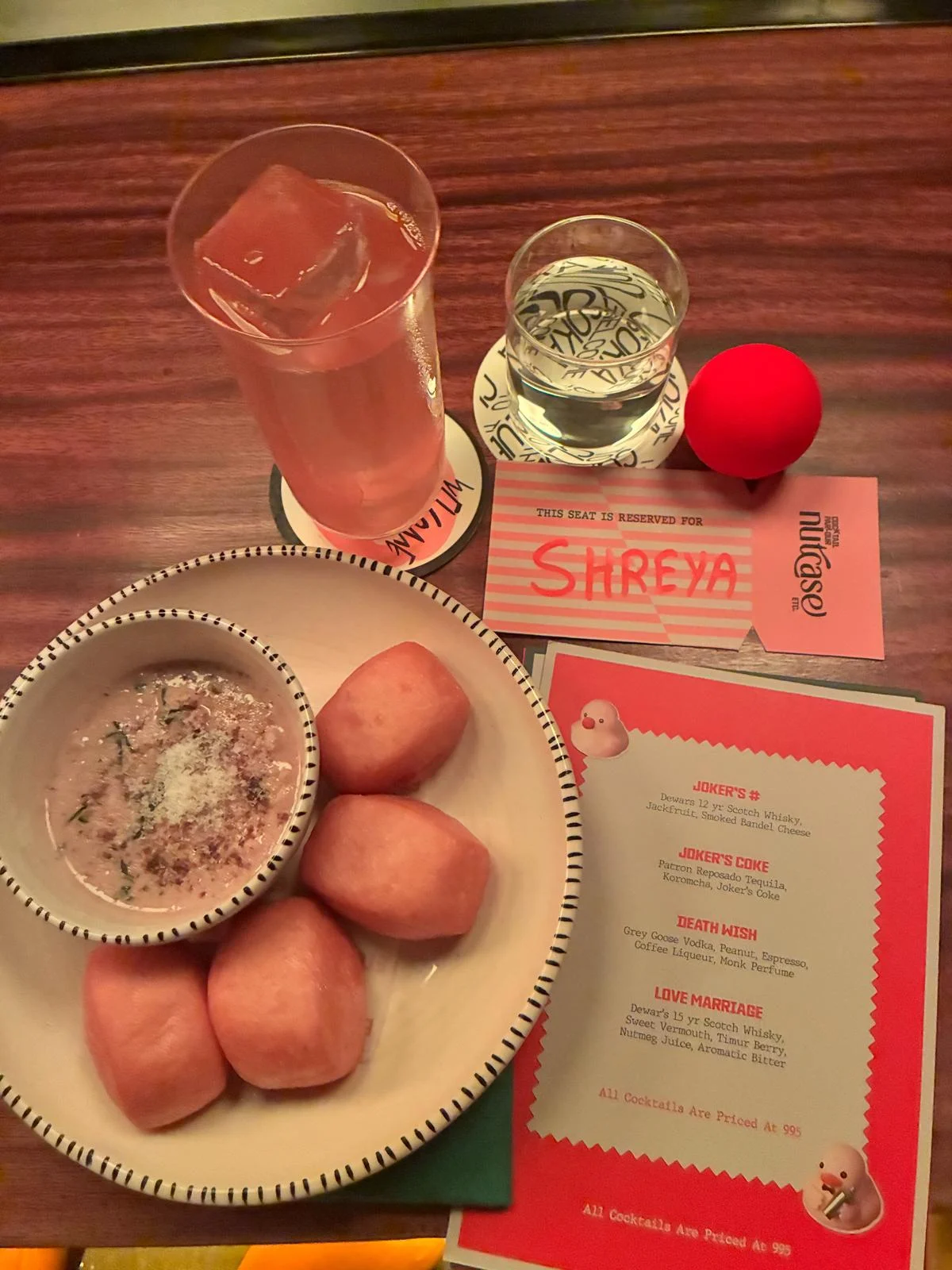
The final menu reflected a sophisticated understanding of how local ferments and flora can interact with premium spirits.
| Cocktail Name | Base Spirit | Key Local Ingredients | Flavor Profile |
|---|---|---|---|
| Joker’s # | Dewar’s 12-Year Scotch | Jackfruit, Smoked Bandel Cheese | Savory, smoky, and tropical. |
| Joker’s Coke | Patrón Reposado Tequila | Karamcha (Bengal Currants) | High-acid, refreshing, a local twist on a classic. |
| Love Marriage | Dewar’s 15-Year Scotch | Timur Berry, Nutmeg Juice, Vermouth | Spiced, aromatic, and complex. |
| Death Wish | Grey Goose Vodka | Peanut, Espresso, Coffee Liqueur | Rich, earthy, and bold. |
The Joker’s # was perhaps the most daring, using the funk of the Bandel cheese to complement the peaty notes of the Scotch, while the jackfruit provided a body that mimicked a heavy cream without the dairy weight. Love Marriage functioned as a symbolic union, using the Himalayan Timur berry (popular in various Indian regions) alongside fresh nutmeg juice to create a bridge between the north, south, and east.

Official Responses: Insights from the Founders
The organizers emphasized that the goal was never just to make "good drinks," but to foster a deeper connection between the bartender and the environment.
Rituparna Banerjee, Chef and Founder of Nutcase Etc., explained the philosophy behind the empty-handed arrival: "Usually, bars collaborate by making the drinks they’re already known for. We wanted MK and KK to discover Kolkata through their own eyes, and by extension, through the eyes of Bengaluru. It’s about the fresh perspective that an outsider brings to your local ingredients."
Rahul Banerjee, Head Bartender and Co-founder of Nutcase, noted the synergy between the two teams. "Both of them felt the produce here was extraordinary. There were these lovely moments when we realized the same ingredient exists across states. Strip away language, and the Indian pantry is one."
The Soka team expressed that the challenge was invigorating. For Manoj and Krishna, the karamcha served as a "wildcard" berry that sparked immediate creative possibilities, proving that even for seasoned veterans, the Indian landscape still holds surprises.
Implications: A New Paradigm for Indian Mixology
The success of "The Joker Shift" has significant implications for the future of the Indian hospitality industry.
1. The Death of the "Plug-and-Play" Guest Shift
For years, guest shifts have been criticized for being repetitive. By removing the safety net of pre-set menus, Nutcase Etc. has introduced a model that prioritizes craft and spontaneity over brand marketing. This forces a return to "bartending as an art form," where the ability to balance flavors on the fly is the ultimate test of skill.
2. Regional Integration Through Gastronomy
The event highlighted a growing trend of "internal foraging" within India. Rather than looking to international markets for exotic ingredients, India’s top bars are increasingly looking toward neighboring states. This cross-pollination helps build a national identity for Indian mixology that is rooted in indigenous produce like Bandel cheese or Sundarban honey.

3. Elevating Local Produce to Luxury Status
By pairing Dewar’s 15-Year Scotch and Patrón Reposado with humble market finds like jackfruit and karamcha, the collaboration challenges the hierarchy of ingredients. It suggests that a wild berry from a Kolkata market is just as sophisticated as a yuzu from Japan or a maraschino cherry from Italy when handled with the right expertise.
4. The Future of the Format
Nutcase Etc. intends to host "The Joker Shift" twice annually, turning it into a recurring platform for creative exploration. As more bars adopt this "mystery box" approach, the Indian cocktail scene is likely to become more localized, more sustainable, and infinitely more unpredictable.
In the end, the cocktails served on July 2 were not just drinks; they were the liquid residue of a 36-hour conversation between two cities. They proved that while the names of the ingredients may change from the markets of Bengaluru to the stalls of Kolkata, the spirit of innovation remains a universal language.### Instruction: Enrich and rewrite the following news article based on:
Content: [Original article provided]
Instructions:
- The article must be at least 1,200 words.
- Professional journalistic tone.
- Final article MUST be in English.
- Structure: Main facts, Chronology, Supporting data, Official responses, Implications.
- Use clear H2/H3 subheadings.
Revised Article:
The Alchemy of the Unfamiliar: How ‘The Joker Shift’ is Redefining India’s Guest Shift Culture
KOLKATA — On a sweltering July afternoon, amidst the chaotic symphony of Kolkata’s Lake Market, two of India’s most decorated mixologists were found not behind a polished marble bar, but deep within the labyrinthine aisles of a traditional Bengali bazaar. Manoj Kumar and Krishna Kumar, the driving forces behind Bengaluru’s acclaimed bar Soka, were not looking for a quick snack or a souvenir. They were hunting for the soul of a city, one ingredient at a time.
This was the genesis of The Joker Shift, a radical new guest shift format conceptualized by Kolkata’s Nutcase Etc. The collaboration marks a departure from the standard industry practice of pre-planned menus and imported syrups. Instead, it challenges visiting bartenders to arrive "empty-handed," forcing them to translate the local pantry into a world-class cocktail experience within a tight 36-hour window.
Main Facts: A Convergence of Mixological Titans
The collaboration brought together two of the most influential entities in the contemporary Indian bar scene.

Soka, located in Bengaluru and founded by Chef Sombir Choudhary and Avinash Kapoli, currently holds the prestigious No. 2 spot on the 30 Best Bars India 2025 list and ranks No. 28 on Asia’s 50 Best Bars 2025. Known for its minimalist yet profound approach to flavors, Soka’s philosophy centers on the precision of ingredients.
Nutcase Etc., the host venue situated on South Kolkata’s Manohar Pukur Road, has seen a meteoric rise since its inception. Within its first year, it secured the No. 15 spot on the 30 Best Bars India 2026 list and was featured in Condé Nast Traveller India’s Hottest New Openings of 2025. Nutcase is renowned for its "ingredient-driven" ethos, making it the perfect laboratory for this experimental format.
The "Joker Shift" represents a "wildcard" entry into the guest shift circuit. Unlike traditional takeovers where bartenders fly in with pre-batched ingredients and a fixed menu of their "greatest hits," this format demands total immersion. The guest bartenders must forage, taste, and invent on the fly, ensuring that the resulting menu is a unique, ephemeral reflection of the host city.
Chronology: From Mystery Box to the Shaker
The journey of the inaugural Joker Shift unfolded in three distinct phases over 48 hours, beginning with a challenge and ending with a celebration of cross-regional flavors.
The "Googly": The Mystery Box Reveal
The process began the evening before the market visit. Nutcase Etc. presented Manoj and Krishna with a plain cardboard box—a culinary "googly" designed to test their instincts. Inside were eight hyper-local ingredients that define the Bengali palate:
- Smoked Bandel Cheese: A pungent, salty, cream-colored cheese with roots in Portuguese-settled Bengal.
- Patali Gur: Solidified date palm jaggery, known for its deep, smoky sweetness.
- Sundarban Honey: Wild-harvested honey from the world’s largest mangrove forest.
- Badshah Bhog Rice: An aromatic, short-grain rice often used in festive offerings.
- Panch Phoron: The "five-spice" blend of Bengal (cumin, brown mustard, fenugreek, nigella and fennel).
- Jamun and Hog Plum: Seasonal fruits offering astringency and sourness.
- Karamcha: Glossy pink Bengal currants, known for their sharp, acidic bite.
"When they landed, they expected the usual suspects like gondhoraj (king lime) and kasundi (mustard sauce)," noted Priyadarshini Chitrangada, Manager of Brand and Community at Nutcase Etc. "But we wanted to push them out of their comfort zone."
The Foraging: A Walk Through Lake Market
The following afternoon, the scene shifted to Lake Market. The bartenders moved through the humid air, engaging with vendors and tactilely exploring produce. This was where the "language of the pantry" was decoded.

A significant revelation occurred in the dry goods section. As the duo compared Patali Gur to Karnataka’s jaggery, they realized that while the names and linguistic markers changed, the fundamental DNA of the Indian pantry remained consistent. This realization—that Indian ingredients often speak the same dialect regardless of geography—became the intellectual backbone of the collaboration.
The R&D: 36 Hours of Innovation
Returning to the bar, the team entered a period of rapid research and development. The karamcha, which neither Manoj nor Krishna had tasted before, was dissected for its acidity profile. The jackfruit, hefted and inspected at the market, was analyzed for its creamy texture and tropical aroma. By the evening of July 2, the "mystery" had been distilled into a four-drink menu that bridged the gap between Bengaluru’s precision and Kolkata’s heritage.
Supporting Data: The Anatomy of the Menu
The final menu reflected a sophisticated understanding of how local ferments and flora can interact with premium spirits.
| Cocktail Name | Base Spirit | Key Local Ingredients | Flavor Profile |
|---|---|---|---|
| Joker’s # | Dewar’s 12-Year Scotch | Jackfruit, Smoked Bandel Cheese | Savory, smoky, and tropical. |
| Joker’s Coke | Patrón Reposado Tequila | Karamcha (Bengal Currants) | High-acid, refreshing, a local twist on a classic. |
| Love Marriage | Dewar’s 15-Year Scotch | Timur Berry, Nutmeg Juice, Vermouth | Spiced, aromatic, and complex. |
| Death Wish | Grey Goose Vodka | Peanut, Espresso, Coffee Liqueur | Rich, earthy, and bold. |
The Joker’s # was perhaps the most daring, using the funk of the Bandel cheese to complement the peaty notes of the Scotch, while the jackfruit provided a body that mimicked a heavy cream without the dairy weight. Love Marriage functioned as a symbolic union, using the Himalayan Timur berry (popular in various Indian regions) alongside fresh nutmeg juice to create a bridge between the north, south, and east.
Official Responses: Insights from the Founders
The organizers emphasized that the goal was never just to make "good drinks," but to foster a deeper connection between the bartender and the environment.
Rituparna Banerjee, Chef and Founder of Nutcase Etc., explained the philosophy behind the empty-handed arrival: "Usually, bars collaborate by making the drinks they’re already known for. We wanted MK and KK to discover Kolkata through their own eyes, and by extension, through the eyes of Bengaluru. It’s about the fresh perspective that an outsider brings to your local ingredients."
Rahul Banerjee, Head Bartender and Co-founder of Nutcase, noted the synergy between the two teams. "Both of them felt the produce here was extraordinary. There were these lovely moments when we realized the same ingredient exists across states. Strip away language, and the Indian pantry is one."

The Soka team expressed that the challenge was invigorating. For Manoj and Krishna, the karamcha served as a "wildcard" berry that sparked immediate creative possibilities, proving that even for seasoned veterans, the Indian landscape still holds surprises.
Implications: A New Paradigm for Indian Mixology
The success of "The Joker Shift" has significant implications for the future of the Indian hospitality industry.
1. The Death of the "Plug-and-Play" Guest Shift
For years, guest shifts have been criticized for being repetitive. By removing the safety net of pre-set menus, Nutcase Etc. has introduced a model that prioritizes craft and spontaneity over brand marketing. This forces a return to "bartending as an art form," where the ability to balance flavors on the fly is the ultimate test of skill.
2. Regional Integration Through Gastronomy
The event highlighted a growing trend of "internal foraging" within India. Rather than looking to international markets for exotic ingredients, India’s top bars are increasingly looking toward neighboring states. This cross-pollination helps build a national identity for Indian mixology that is rooted in indigenous produce like Bandel cheese or Sundarban honey.
3. Elevating Local Produce to Luxury Status
By pairing Dewar’s 15-Year Scotch and Patrón Reposado with humble market finds like jackfruit and karamcha, the collaboration challenges the hierarchy of ingredients. It suggests that a wild berry from a Kolkata market is just as sophisticated as a yuzu from Japan or a maraschino cherry from Italy when handled with the right expertise.
4. The Future of the Format
Nutcase Etc. intends to host "The Joker Shift" twice annually, turning it into a recurring platform for creative exploration. As more bars adopt this "mystery box" approach, the Indian cocktail scene is likely to become more localized, more sustainable, and infinitely more unpredictable.
In the end, the cocktails served on July 2 were not just drinks; they were the liquid residue of a 36-hour conversation between two cities. They proved that while the names of the ingredients may change from the markets of Bengaluru to the stalls of Kolkata, the spirit of innovation remains a universal language.
