

For decades, the Indian summer holiday to Europe followed a script as predictable as a Bollywood plot. Between May and September, families would flock to the traditional hubs of London, Paris, and Lucerne, seeking respite from the sweltering heat of the subcontinent. This window, dictated by school calendars and the European summer, saw demand peak in June and July. However, the post-pandemic era, characterized by "revenge travel" and a shifting geopolitical landscape, has rendered this traditional model increasingly unsustainable.
As Europe grapples with unprecedented levels of "over-tourism" and soaring costs, a new trend is emerging among discerning Indian travelers: the off-season odyssey. By trading the scorching Mediterranean sun for the crisp air of late autumn and winter, travelers are discovering a version of Europe that feels less like a crowded theme park and more like a living, breathing continent.
Main Facts: The End of the Traditional Summer Window
The fundamental shift in travel patterns is driven by three primary factors: economic pressure, physical overcrowding, and shifting logistics. Historically, the May-to-September window was favored for its warmth and long daylight hours. Today, those same months have become synonymous with "human traffic jams" in cities like Barcelona and Venice, and hotel prices that have outpaced inflation.

Furthermore, external pressures are reshaping how Indians reach Europe. Geopolitical unrest in the Persian Gulf has complicated traditional flight paths, making some connections to the West costlier and more restricted. In response, major European carriers, such as Germany’s Lufthansa, have significantly increased their capacity and direct flight frequencies between Indian metros and European hubs, facilitating travel outside the traditional peak months.
The result is a burgeoning interest in the "shoulder seasons" (April-June and September-October) and even the "deep off-season" (November-March). This pivot allows travelers to bypass the logistical nightmares of the summer while enjoying a more intimate connection with their destinations.
Chronology: From Pre-Pandemic Norms to the 2025 Surge
To understand the current state of European tourism, one must look at the trajectory of visitor numbers over the last five years.

- 2019: The Baseline. Before the global health crisis, Europe recorded an estimated 270 million international tourist arrivals during the core July–August period. While high, the infrastructure in major hubs was generally able to absorb the influx, though signs of strain were beginning to show in "bucket-list" cities.
- 2020–2022: The Hiatus and Rebound. The pandemic brought international travel to a standstill, followed by a tentative reopening. This period created a massive "pent-up demand" among Indian travelers who had missed multiple holiday cycles.
- 2023–2024: The Era of Excess. As travel restrictions vanished, the floodgates opened. By the summer of 2024, the pressure on European infrastructure had intensified dramatically. Major destinations began implementing entry fees (Venice) or anti-tourism protests (Barcelona) as local sentiment soured.
- 2025: The Tipping Point. By the summer of 2025, international arrivals during the peak two-month window exceeded 300 million for the first time. The concentration of travel into a handful of weeks and destinations reached a breaking point, leading to the current shift toward off-peak exploration.
Supporting Data: The Statistics of Over-Tourism
The scale of the challenge facing European destinations is best illustrated through the lens of Mallorca, the largest of Spain’s Balearic Islands. Mallorca serves as a microcosm of the broader European struggle between economic necessity and environmental/social sustainability.
The Mallorca Disparity
Mallorca has a year-round resident population of approximately 920,000 people. However, in July 2024 alone, the island welcomed over 2.5 million tourists. Annually, the island sees nearly 14 million visitors. During the height of summer, the ratio of tourists to locals exceeds 14 to one.
This demographic surge has profound effects on local services. Residents report that in the busiest weeks, the "dwell time" at cafes and restaurants—once a hallmark of Mediterranean leisure—has plummeted. Visitors, rushed by the sheer volume of crowds and the pressure to stick to itineraries, often spend as little as seven minutes at a table before moving on to the next landmark.

The Continental Context
Mallorca is not an outlier. The data across the continent tells a similar story of unsustainable density:
- Venice: The "Floating City" attracts 25 million visitors annually. On peak summer days, 80,000 tourists cram into a city where fewer than 50,000 residents remain.
- Santorini: In Greece, the narrow streets of Oia are frequently overwhelmed by cruise ship arrivals, which can dump 10,000 passengers onto the island in a single morning.
- Dubrovnik: Famous for its Game of Thrones filming locations, the walled city often reaches capacity within hours of several large cruise ships docking simultaneously in its deep-water harbor.
Official Responses and the Industry Pivot
Governments and industry leaders are no longer ignoring the friction between tourists and locals. The response has been twofold: regulation and a strategic shift in marketing.
Airline Adaptations
Airlines have been quick to recognize that the Indian traveler’s appetite for Europe is no longer confined to the summer. Lufthansa and other European carriers have expanded their winter schedules, offering competitive rates for travel in November and December. By increasing direct connectivity to hubs like Frankfurt, Munich, and Paris, they are encouraging a more distributed flow of passengers throughout the year.

Local Management Strategies
In cities like Barcelona, officials have described the central thoroughfare of La Rambla as a "human traffic jam," leading to calls for stricter regulation of short-term rentals and cruise ship berths. Venice has experimented with a "day-tripper tax" to discourage low-value, high-impact tourism during peak weekends.
In Mallorca, the focus has shifted toward promoting the island’s cultural and culinary heritage during the winter months. By highlighting the "unhurried" side of the island—the historic bakeries, the mountain trails, and the quiet cathedrals—local authorities hope to attract a demographic that values quality of experience over the mere "checking off" of sights.
Case Study: Mallorca Unhurried
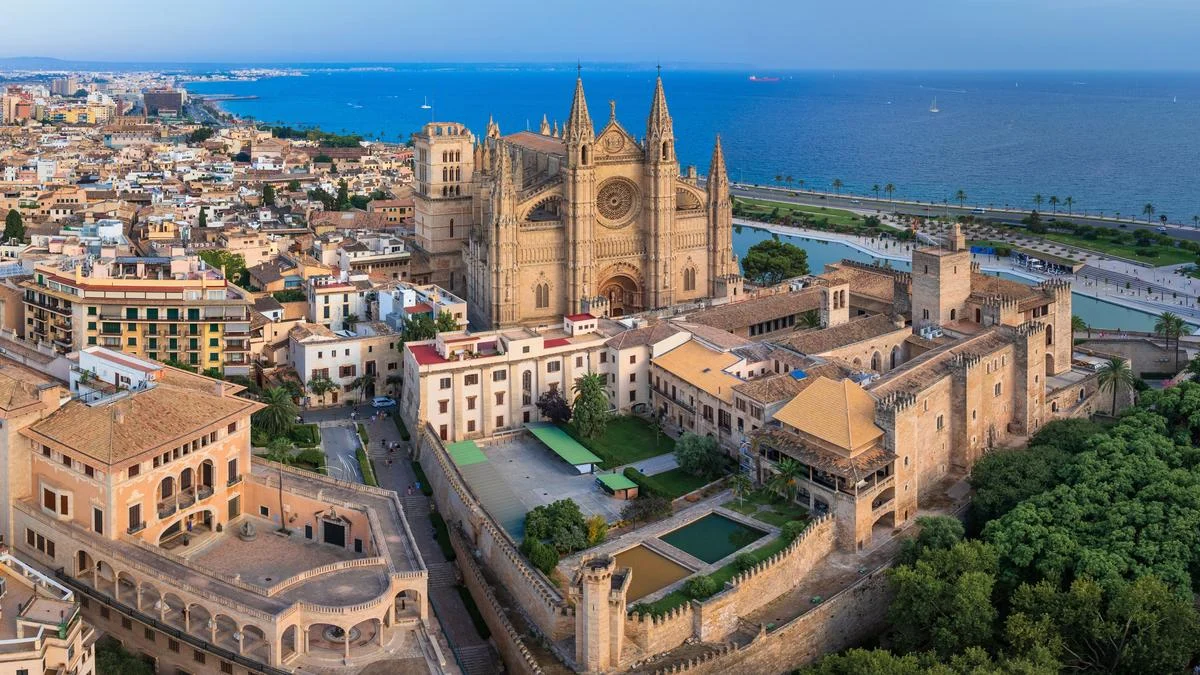
A journey to Mallorca in December offers a stark contrast to the chaotic summer narrative. Upon landing in Palma, the capital, the difference is immediate. The sandstone terraces and sea-soaked promenades are bathed in a soft winter light, and the "steel-and-concrete rhythm" of Europe’s major transit hubs gives way to a village-like pace.

The Culinary Slowdown
In the neighborhood of Santa Catalina, a dinner reservation—once a prerequisite weeks in advance—is often unnecessary. At historic institutions like Can Joan de s’Aigo, which dates back to 1700, the atmosphere is dictated by locals chatting over coffee rather than tourists rushing through itineraries.
The culinary experience also shifts. The ensaimada—a spiral-shaped pastry dusted with powdered sugar—is enjoyed with a thick, decadent hot chocolate, an indulgent afternoon ritual that requires time and a relaxed mindset. Other local specialties, such as the Coca de Patata (a soft potato bun) and Cuarto (an airy sponge cake), take center stage when the heat of the sun no longer demands cold gazpacho.
Architectural Intimacy
Outside the peak months, Mallorca’s architectural marvels, such as the La Seu Cathedral and the Palau de l’Almudaina (a Moorish fortress-turned-royal palace), regain their majesty. In the town of Sóller, the famous wooden tram that runs through citrus groves to the harbor operates without the block-long queues typical of July. In Pollença, the 365 steps of the Calvari staircase offer a peaceful climb and sweeping views of the hills, free from the jostling of crowds.

Implications: The Future of the European Holiday
The shift toward off-season travel is more than a temporary reaction to high prices; it represents a fundamental change in the philosophy of international tourism.
The Trade-off
Traveling outside the summer peak does come with compromises. Many beach-centric businesses, such as seasonal clubs and waterfront bars, close for the winter. The weather, while milder than in Northern Europe, is not suitable for swimming, with temperatures hovering between 15 and 20 degrees Celsius. Shorter daylight hours also mean a more condensed window for sightseeing.
The Reward: Authenticity and Space
However, the rewards are substantial. When the crowds recede, the "stage set" version of Europe disappears, replaced by the authentic pulse of the continent. Cities begin to feel like places where people actually live, work, and socialize.

For the Indian traveler, this shift offers a more sophisticated way to engage with the world. The "shoulder season" allows for luxury at a lower price point, shorter queues at iconic galleries like the Uffizi or the Louvre, and a level of service that is impossible to maintain during the summer madness.
Conclusion: Timing as the New Luxury
The key to enjoying Europe in the mid-2020s is no longer about finding a "hidden gem" that no one else knows about; in the age of Instagram, such places barely exist. Instead, the new luxury is timing. By choosing to visit when the rest of the world is at home, Indian travelers are reclaiming the joy of discovery, proving that the best way to see the world’s most famous sights is to wait for the tide of tourists to go out.
