

Main Facts: Redefining a Culinary Staple for the Modern Era
In the vast and diverse landscape of Indian cuisine, few dishes hold as much cultural and gastronomic weight as the dosa. Traditionally, this fermented crepe—a cornerstone of South Indian heritage—requires a labor-intensive process involving the soaking of raw rice and lentils, followed by precision grinding in a heavy-duty stone grinder or "wet grinder." However, a significant shift is occurring in urban kitchens across the globe. The emergence of the "No-Grind" Rice Dosa is redefining convenience without sacrificing the fundamental essence of this beloved dish.
This innovative recipe, popularized by culinary experts like Dassana Amit, utilizes pre-milled rice flour and urad dal (black gram) flour. By bypassing the soaking and grinding phases, the recipe addresses the primary barrier to entry for many home cooks: time. Despite the simplified preparation, the dish retains its status as a naturally gluten-free, protein-rich breakfast option. While purists may debate the nuances of flavor, the "No-Grind" version has established itself as a legitimate evolution of the form, catering to a fast-paced, health-conscious generation.

Chronology: From Flour to Plate – A Step-by-Step Transformation
The creation of a Rice Dosa using the no-grind method follows a specific chronological sequence that emphasizes the chemistry of fermentation over the manual labor of grinding.
Phase I: The Synthesis of the Batter
The process begins with the careful measurement of dry ingredients. Unlike traditional methods where the ratio of whole grains is critical during the soaking stage, the no-grind method relies on a precise blend of 1¼ to 1½ cups of fine rice flour and ¾ cup of urad dal flour. These are combined in a mixing bowl where water—approximately 2½ cups—is introduced gradually.

At this stage, the technique is paramount. Culinary professionals suggest using a wired whisk or even manual mixing to ensure that every lump of flour is hydrated. The goal is to achieve a "medium-thick, flowing consistency" that mimics the viscosity of traditional batter.
Phase II: The Fermentation Window
Once the batter is smooth, it enters the most critical stage: the overnight fermentation. For a period of 9 to 10 hours, the batter must rest at room temperature. During this time, wild yeasts and lactic acid bacteria interact with the starches in the rice and the proteins in the urad dal.

While the batter does not experience the dramatic volume increase (doubling or tripling) seen in traditional soaked-grain batters, a subtle transformation occurs. The texture becomes slightly airy, and a characteristic tangy, fermented aroma develops. In colder climates, this window may need to be extended by two hours, or supplemented with a tablespoon of yogurt to kickstart the microbial activity.
Phase III: The Art of the Tawa
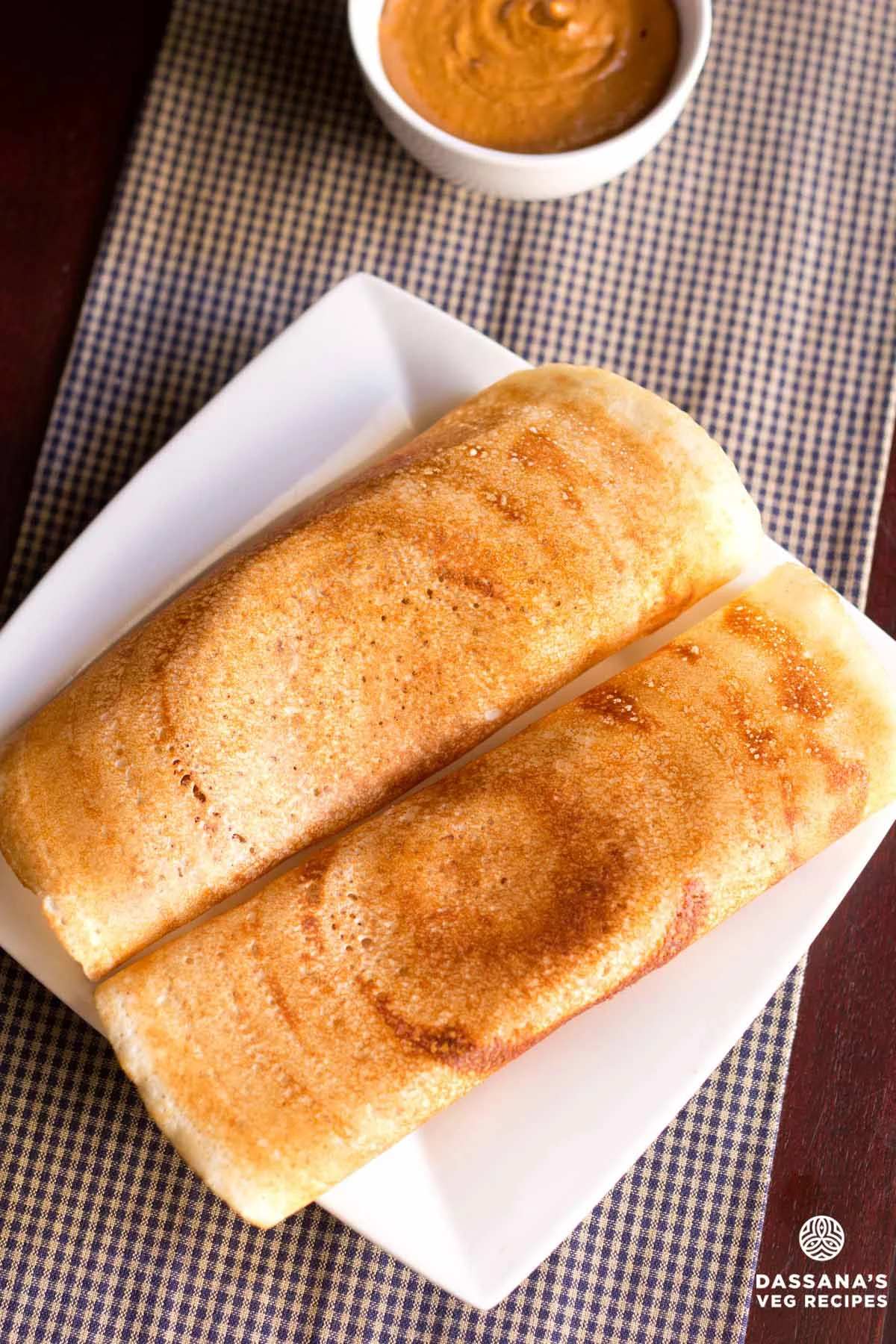
The final stage is the transition from liquid batter to a crisp, golden crepe. After adding salt to the fermented mixture, a cast-iron tawa (griddle) is heated to a precise temperature. The batter is poured onto the center and spread in concentric circular motions. As the water evaporates, oil is drizzled around the edges to facilitate a "crisping" effect. The result is a thin, light, and golden-brown crepe that is flipped and cooked until it reaches the desired structural integrity.

Supporting Data: Nutritional Profile and Efficiency Metrics
The "No-Grind" Rice Dosa is not merely a shortcut; it is a nutritionally dense meal. Data provided by culinary analysts reveals a balanced macro-nutrient profile that supports its reputation as a "superfood" breakfast.
Nutritional Breakdown (Per Serving)
A standard serving of this Rice Dosa contains approximately:

- Calories: 174 kcal
- Carbohydrates: 21g
- Protein: 7g
- Fiber: 5g
- Total Fat: 7g (with only 1g of saturated fat)
Beyond the macronutrients, the dish is a source of essential micronutrients. It contains 21mg of Calcium, 2mg of Iron, and 10mg of Phosphorus. The inclusion of urad dal flour ensures a significant protein boost, while the fermentation process enhances the bioavailability of these nutrients, making them easier for the human body to absorb.
Efficiency Comparison
In a traditional dosa preparation, the "active" and "passive" time can exceed 24 hours (8 hours soaking, 1 hour grinding/cleaning, 12 hours fermenting). The no-grind method reduces the "active" preparation time to less than 10 minutes. This 90% reduction in labor is the primary driver behind the recipe’s viral popularity in the digital age.

Official Responses: Expert Insights on Tradition vs. Convenience
Dassana Amit, a professionally trained vegetarian chef and graduate of Le Cordon Bleu’s plant-based patisserie program, has been a vocal advocate for these modern adaptations. With over 16 years of experience in sharing traditional and contemporary Indian recipes, Amit provides a nuanced perspective on the "No-Grind" movement.
"The flavor is undeniably different from the classic version," Amit notes in her technical analysis. She acknowledges that because the batter is prepared with pre-processed flours rather than freshly ground whole grains, it does not develop the same "deep fermented taste and aroma" that connoisseurs might expect. However, she emphasizes that for the home cook, the trade-off is often worth it. "The rice dosa turns out crisp, light, and delicious, serving as a convenient bridge between traditional heritage and modern schedules."

Other culinary experts suggest that the use of flours allows for greater consistency. In traditional grinding, the heat generated by the mixer blades can sometimes over-ferment the batter prematurely. Using flour at room temperature bypasses this thermal risk, leading to a more predictable result for beginners.
Implications: The Future of South Indian Culinary Heritage
The rise of the "No-Grind" Rice Dosa carries several implications for the future of global food culture.

1. Democratization of Indian Cooking
By removing the requirement for a specialized "wet grinder"—a heavy and often expensive piece of equipment common in South Indian homes but rare elsewhere—the dosa becomes accessible to a global audience. This allows the dish to enter the repertoire of international home cooks who are interested in gluten-free and vegan-friendly options.
2. The Preservation of the "Fermentation Culture"
Even in its simplified form, the recipe insists on overnight fermentation. This is significant because it preserves the health benefits of fermented foods—such as improved gut health and probiotic intake—even in an era of "instant" meals. It represents a refusal to move toward chemically leavened (soda-based) "instant dosas," opting instead for a natural biological process.

3. Culinary Versatility and Pairing
The Rice Dosa acts as a versatile canvas. While it is traditionally paired with coconut chutney and sambar (a lentil-based vegetable stew), its neutral yet savory profile allows it to be served with a variety of modern accompaniments. From the classic "Potato Masala" filling to contemporary pairings like tomato-onion chutney or even peanut-based dips, the Rice Dosa remains a staple that can adapt to varying regional palates.
4. Impact on the Flour Industry
As more households move toward no-grind recipes, there is an increasing demand for high-quality, fine-milled urad dal and rice flours. This shift is encouraging manufacturers to produce specialized "dosa-grade" flours, further solidifying the place of these ingredients in the modern pantry.

Conclusion: A Balanced Approach to Gastronomy
The "No-Grind" Rice Dosa represents a successful synthesis of tradition and technology. It acknowledges that while the stone-ground methods of the past produce a superior depth of flavor, the practicalities of 21st-century life require flexibility. By leveraging the nutritional power of rice and lentils and the biological magic of fermentation, this recipe ensures that one of India’s greatest culinary contributions remains a daily reality for millions, rather than a weekend luxury. As the world continues to look for healthy, plant-based, and gluten-free alternatives, the Rice Dosa stands ready to fill the plate—one crisp, golden crepe at a time.
